Table of Contents
\n- \n
- Choosing the Right Ballet Shoes \n
- Material: Leather vs Canvas \n
- Sole Types: Full Sole or Split Sole \n
- Fit and Sizing \n
- Ballet Shoes for Everyone \n
- Ballet Class Essentials \n
- Maintenance and Care \n
- Frequently Asked Questions \n
Poorly fitting ballet shoes are the fastest way to lose your enjoyment of the class, even before you've made the first plié. In my years at the barre, I've seen hundreds of students struggle with shoes that pinch at the toes or slip off the heel during an allegro. Buying ballet shoes is about the perfect balance between support and flexibility, where the choice of the right material and sole shape determines how well you feel the floor. Whether you are looking for ballet shoes for women who want to refine their technique or the first ballet shoes for a child just starting out, the fit must seamlessly match the specific foot shape.
\n\nI often notice in my classes that dancers hesitate between canvas ballet shoes, which breathe wonderfully and are easy to wash, and leather ballet shoes that mold perfectly to the foot over time. For the little ones, I usually advise a full sole for extra stability, while most adults prefer split-sole ballet shoes to better accentuate their instep. Good ballet shoes are an extension of your body, not a hindrance. In this guide, I share my practical experience and tips for 2026, so you know exactly what to look for in your next purchase.
\n\nChoosing the Right Ballet Shoes
\n\nWhen you start ballet, your first pair of shoes is more than just a purchase; it is your most important tool for good technique. What I often see in the studio is that dancers underestimate the importance of the right fit. A ballet shoe should fit your foot like a second skin, without your toes curling. If the shoe is too big, you lose contact with the floor, which directly affects your stability during a pirouette or a simple balancé. In practice, I see that a shoe that is too loose also causes friction, which in turn causes blisters.
\n\nWhen buying ballet shoes for young dancers, parents often make the mistake of buying them 'with room to grow.' While that makes sense for regular sneakers, it is counterproductive in ballet. A child must be able to 'feel' the floor to learn correct foot placement. For a child's ballet shoe, we usually recommend leather in the first years. Leather is stiffer and offers more resistance against the floor, which is essential for building the small foot muscles and the intrinsic muscles in the arch.
\n\nMaterial: Canvas vs. Leather
\n\nThe choice between canvas ballet shoes and leather ballet shoes depends heavily on your level and how often you train. What I often advise my students is to look at their own foot type. Here are the most important differences I encounter in practice:
\n\n- \n
- \nLeather ballet shoes: These are very durable and stretch slightly to the shape of your foot over time. The natural resistance of leather helps beginners strengthen their feet during foot articulation (tendu). \n
- \nCanvas ballet shoes: These breathe much better and can often be machine washed on a cold cycle. They show the anatomy of the foot beautifully and are therefore a favorite among advanced dancers who want to accentuate their instep. \n
- \nSatin ballet shoes: Although they look beautiful, they are hardly used in class. They are slipperier and less durable, making them mainly suitable for performances or official RAD exams. \n
For adult dancers, the choice is often more personal and aesthetic. In practice, advanced students often choose women's ballet shoes made of canvas with a split sole. Canvas molds directly to the arch of your foot, so there is no excess fabric under the instep when you fully stretch your foot.
\n\nThe Sole: Full Sole or Split Sole?
\n\nA common mistake made by beginners is switching to a split sole too quickly because the professionals wear them too. A full sole runs across the entire bottom of the shoe and provides constant resistance. This forces you to use your foot muscles to the maximum with every movement. Only when you have fully mastered the basics of rolling through the foot is the switch to split-sole ballet shoes recommended.
\n\nSplit-sole ballet shoes only have a small sole under the heel and the ball of the foot. The middle section is made of fabric, allowing the shoe to follow the natural curve of your instep. This looks more aesthetically pleasing but offers less support. In practice, I see that dancers who switch to split soles too early often develop a 'lazy foot' because the shoe does the work for them. When fitting, also pay attention to the elastics; nowadays many ballet shoes come with pre-sewn crossed elastics, which ensures better pressure distribution over the instep and prevents the heel from slipping out of the shoe during jumps like the grand jeté.
\n\nMaterial: Leather vs Canvas
\n\nThe most frequently asked question I get in the dance studio when someone is going to buy new ballet shoes is whether they should choose leather or canvas. There is no 'wrong' answer, but your choice has a huge impact on how you feel the floor and how your technique develops. In practice, I see that this choice often depends on your experience level and how often you train per week.
\n\nLeather ballet shoes: Durability and resistance
\nWhat I often see with beginners and younger dancers is that leather ballet shoes are preferred. Leather is a natural product that molds completely to the shape of your foot over time. The big advantage of leather is its durability; it wears out much less quickly than fabric, especially on a wooden floor or a less smooth Marley floor.
\n\nFrom a technical point of view, children's ballet shoe models offer an important advantage: resistance. Because leather is rougher than canvas, you have to work harder to brush your foot across the floor during a tendu or degagé. This helps build intrinsic foot muscles, which is essential for strong technique later in your dance career. However, a common mistake is that dancers buy leather shoes too big 'to grow into.' Leather always stretches a bit. So buy them snug, like a second skin, so you don't slide around in the shoe.
\n\n- \n
- \nAdvantages: Very durable, molds to the foot, trains the foot muscles through natural resistance. \n
- \nDisadvantages: Can feel a bit stiff at first, less breathable than canvas, harder to wash. \n
Canvas ballet shoes: Line and flexibility
\nAs dancers become more advanced, you often see a shift to canvas. Canvas ballet shoes are flexible straight out of the box and do not need to be 'broken in.' What I notice in practice is that advanced dancers prefer canvas because the material beautifully accentuates the contours of the instep and the arch of the foot. Especially with women's ballet shoes, you often see canvas combined with a split sole for maximum flexibility.
\n\nAnother practical advantage is that you can simply throw canvas shoes in the washing machine (on a cold cycle in a laundry bag!) if they get dirty. The disadvantage, however, is that they wear out much faster. If you train three or four times a week, you will notice that holes appear at the toes faster compared to a leather version. Additionally, canvas hardly stretches; what you buy is what you get, so the fit must be perfect immediately.
\n\n- \n
- \nAdvantages: Immediately flexible, accentuates the foot line, breathable material, machine washable. \n
- \nDisadvantages: Wears out faster, offers less resistance for foot strength training, does not stretch. \n
The role of the sole in your choice of material
\nWhen making your choice, it is also important to look at the type of sole. In practice, I see that the combination of material and sole type determines your balance. Leather shoes are often made with a full sole, which is ideal for beginners to find stability. Canvas shoes are almost always split-sole ballet shoes, where the sole is interrupted under the arch of the foot. This gives you the freedom to point your foot fully without the fabric bunching up under your foot.
\n\nLook carefully at the floor you are dancing on. On a very rough floor, leather can sometimes give too much grip, making turning (pirouettes) more difficult. In that case, a canvas shoe is often a better option because it slides more easily over the surface. For young children just starting their first lessons, the sturdier children's ballet shoes made of leather remain the best investment because of the support and long lifespan.
\n\nSole Types: Full Sole or Split Sole
\nWhen you are standing in front of the shelf or looking around online to buy new ballet shoes, the choice between a full sole and a split sole is one of the most important decisions you have to make. It's not just about looks; the sole has a direct influence on how your foot muscles develop and how you make contact with the floor during class.
\n\nThe full sole: Strength and resistance
\nA full sole consists of one continuous piece of suede or leather under the entire foot. In practice, this is the type of shoe every beginner should start with. Why? Because the sole provides natural resistance against the bottom of the foot. Every time you do a tendu or roll through your foot, your foot has to work harder to push the sole away from the floor. This builds the necessary strength in the arch and the small muscles of the ankle.
\nA common mistake I see among parents is that they want to buy the most flexible shoe for their child right away because it looks 'professional.' Especially in the selection of children's ballet shoe models, that sturdiness of a full sole is crucial for a healthy technical foundation. It prevents the foot from becoming 'lazy' and helps in finding the correct center of gravity. Moreover, a full sole offers more stability during the first jumps and landings, which is very pleasant for young dancers still finding their balance.
\n\nThe split sole: Aesthetics and flexibility
\nIn a split sole, the sole is divided into two separate pieces: one under the ball of the foot and one under the heel. The middle section under the arch is free of sole material, so the shoe at that point consists only of the main fabric (canvas or leather). This type of women's ballet shoe is now the standard choice for advanced amateurs and professionals.
\nThe big advantage of split-sole ballet shoes is that they beautifully accentuate the line of your foot. Because there is no stiff sole in the middle, the shoe can mold perfectly to your instep when you fully point your foot. What I often see with students making the switch to a split sole is an immediate sense of freedom in movement. However, you must already have sufficient foot strength of your own. In practice, the shoe offers you less support, so your ankles and arches have to do all the work themselves to take the right shape.
\n\nPractical tips for your choice
\nWhen making the final choice for your ballet shoes, I recommend looking at the following points:
\n- \n
- \nExperience level: Are you a beginner? Start with a full sole to strengthen your technique. Have you been dancing for several years and are your feet strong enough? Then a split sole is the logical step for a more beautiful line. \n
- \nMaterial combination: Leather ballet shoes with a full sole are almost indestructible and offer the most resistance. Canvas ballet shoes with a split sole, on the other hand, mold faster to the foot, making them ideal for dancers looking for a 'second skin' feel. \n
- \nThe requirements of the ballet school: In many studios, it is simply mandatory for the lower grades to dance on a full sole. Teachers want to be able to see that you are really using the floor to train your foot. \n
- \nFit and wrinkles: A split sole tends to pull tighter around the arch, while a full sole can sometimes wrinkle under the foot if the size is not exactly right. Pay attention to this when fitting; excess fabric can affect your grip on the floor. \n
In my experience, it is not a question of which sole is 'better', but which sole currently fits your anatomy and training goals. Whether you choose the sturdiness of a classic shoe or the flexibility of a modern model, make sure the sole forces you to dance with attention and strength.
\n\nFit and Sizing
\n\nThe biggest mistake I see in the dance studio is that dancers (or their parents) buy ballet shoes like regular shoes. However, a ballet shoe is not a sneaker; it is an extension of your foot. In practice, a ballet shoe should fit like a second skin, without any empty space at the toes or under the instep. When you make a tendu, the shoe should accentuate the line of your foot, not become baggy or wrinkle.\n\nWhat I often see with beginners is the fear that the shoe is too small. A good gauge is the \"plié test.\" Put the shoes on and stand in a deep second position plié. Your toes should just touch the front of the shoe, but they absolutely must not curl or slide over each other. If you stand upright and feel no resistance at all at your toes, the shoe is probably too big. For the perfect fit for adults, I often advise looking at specific ballet shoes for women that have a pre-shaped arch, which helps to create that desired sleek line.\n\nThe difference between canvas and leather ballet shoes in terms of stretch
\n\nWhen determining the size, the material is crucial for how the shoe will behave. In practice, canvas and leather behave completely differently:\n\n- \n
- \nLeather ballet shoes: This material molds to your foot over time. They often feel a bit stiffer and tighter at first, but the heat from your foot stretches the leather slightly. So buy these to fit exactly. \n
- \nCanvas ballet shoes: Canvas hardly stretches. What you try on in the store is what you get. The advantage is that they are immediately comfortable and can easily go in the washing machine (on a cold cycle), but they offer less \"shaping power\" than leather. \n
- \nSplit-sole ballet shoes: Whether you choose leather or canvas, a split sole ensures that the shoe fits better under your instep when you point your foot, which is essential for a professional look. \n
Sizing for children: the pitfall of \"room to grow\"
\n\nA common mistake when buying a ballet shoe for a child is buying for growth. I understand the economic aspect, but in ballet class, this is counterproductive. If a child dances in a shoe that is too big, they cannot feel properly how to brush their feet across the floor (the glissade or tendu). Moreover, excess fabric at the toe can cause a young dancer to trip.\n\nIn practice, I use a margin of at most half a centimeter of space at the toes for children. This gives just enough room for a few months of growth without the technique suffering. Also pay attention to the width of the foot; some brands run very narrow, which can lead to pinching metatarsals in a wider child's foot, even if the length is correct.\n\nFinally, don't forget the elastics and drawstrings. Many ballet shoes have a cotton drawstring along the edge. Use this only to subtly adjust the shoe to the foot, not to \"cinch down\" a shoe that is too big. If you pull the drawstring too tight, it cuts into the Achilles tendon, which can cause injuries. Tie off the drawstring, cut away the excess, and tuck the knot neatly into the shoe for a sleek finish during class.\n\nBallet Shoes for Everyone
\n\nIn the dance studio, I see daily that the right shoe makes the difference between shuffling across the floor uncertainly or starting a pirouette with confidence. Whether you are a parent looking for a pair for a toddler for the first time, or an adult picking up the passion again after years: the anatomy of the foot and the level of the dancer determine what type of shoe you need. A common mistake I often see in practice is buying ballet shoes with room to grow. Although this seems logical with normal sneakers, it is risky in ballet. A shoe that is too big will slide, so a dancer has no grip on the floor and can even trip during a fast combination across the diagonal.\n\nWhen buying ballet shoes for children, I always advise aiming for a fit that fits like a second skin, without the toes curling. For the youngest ones, leather ballet shoes with a full sole are often the best choice. The full sole provides extra resistance, which is essential for building the small foot muscles needed for good technique.\n\nThe difference between canvas and leather
\n\nThe choice between material is not just a matter of taste, but also of how you want to feel the floor. What I often see with advanced dancers is a strong preference for canvas ballet shoes. Canvas has the property that it breathes and beautifully accentuates the contours of the foot, especially at the instep.\n\n- \n
- \nLeather ballet shoes: These are extremely durable and mold to the unique shape of your foot over time. In practice, they are ideal for beginners because they offer more grip on a slippery studio floor. \n
- \nCanvas ballet shoes: These are easy to maintain (they can often just go in the wash) and are immediately flexible. They are perfect for dancers who put in many hours and want a shoe that emphasizes the arch extra during a tendu. \n
The switch to split-sole ballet shoes
\n\nFor adults and teenagers working more seriously on their technique, the sole construction is an important point of attention. Where beginners benefit from the stability of a full sole, I see that most dancers switch to split-sole ballet shoes after a year or two. In this type of shoe, the sole is interrupted under the arch. This allows you to stretch your foot fully without the sole working against you, which gives a much sleeker aesthetic image in your lines.\n\nWhen you look at the collection of ballet shoes for women, you will see that models with elastic inserts around the arch are currently very popular. These hybrid shoes combine the sturdiness of traditional materials with the flexibility of modern fabrics. A handy tip from practice: pay attention to the 'drawstring' (the cord along the edge) when fitting. Do not pull this too tight, as this can irritate the Achilles tendon. Tie it off, cut away the excess string, and tuck the knot neatly into the shoe for a professional finish. This prevents you from suddenly tripping over your own laces during a grand battement.\n\nBallet Class Essentials
\n\nWhen you first step into a ballet studio, the list of requirements can seem overwhelming. In practice, it's not too bad, but the choices you make have a direct influence on your technique and safety. What I often see with beginners is that they tend to buy too many accessories, while the focus should actually be on the basics: a good fit and freedom of movement.
\n\nThe basics: ballet shoes and soles
\nThe most important part of your equipment is, of course, the shoes. A common mistake is buying shoes 'with room to grow.' In ballet, this is risky; a shoe that is too big will slide, so you have no grip on the floor and cannot use your toes properly for the push-off. In class, I regularly see students struggling with their balance simply because their foot is swimming in the shoe. The shoe must fit around the foot like a second skin, so the teacher can properly correct the position of the bones in the foot.
\n\nFor adult dancers who want to optimally accentuate their arch and improve foot articulation, the right women's ballet shoes with a split sole are often the best choice. A split sole interrupts the connection between the heel and the forefoot, allowing the shoe to follow the instep better during stretching (pointé). However, for the youngest dancers, I often recommend a full sole. This offers more resistance, which helps in building the necessary muscle strength in the little feet. For this group, quality children's ballet shoes are essential to lay a good foundation for their further dance career.
\n\nClothing that makes the technique visible
\nIn the ballet world, we wear tight clothing not for show, but for anatomy. A teacher must be able to see the alignment of your knees, the position of your pelvis, and the tension in your back muscles. A baggy T-shirt hides a hollow back or a wrongly tilted pelvis, which can lead to injuries in the long term. The standard equipment usually consists of:
\n\n- \n
- \nA leotard: This ensures that your torso can move freely without clothing shifting during a port de bras. \n
- \nBallet tights: Usually in a light color (such as pink or white) so that muscle definition in the legs is clearly visible to the teacher. \n
- \nLeg warmers: Especially in the winter, I see dancers using these during the warm-up at the barre to keep the muscles flexible, but as soon as the active part begins, they usually come off. \n
Hair and extra accessories
\nA detail that is often underestimated is the hair. In practice, a tight bun (the well-known ballet bun) is functional. During turning (pirouettes), you must be able to move your head quickly (spotting). Loose hair whipping in your eyes disturbs your balance and concentration. So always make sure you have enough hairpins and a sturdy elastic in your bag.
\n\nFinally, a practical tip about maintenance: never wash your canvas ballet shoes in the washing machine on a high setting. This affects the glue and the structure of the sole. A hand wash with mild soap is sufficient to keep them fresh. Leather, on the other hand, you should never wash; you clean that with a slightly damp cloth to keep the material flexible.
\n\nMaintenance and Care
\nYou've finally found the perfect shoes, but what I often see in the dance studio is that the lifespan of ballet shoes is drastically shortened by a few simple mistakes. Good care not only ensures that your shoes last longer, but also that they remain hygienic and maintain their grip on the dance floor. Ballet shoes are precision instruments for your feet; treat them with the necessary attention.\n\nVentilation is half the battle
\nA common mistake is storing your shoes in a closed plastic bag immediately after class. Your feet sweat during an intensive barre workout, and that moisture draws directly into the material. Whether you train in women's ballet shoes made of leather or canvas, they must be able to breathe after each use. In practice, I always advise my students to hang the shoes on the outside of their bag or keep them in a breathable cotton bag. \n\nThis is extra important for the youngest dancers. With a child's ballet shoe, I often see them ending up at the bottom of a full backpack between wet towels and drinking cups. This affects the glue of the sole and causes the material to rot or tear faster at the toes. At home, take them out of the bag immediately and put them in a dry place, but never directly on the radiator, as this dries out leather and shrinks canvas unevenly.\n\nCleaning different materials
\nMaintenance depends heavily on the type of material you chose when buying ballet shoes. Each material reacts differently to moisture and friction.\n- \n
- \nCanvas ballet shoes: These can theoretically be machine washed on a cold and delicate cycle. Always use a laundry bag and absolutely no fabric softener. An important tip from practice: put the shoes on while they are still very slightly damp. This allows them to mold perfectly to the anatomy of your foot again and prevents the canvas from becoming too tight after drying. \n
- \nLeather ballet shoes: Never put these in the washing machine. The leather becomes hard, loses its natural oils, and can crack. What I often do with leather models is wipe them with a slightly damp cloth and possibly a small drop of mild soap for stubborn stains. Then use a colorless leather balm to keep the material flexible, especially in the places where the shoe folds when standing on the relevant 'demi-pointe'. \n
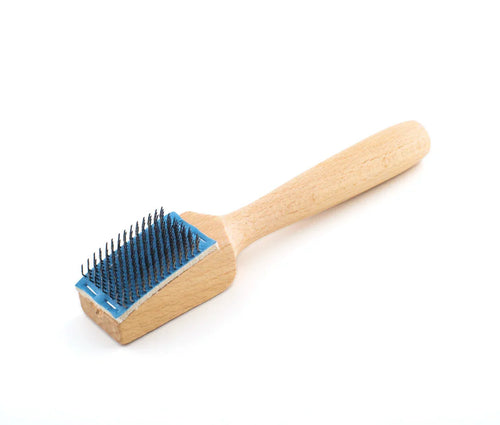
- \nThe sole (split-sole ballet shoes): The suede sole under your shoe becomes slippery over time due to accumulated dust and rosin from the studio floor. Use a special suede brush with iron bristles to roughen the sole again. This gives you the necessary grip for pirouettes without unexpectedly slipping. \n
When is it time for a new pair?
\nEven with the best care, ballet shoes are consumables. In practice, I see that dancers often continue for too long on worn-out shoes, which is at the expense of technique. Look for holes at the toes, but especially look at the state of the elastics and the inner lining. If the split-sole ballet shoes lose their shape and no longer fit properly in the arch when stretching the foot (pointing), they offer insufficient support. \n\nFor a growing child, it is essential to check every three to six months whether the shoes are not too tight. Curved toes in a shoe that is too small can lead to permanent foot problems. If you notice that the lining on the inside starts to crumble or if the smell no longer goes away after a night of airing, it is a clear sign that the material is at the end of its rope. A fresh pair not only ensures better hygiene, but also gives you that direct contact with the floor that is essential for good balance.\n\nFrequently Asked Questions
\n\nWhat is a 6-letter word for a ballet shoe with a hard toe?
\nA ballet shoe with a hard toe of exactly 6 letters is called pointes. These special shoes are worn by advanced dancers to be able to dance fully on the tips of their toes. The hard toe, also called the box, offers the necessary support for this technique. It is essential to wear pointes only after years of training and always under professional supervision.
\n\nHow should ballet shoes fit?
\nBallet shoes should fit the foot very closely, similar to a second skin. Unlike normal shoes, there absolutely should be no extra space at the toes, as this hinders technique. The shoe should accentuate the arch and should not be baggy at the heel. A good fit is crucial for safety, so the dancer maintains optimal contact with the dance floor.
\n\nWhat do you call ballerina shoes?
\nIn the dance world, we simply call ballerina shoes ballet shoes or softies. A clear distinction is made between technical ballet shoes for the studio and fashionable ballerinas for daily use on the street. For ballet class, specifically choose shoes made of leather or canvas with a flexible sole. The term ballerina formally refers to the dancer, while the shoes are her most important work tool.
\n\nWhat do you need for a ballet class?
\nFor a classic ballet class, you need basic equipment consisting of well-fitting ballet shoes, a tight-fitting leotard, and ballet tights. Additionally, it is important that your hair is in a sturdy bun so that it doesn't fall in your face while turning. Forget not a water bottle and possibly a cardigan to keep your muscles warm during the warm-up at the barre.
\n\nWhat is the difference between canvas and leather ballet shoes?
\nThe main difference between canvas and leather ballet shoes lies in durability and feel. Leather ballet shoes are very sturdy, last a long time, and mold perfectly to the foot over time. Canvas ballet shoes, on the other hand, are lighter, breathe better, and can often easily be washed in the machine. Many advanced dancers prefer canvas because of the direct feel of the floor during jumps.
\n\nWhy choose a split sole instead of a full sole?
\nA split sole offers more freedom of movement because the sole is interrupted under the arch. This helps dancers to stretch their feet more beautifully and accentuates the line of the instep. However, for beginners and young children, a full sole is often advised. A full sole offers more resistance, which is essential for building the necessary foot muscles and stability during the first years of learning.
\n\nHow do I choose the right size ballet shoes for my child?
\nWhen buying ballet shoes for a child, it is tempting to buy them with room to grow, but this is unwise. Shoes that are too big cause friction and can lead to blisters or tripping hazards. The shoe must fit snugly without painfully pinching the toes. Keep in mind that sizes of ballet brands often deviate from regular shoe sizes; therefore, always consult a specific size chart.
\n\nHow long do ballet shoes last on average?
\nThe lifespan of ballet shoes depends on the intensity of use and the chosen material. On average, canvas shoes last three to six months with weekly use, while leather shoes often last a full dance season. As soon as holes appear at the toes or the sole comes loose, it's time for replacement. Regularly check the condition of the shoes to prevent injuries from slipperiness.
\n\nThe beauty of the right ballet shoes is that they not only protect your feet but literally take your technique to a higher level. Remember above all that the choice between leather and canvas, or a full sole versus a split sole, depends entirely on your personal goals and experience on the dance floor. Whether you are looking for the extra stability of leather or the refined flexibility of canvas, make sure you invest in quality that offers your feet the support they deserve. For the adult dancer who wants to perfect her lines, our women's ballet collection offers the ideal balance between comfort and elegance. Also for the little ones, a good foundation is essential; a pair of sturdy shoes from our girls' ballet shoes collection makes the difference between a first lesson and a lifelong passion. What I especially want to give you: see your ballet shoes as an extension of yourself. When you step onto the floor with equipment that fits perfectly, the technique fades into the background and only the pure emotion of the dance remains.
\n