

Table of Contents
- What is Boogie Woogie?
- Difference with Lindy Hop
- The Best Dance Music
- The Right Dance Shoes
- Popular Partner Dances
- Technique and Footwork
- Frequently Asked Questions
You think you have good stamina until you try to dance through a full-fledged Boogie Woogie track at tempo for the first time. Boogie Woogie is an explosive, improvised swing dance that has its roots in 1950s rock-’n-roll, where the focus lies on lightning-fast footwork and a playful, musical connection with your partner. In my years on the dance floor, I have seen many dancers switch over from lindy hop, but the technique of the Boogie requires a very specific drive and a more active foot placement that you won't encounter as intensively anywhere else.
I often get asked in class whether you can do this dance in regular sneakers. My answer is always the same: your feet are your most important instrument and the right equipment makes the difference between gliding or struggling. Without decent swing shoes with a smooth sole, you block your knees with every fast turn, which simply becomes painful after an hour of training. While lindy hop is often a bit more 'grounded' and horizontal, the Boogie requires that typical bouncy, upward action. That is why I see my advanced students often preferring sturdy jive shoes that offer just a bit more stability and cushioning during powerful kicks and breaks. This style is all about the perfect balance between raw energy and technical mastery.
What is Boogie Woogie?
When people see a Boogie Woogie demo for the first time, they often think it is simply a sped-up version of the Jive. In practice, however, it is structured quite differently. Boogie Woogie is the European further development of the American swing styles from the 1930s and 40s. Where lindy hop is often a bit 'smoother' and more horizontal, in Boogie Woogie you see that typical upright, energetic Rock 'n Roll posture from the 1950s. It is a dance that revolves around improvisation to piano-oriented music, where the feet literally translate the rhythm of the music to the floor. What I often see is that dancers underestimate the speed of the music. Boogie Woogie is danced to a 6-count rhythm (step-step, triple-step, triple-step), but the tempo is often significantly higher than in the average social dance. This requires a specific technique where your center of gravity remains low, despite the upright posture of your upper body. Your knees act as shock absorbers to catch the fast kicks and 'flicks' without losing your balance.The technique behind the 'Bounce'
The essence of Boogie Woogie lies in the bounce. This is not an up-and-down movement from the calves, but a constant pulse that comes from the hips and knees. A common mistake I see with beginners is that they try to bounce by jumping on their toes. No one can keep this up for a whole song at 48 bars per minute. The trick is to keep your weight on the ball of your foot, while your heels just barely touch or don't touch the floor at all. In practice, this means that your footwear is a decisive factor. Because the footwork patterns are so fast, you need shoes that offer both grip and slide. Many advanced dancers choose specific swing shoes with a hard leather sole or a synthetic sole that gives just enough slide for the spins, but is stable enough for the explosive kicks. Without the right sole, beginners risk knee injuries because the foot 'sticks' to the floor while the body is already turning.Differences with Lindy Hop and Jive
Although its roots lie in Black American culture, Boogie Woogie has developed its own unique character in Europe. The biggest difference with the Jive you see in ballroom dancing is the level of improvisation. In Boogie Woogie, there is no fixed choreography; the leader reacts directly to the accents in the music, such as a sudden piano roll or a break in the drums.- Footwork: Where Jive is often very 'bouncy' and high on the toes, Boogie Woogie remains more 'earthed'. You kick the floor away, as it were.
- Connection: The connection between partners is more elastic. You use the tension in your arms (leverage and compression) to push each other away or pull each other closer for fast turns.
- Footwear: For the fast kicks and constant pressure on the forefoot, sturdy jive shoes or swing sneakers are essential to prevent fatigue in the arch of the foot.
Difference with Lindy Hop
What I often see on the dance floor is that dancers lump Boogie Woogie and Lindy Hop together because they both fall under the broad 'swing umbrella'. Although they share the same roots, the feeling in practice is totally different. Where Lindy Hop is deeply rooted in 1930s jazz with a very horizontal, 'grounded' flow, Boogie Woogie revolves around the explosive energy of 1950s rock-’n-roll. The biggest difference lies in the vertical movement; in Boogie, we dance much more 'on top of the music' with an active, pumping knee action, while a Lindy Hopper seeks the floor with a deep bounce from the hips.
The posture: From 'Grounded' to 'Pumping'
In practice, you notice this difference immediately in your body posture. In Lindy Hop, you often lean slightly more forward in an athletic stretch posture. In Boogie Woogie, we stand more upright. A common mistake I see in dancers making the switch is that they keep their center of gravity too low. This simply prevents you from keeping up with the fast piano riffs of Boogie music. Because the tempo is often much higher, you need footwear that supports these fast footwork changes without losing grip. I often recommend investing in specific swing shoes with a sole that offers just enough slide, but also has the cushioning for that constant 'pump'.
Another crucial technical difference is the connection. In Lindy Hop, you work a lot with 'stretch and compression' over a larger distance. In Boogie Woogie, the connection is more compact and direct. The leader gives signals that are much shorter and sharper. This is necessary, because at a tempo of 48 bars per minute, you don't have time for large, sweeping movements. Here are the most important technical differences at a glance:
- The Basis: Lindy Hop uses many 8-count patterns (like the Swingout), while Boogie Woogie is primarily based on 6-count patterns with a very specific footwork accent on the backstep.
- The Bounce: In Lindy Hop, the bounce goes down into the floor. In Boogie Woogie, the movement is more upward and sharp from the knees and ankles.
- Musical interpretation: Lindy Hop follows the swing eighths of big band jazz. Boogie Woogie follows the staccato 'straight' or 'shuffled' beats of the piano and early rock-’n-roll.
Footwork and shoe choice
What I often see is that beginners underestimate how heavy Boogie Woogie is on the calves compared to Lindy Hop. Because you are constantly making that pumping movement, your footwork is much more active. You tap the floor more often with the ball of your foot. This is also where your choice of equipment plays a role. While in Lindy Hop you can sometimes get away with a heavier sole, for the fast kicks and triples of the Boogie, you really need something lighter. Some dancers prefer jive shoes because they are often more flexible and offer more lateral support for the fast turns that are so characteristic of the European style of Boogie Woogie.
In practice, I see that Lindy Hop more often remains a social, improvisational dance, while Boogie Woogie (especially in Europe) has developed a strong competitive side with a lot of attention to footwork precision. If you come from Lindy, you really have to learn to make your 'triple steps' smaller and sharper. Instead of the sliding movement of the Lindy, in Boogie you focus on pulling up your knees. It is physically more challenging, but the kick you get when you hit those fast piano breaks exactly on the beat is like nothing else.
The Best Dance Music
When I'm on a dance floor, I immediately notice if the DJ understands what Boogie Woogie is. It's not simply about 'fast music', but about the specific drive of the piano. What I often see is that beginners focus blindly on the tempo, while the magic of this dance style lies precisely in the syncopation and the rolling basslines. The music from the 40s and 50s, with artists like Albert Ammons, Pete Johnson, or Meade Lux Lewis, has a raw, staccato energy that forces you to keep your weight low. In practice, this means that you don't just listen to the melody, but especially to the 'eight-to-the-bar' cadence of the pianist's left hand. A common mistake is that dancers try to dance to a heavy 4/4 beat that is more like modern pop or disco. That simply doesn't work for the technique we use in Boogie Woogie. You need that specific swing eighth to give your triple steps and kicks that typical 'bounce'. Because the movements in this dance style are often explosive and contain a lot of rotation, I find that good swing shoes with a smooth sole are essential to control those fast spins without blocking your ankles or knees.The difference between Boogie, Lindy and Jive
In practice, I often get asked if you can dance Boogie Woogie to any swing song. Although there is a lot of overlap with lindy hop, the big difference lies in the interpretation of the music. Where Lindy Hop is often danced a bit 'looser' and more 'behind the beat' to big band music, Boogie Woogie requires sharper, more forward timing. Just listen to 'Down the Road a Piece' by Amos Milburn; that rolling piano forces you into an active posture. What I often see in dancers switching from other styles is that they land too much on their heels. In Boogie Woogie, you want to keep the pressure constantly on the ball of the foot to stay agile. Therefore, I often advise looking at specific jive shoes that offer the necessary flexibility in the forefoot, yet have enough cushioning to absorb the impact of the fast kicks.Music Choice and Training Structure
If you're going to practice at home, don't start immediately with the top speeds you see at championships. That is a recipe for sloppy technique and injuries. I always advise my students to start with songs around 30 bars per minute (BPM). This gives you the space to really let the 'bounce' come from your knees and ankles, instead of just stomping with your feet.- Choose classic piano blues to train your timing on the 'off-beat' (the 2 and the 4).
- Use songs with clear 'breaks' in the music to practice your musicality and stops.
- Focus on smaller steps during faster songs; the faster the music, the smaller your footwork must become to maintain control.
The Right Dance Shoes
When you step into a Boogie Woogie workshop for the first time, you often see people in their daily sneakers or trainers. What I often see is that these beginners get pain in their knees or ankles after half an hour of intensive dancing. That is no coincidence. Regular sports shoes are designed to provide grip on asphalt or in the gym, but in an energetic dance like Boogie Woogie, that grip is actually your worst enemy. In practice, you need a shoe that allows you to turn and slide without your joints having to absorb the full torsion.The sole determines your flow
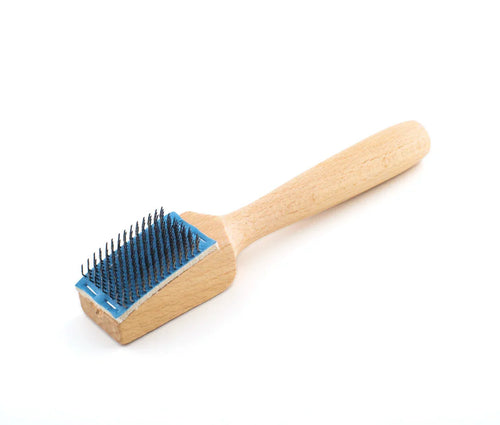
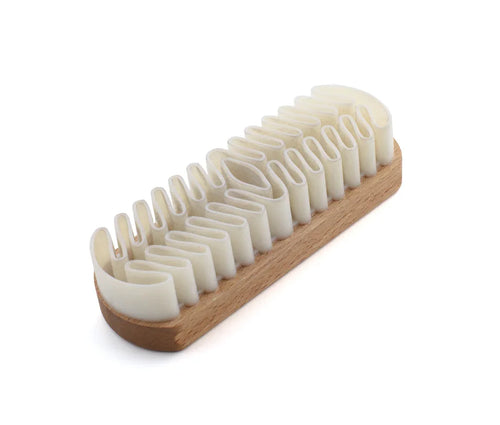
A common mistake is underestimating the resistance of the sole. During the fast triple steps and the constant 'pulse' of Boogie Woogie, your foot must be able to pivot effortlessly over the floor. If your sole has too much grip, your foot stays stuck while your body is already starting the turn. This puts enormous tension on your cruciate ligaments and menisci. Good swing shoes are therefore almost always equipped with a sole of suede (chrome leather) or hard smooth leather. Suede is my personal favorite because it gives you great control; you can roughen it with a special wire brush if the floor is too slippery, or flatten it for more speed. In practice, I see that dancers on a stiff wooden floor often struggle if they don't have good soles, which directly affects their technique and self-confidence.Stability for explosive kicks
Boogie Woogie distinguishes itself from other swing styles through powerful kicks and fast footwork variations. This requires a shoe that is not only smooth on the bottom but also offers lateral stability. A flimsy shoe causes your foot to slide inside the shoe, which in practice leads to blisters and an uncertain balance. What I often advise students is to look at the firmness of the heel counter. Your heel must stay firmly in place during a kick-ball-change. For ladies, lindy hop shoes with a lower, wide heel are often the best choice. A heel of 2 to 4 centimeters helps to bring your weight slightly more to the ball of the foot, which is essential for the forward drive of the dance, without completely losing the stability of a flat sole.Material and fit
In practice, I see that leather is still the gold standard. Synthetic materials often don't breathe enough for the intensity of a Boogie night, causing your feet to overheat and swell. Leather molds over time to the unique anatomy of your foot, which is crucial for the fine motor skills in your footwork. When fitting, also pay attention to the space at the toes. You don't want pinching shoes, but too much space causes you to lose the 'connection' with the floor. If you look at professional jive shoes, you often see that they have a snug fit that feels almost like a second skin. This gives you the precision needed for the fast accents in the music. Don't forget that your dance shoes are an investment in your body; with the right footwear, you can dance for hours without waking up the next day with painful joints.Popular Partner Dances
In practice, I often notice that dancers who start with Boogie Woogie also show interest in other styles within the swing family. Although Boogie Woogie has its own character — think of the fast piano-driven music and the acrobatic footwork — the cross-pollination with other dances is enormous. What I often see on the dance floor is that the techniques from one dance reinforce the other, provided you understand the nuances.
Lindy Hop: The Basis of the Bounce
If we look at the roots of swing, we cannot ignore Lindy Hop. Where Boogie Woogie is often danced more upright and feels more 'staccato', Lindy Hop is much more 'grounded'. A common mistake I see in students making the switch is that they try to maintain the deep, relaxed bounce of Lindy Hop during an uptempo Boogie track. That simply won't work; you'll be late for the beat.
In Lindy Hop, everything revolves around the 'swingout' and the 8-count patterns. In practice, I see that dancers who master both styles are much more creative in their improvisation. The most important difference lies in the connection: in Lindy Hop, the stretch is often larger and more elastic, whereas in Boogie Woogie you need a shorter, more direct response from your partner. To perform those fast stops and turns well, you need swing shoes with a sole that offers just enough grip but doesn't 'lock' you to the floor. If your sole is too stiff, you risk knee injuries during the fast rotations so characteristic of Boogie.
Jive: Speed and Sharp Footwork
Another dance that is closely related but often requires a very different energy is the Jive. Although Jive is part of the ballroom curriculum, you clearly see the influences of early swing. What I often see in Jive dancers is an extreme focus on 'flicks and kicks'. In Boogie Woogie, we also use kicks, but these are more functional and less 'showy' than in competitive Jive.
A technical detail I always emphasize is the anatomy of the ankle movement. In Jive, you often see the dancer stay high on the ball of the foot, which puts an enormous strain on the calf muscles. In Boogie Woogie, we try to let the heel kiss the floor a bit more often to save energy for those long social dance nights. Because Jive is so explosive, many dancers choose specific jive shoes that have extra cushioning in the heel to absorb the impact of the fast triples. In practice, I see that a good shoe makes the difference between having to stop after an hour or dancing through the whole night.
- Rhythm: Boogie Woogie focuses on the 6-count basis, while Lindy Hop often uses the 8-count as a foundation.
- Footwork: In Jive, the knees are often higher, while in Boogie the feet stay closer to the floor for maximum speed.
- Musicality: Boogie Woogie is inextricably linked to the piano, while Lindy Hop looks more broadly at Big Band and Jazz.
What I always tell my students: don't just try to copy the steps, but understand the mechanics behind them. Whether you choose the flow of the Lindy or the explosiveness of the Jive, the basis of every partner dance remains communication through your frame. A frame that is too weak causes noise on the line, a frame that is too stiff blocks your partner's movement. Finding that 'sweet spot' in tension is what really makes a dancer stand out from the rest.
Technique and Footwork
In practice, Boogie Woogie is much more than just moving fast to music; it's about control over your center of gravity. What I often see with dancers who are just starting out is that they try to achieve speed by lifting their feet high. This is counterproductive. The power of a good Boogie lies in the 'bounce', a constant springy movement from the knees and ankles that never stops. This bounce ensures that your weight always stays on the front of your foot, on the ball of the foot. If you put your heels too heavily on the ground, you immediately lose the connection with the beat and your partner.The anatomy of the Triple Step
The basis of the footwork is the triple step (chassé). A common mistake is that dancers make this step too wide. In practice, you want to keep your feet directly under your body. The faster the music, the smaller your steps should become. A handy tip I often give: imagine you are dancing on a hot plate. Your feet must make quick and light contact with the floor. The technique behind a tight triple step requires that your ankles remain flexible. Good swing shoes are crucial here because they offer the right balance between grip and slide. If your shoes are too stiff, you block your knees during the fast changes, which can cause injuries in the long term. You want a sole that is flexible enough to feel the floor, but also has enough cushioning for the constant springing.Kicks and Variations in Speed
In addition to the triple steps, kicks make up a large part of the Boogie Woogie dynamic. Unlike the softer kicks you sometimes see in lindy hop, the kicks in Boogie Woogie are often sharper and shorter. We call this the 'flick-kick'. It involves throwing your lower leg forward from the knee and immediately pulling it back. What I often notice during workshops is that dancers lose their balance as soon as the speed goes up to 48 or 50 bars per minute. The solution almost always lies in the posture:- Keep your upper body tilted slightly forward, the so-called 'athletic stance'.
- Ensure your arms form a solid frame without becoming stiff; the lead-follow communication happens through the tension in your core, not just through your hands.
- Focus on the 'backbeat' (counts 2 and 4) to keep the typical drive in your footwork.
- Use your free arm for balance, but keep it close to your body to make rotations faster.
Frequently Asked Questions
Is boogie woogie a solo or a partner dance?
Boogie woogie is primarily a partner dance known for its energetic and improvisational character. Although solo elements and variations exist, the core revolves around the interaction between the leader and the follower to fast piano music. Wearing good swing shoes is essential here to be able to turn smoothly and perform the fast footwork techniques safely and in a controlled manner on the club's dance floor.
Which dances with a partner?
Besides boogie woogie, there are countless other popular partner dances within the swing family, such as lindy hop, west coast swing, and rock-'n-roll. Styles such as jive, salsa, tango, and ballroom dances are also always danced with a partner. For many of these energetic styles, specific jive shoes or dance sneakers are recommended, as they offer the necessary cushioning and grip for complex turns and fast steps.
Who is the best boogie woogie pianist at the moment?
While 'the best' is subjective, Silvan Zingg is recognized worldwide as one of the most influential boogie woogie pianists of the moment. The Swiss musician is known for his incredible technique and authentic interpretation of the style. Other big names currently dominating international stages include the German pianist Axel Zwingenberger and the virtuous young talents keeping classic piano blues and swing music alive.
What are the best boogie woogie songs?
Some of the most iconic boogie woogie songs are "Boogie Woogie Stomp" by Albert Ammons and "Pinetop's Boogie Woogie" by Pinetop Smith. Modern classics like "Swanee River Boogie" also remain favorites on the dance floor. These songs provide the perfect rhythm for dancers to showcase their technique, where the right swing shoes help to keep up with the fast tempo of the piano chords effortlessly and stylishly.
What is the difference between boogie woogie and lindy hop?
Although both dances fall under the swing umbrella, boogie woogie is based on the piano-oriented music from the 1950s, while lindy hop originates from the big band jazz of the 1930s. Boogie woogie often has a faster, more upright posture and specific footwork that differs from the fluid 'swingout' of lindy hop. Both dances, however, require flexible swing shoes for optimal freedom of movement.
What clothing and shoes are needed for boogie woogie?
For boogie woogie, comfortable, breathable clothing is essential due to the high intensity. Regarding footwear, special swing shoes or jive shoes with a smooth sole are crucial. These soles allow dancers to turn easily without straining the knees. Many dancers choose sneakers with a suede or synthetic sole that provides sufficient support for the fast kicks and jumps that characterize this dance style.
Is boogie woogie difficult to learn for beginners?
Boogie woogie can be challenging due to the tempo, but the basic steps are relatively quick for beginners to learn. The focus is on a sense of rhythm and the technique of leading and following. With the right guidance and good jive shoes, beginners can quickly enjoy the dynamic. Consistent practice helps to eventually fully master the complex improvisations and fast footwork patterns that belong to this swing dance.
The beauty of Boogie Woogie is the unfiltered energy that is released as soon as the first piano chords fill the room. What I especially want to give you is that while this dance style requires sharp technique and lightning-fast footwork, the real magic happens when you dare to let go of control and completely immerse yourself in the rhythm. Remember above all that your body is your instrument, and that instrument deserves the best support on the floor.
To perform those explosive kicks and fast turns smoothly without straining your joints, the right foundation is essential. Therefore, invest in quality swing shoes that offer you the necessary stability and cushioning during every session. Whether you prefer the classic aesthetics of sturdy jive shoes or are looking for a lighter model for your lindy hop adventures, the right footwear gives you the confidence to tackle every improvisation with flair. The dance floor is no place for hesitation; it is a place where your enthusiasm plays the leading role. Let the music lead you and transform every step into a moment of pure, swinging freedom.


