

Table of Contents
- Why your sneakers are your worst enemy on the dance floor
- The Italian secret: What makes Dance Naturals different from the rest
- The quest for the perfect Dance Naturals Latin shoes
- The drama of wide feet (and how to solve it)
- Dance Naturals vs. the rest: Capezio, Portdance, and Werner Kern
- How high do you dare to go? The truth about heels for beginners
- Keeping your shoes in top condition: Brushing is life
- Frequently asked questions about Dance Naturals
Why your sneakers are your worst enemy on the dance floor
I see it every week in my classes. A new student walks in wearing her trendiest Nikes or All Stars. "They're so comfortable," she says. But after fifteen minutes, I see her struggling. Why? Because sneakers are made for grip. They are meant to keep you in place while you run or jump. On the dance floor, you want the exact opposite: you want to be able to turn, slide, and pivot without your knees taking on a life of their own because your shoe is sticking to the floor.
When you dance in regular shoes, you force your joints to absorb the friction caused by the sole. That is the fastest way to an injury that will bother you for months. Real dance naturals shoes have a suede sole. This is the "magic sauce" of dancing. It gives you just enough grip so you don't slide around like a newborn deer on ice, but lets you turn smoothly at the same time. It’s a liberation, truly. Suddenly those double turns work, simply because your shoes aren't fighting you anymore.
Additionally, regular shoes often have a thick, stiff sole. In salsa, bachata, or kizomba, you need to be able to "roll" your feet. You want to feel the floor. Dance Naturals understands this like no other. Their shoes are so flexible you can almost fold them in half. That means you are training your foot muscles while you dance, instead of locking them in a stiff cage. So girl, do yourself a favor and leave those sneakers in your gym bag for the gym.
The Italian secret: What makes Dance Naturals different from the rest
Let's be honest: Italians just know how to make shoes. Whether it's Prada or Gucci, they have that "feeling" for leather and fit. Dance Naturals is no exception. While many brands have moved their production to low-wage countries to cut costs, Dance Naturals swears by its artisanal roots in Italy. And you can tell by everything.
The first thing you notice when you take a pair of dance naturals out of the box is the smell. No chemical glue scent, but real, high-quality leather and suede. The inside is often lined with materials that absorb sweat and let your foot breathe. Nothing is more annoying than slipping out of your shoes halfway through a party because it’s become a swimming pool inside, right? Dance Naturals uses materials that mold to your foot. It's as if the shoe becomes a part of your own body after three wears.
What I also appreciate so much as an instructor about this brand is the balance. With cheap dance shoes, the heel is sometimes not perfectly aligned under your heel, making you constantly feel like you're tipping backward. With Dance Naturals, the architecture of the shoe is perfect. Whether you choose a low heel or a spectacular Latin heel, you are centered. That gives you the confidence to try those daring moves without being afraid of falling over. It is an investment in your own safety and enjoyment on the floor.
The quest for the perfect Dance Naturals Latin shoes
When you're just starting out with Latin dancing (think Salsa, Bachata, Rumba, or Cha-cha-cha), you get bombarded with terms. "Latin shoes" is the most common. But what does that actually mean for you? Basically, dance naturals latin shoes are designed to provide maximum flexibility. The sole is often split or extremely flexible under the arch, so you can stretch your toes well (point) and create that typical hip action that belongs to Latin.
For ladies, this usually means a sandal model with straps. And this is where Dance Naturals' expertise comes in. The straps aren't just for decoration; they are strategically placed to keep your foot in place. Nothing is more irritating than a foot sliding forward, causing your toes to hang over the edge of the shoe (the infamous "cliffhanger toes"). Dance Naturals has different widths and closures, so the shoe truly closes around your instep.
If you're going for your first pair, I often recommend a model with a cross strap over the instep or around the ankle. This gives you that extra bit of stability you crave in the beginning. And don't be afraid of the colors! While black is always safe, the flesh-colored (tan) or bronze models from Dance Naturals are fantastic because they make your legs look optically longer. And who wouldn't want that on the dance floor? If you want to score a good deal for your first pair, definitely check out the last size love sale. Sometimes you get lucky and your dream pair is there for a fraction of the price.
The drama of wide feet (and how to solve it)
Okay, we need to talk about something. Something many girls don't dare to talk about, but which is a huge source of frustration: wide feet. I so often see dancers stuffing their feet into shoes that are much too narrow because they find them "so pretty." The result? Pain, pinching, and after half an hour, you want to throw those shoes out the window. Stop doing that! It's completely unnecessary.
If you are blessed with somewhat wider feet, you should be proud of that, but you must choose the right shoes. I have written an extensive article about this that you really should read: Wide Feet Dance Shoes: Brands, Tips & Comfort. It's the ultimate guide to prevent you from making another bad purchase.
Dance Naturals is one of the few top brands that really takes different foot shapes into account. Because they work a lot with soft leather and suede, their shoes give more than the stiff satin shoes you often see from other brands. Suede stretches and molds to the bumps or width of your foot. Do you have really wide feet? Look for models with adjustable straps at the forefoot. This way you can make the shoe exactly as wide as you need. No more pinching toes, just the freedom to move. Your feet will thank you, and so will your dance teacher, because when you're not in pain, you dance a hundred times better.
Dance Naturals vs. the rest: Capezio, Portdance, and Werner Kern
When you go shopping for dance shoes, you'll come across a few names repeatedly. How does Dance Naturals compare to them? Let's compare honestly, because every brand has its own "vibe."
Let's start with Capezio. This is the giant from America. They are fantastic for basic models and jazz shoes. But if we look at the specific Latin aesthetic and the use of high-quality materials, Dance Naturals wins on points of refinement. Capezio is the reliable family car; Dance Naturals is the Italian sports car with leather upholstery.
Then you have Portdance women's shoes. Portdance comes from Portugal and they are the kings of "fashion" on the dance floor. If you want shoes with glitter, laces, and a modern look, then Portdance is your go-to. They are very comfortable, but Dance Naturals often feels just a bit more "organic" on the foot. Where Portdance shines in the club, Dance Naturals shines in the studio and on the serious dance floor where technique and feeling are central.
And then Werner Kern. German reliability. If you swear by comfort and a classic look, then Werner Kern is great. But for a young (or young at heart) dancer who wants that little bit of extra flair and a more modern cut, Dance Naturals is often the better choice. It combines the solid construction with the passion of Italian design. It is the middle ground between "I don't want pain" and "I want to look fantastic."
How high do you dare to go? The truth about heels for beginners
I know what you're thinking. You see those beautiful professional dancers flying by on 8 or 9-centimeter heels and you think: "I want that too!" But darling, let's be real for a moment. If you're still learning where your weight should be during a basic step, then sky-high heels are your worst enemy. Your center of gravity moves too far forward, your calves cramp up, and you lose your balance.
For my beginners, I almost always recommend a low heel, somewhere between 3.5 and 5 centimeters. Why? Because at this height, you still have that beautiful feminine line in your leg, but you can use your entire foot to push off the floor. Dance Naturals has great models with a so-called "flare heel." This is a heel that flares out slightly at the bottom. This gives you much more stability than a thin stiletto heel. You have a larger surface area to land on, which gives your confidence a huge boost.
Once you have mastered the technique and your ankles have become stronger (yes, dancing is also a workout for your ankles!), you can slowly build up to 6 or 7 centimeters. But believe me, even the pros often train in lower heels to save their feet. There is no shame in comfort. In fact, a dancer who stands stably on a low heel looks much more elegant than a dancer wobbling on a heel that's too high. So choose wisely for your first pair of Dance Naturals and give yourself that stable foundation.
Keeping your shoes in top condition: Brushing is life
You’ve finally bought your dream pair of dance naturals shoes. They fit like a glove, you look great, and you're flying across the floor. Now, of course, you want them to last longer than one season. The biggest secret of experienced dancers? The shoe brush.
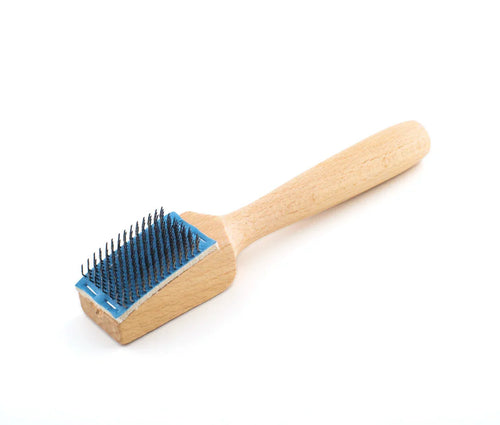
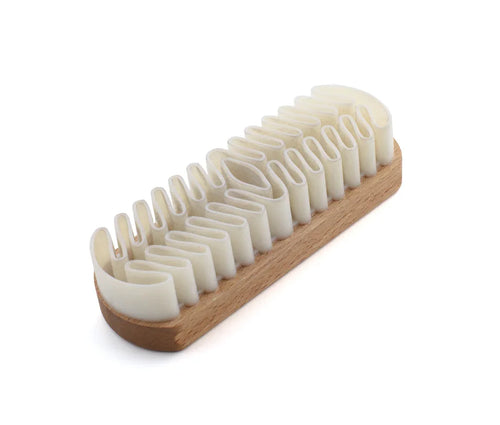
Because the soles are made of suede, they pick up dirt, dust, and wax from the dance floor. After a few nights, you'll notice the soles becoming slippery and starting to shine. They "felt over." This is the moment you pull out your suede brush (you know, that brush with the sharp iron bristles). By regularly roughening up your soles, you pull the fibers of the suede back up. This restores your grip. Always do this from the heel toward the toe, and don't be afraid to use a little force. Your shoes can handle it!
Another golden tip: NEVER wear your dance shoes outside. The suede is extremely vulnerable to moisture and street dirt. One walk across a wet parking lot can permanently ruin your soles. Take them with you in a bag and only put them on once you're inside. And if they're a bit damp from sweat after an intensive class? Let them air dry (not near the heater, as that dries out the leather!). You can put some newspaper inside to absorb the moisture. If you take good care of your Dance Naturals, they will take good care of your feet for years.
Frequently asked questions about Dance Naturals
1. How do Dance Naturals fit in terms of size?
Generally, Dance Naturals fit quite "true to size," but because they are Italian, they can run slightly narrower in the standard models. If you are between two sizes, I often recommend taking the smaller size for Latin shoes, because the leather still stretches and you want them to fit like a second skin. For wide feet, check my special guide.
2. Can I also use Dance Naturals for Ballroom?
Absolutely! Although they are famous for their Latin shoes, they also have beautiful closed models for Ballroom. The quality and the suede sole are exactly what you need for those fluid waltz movements.
3. Are Dance Naturals suitable for beginners?
Yes, especially for beginners! Precisely when you are still learning, you need a shoe that doesn't work against you. The balance and stability of Dance Naturals help you make faster progress without being distracted by foot pain.
4. Why are they more expensive than shoes I see on Amazon or AliExpress?
Girl, cheap is expensive in the dance world. Those cheap shoes often have soles made of cardboard and plastic "leather" that doesn't breathe. They offer zero support and break after three months. Dance Naturals are handmade from real leather and last for years with proper maintenance. You are investing in your own body.
5. How do I clean the top of my shoes?
For satin shoes, you can use a slightly damp cloth with a very small amount of mild soap. For leather models, a good shoe polish or leather balm is fine occasionally to keep the leather supple. But the main focus always remains that suede sole!
6. Do I need heel protectors?
I always say: yes! Heel protectors (clear plastic caps that you slide over your heel) do two things. They protect the actual heel of your shoe from wear and tear, and they give you just that little bit of extra grip. Many dance schools even require them to protect their floors. Dance Naturals has specific caps that fit their heels exactly.
Listen, I could talk about it for hours, but ultimately you have to experience it for yourself. Dancing is passion, it is emotion, and it is connection. All of that is much easier when you're not constantly thinking about that blister on your heel or that pinching toe. Give yourself the best possible start to your dance career. Whether you choose a beautiful pair from the new collection of Dance Naturals or look for a bargain in the sale, you will notice the difference immediately with your first step on the floor.
Do you still have questions or are you unsure about the size? App me or send a message to Miss Salsa's customer service. We are here to help you, because we want nothing more than for you to hit the dance floor with a huge smile. Will I see you at the next social?
Ready to become the star of the dance floor?
Don't wait any longer for those painful feet. Discover the collection and find your perfect match!
Shop Dance Naturals Collection


