

Table of Contents
- Importance of the Right Sole
- Suede Sole for Grip
- Rubber Soles for Outdoors
- Advantages of the Split Sole
- Maintenance of Dance Soles
- Making the Best Choice
- Frequently Asked Questions
Are you finally standing on the dance floor for that perfect double turn, but your feet stay stuck to the ground as if there is chewing gum underneath? Choosing the right dance shoe soles is often the difference between gliding effortlessly over the parquet or going home with burning knees and ankles after an hour of dancing. In my classes, I regularly see students struggling with the wrong amount of grip, while the solution is simply the right sole choice for the specific surface you are dancing on.
Generally, a suede sole is the gold standard for indoor use; the material gives you just enough resistance to stop in a controlled manner, but allows you to turn smoothly without straining your joints. Rubber, on the other hand, is your best friend for outdoor parties or slippery tile floors where suede would be damaged immediately. When I look at the foot technique of my students, I often recommend a split sole for dancing specific styles where the flexibility of your instep and contact with the floor are central. After years of standing on everything myself—from stiff community center floors to mirror-smooth ballroom parquets—I know that your shoes are your most important tool. I’m happy to help you determine which sole will give you the most dancing pleasure.
Importance of the Right Sole
In practice, I often see dancers underestimate the impact of their sole choice. Your soles are the only point of contact between your body and the dance floor; they determine how you turn, how you stop, and how your joints process the load. What I often see with beginners is that they step onto the dance floor with normal sneakers. Although that feels safe because you have a lot of grip, that is exactly where the danger lies. A sole that 'grabs' too much on a wooden floor blocks your movement, meaning the rotational force is not absorbed by your foot, but directly by your knees and ankles. A common mistake is thinking that more grip is always better. In the world of Latin, Salsa, or Ballroom, it’s all about controlled gliding. A good suede sole offers exactly that balance. The material is rough enough not to slip during a powerful push-off, but smooth enough to make a double spin without resistance. When you stand on professional soles for the first time, you immediately notice that your technique improves because you are no longer fighting against the floor, but working with it.Grip versus Gliding Ability
In dance class, it's all about the 'sweet spot'. In practice, I notice that the condition of the floor plays a huge role here. On a smooth competition floor, you need a sole that you can 'roughen up' with a wire brush to create grip. On a stiff, perhaps somewhat greasy café floor during a social dance evening, you want a sole that helps you perform your pivots smoothly. If you choose women's ballroom shoes, for example, the thickness and quality of the suede sole are decisive for how long you can continue dancing comfortably. A sole that is too thin makes you feel every unevenness in the floor, which can result in a burning ball of the foot after an hour of leading or following. A high-quality sole acts as a buffer and distributes the pressure over the entire forefoot, which is essential for your anatomical posture during rapid weight shifts.The anatomy of the split sole
In addition to the material, the construction of the sole is of crucial importance. A much-discussed topic in my classes is the use of a split sole versus a continuous sole. In split sole dancing, the sole is interrupted at the arch of the foot. You see this a lot in jazz and modern dance, but also increasingly in Latin training sneakers. Why is this so important? In practice, a split sole allows you to fully 'point' your foot and stretch your instep. This is not just an aesthetic choice for the line of your leg, but it also trains the small muscles in your arch. A stiff, continuous sole can make the foot lazy. I often advise students who want to work on their footwork to train on a split sole, because you simply get more feedback from the floor. You feel exactly where your center of gravity is, which directly benefits your balance during pirouettes. Be aware that a split sole offers less support to the arch of the foot; if you suffer from flat feet, a sturdier, continuous sole might be the better choice to prevent injuries.Suede Sole for Grip
When you put on a pair of professional dance shoes for the first time, the suede sole is usually the first thing you notice. In the dance world, we also call this material chrome leather, and it's the standard for a reason. What I often see with students transitioning from normal sneakers to real Latin shoes is a kind of 'aha moment' as soon as they make their first pivot. The suede sole offers a very specific resistance that you simply don't find with regular shoes.The balance between gliding and grip
In practice, everything about dance shoe soles revolves around the delicate balance between grip and slip. If your sole is too stiff, like most types of rubber, your joints lock up with every turn. A common mistake is dancing on a stiff wooden floor with shoes that have too much grip. Unfortunately, over the years, I have seen too often how this leads to nasty knee injuries, simply because the foot sticks while the body continues to turn. With a suede sole, you have just enough grip not to slip uncontrollably during a powerful start, but you retain the freedom to turn smoothly on the ball of your foot. The material responds to the pressure you apply; the harder you push, the more grip you experience. This gives you enormous control over your dynamics, whether you are dancing a slow rumba or performing a lightning-fast salsa combination.Split sole dancing and anatomical freedom
A specific point to look out for when purchasing is whether you choose a continuous sole or a split sole. In many jazz dance shoes and modern sneakers, the suede sole is split into two parts. In practice, I notice that advanced dancers often prefer this. 'Split sole dancing' ensures that the shoe is much more flexible under the instep. This has a direct effect on your technique: it allows you to fully 'point' your foot and use your arch to push the floor away. With a stiff, continuous sole, the anatomical movement of your foot is often limited, which can make your dance style stiff. Especially with techniques involving a lot of footwork on the ball of the foot, that extra flexibility of a split sole makes a world of difference.Maintenance for retaining control
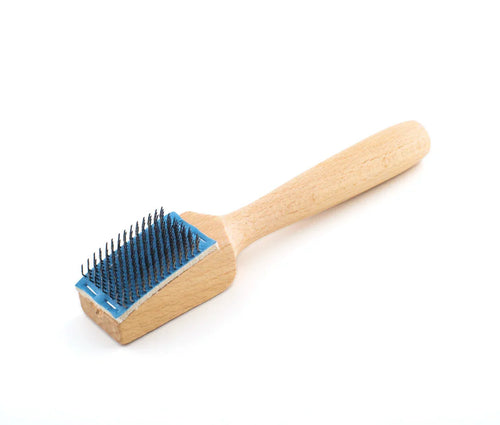
A suede sole is a natural product, which means it needs care. What I often see on the dance floor is that soles become mirror-smooth over time. This is due to a combination of accumulated dust, floor wax, and the flattening of the small suede hairs. At that point, you lose control and dancing becomes a dangerous slide. To prevent this, a good steel shoe brush is indispensable in your dance bag. Here are some practical tips for maintaining your suede soles:- Always brush the soles from heel to toe to 'open' the fibers again and remove dirt.
- Never wear your shoes with suede soles outside; moisture and dirt from the street ruin the leather immediately, making it hard and unusable.
- If the floor is extremely slippery, I often see dancers use a drop of water for extra grip. Be careful with this; too much moisture causes the suede to clump.
- It's better to brush your soles briefly more often than very hard once, to prevent making the leather too thin.
Rubber Soles for Outdoors
What I often see with students who go to an outdoor festival or a summer social on a terrace for the first time is that they take their most beautiful shoes with a suede sole out of the closet. In practice, this is the fastest way to ruin your favorite pair. A suede sole is made for a smooth, clean parquet floor and not for the harsh reality of asphalt, paving stones, or concrete. As soon as suede comes into contact with moisture or street dirt, it loses its unique properties and becomes a hard, slippery cake that you no longer have control over.
For these types of situations, I always recommend switching to rubber. But beware: not every type of rubber is the same. In the dance world, we often use a specific type of smooth rubber that offers just enough grip not to slip, but still allows you to turn without overloading your knees. A common mistake is wearing standard running shoes with a coarse profile. These shoes 'grab' the ground during a spin, causing enormous torsion on your meniscus and ankle joint. Therefore, rather choose specialized dance sneakers that have a sole specifically designed for both grip and rotation.
The balance between grip and turning ability
In my classes, I often explain that dancing on rubber requires a different technique than dancing on suede. Because rubber naturally offers more resistance, you have to be more conscious of your weight transfer. If you are on a stiff outdoor surface and you want to start a double turn, you really have to be 'above' your axis and lift your foot slightly more actively during the turn. What I often see is dancers used to the slipperiness of a suede sole spraining their ankles outside because the shoe suddenly stops while the body still wants to turn.
A good practical tip: always test the floor with a few small spins before going all out. Is the surface too stiff? Then you might consider wearing dance shoes with a smooth rubber sole that has less profile. These soles are often harder and more wear-resistant, meaning they not only last longer on rough concrete but also give you that necessary freedom in your movements.
Split sole vs. Full rubber sole
When we look at the construction of the shoe for outdoors, the term split sole dancing often comes up. A split sole means that the sole consists of two parts, with a flexible middle section of fabric or leather. This is crucial for dancers who need a lot of articulation in their feet, such as in modern, jazz, or certain styles of salsa and bachata. In practice, a split sole gives you the ability to fully point and stretch your foot, even if the sole is made of rubber.
- Full sole: Offers more stability and support under the arch of the foot, which is nice if you are standing on a hard outdoor surface for a longer time.
- Split sole: Gives maximum flexibility. When split sole dancing on rubber soles, you notice that you have much more contact with the floor, which benefits your balance on uneven tiles.
- Hybrid soles: Some modern dance sneakers combine a rubber sole with a small 'spin spot' under the ball of the foot, which is ideal for outdoor locations.
Don't forget the anatomy of your foot either. Dancing on a hard outdoor surface has a greater impact on your joints than dancing on a springy wooden floor. A rubber sole with good cushioning in the heel is therefore not a luxury. I often see dancers who get pain in their shins or lower back after an outdoor party simply because they were standing on soles that were too thin. Invest in a pair specifically made for dancing; your body will thank you after a long night on a stone square.
Advantages of the Split Sole
What I often see on the dance floor is that dancers, as soon as they make the transition to an advanced level, struggle with their footwork. The movements look stiff or the instep doesn't look right. In nine out of ten cases, that's not due to their technique, but to the shoe. A traditional full sole offers a lot of stability, but it acts as a splint for your foot. This is exactly where the split sole makes the difference. In a split sole, the sole is interrupted at the arch, allowing the front and the heel to move independently of each other.Maximum Flexibility and the 'Point'
A common mistake is the thought that a dance shoe is only intended for grip. In practice, your shoe is an extension of your anatomy. Because there is no stiff connection between the heel and the ball of the foot, you can 'point' your foot much more easily. For dance styles such as jazz, modern, or Latin, this is essential. If you wear jazz shoes with a split sole, for example, you immediately feel that the shoe follows the natural curve of your instep instead of pushing against it. This not only has an aesthetic advantage (it simply looks better on stage), but it also helps in strengthening the small foot muscles. Because the shoe offers less support in the arch, your foot has to work harder. What I often see with students who switch is that they have tired feet a bit faster in the beginning, but develop a much more powerful push-off after a few weeks.Better Floor Feel and Articulation
When choosing dance shoe soles, we often look at how smooth they are, but the mobility is at least as important for your balance. With a split sole, you can 'articulate' much more specifically. This means that during a weight transition, you can very consciously roll off the floor from your heel to your toes, or vice versa. In practice, you notice this especially during spins and rapid weight shifts. Because the ball of the foot can move more freely, you can spread your toes better and 'grab' the floor, as it were. This gives a feeling of control that you will never achieve with a continuous sole. For those who spin and jump a lot, dance sneakers with a split sole are often the best choice, because they combine the cushioning of a sports shoe with the suppleness of a ballet shoe.- Better foot line: The shoe accentuates your instep, which is crucial for visual presentation in almost every dance style.
- Muscle development: Because the shoe does not artificially hold up the arch, you train the intrinsic foot muscles with every step.
- Agility: The lack of material in the middle of the foot makes the shoe lighter and more responsive in fast footwork combinations.
- Adaptation to the floor: A split sole allows the foot to adapt to small irregularities or different pressure points on the dance floor.
Maintenance of Dance Soles
In practice, I often see dancers spend hundreds of euros on beautiful shoes, but then dance them 'out' within three months because they completely forget the maintenance. Maintaining your soles is not just a matter of hygiene or aesthetics; it is essential for your technique and the safety of your joints. A poorly maintained sole changes your grip on the floor, which directly influences how you maintain your axis during a turn or how you shift your weight.
What I often see is that beginners only take action when they literally slip on the dance floor. At that point, the suede sole is often already so 'vitrified' that the fibers are flattened and have formed a smooth, shiny layer. This happens through a combination of dust, floor wax, and sweat. A common mistake is trying to clean the sole with water or a damp cloth. Never do this! Water makes the leather hard and brittle, causing the natural flexibility of the shoe to disappear.
How to brush
The only correct way to keep a suede sole in top condition is by regularly using a steel dance shoe brush. In practice, I advise my students to briefly roughen their soles after every two or three lessons. You don't have to scrub hard; it's about bringing the fibers of the suede back 'up'. Here are some specific tips for brushing:
- Always brush from the center of the sole to the outside to prevent damaging the stitching.
- Focus extra on the ball of the foot, as this is the point where the most friction occurs during turning.
- If the sole looks really black with dirt, use short, powerful movements to 'flick' the dirt out instead of pushing it deeper into the leather.
When you notice that you suddenly lose grip during a double spin in salsa class, that's your shoe telling you that the fibers are saturated. For dancers who choose dance sneakers with a split sole, maintenance is slightly different. Because these often have a rubber or synthetic sole, you don't have to brush, but you should pay attention to the buildup of dirt in the grooves. A toothbrush with a little bit of lukewarm water (only on the rubber!) often works best here to restore grip.
Split sole versus full sole maintenance
The concept of split sole dancing involves a specific anatomical aspect. Because the sole is interrupted at the arch, the material at the heel and forefoot receives more individual load. What I often see with men who dance on men's leather dance shoes with a full sole is that the sole wears more evenly, but also becomes stiffer over time. A split sole remains more flexible, but the edges of the suede at the break can come loose faster if you don't check them properly.
A common mistake is wearing dance shoes outside the dance hall, even if it's just for that short walk from the car to the entrance. Street dirt, small stones, and moisture are the biggest enemies of your soles. Stones can prick holes in the suede that you can't repair, and street dirt causes a chemical reaction with the glue of your soles. In practice, this simply means: only put on your shoes once you step onto the dance floor. This extends the life of your soles not by weeks, but by years.
Making the Best Choice
What I often see in practice is that dancers base their choice on what a shoe looks like on top, rather than looking at what's happening under the foot. The most important question you should ask yourself is: what kind of surface am I on most? For most ballroom and Latin lessons on a smooth wooden floor, a suede sole is the gold standard. Why? Because you want to have control over your turns without your joints taking the hit. A common mistake is wearing shoes with too much grip; if your foot stays stuck while your knee continues to turn, you're asking for injuries to your meniscus or cruciate ligaments. Suede offers exactly that 'sweet spot' between gliding and grip.The Anatomy of the Sole: Split Sole vs. Continuous Sole
When choosing the right dance shoe soles, you inevitably face the choice: a full sole or a split sole. In split sole dancing, the sole is interrupted under the arch of the foot. In my classes, I see that advanced dancers often prefer this because it follows the anatomy of the foot. It allows you to fully 'point' your foot and use maximum flexion in your footwork. This is essential for techniques where you have to 'feel' the floor (maintain contact with the floor while moving). Yet a split sole is not the holy grail for everyone. A common mistake I see with beginners is that they choose a split sole when they actually still need some extra stability. If you notice that your ankles are still a bit shaky or if you suffer from a sagging arch, then a continuous sole gives you just that little bit of extra support you need to stand confidently on the floor. For men who are just starting lessons, I often advise starting with sturdy men's dance shoes with a full sole before switching to the more flexible variants.When Rubber is the Better Card
Although suede is fantastic for the studio, it has one major enemy: moisture and dirt. I regularly see students who ruin their suede soles within one evening by walking outside with them or dancing on a sticky floor of a café. As soon as suede becomes wet or saturated with dirt, it loses its unique properties; it becomes either slippery or unpredictably stiff. In practice, I recommend a rubber sole for two specific scenarios. First: outdoor performances or dancing on rough locations such as concrete or paving stones. Second: for dancers who suffer a lot from their joints and need extra cushioning that a thin suede sole simply cannot offer. However, if you choose suede, don't forget to always have a steel sole brush in your bag. By regularly brushing the hairs of the suede back up, you remove the accumulated wax and dirt from the floor, which significantly extends the life of your shoes and keeps your grip constant. Ultimately, it's about your sole supporting your technique instead of working against it.Frequently Asked Questions
What is the main difference between suede and rubber soles?
When choosing between suede and rubber dance shoe soles, it is important to look at the dance floor. Suede soles offer the perfect balance between grip and gliding on wooden floors, which is essential for turning movements. Rubber soles, on the other hand, are rougher and more durable, making them extremely suitable for street dancing or rough surfaces where suede would quickly damage or wear out completely.
Why should I choose a split sole while dancing?
A split sole in dancing offers significantly more flexibility than a full sole. Because the sole is missing under the arch of the foot, you can stretch and point your foot more easily. This is crucial for styles such as jazz or modern, where foot lines are important. It also helps dancers to better develop the muscles in their feet and experience greater, natural freedom of movement.
What is the best way to maintain my suede soles?
Maintaining a suede sole is essential for a long life and optimal grip. Over time, these soles become slippery due to accumulated dirt and wax from the dance floor. Use a special steel dance shoe brush to roughen the hairs of the leather again. Always brush from heel to toe to restore the structure, so that you can turn safely and in a controlled manner again.
Can I wear dance shoes with suede soles outside?
It is absolutely not recommended to wear dance shoes with a suede sole outside. Suede is extremely sensitive to moisture, dirt, and rough surfaces such as asphalt. As soon as the sole gets wet, it loses its unique gliding properties and the material becomes hard and unusable. Therefore, only wear your dance shoes indoors on a clean dance floor and only change shoes once you actually enter the dance hall.
When are rubber soles a better choice than suede?
Rubber dance shoe soles are the best choice when you dance in locations that do not have a professional parquet floor. Think of concrete, tiles, or even outdoor stages. They offer more shock absorption and stability, which helps prevent injuries on hard surfaces. For urban dance styles such as hip-hop or street dance, rubber is the standard because these soles can withstand the friction of rough surfaces and last much longer.
Does a split sole offer enough support for my feet?
Although a split sole is less stiff than a continuous sole, it offers enough support for experienced dancers. The focus with a split sole is mainly on the active muscle strength of the foot itself. For beginners who need extra stability, a full sole can sometimes feel more comfortable. Still, most advanced dancers choose the split sole because of the superior control over foot position and the many aesthetic advantages.
How long do the soles of my dance shoes last on average?
The lifespan of dance shoe soles depends heavily on the intensity of use and the surface. With weekly use on a clean indoor floor, suede soles last an average of one to two years, provided they are well maintained. Rubber soles are generally more wear-resistant and can last longer, even with more intensive use. Once you notice that the grip is disappearing or the sole is becoming dangerously thin, replacement is necessary.
The beauty of the right dance shoe soles is that they not only allow you to move better technically but also give you the confidence to fully immerse yourself in the music. What I especially want to give you is that the choice between suede and rubber really makes a difference in how you experience the floor. Remember above all that a classic suede sole remains the absolute gold standard for that perfect balance between grip and fluid turning movements on a wooden floor. However, if you are looking for more freedom for technical footwork, then a split sole for dancing is the ideal partner to optimally articulate your arch with every step.
The right sole acts as the invisible connection between your passion and the dance floor. Give yourself that extra comfort and precision that fits your unique style; you will notice that your movements immediately feel more powerful and confident. Ultimately, your shoe is an extension of your body and your expression. Step onto that floor with conviction and let yourself be fully guided by the rhythm, knowing that your equipment supports you in every move.


