

Table of Contents
- Classic Flamenco Shoes Men
- Key Features and Materials
- Choosing the Perfect Fit
- Maintenance of Your Dance Shoes
- Combining with Spanish Dance Clothing
- Sound and Zapateado Technique
- Frequently Asked Questions
Have you ever tried to perform a powerful redoble, only to find out that your shoes simply don't produce the sound the dance requires? Good flamenco shoes for men are the dancer's most important instrument; they are distinguished by a solid wooden heel, sturdy cowhide leather, and the characteristic small nails that are manually hammered into the sole for the correct percussion. In my years in front of the mirror in the studio, I have seen countless men struggle with soles that are too flexible or heels that weren't quite stable enough for a tight zapateado.
For the male dancer, the shoe is not a simple accessory, but an essential part of the flamenco clothing that directly influences your technique and posture. Whether you choose the traditional lace-up shoe or the higher botas, the fit must be impeccable to prevent injuries. During my lessons, I often notice that the transition from a standard shoe to an authentic Spanish model is the key to that deep, dry sound we strive for in Spanish dance. I'll take you through the classic styles and share my personal tips for the best investment in your feet, so you can step onto the floor with confidence.
Classic Flamenco Shoes Men
When you start with flamenco, you soon notice that your shoes are your most important percussion instrument. Unlike many other dance forms, here it's not just about aesthetics, but primarily about the sound you make with the floor. What I often see with male dancers transitioning from a standard dance shoe to a real Spanish model is that they have to get used to the weight and stiffness of the sole. A classic flamenco shoe for men is built to absorb shocks and simultaneously produce a crystal-clear 'clavo' (nail) sound.
In practice, the construction of the heel and the sole is the most critical point. For men, the heel is usually slightly lower and wider than for women, often the so-called 'tacón de base' or 'tacón de cubano'. This gives the necessary stability for the powerful foot technique, the zapateado. Although the focus in this section is on the male dancer, you see the same artisanal quality reflected in professional flamenco shoes, where the resonance of the wood and the placement of the nails are decisive for artistic expression.
The Botín: The Standard in Spanish Dance
The most classic style for men is without a doubt the 'botín', the ankle boot with an elastic insert or a zipper on the side. A common mistake I see among beginners is choosing a low shoe because it feels more familiar. However, with the explosive movements of flamenco, you really need the extra support around the ankles that a boot offers. It prevents your foot from 'wobbling' during fast 'redobles' (double strokes).
When putting together your flamenco clothing, it is also important to pay attention to the material of the shoe. In practice, you usually have a choice between two main types of leather:
- Boxcalf (smooth leather): This is the traditional choice for performances. The leather is sturdy, offers a lot of resistance, and has a sharp, clear sound that carries well over the guitar.
- Suede (antelope or serraje): I often see this material in the rehearsal room. It is slightly softer and shapes to the foot more quickly, which is nice during long rehearsals, but the sound is somewhat duller and less 'snappy' than smooth leather.
The Anatomy of the Sole and Nails
An essential detail that distinguishes the classic men's shoe is the thickness of the sole. Many professional models use a 'doble suela' (double sole). This not only adds weight for a more powerful sound but also protects the metatarsals against the constant impact on the wooden floor. A common mistake is to skimp on the quality of the sole; a glued sole often comes loose in the heat of an intensive dance session, while a stitched sole (Goodyear method) lasts for years.
What I often advise is to listen carefully to your own footwork after the first few lessons. Does your 'golpe' (flat stroke) sound hollow or solid? This often depends on the density of the wood in the heel. Just as with the selection of high-quality flamenco shoes for your dance partner, the fit at the heel must be perfect. The shoe must absolutely not slip. In practice, this means that a new shoe should feel almost too tight the first time you try it on; the leather always stretches a fraction due to the heat of your feet, eventually making the shoe feel like a second skin.
Key Features and Materials
In the dance studio, I often notice that male students underestimate the technical complexity of their footwear. A flamenco shoe is not just an ordinary shoe; it is in fact a percussion instrument that you wear on your feet. What I often see in cheaper models is that the sole is far too flexible. This is a problem because, during powerful footwork (zapateado), you need a stiff construction that absorbs the impact. A professional shoe for men therefore usually has a double or even triple leather sole.
Quality Leather and the Right Fit
The choice of material determines how the shoe shapes to your foot and how long it lasts during intensive rehearsals for Spanish dance. Over the years, I've noticed that 'Box-calf' leather offers the best balance. This is a sturdy cowhide leather that feels stiff at first but fits like a second skin after a few weeks of training. A common mistake is choosing a suede (ante) shoe that is too soft for heavy stomping; although suede is immediately comfortable, it tends to stretch too far, causing you to lose stability during fast 'redobles'.
- Box-calf leather: Offers the best support and durability for the 'golpe' (stroke).
- Suede (Ante): More comfortable for sensitive feet but requires more frequent maintenance and stretches faster.
- Inner lining: Always choose a full leather lining to optimally absorb sweat and prevent blisters.
While flamenco shoes for women often have a narrower last for an elegant line, the men's shoe is built for volume and power. The fit should be 'skin-tight' without crushing your toes. If you notice your heel slipping during a 'taconeo', the shoe is too big or the heel counter is not firm enough.
The Anatomy of Percussion: Nails and Heels
The most characteristic aspect of flamenco shoes are, of course, the nails (clavos). What I often see with beginners is amazement at how these nails are applied. They are not only in the heel but also in the toe of the shoe. In a high-quality shoe, these dozens of small nails are hammered in by hand and then ground completely smooth. This ensures that specific dry sound without unnecessarily damaging the dance floor.
The heel of a men's shoe, usually the 'tacón de base' or 'tacón cubano', is lower and wider than what you see on the average flamenco shoes for women. This wide base is essential for the male dance style, which is often heavier and more grounded. A heel height of 3.5 to 4 centimeters is the standard. This gives you just enough lift to shift your weight to the ball of your foot, which is crucial for speed, without losing your balance during complex turns.
Another technical detail I always emphasize to my students is the 'fili'. This is a thin layer of anti-slip rubber placed over part of the leather sole. In practice, I see that dancers without this fili constantly lose grip on slippery wooden stages. It provides the necessary resistance so you don't slip while focusing on your rhythm and presenting your flamenco clothing correctly. So when purchasing, don't just look at the appearance, but inspect the sole as if it were a car engine; it is the foundation of your entire dance style.
If you dance with a partner, it's good to know that the technical requirements for flamenco shoes for women are similar regarding the quality of the nails, but the pressure distribution is completely different due to the higher heel. For men, the focus always remains on that solid, almost architectural sturdiness of the shoe.
Choosing the Perfect Fit
A common mistake I see among male dancers is that they fit their flamenco shoes the same way as their daily sneakers. In Spanish dance, however, it works fundamentally differently. Your shoe is in fact not a piece of clothing, but a percussion instrument. What I often see in practice is that beginners choose a size larger "just in case," but as soon as you start a fast escobilla, you notice your foot starts to slide. That sliding not only causes blisters but also takes the precision and power out of your golpe. In practice, the shoe should feel almost uncomfortably tight around the instep and heel the first time you try it on. The leather will still stretch. Just as with high-quality flamenco shoes for women, it is essential that the heel counter holds your foot firmly in place during up-and-down movements. If your heel rises even a millimeter in the shoe during a taconeo, you lose control over your timing.The Importance of Width and Material
What I often advise students with a wider foot is to look specifically at the ancho (width) of the last. Many Spanish brands use a standard narrow last, which often leads to pressure points at the little toe for men. When fitting, make sure your toes are not overlapping but are pressed firmly against the front. Material plays a major role here. A shoe made of cowhide leather (cuero) is stiffer and offers more resistance, which is pleasant for dancers with a powerful technique. Suede (ante), on the other hand, is much softer and shapes to the foot more quickly. In practice, I see that dancers who put in many hours often prefer leather because it is less likely to "stretch out" after months of intensive use. If you look at the construction of professional flamenco shoes, you see that the sole is often double-layered to absorb the shocks to the joints; this is at least as important for men's models due to the often higher body weight.Practical Tips for the First Fitting Session
When you go to fit your new shoes, there are a few concrete things to look out for to prevent regret after a week:- Always fit your shoes with the socks you also wear during class or performance. A thicker sports sock can completely change the fit.
- Stand up and perform some basic golpes and tacones. The shoe should not pinch at the instep, but you should also feel no space between your heel and the back of the shoe.
- Check the nails in the sole. In high-quality Spanish dance shoes, the nails are filed smooth so they don't tear up the floor but still give that characteristic dry sound.
- Pay attention to the balance. When you stand on the ball of your foot (planta), the shoe should feel stable without tilting inward or outward.
Maintenance of Your Dance Shoes
What I often see with students who have just bought their first pair of professional shoes is that they underestimate the maintenance. You must understand that flamenco shoes for men are not ordinary fashion accessories; they are percussion instruments. The combination of leather, wood, and the steel nails (clavos) in the sole requires a specific approach. In practice, I see that a well-maintained pair lasts up to three times longer than a pair that is simply left in a damp bag after class.
A common mistake is storing your shoes directly in a plastic bag after an intensive rehearsal. Flamenco is physically demanding and your feet sweat considerably during footwork (zapateado). The moisture seeps into the leather and the insole. If you don't let this air out, the leather becomes brittle and the glue joints of the sole can come loose. Take them out of your bag immediately at home and let them dry in a cool place, never near the heater, as this will crack the leather. For partners who dance together, the same applies: the refined flamenco shoes for women also need this rest time to maintain their shape and firmness.
Checking the Nails and the Sole
In practice, the sound of your shoe is your calling card. The nails in the toe and the heel are hammered in with precision to give that characteristic dry strike. A routine I recommend to every dancer is checking these nails weekly.
- Check for burrs: Carefully feel if there are any sharp edges on the nails. These can irreparably damage the dance floor and cause unnecessary friction.
- Check the grip: If the nails wear too smooth, you lose grip during fast turns or powerful remates.
- Loose nails: Do you hear a rattling sound that wasn't there before? Then a nail is likely loose. Go directly to a specialized cobbler before you damage the wooden sole.
It is also essential to look at the wear of the leather at the toe. In many men's styles, the toe is used intensively for puntería (tapping with the tip). If you notice the leather getting thin here, you're actually already too late. Just as with high-quality Spanish dance shoes, you can extend the lifespan by keeping the leather supple with a high-quality beeswax-based shoe cream.
Cleaning and Conditioning
What I often notice is that dancers only think about maintenance when the shoe looks dull. For smooth leather shoes, use a soft brush to remove dust and resin residues (beeswax or colophony from the floor). Then use a small amount of colorless or black cream. Avoid liquid polishes with a lot of silicone; these seal the pores of the leather, preventing it from breathing.
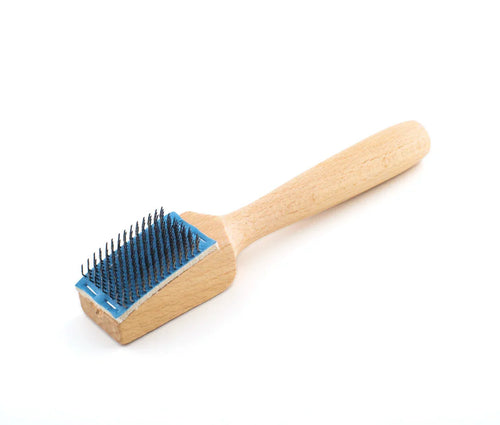
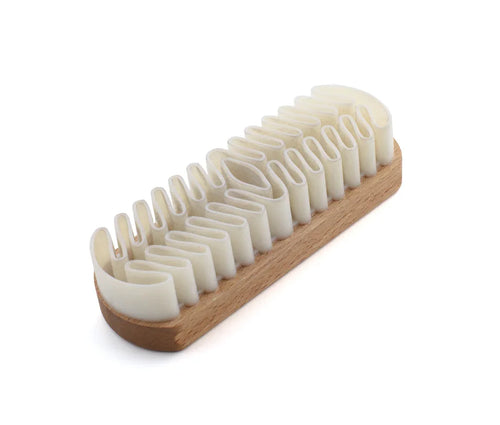
Do you have suede or nubuck shoes? Then absolutely do not use cream. A suede brush is your best friend here. In practice, I often see suede shoes becoming "bald" in the places where they touch each other during dancing. By brushing them regularly, you keep the fibers open and the color deep. Whether you train in heavy men's boots or lighter flamenco clothing and footwear for performances, the discipline you put into your footwork must also be put into your material maintenance. A clean, well-maintained shoe simply responds faster to your movements and gives you the stability needed for complex rhythms.
Combining with Spanish Dance Clothing
When putting together a flamenco outfit for men, everything revolves around the balance between tradition and functionality. What I often see in the dance studio is that dancers underestimate the impact of their choice of trousers on the visibility of their footwork. In practice, your clothing is not just an aesthetic choice but an extension of your instrument: the shoe. The way your trousers fall determines whether your footwork looks 'clean' or whether your movements get lost in excess fabric.The Right Trousers and the 'Talle Alto'
The most classic combination for men is the pantalón de talle alto (high-waisted trousers). These trousers are specifically designed to lengthen the line of the body and support the back during heavy zapateado sessions. A common mistake is choosing a trouser leg that is too wide or too long. If the fabric falls over the heel of your shoe, this not only muffles the sound but you also run the risk of the nails in the heel getting caught in the hem. Ensure that the trouser legs taper narrowly and rest exactly on the instep of the shoe. This emphasizes the angle of the foot during planta and tacón strikes. Where with flamenco shoes for women the focus is often on the interplay with the skirt, for men, it is about the sleek, architectural line of the leg that flows directly into the shoe.Material Use and Color Coordination
Although black is the standard for performances, in practice I see more and more men experimenting with materials such as suede (ante) for their footwear. Suede has a slightly softer sound and a matte appearance that combines beautifully with a wool chaleco (vest) or a cotton shirt. If you choose brown or burgundy shoes, it is essential that your belt or faja (sash) stays in the same color family to maintain visual calm. When selecting materials for Spanish dance clothing, it is important to take the heat into account. Flamenco is physically elite sport; choose breathable fabrics that do not restrict your freedom of movement. A slim-cut shirt should never pull at the shoulders when you bring your arms into the braceo position.Practical Tips for the Dance Floor
To take your presentation to a higher level, I have a few practical guidelines that I always give to my students:- Always wear black socks that are high enough. Nothing distracts more from good footwork than a strip of white skin becoming visible between the shoe and the trousers during a jump or fast turn.
- Check that your belt or faja is tight enough to keep your chaquetilla (short jacket) in place. A jacket that rides up disrupts the line of your back and makes your footwork look optically heavier.
- In the studio, I often see men training in regular trousers. This is fine, provided the fabric is not too heavy. Heavy fabrics hide the subtle knee bends needed for good technique.
- Ensure the quality of your clothing matches your footwear. Investing in professional flamenco shoes is step one, but ill-fitting trousers can ruin the entire look of your dance.
Sound and Zapateado Technique
In the world of flamenco, your shoe is not just part of your outfit; it is your instrument. Where a guitarist has strings, the dancer has the sole of his foot. Producing a clear, powerful sound – the zapateado – is one of the most challenging aspects of the dance. In practice, I often see beginners think they have to stomp on the floor as hard as possible to generate volume. This is a common mistake that leads not only to a dull sound but also to injuries to the knees and lower back. Good sound comes from technique and the quality of your material. The nails (tachuelas) hammered into the toe and heel of professional flamenco shoes must be flattened with precision. If these nails are not well distributed, you get an irregular tone that disrupts the compás (the rhythm). What I often notice with students who switch from an entry-level model to a professional shoe is that their footwork immediately sounds sharper without them having to use more force.The Anatomy of the Strike
To produce a rich variety of sounds, we use different parts of the foot. The technique of the zapateado is built from four basic elements:- Golpe: The whole foot hits the floor at the same time. This should be a full, dry strike while the ankle remains relaxed.
- Planta: The ball of the foot. This is often the starting point for fast combinations. Just as with high-quality flamenco shoes for women, the thickness of the sole here is crucial for the balance between sound and cushioning.
- Tacón: The heel. The movement comes from the knee and the ankle, with the heel being driven powerfully downward while the planta stays on the ground.
- Punta: The tip of the shoe. This gives a percussive, tapping sound often used for accents in the music.
Power versus Precision
An aspect that is often overlooked is the role of the floor in combination with the shoe. A wooden floor works like a soundbox. When you train, it is essential to listen to the 'color' of your sound. Is it sharp and clear, or does it sound muddy? A common mistake is tensing the entire leg musculature. This blocks the natural vibration of the shoe. What I often advise is to practice at a lower volume. If your technique is good, the zapateado still sounds defined even when performed softly. This requires a shoe with a sturdy shaft and a perfect fit. The shoe must sit like a second skin around your foot; every millimeter of space between your foot and the insole causes a delay in the sound. When choosing flamenco clothing and footwear, the functional support of the arch is more important than just aesthetics. Ensure the heel height fits your build and experience, so you maintain full control over every strike you make.Frequently Asked Questions
What are the best flamenco shoes for men?
The best flamenco shoes for men are made of high-quality cowhide leather or suede. For optimal performance, choose shoes with a sturdy heel and a stitched sole. Professional models often have extra reinforcement at the toe and heel, including carefully placed nails. Brands like Gallardo or Senovilla are known for their excellent quality, durability, and ability to produce a clear, powerful sound while dancing.
Why are there nails in the sole of flamenco shoes?
Nails in the sole of flamenco shoes are essential for creating the characteristic percussive sound of Spanish dance. These small nails are manually hammered into the heel and the toe and then filed smooth. This allows the shoe to function as a musical instrument. The nails amplify the sound of the footsteps, allowing the dancer to make complex rhythms clearly audible to the audience and musicians.
How should flamenco shoes for men fit?
Flamenco shoes should fit snugly, almost like a second skin, without painfully pinching. It is important that your foot does not slide in the shoe, as this reduces control over the footwork and can cause blisters. Keep in mind that leather stretches slightly over time. Preferably choose a size that feels tight but where your toes can still lie flat for stability.
What is the difference between professional and beginner flamenco shoes?
The main difference lies in construction and sound quality. Professional flamenco shoes have a hand-stitched sole, better sound resonance, and are made of more durable leather that withstands intensive use. Beginner models are often cheaper, have a glued sole, and fewer nails. For serious practitioners of Spanish dance, investing in professional quality is recommended, as these shoes offer better support and produce a superior sound during practice and performance.
What flamenco clothing do men wear while dancing?
Men traditionally wear tight, high-waisted trousers (pantalón de talle alto) combined with a form-fitting shirt. Often a short vest (chaquetilla) or a wide fabric belt (faja) is worn over this. The clothing must offer sufficient freedom of movement for the legs and arms, while the tight fit accentuates the dancer's proud posture. Good flamenco clothing, together with the right shoes, forms the basis for an authentic presentation.
How do you maintain flamenco shoes for a long lifespan?
To keep your flamenco shoes in top condition, you should let them air out after every class, but never place them directly near a heat source. Use shoe trees to maintain the shape and polish the leather regularly with a high-quality cream. Also regularly check if the nails in the sole are still smooth; if they protrude or become rough, they can damage the dance floor. Good maintenance significantly extends the lifespan.
What should you look for when buying your first pair?
With your first pair of flamenco shoes, the balance between comfort and sound is crucial. Pay attention to the height of the heel; for men, a standard heel height is usually the most stable. Choose real leather instead of synthetic materials for a better fit and breathability. Although price is important, mid-range shoes often offer the best value for money for beginners learning the basics of Spanish dance.
The beauty of flamenco is that every step you take directly translates your passion and power into the rhythm of the music. What I especially want to tell you is that the right flamenco shoes are not just an accessory; they are your most important instrument on the dance floor. Always pay attention to the quality of the leather and the precise finish of the nails in the heel and toe, because that ultimately determines the clarity and impact of your taconeo. While you perfect your own technique, it's good to know that a harmonious appearance on stage makes all the difference. Are you looking for a wonderful gift for a dance partner or do you want to appear in style together? View our women's flamenco collection for options that seamlessly match authentic flamenco clothing.
Above all, remember that flamenco is a journey that never truly ends. Every time you put on those shoes, you step into a centuries-old tradition of expression and pride. Let your feet speak, keep pushing the boundaries of your rhythm, and feel the raw energy of Spanish dance in every fiber of your body. The wooden floor is waiting for your unique sound.


