

Table of Contents
- Jive Shoes for Speed
- Swing and Lindy Hop Choices
- Importance of Good Cushioning
- Zumba and Street Dance Alternatives
- Ballerina Shoes and Terminology
- Tips for the Right Grip
- Frequently Asked Questions
Are you standing halfway through an uptempo song suddenly 'stuck' to the floor while your partner tries to spin you around? In my years on the dance floor, I have seen countless students struggle with regular sneakers that simply have too much grip for the explosive footwork of the jive. Good jive shoes are essential: these are lightweight dance shoes with a suede or leather sole that offer the perfect balance between stability for powerful kicks and enough glide for smooth spins and turns.
During my lessons, I immediately notice who has made the right choice; the difference in technique and endurance is often enormous. When you switch from everyday footwear to specific swing shoes, you not only relieve your knees and ankles with every landing, but you also get that much-needed speed in your lindy hop triples. These shoes aren't just about the iconic vintage look – although those two-tone models obviously look fantastic on the floor – it's about the technical support with every bounce. Whether you're just starting with your first basic steps or have been tearing up the floor at social dance nights for years, the right sole under your feet determines whether you'll keep up with those fast tracks with ease or have to drop out early with muscle fatigue.
Jive Shoes for Speed
In practice, I often see dancers underestimate the speed of the Jive. As soon as the music goes above 40 bars per minute, every gram on your feet counts. A common mistake I see in beginners is trying to dance in standard sneakers with a thick rubber sole. While that might seem comfortable for cushioning, the massive grip of rubber ensures your knees take a significant hit with every turn. In a dance where 'flicks and kicks' follow each other at lightning speed, you need footwear that works with you, not against you. What I often advise my students is to look critically at the flexibility of the sole. In a fast chassé, you want the shoe to move with the natural arch of your foot. If a shoe is too stiff, you lose direct contact with the floor, which makes your balance uncertain during explosive movements. Good jive shoes usually have a suede sole that offers exactly the right balance between grip and glide. After all, you don't want to slip during a powerful rock-step backward, but you do want to be able to make that effortless spin without your ankle locking up.Grip versus Glide on the Dance Floor
In the swing scene, it's all about the nuances of the floor. A wooden floor in a local dance school reacts very differently than a smooth synthetic floor during a competition. What I often see is dancers struggling with their speed because their shoes 'stick' too much. For the fast footwork patterns of the Jive and the lindy hop, a sole made of chrome leather or suede is essential. This material allows you to stay on the ball of your foot, which is crucial for speed.- Sole thickness: A thinner sole gives more 'floor feel', allowing you to react faster to tempo changes.
- Material weight: Choose lightweight materials such as canvas or supple leather to prevent calf fatigue.
- Heel stability: Ensure the heel counter is firm so your foot doesn't slide inside the shoe during lateral movements.
The Anatomy of the Foot during Fast Changes
Anatomically, the forefoot absorbs most of the impact during the Jive. While teaching, I notice that dancers who experience pain in their shins or the ball of their foot are often dancing in shoes with insufficient shock absorption under the metatarsals (the midfoot bones). Good cushioning in your swing shoes is not a luxury, but a bitter necessity if you want to be on the floor for longer than half an hour. A technical detail I always emphasize: pay attention to the space at the toes. Your toes must be able to spread to provide stability during the landing of a kick. If your shoes are too pointed, you pinch the muscles in your foot, which immediately lowers your reaction speed. In practice, this often means choosing a model specifically designed for the dynamics of swing dancing, where the last is often slightly wider at the forefoot. This gives you the necessary foundation to perform those fast triple steps tightly and controlled, without losing control of your footwork halfway through the song.Swing and Lindy Hop Choices
In practice, I often notice that dancers moving from Jive to Lindy Hop or other Swing styles underestimate their shoe choice. Although the dances are related, the technique is substantially different. Where in Jive you often dance more compactly and 'on your toes', Lindy Hop requires a deeper 'bounce' and more floor contact from the entire foot. What I often see is people trying to swing in regular sneakers with a rubber tread sole. That is a recipe for knee injuries. Because you make many turning movements in Swing (think of the follower's classic swivels), your sole must be smooth enough to relieve your joints, but grippy enough not to slip during a powerful rock-step.The balance between grip and glide
A common mistake is choosing a shoe that is too slippery. If you stand on a mirror-smooth parquet floor with polished leather, you lose control over your 'anchor'. In my experience, suede soles work best for most Swing styles. Suede gives you that subtle resistance needed to push off for a fast triple step, while remaining supple enough for spins. When I teach, I often advise students to look at specific swing shoes that have a thin, flexible sole. You want to be able to feel the floor; a thick sole removes the communication between your foot and the dance floor, making your balance uncertain during fast tempos.Flat or a heel: what does anatomy say?
In the Lindy Hop scene, you see a clear division between flat shoes and low heels. What I often see with followers is the doubt: "Should I dance in heels for the aesthetics, or in flats for comfort?". My advice is always based on your technique and physique:- Flat shoes (Keds-style): Ideal for the authentic 'low bounce'. It forces you to distribute your weight well over the ball of the foot without overstraining your calves.
- Low heels (3-5 cm): Often better for dancers with a shorter Achilles tendon or people used to ballroom. It helps bring your center of gravity slightly forward, which is essential for connection with your partner.
- Wedges: An excellent compromise. They offer the stability of a flat sole but still give you that slight elevation that helps with posture.
Importance of Good Cushioning
In practice, I often see dancers underestimate the impact of an evening of Jive or Lindy Hop. You're not just swaying a bit; you're constantly in motion with fast kicks, bouncy triple steps, and sudden stops. What I often see with beginners is that they start in sneakers with a thin, flat sole. After an hour on the dance floor, I see them standing on the sidelines with a grimace, rubbing their heels or shins. That is exactly where good cushioning makes the difference between happily reaching the last dance round or sitting on the couch with paracetamol the next day. A common mistake is the assumption that 'softer is better' is the rule. That's not true. If you dance on pillows that are too soft, you lose control over your balance and your ankles wobble in all directions during a fast turn. It's about targeted cushioning, especially under the ball of the foot and the heel. During Jive, you almost always land on the forefoot. While the anatomy of your foot is built to absorb shocks, the repeated stress of the fast 4/4 beat requires extra support. Good swing shoes often have a hidden layer of EVA foam or a gel inlay that absorbs the biggest hits of the kick-ball-change without losing contact with the floor.Prevent injuries through repeated impact
In the dance world, we often call it 'dancer's knees' or 'shin splints'. In practice, this is almost always caused by a combination of a hard floor and footwear without spring. When you land a Lindy Hop aerial or make a powerful Jive kick, three to four times your body weight ends up on your joints. Without proper absorption, that energy goes directly to your ankles, knees, and eventually your lower back. Here are a few things I personally look for when advising students:- Check if the insole is removable. This is handy if you want to add extra orthopedic insoles later.
- Feel if the shoe is thicker under the ball of the foot; this is where you spend most of your time during a fast swing.
- Look at the thickness of the heel. Even a small elevation helps take pressure off your heels during rest moments in the music.
The balance between spring and 'floor feel'
What I often explain in my lessons is that you need 'floor feel' to dance well technically. If you have too much cushioning, like in a thick running shoe, you no longer feel the floor and can turn less sharply. Specific jive shoes are therefore designed so the sole is thin enough to 'read' the floor, but technical enough to filter the impact. Another aspect often forgotten is lateral stability. During a fast swing-out, you don't want your foot to slide over the edge of the sole. The cushioning must therefore be stable. If you notice your arch hurting after a dance class, that's often a sign your shoes are too flexible and offer too little support upon landing. Invest in high-quality lindy hop shoes that combine a sturdy heel counter with a springy sole. Your joints will thank you in ten years, and you'll notice your technique improves faster because you no longer subconsciously hold back your movements to avoid pain.Zumba and Street Dance Alternatives
What I often see in the dance school is students walking into a Zumba or street dance class with their standard fitness sneakers. In practice, this is a recipe for knee injuries. Running shoes are designed for forward motion and have a tread intended to provide grip on asphalt. When you make a fast pivot or a turn on a wooden floor with these, your foot "sticks" while your knee continues to rotate. This is exactly where the technique from the swing world comes in.
A common mistake is the assumption that you necessarily need a clunky sneaker for cushioning in Zumba or street dance. While cushioning is important for the many jumps, the rotation of the forefoot is crucial. Therefore, I often advise looking at swing shoes as an alternative. These shoes often have a sole made of suede or a special type of smooth rubber (spin-spots) that allows you to turn effortlessly without overstraining your meniscus. In my own classes, I notice that dancers who switch to a shoe with a smoother sole experience much less joint pain after an intensive session.
The balance between grip and sliding
In street dance, you see a lot of footwork that seems directly derived from the old Lindy Hop and Charleston of the '20s and '30s. Think of the fast kicks and the "shuffles". In practice, a heavy sneaker only works against you. What you need is a shoe flexible enough to roll your foot properly. A good option is lindy hop shoes, as these combine the aesthetics of a sneaker with the technical properties of a dance shoe.
Pay attention to the following points when purchasing, which I find essential for both Zumba and urban styles:
- The Spin-point: Check if there is a circular pattern under the ball of the foot. This significantly reduces friction during turns.
- Sole material: For a tiled floor or a rough floor, a synthetic sole is useful, but on a professional dance floor, nothing beats suede.
- Weight: The lighter the shoe, the faster your footwork. Heavy soles make you slow during fast Jive steps or Street dance combos.
Why Jive shoes also work outside the ballroom
It might sound illogical to wear jive shoes during a street dance class, but the anatomical support is often superior to that of a fashion sneaker. In Jive, you do many "kick-ball-changes" where the pressure is constantly on the metatarsus (the midfoot bones). Dance shoes are extra padded in that spot. If you dance on your forefeet a lot during a Zumba class, this specific padding prevents your feet from burning.
What I always tell dancers: don't just look at the label on the box, but feel how the shoe reacts to the floor. A shoe technically designed for the speed of Jive can make a world of difference in your mobility during a street dance choreography. It's about the shoe supporting your movement instead of slowing it down. If you find yourself struggling with fast foot changes, there's a good chance your shoe sole offers too much resistance. Switch to a model with a smoother finish; your knees and your speed will thank you.
Ballerina Shoes and Terminology
In the dance world, we often use different terms for what most people simply label as 'ballerinas'. What I often see with dancers just starting with swing styles is the assumption that any flat shoe is suitable for hitting the floor. In practice, however, there is a world of difference between a fashionable ballerina for the street and a functional dance shoe. The correct name and corresponding design are crucial for your technique and, even more importantly, the long-term health of your joints.The 'Mary Jane' and the necessity of fixation
A common mistake I see at social dance nights is wearing slip-on ballerinas without a strap. Although this looks elegant, it is frankly risky for the fast footwork patterns of the Jive or Lindy Hop. When you perform a 'flick kick' or a fast triple step, the shoe must fit your foot like a second skin. As soon as your toes have to subconsciously 'claw' to keep the shoe in place, you block the natural movement of your arch and ankle, which can quickly lead to cramping. That's why we often advise the 'Mary Jane' style in class. This is essentially a ballerina with a sturdy strap over the instep. This strap ensures the shoe doesn't fly off during a powerful swing out or a fast turn. For dancers who prefer an authentic vintage look, these swing shoes are often the best choice because they combine the aesthetics of the 1940s with necessary modern support and grip.Technical features: Sole and Flexibility
What I often see is that dancers overlook the anatomy of the sole when choosing their footwear. A standard ballerina from a fashion store often has a rubber sole with far too much grip. In Jive, where you constantly turn on the ball of the foot (the area around the metatarsals), too much friction can lead to nasty knee injuries because your foot 'sticks' to the floor while your body is already turning. A real dance ballerina has a sole adapted to the wooden dance floor.- Suede soles: These offer the perfect balance between gliding and controlled grip. They are ideal for well-maintained wooden dance floors and give you lots of feedback from the floor.
- Hard leather soles: These are often seen in classic lindy hop models. They are smoother than suede and force you to dance more from your core for balance, which ultimately benefits your technique.
- Padding and cushioning: A good dance flat has extra shock-absorbing padding under the heel and the ball of the foot to absorb the impact of fast movements.
Tips for the Right Grip
Grip is one of the most underestimated parts of your equipment in Jive. In practice, I notice that many dancers only start thinking about their soles when they either almost slip during a fast kick-ball-change, or when their knees start to ache after an evening of swinging. A common mistake is the assumption that 'more grip' is always better. In an explosive dance like the Jive, where the tempo is often above 40 bars per minute, the right balance between gliding and grip is essential for your safety and technique.
What I often see with students just starting out is that they dance in shoes with a rubber sole that is simply too grippy. When you start a spin or make a fast turn, your foot must be able to pivot on the ball of the foot. If your sole 'bites' into the floor, that torsion is directly transmitted to your ankle and knee joint. Therefore, I always advise looking at specific swing shoes with a suede or smooth leather sole. These materials give you just enough resistance to push off powerfully, but also let you turn effortlessly without your joints taking the hit.
The Balance on Different Floors
In practice, unfortunately, you don't always have control over the dance floor. One time you're on a perfectly maintained parquet floor, the next on a rough sports floor in a community center. A technique I always apply myself is adjusting the 'roughness' of my soles to the conditions of the day. Here are a few concrete tips I always give my students:
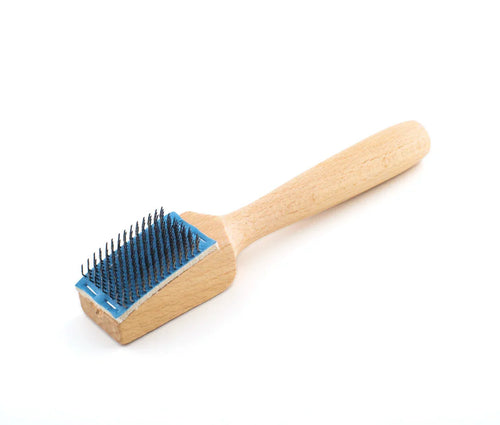
- Use a steel sole brush to raise the hairs of your suede soles again when they become smooth due to dust and wax.
- If the floor is extremely slippery, you can drip a little water on a towel and step on it with the ball of your foot; this temporarily gives extra grip for those fast kicks.
- On a floor that is too rough, a drop of dance floor powder or even a tiny bit of talcum powder on the sole can work wonders, although you should be careful with this so as not to hinder others.
It is important that your jive shoes fit well around the instep, so your foot doesn't slide inside the shoe while you try to find grip on the floor. If your foot 'swims', you lose control over your balance, which immediately limits your speed.
Technique and Anatomy of the Grip
Besides the material of the shoe, grip also comes from how you distribute your weight. A common mistake I see in Lindy Hop and Jive is that dancers keep their weight too much on their heels. For optimal grip, your center of gravity must be above the metatarsals (the midfoot bones). This is the widest part of the forefoot where you have the most control over friction with the floor. By leaning slightly forward in your basic posture, you 'load' the sole of your shoe, allowing the suede to make optimal contact with the wood.
In practice, this means your shoe must be flexible enough to allow this bending of the foot. A stiff sole prevents you from feeling the floor, which slows your reaction time. So make sure you choose shoes that move with the anatomy of your foot, so you're not just dancing on your shoes, but really making contact with the dance floor. This subtle difference in feeling is often what distinguishes a dancer struggling with the tempo from a dancer flying across the floor with apparent ease.
Frequently Asked Questions
Which shoes provide lots of cushioning?
For dancers looking for lots of cushioning, special dance sneakers from brands like Bloch or Rumpf are excellent. These shoes are often equipped with an air cushion or shock-absorbing materials in the heel. This is essential for intensive dance styles such as jive or aerobics, where joints need extra support to effectively prevent injuries during jumps and fast movements.
Where to buy Zumba shoes?
It's best to buy Zumba shoes at specialized dance stores or through major online sports shops. Popular brands like Zumba Fitness itself, Reebok, and Nike offer models specifically designed for lateral movements and turns. Pay close attention to the sole when purchasing; it must be smooth enough to turn but provide enough grip on various sports floors.
Which shoes for street dance?
For street dance, sturdy sneakers with good grip and ankle support are the best choice. Many dancers choose classics like the Adidas Superstar or Nike Air Force 1 for their durability and iconic style. It's important that the shoe provides enough support for explosive movements and jumps, while the sole remains flexible enough to move fluidly across the dance floor.
What are ballerina's shoes called?
A ballerina's shoes are officially called ballet shoes or pointe shoes. Beginners usually wear soft ballet shoes made of leather or canvas with a full or split sole for flexibility. Advanced dancers use pointe shoes, which have a hardened toe allowing them to dance on the tips of their toes. Although jive shoes are very different, they share the need for a snug fit.
What are the best swing shoes for Lindy Hop?
The best swing shoes for Lindy Hop have a smooth sole, often made of suede or leather. This allows you to easily turn and slide without straining your knees. Brands like Aris Allen are popular because they combine the authentic vintage look with modern comfort. A flat sole or a low heel is ideal for the fast and energetic footwork that characterizes this dance style.
Why do I need special jive shoes instead of sneakers?
Special jive shoes are necessary because regular sneakers often have too much grip on the dance floor. In jive, you make many fast turning movements and kicks; a grippy rubber sole can then lead to nasty knee injuries. Jive shoes have a specific sole that offers the right balance between grip and smoothness, allowing you to move faster, smoother, and safer during this intensive dance form.
How do I maintain the soles of my suede swing shoes?
Maintaining suede soles on your swing shoes is crucial for optimal performance. Use a special steel sole brush to regularly roughen the suede when it has become smooth or dirty from dust on the dance floor. Avoid wearing these shoes outside on the street, as moisture and rough surfaces can permanently damage the suede. This way, you always maintain perfect control.
The beauty of jive and lindy hop is the boundless energy released as soon as the music starts. What I especially want to tell you is that the right shoes make the difference between awkward sliding and that perfect, controlled swing. Remember above all that good support and a smooth sole are essential to save your joints during those fast kicks and turns. If you really want to shine on the dance floor, it pays to invest in quality jive shoes specifically designed for these dynamic styles. A pair of good swing shoes not only gives you the necessary confidence but also ensures your technique is effortlessly taken to a higher level. Ultimately, it's about your feet being able to keep up with your pace effortlessly, so you can lose yourself completely in the rhythms of the big band. Let your shoes do the heavy lifting, so all you have to do is


