

Table of Contents
- Benefits of Suede Soles
- Suitable Shoes for Dancing
- Perfect Swing and Jive Shoes
- Lindy Hop versus Street Dance
- Maintenance of Your Dance Shoes
- Where to Buy Dance Shoes
- Frequently Asked Questions
Have you ever tried making a fast triple step on a sticky floor and felt your knees protest immediately? For most dancers, Lindy Hop shoes with suede soles are the only right choice, because these soles offer the ideal balance between controlled sliding and sufficient grip on wooden dance floors. In my years as an instructor, I have seen countless students struggle with standard sneakers that simply provide too much resistance, which not only hinders your technique but also puts unnecessary pressure on your joints.
Whether you are just starting your first lessons or have been on the floor for years for an energetic Jive, the right sole determines how freely you move. I remember well the moment I switched from rubber to suede; it was as if I truly regained control over my feet for the first time during a fast swing out. Good swing shoes should give you the ability to turn effortlessly without losing grip during a powerful push-off. In this guide, I share my practical experience on choosing the best jive shoes and explain why that specific layer of leather under your foot makes the difference between a stiff movement and that characteristic, fluid flow that we love so much in the swing community.
Benefits of Suede Soles
What I often see with dancers switching from regular sneakers to their first pair of real dance shoes is an immediate 'aha moment'. In practice, the sole is the most important point of contact between you and the dance floor. In swing dances like Lindy Hop and Jive, everything revolves around freedom of movement, and that is exactly where suede soles make the difference. Unlike rubber, which often has too much grip, or hard leather, which can sometimes be dangerously slippery on a freshly polished wooden floor, suede offers that coveted 'sweet spot'.
Perfect Balance between Grip and Sliding
A common mistake beginners make is thinking that grip is always good. However, in an energetic dance like Lindy Hop, you are constantly making fast rotations, pivots, and slides. If your soles are too sticky, you literally stick to the floor while your body already wants to turn. This creates enormous friction. Suede soles allow you to slide in a controlled manner when necessary, but also give you the required traction to push off powerfully for a fast triple step. When you invest in quality swing shoes, you will notice that you waste much less energy 'fighting' against the resistance of the floor.
- Controlled spins: You can make multiple turns without your ankle locking up.
- Adaptability: Is the floor too slippery? Then roughen the suede with a wire brush. Is the floor too sticky? Then the suede will naturally become smoother after a few songs.
- Floor feel: The thin, flexible structure of suede ensures that you feel the floor under your feet, which is essential for your balance and technique.
Protection of your Knees and Joints
In practice, I unfortunately regularly see dancers stop due to knee injuries that could have been prevented. The anatomy of the knee is not built for the torsion (rotational force) that occurs when your foot is fixed on the ground while your knee turns. This is exactly what happens with rubber soles during a fast swingout or a tuck turn. Suede soles act as a kind of safety valve; they allow your foot to rotate with the rest of your leg.
Good lindy hop shoes with a suede bottom not only absorb the shocks of the kick-steps but also relieve your joints during the lateral movements that are so characteristic of the Jive. I always advise my students not to skimp on this aspect. A shoe specifically designed for social dancing often also has better pressure distribution under the ball of the foot, which prevents burning feet after a long night of social dancing.
What many dancers also appreciate about suede is the lightness. Compared to heavy leather soles, suede soles feel almost like slippers. This is crucial when the tempo of the music goes up to 200 BPM and your feet have to keep up with the tempo of the big band. Do make sure to wear these shoes exclusively indoors; outside, the suede wears away within minutes on asphalt and loses its unique properties for the dance floor.
Suitable Shoes for Dancing
What I often see on the dance floor is that beginners start on their daily sneakers. Although that is fine for the first lesson, in practice you quickly notice that rubber soles literally work against you. In a dance like Lindy Hop, where the 'pulse' and constant weight transfer are central, you want shoes that work with you instead of sticking to the floor. A common mistake is underestimating the friction; if you start a pivot or a quick turn on a sticky floor, your knees and ankles absorb the blow that your shoe should have absorbed by sliding.
The Balance between Grip and Sliding
In practice, everything revolves around the control over your slide. Good swing shoes almost always have a sole of suede or smooth leather. Suede is the favorite of many advanced dancers because it has a unique property: it offers just enough grip not to slip during a powerful push-off for a swingout, but lets you turn effortlessly without straining your joints. When I teach, I immediately notice who is standing on the right soles; their movements are more fluid and they have less trouble with balance during fast triple steps.
- Turning ability: Suede ensures that the ball of your foot can rotate freely, which is essential for the typical 'swivels' of the follower.
- Feedback from the floor: A thinner suede sole lets you feel the floor better, which benefits your balance and technique.
- Cushioning: Although the sole is smooth, the insole must provide enough cushioning for the constant 'bounce' in the music.
From Keds to Oxfords: The Right Model
Another point I often give advice on is the shape of the shoe. In the Jive, which is often faster and more athletic than the average social Lindy Hop dance, you often see people choosing lighter, flexible shoes. For men (and women who prefer to dance flat), classic Oxfords with a suede sole are the standard. These offer the structure needed for sharp footwork. For the women, I often see hesitation between flat shoes and a small heel. My advice is always: choose a heel of maximum 3 to 4 centimeters if you want more stability during turning, but make sure the heel is wide enough.
In practice, I see that specific lindy hop shoes often have a slightly wider toe box. This is no coincidence; your toes need space to spread during the landing of a jump or a fast kick-step. If your shoes are too narrow, you lose part of your natural balance system. For the fast kicks and high energy of the Jive, you need dance shoes for women that fit firmly around the instep, so your foot doesn't slide inside the shoe. Nothing is as annoying as a blister that develops because your foot shoots forward half a centimeter with every 'rock step'.
Don't forget that the anatomy of your foot changes during an evening of social dancing. Due to the heat and exertion, your feet expand slightly. What I often do is re-tie my laces after the first half hour of dancing. Good quality leather shoes mold to your foot over time, making them feel like a second skin. This is exactly why investing in a pair of real dance shoes often makes the difference between having to sit down after two songs or going on effortlessly all night on the dance floor.
Perfect Swing and Jive Shoes
In practice, I often see that dancers underestimate how much influence their soles have on their technique. What I often see with beginners is that they step onto the dance floor with standard sneakers with rubber soles. While that feels fine while walking, it becomes a serious problem as soon as you start to speed up in a Lindy Hop routine or an energetic Jive. Rubber "bites" into the floor. During a fast turn or a swivel, your feet stick, while your knees and ankles want to keep rotating. This is a common mistake that not only spoils your dancing pleasure but can also cause long-term injuries to your ligaments.
Real lindy hop shoes with suede soles solve this problem immediately. Suede offers that elusive balance between grip and glide. You have enough grip to push off powerfully for a triple step, but you can also pivot effortlessly without friction. In my experience, the difference is immediately noticeable in your balance; you stand "firmer" on the floor because you don't have to constantly fight against the resistance of your shoe sole.
Stability for Kicks and Swivels
In the Jive, the tempo is often a lot higher than in the average swing dance. Here I often see dancers choosing shoes that are too loose or offer too little support at the instep. Because in the Jive you are constantly dancing on the ball of your foot and making many fast 'kicks', the shoe must fit your foot like a second skin. A shoe that slips at the heel causes you to unconsciously curl your toes to maintain grip, which leads to cramping in your arch.
If you look at the anatomy of the movement, you see that in Lindy Hop the 'bounce' comes from the knees and ankles. Good swing shoes must be flexible enough to absorb this vertical movement. When trying them on, pay particular attention to the following points that make the difference in practice:
- The thickness of the suede sole: Too thin and you feel every pebble or impurity on the floor; too thick and you lose the contact ("floor feel") with the dance floor.
- The heel height: For Lindy Hop, I often advise flat shoes or a very low heel (maximum 2-3 cm) to keep your center of gravity low. In Jive, a slightly higher, stable heel can help keep your weight forward on the ball of the foot.
- Flexibility of the midsole: You must be able to fully stretch and bend your foot without the shoe working against you.
Maintenance on the Dance Floor
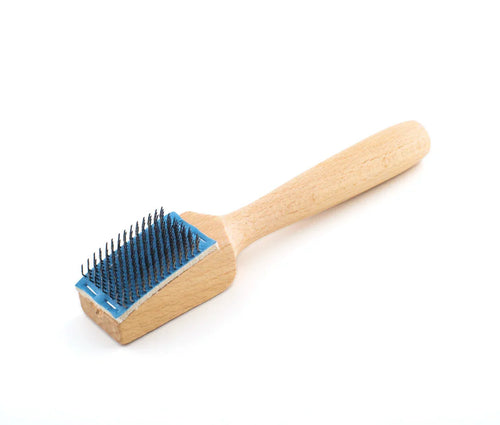
A practical detail that is often forgotten is that suede soles need maintenance. In practice, I see soles become smooth and hard after a few months due to a combination of dust, floor wax, and wear. You notice this immediately because you start to slip during your rock steps. A steel sole brush is therefore indispensable in your dance bag. By brushing the fibers of the suede rough again, you restore the grip you need for those controlled slides.
What I also often advise my students is to wear these shoes strictly indoors only. Suede is like a sponge for moisture and dirt from outside. Walking across a wet sidewalk once and your sole loses its unique gliding properties. In practice, I see that dancers who only put their shoes on at the entrance of the hall not only make their materials last longer, but also dance much more consistently because their soles are always in top condition.
Lindy Hop versus Street Dance
What I often see with dancers transitioning from street dance or hip hop to the swing world is a slight confusion about the role of the floor. In street dance, your shoe is your anchor; you need grip to make explosive movements and stop sharply on concrete or a sports floor. In Lindy Hop, however, the floor is your partner. Instead of pushing off against the surface, you use the smoothness to be able to slide and swivel effortlessly. In practice, this means that the thick rubber soles of your favorite sneakers, which are perfect for a street dance choreography, become your greatest enemy during a social dance evening. A common mistake is that beginners think 'comfortable shoes' are synonymous with sports shoes. Although they feel soft, the enormous amount of friction from rubber ensures that your knees absorb the blows that your feet should actually dissipate through a turn. If you try to swivel on a sticky sole, your ankle blocks and that torsion goes directly into your knee joint. That is why I always recommend students to switch as quickly as possible to real swing shoes with a suede sole, because they offer exactly the right balance between control and slip.The mechanics of the slide versus the grip
If we look at the anatomy of the movement, you see a fundamental difference in how you place your weight. In street dance, you often stay 'grounded' with a focus on power from the upper legs. In Lindy Hop, we work with a constant 'pulse', where your weight is more on the ball of the foot. A suede sole under your lindy hop shoes enables you to convert that pulse into a sliding movement without losing your balance. What I often advise during class: try a 'mess around' or a 'skating' step. On rubber soles, this feels stiff and heavy. On suede, it feels like you are floating across the floor. That difference in resistance is crucial for the flow of the dance. Where street dance is about isolations and sharp accents, Lindy Hop is about the flow between you and your partner. Too much grip breaks that connection because you are literally stuck to the wooden floor of the dance hall.Why your knees will thank you
A technical detail that is often overlooked is the impact on the meniscus and the cruciate ligaments. In practice, I unfortunately regularly see dancers who, after a year of intensive swinging on regular sneakers, complain about a nagging pain in the knees. This is almost always due to the lack of the ability to turn on the ball of the foot. Good jive shoes or swing-specific models often have a thinner sole than street dance sneakers, giving you much more feedback from the floor. You feel where your weight is, which is essential for fast footwork variations. In street dance, you need that cushioning for jumps, but in Lindy Hop, 'proprioception' – the ability to feel how your foot is positioned – is many times more important. Switching from the street to the dance floor? Leave those heavy sneakers in your bag and choose a sole that allows you to slide. It changes not only how you dance, but also how long you can keep it up on the dance floor without injuries.Maintenance of Your Dance Shoes
What I often see during an intensive dance weekend is that dancers start complaining about sticky floors after a few hours. Often, however, it is not the venue but the state of their own soles. A suede sole is designed to keep a tiny layer of air between the shoe and the floor, which gives you that characteristic 'slide'. But through friction, dust, and sweat, that soft suede quickly turns into a smooth, hard plate in practice. We call this 'glazing', and it is the greatest enemy of your spins and turns. If you invest in quality lindy hop shoes, it is essential to keep that sole 'open'.The technique of brushing
A common mistake is that dancers only grab their shoe brush when they are literally slipping across the floor. My advice? Be proactive. Use a special steel shoe brush to bring the fibers of the suede back up. What I often see is that people brush too carefully. You can apply quite some force; you really want to loosen the accumulated dirt and compressed fibers. Always brush from the middle towards the sides. This restores the grip needed for powerful push-offs during a swingout. Preferably do this before every social dance evening, so you don't have to leave your partner halfway through a song to save your soles. Well-maintained jive shoes ensure that your knees are less stressed because the shoe offers the correct resistance for fast kicks.Moisture control and anatomy
Lindy Hop is a physical sport and your feet take a beating. An aspect that is often forgotten is what sweat does to the anatomy of your shoe. The leather and the suede sole absorb moisture, making the material soft and vulnerable. In practice, I often see dancers leaving their shoes in their bag after a lesson. This is disastrous. The leather cannot 'breathe', leading to unpleasant odors and, even worse, deformation of the shoe at the ball of the foot.- Take your shoes out of your bag immediately after dancing to let them air dry.
- Use cedar shoe trees; these extract moisture from the leather and maintain the shape of the toe, which is crucial for your footwork.
- Never put your shoes near a heater. The heat dries out the natural fats in the leather and the suede, causing the sole to become hard and potentially crack.
- Wear your swing shoes exclusively indoors. A short walk across the sidewalk to the car is enough to irreparably damage your suede soles with moisture and street dirt.
Where to Buy Dance Shoes
What I often see with beginning dancers is that they do their first lessons in regular sneakers with rubber soles. In practice, however, you quickly notice that rubber 'bites' too much into the dance floor, which is disastrous for your knees during a fast swivel or a Lindy Turn. The search for good shoes often starts online, but a common mistake is that dancers only look at the appearance of the shoe and forget the technical construction of the sole. For a dance style where you constantly shift your weight on the ball of your foot, you need a sole that slides just enough, but also gives sufficient feedback from the floor.Specialty Shops and Dance Stores
In practice, I always advise students to look at stores that specifically focus on vintage-style dancing. A regular sports store is not going to help you find the right suede finish. When you look at professional swing shoes, you see that the construction is often lighter than a standard shoe. This is essential for the fast footwork patterns in the Jive or Charleston. When buying, pay attention to the following points:- The flexibility of the sole: You must be able to point your foot easily without the shoe working against you.
- The heel closure: During an active swingout, your heel must absolutely not slip out of the shoe; this causes instability in your entire posture.
- Thickness of the suede: Suede that is too thin wears away within a few months on a rough wooden floor, while suede that is too thick takes away the connection with the floor.
The Alternative: Customizing Your Own Shoes
One method I see many experienced dancers use is buying a quality 'normal' shoe and having it fitted with a suede sole by a specialized shoemaker. This is an excellent option if you have difficult feet or need specific width sizes that are hard to find in standard dance collections. You can then choose a pair of sneakers or neat leather shoes that fit perfectly and have a 'stick-on' suede sole put under them. Still, I often give the advice to invest in specific jive shoes for the faster dance forms. Why? Because these shoes are designed from the inside out to handle lateral forces. A regular sneaker is made for forward movement (walking or running), while in the swing world we are constantly pushing and turning sideways. The anatomy of a real dance shoe supports the arch of your foot in a way that prevents injuries from overuse. Remember that the floor you dance on also determines where you buy your shoes. Do you dance a lot on the street during festivals? Then suede is less convenient and you're better off looking for hard leather soles. But for the weekly social dance evening in the local dance hall, a specialty store with suede options remains the best investment you can make for your dance career.Frequently Asked Questions
Which shoes for Lindy Hop?
For Lindy Hop, shoes with smooth soles are essential to be able to turn and slide smoothly without straining your knees. Most dancers choose suede or leather soles. Vintage-style leather oxfords or sneakers like Keds with a glued-on suede sole are very popular. Make sure the shoes offer enough support and have a low heel for good balance during fast swing music.
Which shoes are suitable for dancing?
Suitable dance shoes depend on the dance style, but in general, they should have soles that do not mark and provide the right balance between grip and slide. For ballroom and swing, suede soles are ideal for wooden floors. Avoid standard sports shoes with heavy rubber treads, as this stickiness can cause knee injuries during turning movements. Always prioritize flexibility, light weight, and a firm fit when choosing.
Which shoes for street dance?
Street dance requires shoes with excellent shock absorption and ankle support due to the explosive movements and jumps. High-top sneakers or specialized dance sneakers with a split sole are often used for extra flexibility. Unlike lindy hop shoes, street dance shoes usually have rubber soles for more grip on various surfaces. Brands like Nike, Adidas or specific dance brands like Bloch offer excellent options for this energetic and physically demanding dance style.
Where do you buy Zumba shoes?
You can buy Zumba shoes at specialized dance stores or large sports shops. Online retailers and specific dance webshops also often have a wide range of shoes with "pivot points" on the sole, which is crucial for the lateral movements in Zumba. Look for lightweight sneakers with breathable mesh and sufficient cushioning to protect your joints during these intensive cardio sessions where you turn, jump, and move sideways a lot.
What are the benefits of suede soles for swing dancing?
Suede soles are the gold standard for swing dancing because they provide the perfect amount of "slip" on wooden dance floors. This allows for effortless turns and slides, while still maintaining enough control not to slip. Unlike hard leather, suede provides more feedback, making it easier to perform complex footwork in Lindy Hop or Jive without unnecessarily overstraining your joints.
How do you maintain the suede soles of dance shoes?
Maintaining suede soles is crucial for the life and performance of your dance shoes. Over time, the suede becomes flat and smooth due to dirt and floor wax. Use a special steel shoe brush to roughen the fibers again and remove dirt. Always brush from the center outwards as soon as the soles feel smooth. Never wear these shoes outside to prevent damage.
Can I use regular sneakers as swing shoes?
You can use regular sneakers for swing dancing, but these often need adjustments. Standard rubber soles provide too much resistance, which can lead to knee and ankle injuries while turning. Many dancers solve this by covering the soles with duct tape or gluing a layer of suede underneath. If you choose sneakers, look for lightweight, flat models like Keds, which offer the necessary flexibility.
The beauty of dancing on suede soles is that you finally find that perfect balance between control and freedom on the floor. What I especially want to tell you is that the right shoes not only improve your technique but also increase your enjoyment because your knees and ankles are much less stressed with every fast turn or slide. Remember above all that a good sole gives you the confidence to dance those energetic triple steps and kicks with full commitment, without being afraid of slipping or sticking to the parquet.
If you are ready to give your feet the support they deserve, be sure to take a look at our swing shoes collection. Here you will find models that have been specifically selected for the unique dynamics of the Lindy Hop and Jive. The right lindy hop shoes simply make the difference between tired feet and the feeling that you are floating across the floor. The music is the heartbeat of the dance, but your shoes are the wings that really bring your movements to life. The dance floor is waiting for your unique rhythm.


