

Table of Contents
- Essentials for Suede Maintenance
- Step-by-Step Plan for Suede Soles
- Choosing the Best Cleaning Product
- Refreshing Grip and Color
- Common Cleaning Mistakes
- Frequently Asked Questions
You often only notice it during a quick turn or a sudden stop: your dance shoes feel like you're standing on ice instead of a high-traction wooden floor. Cleaning suede soles is essential to restore grip; you do this by carefully brushing away accumulated dirt and flattened leather hairs with a special wire brush. Proper dance shoe care not only extends the life of your valuable material but also prevents nasty injuries from unexpected slips.
In my years on the dance floor, I have seen countless students who thought their shoes were simply worn out, when they actually just needed a thorough maintenance session. I always keep a small wire brush in my bag as standard, because as soon as the sole becomes saturated with dust and floor wax, you immediately lose control over your footwork. It's a small task taking less than five minutes that makes a world of difference in how you move across the floor. In this guide, I'll explain how to effectively handle this shoe maintenance without damaging the delicate suede, so you can start that next salsa or tango with full confidence.
Essentials for Suede Maintenance
In the years I've spent on the dance floor, I've seen countless dancers slip because their soles had become 'slippery'. Often they think the shoe is worn out, but in reality, the structure of the suede is just full of accumulated dust, floor wax, and skin oils from the floor. To restore your grip without damaging the fibers, you need the right set of tools. Good shoe maintenance doesn't start with an expensive machine, but with a few specific hand tools that should actually be in every dance bag.
The Suede Brush: Your Most Important Tool
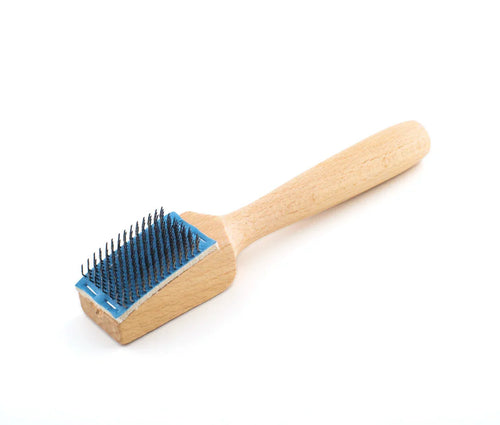
The absolute basic for every dancer is a steel suede brush, also known as a sole brush. What I often see is people using a regular shoe brush with soft bristles, but that only pushes the dirt deeper into the leather. A good sole brush has stiff, metal bristles that pull the flattened fibers 'open' again. In practice, I often see dancers forgetting to clean the brush regularly; if there is too much dirt between the bristles, you're just moving the problem from one shoe to the other. A quality brush from our collection for dance shoe care is essential to maintain that necessary friction with the floor, especially on slippery parquet floors.
- Steel sole brush: Indispensable for roughening the sole and removing deep-seated dirt and wax.
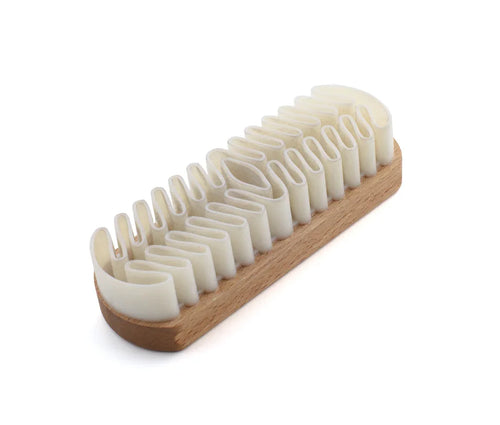
- Suede gum or eraser: Perfect for removing specific stains or black streaks often picked up during a busy social dance night.
- Protective spray: To prevent moisture and dirt from soaking directly into the delicate fibers.
- Microfiber cloth: For dry-wiping the sides of the sole after an intensive training session.
Cleaning Products and Protection
In addition to the brush, a good suede cleaner is not an unnecessary luxury. A common mistake I see beginners make is using water to clean the soles. Water actually causes the suede to become hard and stiff after drying, which results in the loss of your shoe's flexibility. Instead, use a foam or liquid specifically developed for delicate leather. If you invest in professional products for cleaning your shoes, you significantly extend the life of your soles and maintain the anatomical shape of the sole.
In practice, I notice that the condition of your soles directly influences your technique. If your soles are too slippery, you unconsciously start 'clenching' your toes more to maintain grip, which can lead to cramps or unnecessary fatigue in the arch of the foot. By briefly brushing your soles weekly and providing thorough care monthly with the right products, you maintain that perfect balance between sliding and grip. Make sure you always have these basic essentials with you, so you can also quickly roughen your soles during a workshop if the floor feels unexpectedly slippery due to humidity in the hall.
Step-by-Step Plan for Suede Soles
In practice, I often see dancers who only take action when they are literally sliding across the floor. A common mistake is thinking that suede soles are maintenance-free, while grip is the essence of your control during spins and stops. What I often see with students is that the sole turns into a smooth, shiny surface after a few months of intensive use. This happens because the fine hairs of the suede (the 'nap') get flattened and saturated with dust and floor wax from the dance floor. To extend the life of your salsa shoes, a regular routine is essential.
The right technique with the dance shoe brush
The most important tool in your bag is the steel dance shoe brush. I often notice that dancers are too cautious, or conversely, press much too hard, which tears the suede. The trick lies in short, powerful movements. Instead of long strokes across the entire sole, work in small sections from the heel to the toe. You're not just trying to remove the dirt, but also to comb the fibers 'up' again.
When using products from our collection for professional shoe care, I always advise holding the brush at a slight angle. This allows you to also reach the edges of the sole, where the most wax often accumulates. A good indicator is the sound: a healthy suede sole makes a rustling sound when you run your thumb over it, while a dirty sole is almost silent and feels greasy.
Dealing with sticky soles and stubborn dirt
What I often see at social dance nights is drinks being spilled. If you step into a puddle of soda or beer with your suede soles, there's no need to panic, but speed is required. A common mistake is to start brushing immediately while the sole is still wet; this only rubs the sugary moisture deeper into the fibers. Let the shoe dry naturally first (never near a heater, as that dries out the leather and makes the sole brittle).
- Step 1: Inspection. Check if there are stones or metal splinters in the sole. This often happens if you've accidentally walked outside. Remove these manually before brushing.
- Step 2: Dry brushing. Use the steel brush to loosen the top layer of dust and dried wax. Preferably do this over a trash can, as a surprising amount of dust is released.
- Step 3: Restoring the fibers. Brush against the direction of the fibers to bring back the grip. If you notice the sole remains slippery in certain spots, you can apply a bit more pressure there.
- Step 4: Heel maintenance. Don't forget the heel sole. Although smaller, this is the point where you often place your weight during a turn.
In practice, I advise briefly brushing your soles after every two to three dance sessions. Don't wait until you lose control during a double turn. Good shoe care is not just a matter of aesthetics, but primarily of safety on the floor. A well-maintained sole ensures that the anatomy of your foot is optimally supported, because you won't unconsciously curl your toes to find grip on a slippery floor. This prevents long-term injuries to the plantar fascia and calves.
Choosing the Best Cleaning Product
What I often see in dance class is students panicking as soon as their soles lose their grip. The first impulse is often to hold the sole under the tap or use an aggressive all-purpose cleaner. A common mistake, because suede is a natural product that is extremely sensitive to moisture and chemicals. In practice, the "best" cleaning agent for suede soles is often not a liquid at all, but a mechanical action. Suede soles work via small fibers (the 'nap') that create friction on the dance floor. When you dance, dust, skin oils, and floor wax accumulate between these fibers, causing the sole to 'vitrify' and become slippery as ice. To solve this, you need tools that set the fibers upright again without affecting the structure of the leather. For daily shoe care, a steel sole brush is your most important tool.Dry cleaning versus liquid products
In most cases, I advise against liquid products unless there are stubborn oil stains or extreme contamination. If you notice that your salsa shoes remain slippery even after brushing, you might consider using a specific suede cleaner. Pay attention to the following:- Avoid oil-based products: Many standard leather care products contain oils or waxes to keep leather supple. For a suede sole, this is disastrous; it immediately sticks the fibers together, causing you to lose all grip.
- Suede Erasers (Suede gum): This is a fantastic 'dry' product. It works like an eraser that pulls dirt out of the fibers. I especially recommend this for lighter stains that you can't get rid of with a brush.
- Specific Suede Shampoo: Use this only if the sole is truly black from accumulated dirt. Apply it minimally and ensure the sole does not become soaked.
The role of a good sole brush
Real dance shoes for men and women have a sole that is alive. The maintenance product you choose must respect this. A steel brush with a wooden handle is the standard in the dance world. What I often see is dancers brushing too cautiously. Don't be afraid to apply some force; you literally have to break open the accumulated layer of dirt to bring the soft fibers underneath back to the surface. If you still want to use a liquid for extra traction, I often see dancers in practice use a drop of castor oil. Although this is technically not a cleaning agent, it is often mentioned in the same breath as maintenance. However, be extremely careful with this. Too much oil permanently ruins your sole and makes the dance floor dangerous for others. The best approach remains: dry brush 90% of the time, and only switch to a specialized suede cleaner that doesn't disturb the pH value of the leather in exceptional cases. Consistency is more important here than the strength of the product; anyone who briefly runs the brush over the soles after every dance night will find that aggressive cleaning agents are simply never necessary.Refreshing Grip and Color
What I often see in dance class is that dancers only think about maintenance when they almost lose control during a spin. A common mistake is waiting until the sole is completely "vitrified" – that moment when the suede is so flattened and filled with dirt that it shines like a mirror. In practice, this means you no longer have contact with the floor, which is disastrous for your technique and safety. Good shoe care for women begins with understanding that suede is a natural product that must be able to breathe and whose fibers (the "nap") must be open for optimal friction.
The technique of roughening
To restore grip, you cannot avoid using a steel sole brush. I notice that many beginners are hesitant to apply force, but you really have to go deep enough to remove the accumulated dirt and wax residue from the dance floor. An effective method I always recommend is to brush from the center of the sole toward the edges. Here are a few points to watch for during this process:
- Always brush away from yourself to prevent the sharp steel bristles from damaging your hands or the rest of the shoe.
- Concentrate on the ball of the foot; this is the point where most pressure is applied during turning and where the sole becomes slippery fastest.
- If you notice the sole is very greasy, you can use a small amount of special cleaning agent, but do so sparingly. Too much moisture can damage the glue layer under the suede.
When you notice that your dance shoes still feel slippery after brushing, the suede is probably too worn out or the pores are clogged by too many oily products. In that case, a more thorough cleaning is needed before you can restore the grip.
Revitalizing color and appearance
In addition to grip, the color of the suede is often a point of concern. Over time, black soles turn gray due to dust, and light soles become dingy. What I often see with intensively used shoes is that the sides of the sole start to fray and lose their deep color. This not only looks unkempt, but it can also affect how the shoe fits around your foot. By treating the sole regularly, the material remains supple and you prevent the suede from drying out and cracking at the base of the heel.
A practical tip I always give my students: after brushing, use a color-restoring spray specifically intended for suede. Be sure to cover the top of your shoe with a cloth so that no spray gets on the satin or leather of the rest of the shoe. For men looking for a professional appearance on the dance floor, it's essential that the men's dance shoes have a sole that looks as sharp as the upper. A deep black, well-brushed sole radiates authority and precision in your footwork.
Keep in mind that the color of the sole will never be 100% like new again, simply due to contact with different floor types. However, by keeping the fibers open and removing dirt in time, you prevent that typical "gray haze". The result is a shoe that not only performs better but also looks well-cared for on stage or during a social dance night. Consistent maintenance significantly extends the life of your investment, meaning you won't have to have new soles fitted by the cobbler as soon.
Common Cleaning Mistakes
What I often see in the dance studio is that dancers only take action when they are literally sliding across the floor. At that point, the sole is often so saturated with dirt and floor wax that a simple brushing is no longer sufficient. Maintaining suede soles is a skill in itself, and in practice, I notice that many dancers unconsciously damage their expensive shoes through bad habits. A good shoe care routine starts with understanding what suede actually is: an open structure that provides grip through friction. As soon as that structure clogs up, you lose control over your spins and stops.
Water and liquids are the biggest enemy
The most common mistake I encounter is using water or liquid cleaning agents on the sole. Suede is extremely absorbent. When you use water to remove a stain, the fibers contract and dry hard. Instead of a soft, non-slip sole, you end up with a sole that feels like a hard plank. This is disastrous for the flexibility of your salsa shoes, where you specifically need that connection with the floor for your footwork.
I also often see dancers trying to make their soles more non-slip by wetting them briefly with a damp cloth or, even worse, by standing in a puddle of a drink at the bar. This might give five minutes of extra grip, but as soon as it dries, the sole is slipperier than ever before. The moisture causes the accumulated dirt and wax from the dance floor to settle deeper into the fibers, creating a kind of 'glaze layer' that is almost impossible to remove without shaving the sole bare.
Wrong brushes and techniques
Another common mistake is using a regular shoe brush or even a toothbrush. These are simply not powerful enough to pull the compressed dirt out of the deep suede fibers. For effective shoe maintenance, you really need a steel sole brush. But beware: things often go wrong even with the right brush. I often see students scrubbing their soles with enormous force. This doesn't loosen the fibers; it literally pulls them out, making your sole thinner and thinner.
In practice, I see these mistakes most often:
- Pressing too hard: You want to "lift" the fibers, not sand down the sole. Use short, controlled movements.
- Brushing in the wrong direction: Always brush from heel to toe or in circles, but don't alternate chaotically. This keeps the suede structure healthy.
- Brushing while the sole is still damp: If your shoes are wet from sweat after an intensive social, let them dry completely first before grabbing the brush. Wet suede is fragile and tears more easily.
- Forgetting the sides: Dirt often accumulates at the edges of the sole. If you ignore this, it spreads over the entire surface again during the next dance session.
A student recently asked me why her new bachata shoes had lost their grip after only three weeks. After one look at the soles, I saw the problem: they were "polished" by a combination of floor wax and skin oils because she touched the shoes with her hands while putting them on. Avoid direct contact with the soles; the natural oils on your hands are enough to make the fine suede hairs stick together. Keep your soles pure and treat them only with the right tools to significantly extend the life of your dance shoes.
Frequently Asked Questions
What is the best way to clean suede shoes?
To get suede shoes clean in the best way, use a special suede brush for surface dirt. Remove stubborn stains with a suede eraser or a slightly damp cloth with a drop of white vinegar. Always brush gently in one direction to maintain the texture. Avoid excessive water, as this causes rings. Regular maintenance prevents dirt from penetrating deep into the delicate fibers.
How do you clean suede shoe soles?
Suede shoe soles, such as those on dance shoes, should be cleaned with a steel suede brush. Brush vigorously to remove accumulated dirt and wax and set the fibers upright again. This restores the necessary grip on the floor. Never use water on the soles; this makes the suede hard and slippery after drying. Regular brushing after each use is essential for optimal sole maintenance.
Which cleaning product for suede?
For suede, it is best to use specialized cleaning products, such as suede foam or a mild cleaning spray. As a home remedy, a mixture of water and white natural vinegar works effectively against light stains. Avoid aggressive all-purpose cleaners or soap, as these pull the natural oils out of the leather. Always test a new cleaning product on an inconspicuous spot first to check if the material discolors or becomes damaged.
How can I refresh the color of my suede shoes?
You can refresh the color of suede shoes by using a color-restoring spray that matches the shade of your shoes. First brush the fibers up before applying the spray evenly. After drying, brush the suede again for a soft texture. Sometimes simply roughening the fibers with a brush already helps to make the deep, original color visible again.
How often should I brush the soles of my dance shoes?
It is advisable to briefly brush suede soles after each use with a special dance shoe brush. This prevents dirt and floor wax from accumulating and making the sole slippery. Through this routine, you maintain the optimal grip and flexibility needed for safe dancing. It also significantly extends the life of your shoes by preventing the suede fibers from permanently clogging.
What to do if suede shoes have accidentally become wet?
Always let wet suede shoes dry naturally, away from direct heat sources such as a radiator. Fill the shoes with paper towels to maintain the shape and absorb moisture. Once they are completely dry, use a suede brush to gently roughen the fibers again. Never use a hair dryer, as the intense heat can cause the suede to shrink, deform, or even crack.
How can I prevent stains on suede shoes in the future?
Prevention is better than cure in suede maintenance. Treat your new shoes immediately with a high-quality waterproofing spray that repels water and dirt. Repeat this protection every few months, especially during wet seasons. This creates an invisible barrier that makes liquids less likely to soak into the fibers. This makes daily maintenance much easier and ensures your shoes look like new for years.
The beauty of well-maintained suede soles is that you feel the difference immediately as soon as you step onto the dance floor. It gives you that perfect balance between grip and sliding that makes every movement effortless. Remember above all that regular brushing with a wire brush is essential to keep the leather 'open' and that you must avoid moisture at all costs. By investing just a few minutes a week in your dance shoe care, you significantly extend the life of your favorite pair.
Nothing is more frustrating than slippery soles during an important turn, so make sure you always have the right tools in your bag. For the best results and a long-lasting shine, take a look at our women's shoe care collection, where you'll find everything to keep your shoes in top condition. What I especially want to share with you is that good shoe maintenance is not just about hygiene, but about respect for your passion and your own body. Give yourself that extra bit of grip and confidence; your feet deserve to perform at their best with every beat you hit.


