

Table of Contents
\n- \n
- Characteristics of Swing Clothing \n
- The Perfect Lindy Hop Outfit \n
- Accessories for Vintage Dancers \n
- Comfort and Freedom of Movement \n
- Shoes for the Dance Floor \n
- Maintenance of Vintage Clothing \n
- Frequently Asked Questions \n
Nothing is more frustrating than starting a triple step and realizing halfway through that your skirt is too tight or your shoes have absolutely no grip on the wooden floor. Good swing clothing is actually much more than just a nostalgic costume; it is in fact functional sportswear in a stylish 1930s and 40s jacket. In the years that I have been teaching, I have seen countless dancers struggle with stiff fabrics that restricted their freedom of movement, while they were specifically looking for that fluid flow to the music.
\n\nA successful vintage dance outfit must be able to breathe and move effortlessly with every kick-ball-change. I still remember my own first Lindy Hop weekend where I showed up in a beautiful but heavy authentic wool jacket. Within ten minutes, I was completely soaked and could barely lift my arms for a simple tuck turn. Nowadays, I always advise my students to look for specific Lindy Hop clothing that leaves room at the shoulders and hips. Whether you choose a flowy A-line skirt that flares beautifully during a turn or high-waisted trousers with suspenders, the right balance between aesthetics and comfort determines how long you can keep it up during an intensive social dance on a Saturday night.
\n\nCharacteristics of Swing Clothing
\n\nIn practice, I often see dancers choosing an outfit that looks beautiful in a photo but becomes uncomfortable after the first swing out. Real swing clothing must not only have that iconic 1940s and 50s look but also be able to withstand the physical demands of an intense Lindy Hop session. The most important aspect I always emphasize to my students is the balance between authenticity and functionality. You want to look like you stepped straight out of the Savoy Ballroom, but you also need to be able to sweat and move unhindered.\n\nFreedom of Movement and the 'Swing Factor'
\n\nA common mistake is wearing clothing that is too tight around the shoulders or hips. In Lindy Hop and Charleston, you make large, explosive movements. What I often see is ladies choosing a pencil skirt because it looks so vintage, but in practice, this limits your footwork enormously. A good vintage dance outfit for ladies has a skirt that flares out (A-line or circle skirt) and falls just at or over the knee. This not only provides the necessary space for your legs but also gives that beautiful visual 'swish' during turns.\n\nFor the gentlemen, a similar principle applies. Instead of modern, tight slim-fit trousers, look for pants with a high waist and wide legs, often with a pleat. This gives you the space to go deep into your knees in your 'pulse' without the fabric pulling. When picking out swing clothing, also pay specific attention to the armholes of shirts and dresses; these should be cut high. If the sleeve insertion is too low, you pull the entire torso of your garment up as soon as you lift your arms for a tuck turn.\n\nMaterial and Breathability
\n\nSomething often underestimated by beginners is the heat on the dance floor. After three high-tempo songs, a polyester dress or a heavy wool blazer is a recipe for overheating. In practice, natural fabrics such as cotton, linen, or viscose (rayon) work best. Viscose is my personal favorite because it has the weight and 'drape' of vintage fabrics but breathes and moves flexibly.\n\n- \n
- \nHigh Waist: Essential for both men and women to maintain the 1940s silhouette while remaining comfortable during bending. \n
- \nLayering: As a gentleman, always wear an undershirt under your shirt to absorb perspiration, and as a lady, wear dance shorts under your skirt for complete freedom of movement. \n
- \nSturdiness: Buttons and zippers endure a lot. Check if your clothing is double-stitched at the seams, especially in the crotch and under the armpits. \n
The Basics: Shoes with the Right Grip
\n\nYour shoes are perhaps the most critical part of your outfit. A common mistake is dancing on rubber soles that offer too much grip on a wooden floor, which is disastrous for your knees during spins. For an authentic experience, I recommend leather dance shoes for men or women with a smooth sole (leather or suede). This allows you to slide and turn in a controlled manner without your joints absorbing the impact. For women's heels, ensure the heel is not too high (maximum 4-5 cm) and stands firmly under the heel; stability is more important than height when performing a fast Charleston kick.\n\nThe Perfect Lindy Hop Outfit
\n\nIn practice, I often see dancers initially focusing entirely on the aesthetics of the 1930s and 40s, but after three high-tempo songs, they realize that their choice of clothing does not match the physical reality of the dance floor. Lindy Hop is an energetic, almost athletic dance where you sweat, jump, and turn. An outfit that looks beautiful in a photo can work completely against you during an intense Swing Out. What I often notice at social dance evenings is that the most experienced dancers choose a balance between authentic vintage details and modern functionality.
\n\nFootwear and Anatomy: The Foundation of Your Dance
\n\nA common mistake among beginners is wearing sneakers with too much grip or heels that are too high and unstable. In Lindy Hop, everything revolves around the 'pulse' and contact with the floor. In practice, I see that dancers who dance on shoes with thick rubber soles often develop knee problems because they cannot pivot smoothly. You want to be able to slide without slipping. Therefore, I always recommend investing in quality vintage dance shoes with a smooth sole of chrome leather or hard leather. This relieves your joints during fast turning movements and ensures that you can distribute your weight correctly over the ball of your foot, which is essential for good technique.
\n\nClothing for the Follow: Movement and Modesty
\n\nWhat I often see with ladies who are just starting is that they choose a tight pencil skirt. Although that looks fantastic for a vintage look, it is not recommended for Lindy Hop. The dance requires a lot of space for your legs, especially during kicks and fast footwork variations. Better to choose swing dresses with a wide skirt that falls just at or over the knee. This gives the skirt the chance to move beautifully with your turns without the fabric getting caught between your legs.
\n\n- \n
- Always wear dance shorts or 'bloomers' under your skirt. During an energetic Charleston kick, your skirt flies up; you want to be able to move freely without worrying about your privacy. \n
- Choose breathable fabrics like cotton or viscose. Synthetic fabrics like polyester trap heat, and believe me: after an hour in a full room, you want clothing that breathes. \n
- Pay attention to the shoulder area: make sure your arms can move freely above your head without the whole dress riding up. \n
Clothing for the Lead: Comfort and Functionality
\n\nFor the gentlemen (or leads), a completely different set of requirements applies. A common mistake is wearing a modern, slim-cut blazer. In practice, you see leads taking off their jacket after the first song because it restricts arm movements. The authentic style of the 1940s offered much more room in the cut. I often advise looking at vintage men's trousers with a high waist and a wide leg. These trousers are not only comfortable around the hips during deep 'dips', but they also create that iconic silhouette when you are in motion.
\n\nDon't forget the details that improve your dance experience. Use suspenders instead of a belt; a belt can get in the way during close contact in the 'closed position', while suspenders keep your pants perfectly in place regardless of how low your 'bounce' is. Also, always bring an extra shirt to a social. It is an unwritten rule in the Lindy Hop community: if your shirt is soaked with sweat, it's time to change for the comfort of your dance partners.
\n\nAccessories for Vintage Dancers
\n\nAccessories in the world of vintage dance are much more than just a visual addition; they are the finishing touch that transforms you from a spectator into an authentic dancer. What I often see is that beginners focus entirely on the dress or the suit but forget the small details that bring the whole look together. In practice, however, it turns out that not every vintage item is suitable for an intensive evening of Lindy Hop or Balboa. You want to look like a 1940s movie star, but you don't want your accessories flying across the room halfway through a swing out.\n\nHair Accessories and How to Secure Them
\n\nFor followers, much revolves around the hairstyle. A set of sturdy hair flowers or a well-placed fascinator completes your vintage hair accessories collection and immediately gives that iconic look. A common mistake I see at workshops is dancers only securing their flowers with the standard clip. During a fast Charleston session, centrifugal force is guaranteed to send your flower shooting onto the dance floor. Always use two extra bobby pins in a cross shape over the clip for maximum grip.\n\nAdditionally, the anatomy of your hairstyle is crucial for your balance. If you choose a heavy 'victory roll' on one side, you notice in practice that this can affect your orientation during fast turns. Make sure your hair not only looks good but is also functional; loose hair can whip into your partner's eyes during a tuck turn. A well-chosen headband or snood is a smart way to keep your hair out of your face while staying true to the authentic swing clothing style.\n\nSafety and Etiquette with Jewelry
\n\nJewelry requires a specific approach on the dance floor. In practice, I often see dancers choosing long, dangling necklaces or large hoop earrings. This is a risk: a partner's fingertip can easily get caught behind a piece of jewelry during a 'close embrace' or a fast hand change. I always advise my students to choose 'stud' earrings or short necklaces that lie close to the skin.\n\nFor the gentlemen, the right stylish men's accessories such as tie pins and cufflinks are essential for a sharp look. A tie pin is not only decorative but also functional; it prevents your tie from blowing into your partner's face during an energetic move. Do make sure the corners of the pin are not too sharp to prevent snagging in the delicate fabric of your partner's dress.\n\nSuspenders, Belts, and the Right Fit
\n\nThe choice between suspenders and a belt is more than a matter of taste for the vintage dancer. What I often see is that a belt tends to cut into the stomach when you go deep into your 'bounce'. Suspenders (with buttons, never with clips if you go for authenticity) offer more freedom of movement for your diaphragm, which benefits your breathing during a fast track.\n\nMake sure your Lindy Hop clothing accessories support your movements instead of restricting them. A belt that is too tight hinders the rotation of your pelvis, while suspenders that are too loose can slip off your shoulders during an 'aerial'. In practice, a 'Y-back' model suspender is often the best choice for dancers because it stays on the shoulders better during intensive arm use. By combining these practical considerations with the right aesthetics, you create a vintage dance outfit that not only looks beautiful in photos but also functions technically perfectly during the last dance of the evening.\n\nComfort and Freedom of Movement
\n\nWhat I often see on the dance floor is that dancers look beautiful in an authentic 1940s outfit but after three songs become completely overheated or can no longer get their arms above their heads. Vintage style is fantastic, but swing dancing is a high-performance sport. In practice, this means your clothing must be able to breathe and, above all, move with the explosive movements of the Lindy Hop. A common mistake is choosing fabrics that have no stretch or garments that are too tight around the shoulders and armpits.\n\nThe Anatomy of a Danceable Outfit
\n\nWhen picking out your swing clothing, the cut of the sleeves is crucial. For both men and women: look for clothing with a high armhole cut. This sounds contradictory, but a higher armhole ensures that you can move your arms freely without your entire shirt or dress pulling up. When you stretch your arms in a swing-out, you don't want the hem of your garment to hinder your stretch and connection with your partner.\n\nAdditionally, the \"pulse\" – the constant bouncing motion from the knees – is the basis of almost every swing dance. This requires space at the hips and thighs. For men, high-waisted trousers with a wide leg are ideal because they offer the space for deep kicks and fast footwork variations. When trying them on, make sure you can do a full squat without the fabric straining at the seams. A good Lindy Hop outfit should feel like a second skin that follows the dynamics of the music.\n\nFabric Choice and Temperature Control
\n\nA social dance evening often lasts for hours, and the temperature in the room rises quickly. What I often advise my students is to look at the composition of the fabric. Although 100% cotton is authentic, it can become heavy and stick to your body as soon as you start to sweat. A mix with a small percentage of elastane (stretch) or fabrics such as viscose and tencel work much better in practice. These fabrics drape flexibly around your body and dry faster.\n\n- \n
- \nNatural Fibers: Choose linen or cotton blends for maximum ventilation during intensive Charleston sessions. \n
- \nLayering: As a gentleman, always wear an undershirt under your shirt; this absorbs moisture and keeps your exterior presentable for your dance partners longer. \n
- \nSkirt Length: For the ladies, a skirt that falls just at or over the knee is ideal. Too long and you trip over the fabric during fast turns; too short and you feel uncomfortable with larger kicks. \n
Shoes for the Dance Floor
\n\nShoes are the most underestimated part of your outfit, but in practice, they determine whether you swing through the whole evening or sit on the sidelines with burning soles after two songs. What I often see with beginners is that they step onto the dance floor with sneakers that have too much grip. Although that feels safe while walking, it's a recipe for knee injuries as soon as you start the fast rotations of the Lindy Hop. A good shoe should give you the freedom to 'slide' and turn without your joints absorbing the impact.\n\nA common mistake is wearing shoes with thick rubber soles. Rubber sticks to the floor. When you start a 'swivel' or make a fast turn, your foot stays put while your knee is already turning. This causes unnecessary torsion on your menisci. That's why I swear by leather soles or suede. Leather offers exactly the right balance: enough smoothness to turn effortlessly, but enough control not to slip during a powerful rock-step. If you invest in your first pair of real swing shoes, pay special attention to the flexibility of the sole; you must be able to fully roll your foot during triple steps.\n\nThe Anatomy of a Dance Shoe
\n\nIn practice, I see that the height of the heel for followers is often a point of discussion. Although that authentic vintage look calls for an elegant heel, I recommend a heel height of maximum 4 to 5 centimeters for social dance evenings. The higher the heel, the more your center of gravity shifts forward to your metatarsals. During a fast swingout, extreme pressure is placed on the ball of your foot. A wider 'Louis heel' offers more stability than a stiletto, which is essential if the floor is a bit more slippery than you're used to.\n\nFor leaders, the stability of the heel is crucial. A sturdy heel counter prevents your foot from sliding in the shoe during fast kicks. When fitting your Lindy Hop clothing and shoes, also pay attention to the space at the toes. Your toes need room to spread for balance, but the shoe should not be so loose that you 'swim' in it. This causes friction, which in turn leads to those notorious blisters on the heel or under the ball of the foot.\n\nPractical Tips for the Dance Floor
\n\nEvery dance floor is different. One time you're on a perfectly polished parquet floor in a ballroom, the next on a rough concrete floor in a café. To be prepared for different conditions, I always follow these rules myself:\n\n- \n
- Break in your new shoes at home with thick socks to make the leather flexible before attending a six-hour workshop. \n
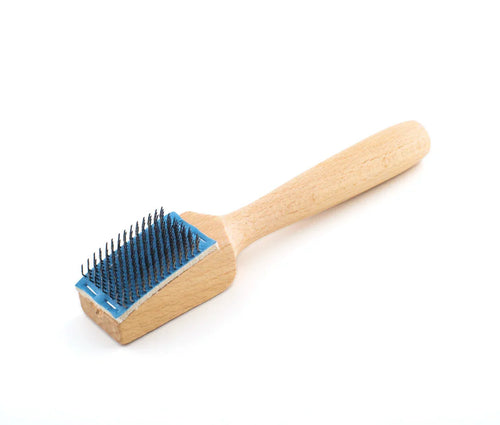
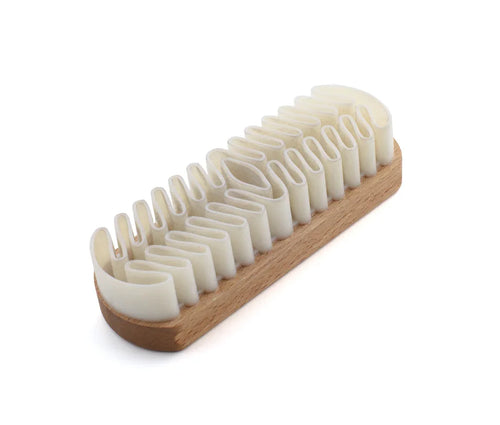
- Keep a brush for your suede soles handy; if suede gets flattened and dirty, it loses its grip and becomes dangerously slippery. \n
- If the floor is too rough, you can consider using a little bit of dance powder, but be careful with this; in practice, venue owners don't always appreciate it. \n
- Make sure your shoes match the rest of your vintage dance outfit, but always let comfort win over aesthetics. \n
Maintenance of Vintage Clothing
\n\nWhat I often see with dancers who are just starting to collect authentic pieces is the heartbreaking moment when a beautiful 1940s dress or wool trousers come out of the washing machine and have become three sizes smaller. Vintage fabrics such as rayon (often called 'cold ray') and old wool were not made for today's aggressive spin cycles. In practice, prevention is really better than cure, especially when you consider that sweat and friction during a fast Charleston break down fibers faster than you think. If you invest in quality swing clothing, you want these items to survive the hundreds of swing outs yet to come.\n\nWashing Without Mishaps
\n\nA common mistake is underestimating the power of hand washing. For almost all items older than the 1960s, I recommend a standard cold hand wash with a mild detergent. Rayon, a commonly used fabric for those fluidly draping dresses, loses up to 50% of its strength when wet. If you throw this in a machine, the seams will rip or the entire garment will deform.\n\n- \n
- Always use cold water; heat is the enemy of old dyes and fibers. \n
- Never wring out your clothes. Roll the item in a clean towel and gently press the moisture out. \n
- Let clothes dry flat. The weight of water in a wet dress on a hanger can completely stretch out the shoulders. \n
- Steam your clothes instead of ironing. A handheld steamer is much safer for delicate fabrics and removes odors more effectively. \n
The Battle Against Sweat and Friction
\n\nLindy Hop is a sport, let's be honest about that. After three high-tempo songs, your vintage dance outfit is often soaked. What I often advise my students is to wear modern underlayers. For men, this means a well-fitting undershirt made of cotton or bamboo under the vintage shirt. For ladies, 'dress shields' or armpit pads are an absolute recommendation. These catch the sweat before it reaches the fragile silk or rayon of your vintage top. Sweat contains salts and acids that can permanently change the color of antique fabrics, often resulting in those familiar yellow stains you can no longer get out.\n\nRepairs and Preventive Reinforcement
\n\nIn practice, I often see seams giving way during a deep lunge or an unexpected turn. Vintage thread has often become brittle after decades. A tip I always give: check the stress points of your clothing before you step onto the dance floor. Specifically look at the armpits, the crotch of the pants, and the zippers. It is often smart to have fragile seams preventively top-stitched with modern, strong thread.\n\nPreserving your Lindy Hop clothing also includes smart storage. Never hang heavy items, such as wool blazers or beaded dresses, on thin wire hangers. Use padded hangers or store them flat in an acid-free box. If you notice a zipper is stiff, lubricate it with a bit of beeswax or a graphite pencil instead of pulling it. Replacing an original metal zipper is a precise and often costly job that you'd rather avoid.\n\nFrequently Asked Questions
\n\nWhat exactly is swing clothing and why is it so popular?
\nSwing clothing refers to fashion from the 1930s and 40s, the heyday of jazz music. This style of clothing is popular because it offers a unique combination of elegance and freedom of movement. Think of wide skirts that flare out beautifully and high-waisted trousers. Wearing this vintage clothing helps dancers fully immerse themselves in the energetic atmosphere of the swing era.
\n\nWhich Lindy Hop clothing is most suitable for a social dance evening?
\nChoosing Lindy Hop clothing for an evening means paying attention to breathable fabrics and comfort. Ladies often choose an A-line skirt or a dress that is not too tight around the knees, so they can move freely. Gentlemen usually wear comfortable trousers with a shirt and possibly suspenders. It is important that the clothing absorbs sweat and does not restrict during fast kicks and turns on the floor.
\n\nWhat should I look for when buying a vintage dance outfit?
\nWhen picking out a vintage dance outfit, the fit is crucial. Old clothing sizes often differ from modern sizes, so try everything on well or measure yourself accurately. Also, pay attention to the quality of the seams and the fabric; vintage materials can be fragile. Choose garments that look authentic but are resistant to the physical exertion of an intensive dance session on the dance floor.
\n\nWhich shoes fit best with swing clothing for women and men?
\nShoes are the most important part of your swing clothing. For ladies, shoes with a low, sturdy heel are ideal, while men often choose classic brogues or leather lace-up shoes. Ensure soles are made of leather or smooth rubber, so you can turn easily without straining your knees. Comfort is more important here than appearance, as you will be on your feet for hours and moving intensively.
\n\nHow do I combine authentic vintage style with modern comfort while dancing?
\nYou can create a beautiful vintage look by combining modern garments with a retro look with real vintage accessories. For example, choose a modern skirt made of stretch fabric that resembles a 1940s model. This allows you to maintain the classic aesthetic of swing clothing while benefiting from the technical advantages of contemporary materials. This ensures you look stylish without sacrificing freedom of movement.
\n\nIs specific swing clothing necessary for beginners in the dance world?
\nAlthough it is not mandatory, the right swing clothing helps beginners feel more confident on the dance floor. You don't have to purchase a full vintage wardrobe immediately; start with comfortable shoes and clothing in which you can move freely. As you take more classes and go to social dance parties more often, you can slowly invest in a more authentic Lindy Hop clothing style that fits your own personality.
\n\nHow can I best maintain my vintage dance outfit after an evening of dancing?
\nBecause dancing is a physical activity, your vintage dance outfit endures a lot from perspiration and movement. Hang your clothes out to air immediately after dancing. Many authentic vintage pieces should not go in the washing machine; therefore, have them professionally steamed or wash them carefully by hand. By taking good care of your swing clothing, the fragile fabrics stay beautiful longer and you can enjoy them for years.
\n\nThe beauty of swing clothing is that it is much more than just an outfit; it is an extension of your movement and the music. Whether you choose a flowy skirt that turns perfectly or those iconic wide pants, it's all about the balance between authentic vintage flair and the physical comfort you need for an energetic Lindy Hop session. What I especially want to tell you is that the right materials make the difference between sweating and shining on the floor. Remember above all that your clothing should never restrict you, but rather invite you to move freely. For that indispensable finishing touch, you can view our collection of vintage dance shoes, so your feet move just as smoothly as the rest of your body. A carefully composed vintage dance outfit gives you that invincible feeling as soon as the first notes sound. Let the clothing work for you, step onto the floor with confidence, and let the music guide you.
\n


