

Table of Contents
- Starting with Tap Dancing
- Choosing the Right Fit
- All About Tap Plates
- Choosing the Best Tap Shoes
- Maintenance of Your Shoes
- Important Tips for Beginners
- Frequently Asked Questions
Your first shuffle often sounds more like a dull thud than that clear 'click' you hear in movies, and nine times out of ten, it's not due to your technique, but your footwear. When buying tap shoes for beginners, you should mainly look at the right fit, the stiffness of the sole, and the quality of the mounted tap plates. In my classes, I regularly see students coming in with cheap imitation shoes that fall apart after three weeks or, even worse, cause blisters due to a lack of lining and breathability. A good beginner shoe doesn't have to cost a fortune, but it must provide sufficient support for your ankles and have a reliable screw system that allows you to adjust the sound of the plates. I usually recommend leather over synthetic materials because leather molds to your foot and the resonance is simply richer. The difference between a thin aluminum plate and a quality steel tap determines whether you experience tap dancing as making music or simply making noise. I am happy to help you get started on making that first investment in your new hobby wisely, so you can start immediately with the right rhythm and a full sound.
Starting with Tap Dancing
When you step into a tap studio for the first time, one thing stands out immediately: the sound. Unlike almost any other dance form, in tap dancing you are not just a dancer, but also a percussionist. What I often see with beginners is a kind of healthy nervousness for that first 'shuffle' or 'stamp'. It is a unique discipline where your feet are your instrument, and that means the choice of your equipment directly influences how quickly you master the basic techniques. In practice, I notice that students who start with a quality shoe make progress much faster. A common mistake is thinking you can get through the first lessons in regular shoes with a hard sole. I always advise against that. Without the right resonance, you won't hear if you are performing the technique correctly. These tap shoes, for example, are specifically designed to give the ankles the necessary support while the sole offers enough flexibility for 'ball-tap' movements. If your shoe is too stiff, you force your foot into an unnatural position, which can quickly lead to cramping in the arch of the foot.The role of tap plates and sound quality
The most important part of your new equipment are the metal plates under the sole, also called tap plates. For a beginner, all taps might sound the same, but there is a world of difference. You have 'tele-tone' taps that give a clear, hard click, and flatter variants that sound a bit more muffled. What I often see is that beginners are startled by the volume they produce, but that is exactly the intention. You must be able to hear each strike separately from the others to train your sense of rhythm. An essential aspect of maintenance that is often forgotten is checking the screws in the plates. In dance practice, I regularly see a student producing a dull sound simply because a screw is slightly too loose. On the other hand, a screw that is tightened too much gives a stifled sound. To keep your equipment in top condition and carry out small repairs yourself, you can look at our selection of tap accessories, where you often find replacement parts and handy tools.Tips for your first steps
Once you have your shoes, the temptation is great to start stomping very hard immediately. My advice? Start gently. Tap dancing is about precision, not power. When practicing, pay attention to the following points that I always emphasize to my students:- Keep your knees 'soft': Never tap with straight legs. Your knees act as shock absorbers for your joints and help you strike faster rhythms.
- Weight distribution: In practice, I see that beginners often lean too much on their heels. Try to shift your weight slightly more toward the ball of your foot, so your heel is free for 'heel drops'.
- Isolation: Try to keep your upper body still while your feet do the work. This helps with your balance, especially during fast combinations like the 'cramp roll'.
- Listen to the pauses: The silences between the taps are just as important as the strikes themselves. This is what makes a rhythm recognizable.
Choosing the Right Fit
In practice, I often see that beginners buy their first pair of shoes a size too large, "just in case" or because they are used to the extra space in their daily sneakers. However, this is a common mistake that can directly affect your dancing pleasure. In tap dancing, your shoe is not just footwear, but your instrument. If there is play between your foot and the shoe, a fraction of a second delay occurs between your movement and the strike of the tap plates on the floor. In the studio, we also call this "flamming" – an unwanted double sound that completely messes up your rhythm. When you try on different models of tap shoes, the shoe should feel like a sturdy glove. Your toes should just touch the front of the shoe, but they absolutely must not fold or pinch. What I often see is that dancers forget that leather still stretches. A leather shoe will mold to the unique contours of your foot after a few lessons, while a synthetic shoe remains stiffer. Keep this in mind during fitting; a leather shoe can fit quite "snugly" at purchase.The test: heel and ball of the foot
A crucial check I always have my students do is the heel test. Stand on the ball of your foot and lift your heel as if you are going to make a tip or a toe tap. If your heel slips out of the back of the shoe, the shoe is too big or the heel counter is not deep enough for your anatomy. A slipping heel makes techniques such as the shuffle or the scuff impossible to perform cleanly. In addition, you should pay attention to the width at the ball of the foot. This is where most of the pressure is placed while dancing. If the shoe is too narrow here, you will experience cramps in your arch in no time. If you notice that the shoe doesn't fit perfectly at certain points, you can often fine-tune this with the right tap shoe accessories, such as silicone protectors or specific insoles that fill the empty space without losing contact with the floor.What to specifically look for during fitting
To be sure you are making the right choice, I recommend checking off the following points while you have the shoes on:- Toe space: Can you still just wiggle your toes? The toe box of the shoe must be sturdy enough to protect your toes during toe stands, but must not cut off circulation.
- The sound test: Perform a few simple steps and heels on a hard floor. Do you hear a clear, dry click? If the sound sounds dull, it may be that your foot doesn't have enough grip inside the shoe.
- The instep: For models with laces, the closure should fit nicely without the laces coming completely together. For a model with a strap (mary-jane style), the strap must hold your foot firmly in place during fast movements like a ball change.
- The position of the plates: Check if the metal plates fit well against the sole. There should be no space between the metal and the sole, as splinters or dirt can get in between, damaging your floor.
All About Tap Plates
Without the metal plates under your sole, a tap shoe is of course just a regular shoe. These plates, which we simply call 'taps' or plates in the dance world, are the instrument you play on. In practice, I often see beginners thinking every piece of iron is the same, but nothing could be further from the truth. The quality of the metal, the method of attachment, and even the tension of the screws determine whether you get a clear 'crisp' sound or a dull thud.
What I often see with students buying their first pair of tap shoes is the surprise that the plates sometimes seem to rattle a bit. A common mistake is to then immediately grab a screwdriver and tighten everything as hard as possible. Please don't do that! For good resonance, the taps need a tiny bit of freedom of movement. This creates a kind of soundbox effect between the metal and the sole. If you tighten everything too much, you stifle the sound and your shuffles and flaps sound much less dynamic.
Different types and sounds
On most entry-level models, the plates are already standardly mounted. These are often universal aluminum taps. They are light and fine for learning the basic techniques. However, as your footwork gets faster, you will notice the difference with professional taps like the well-known Tele-Tone variants. These often have an extra fiberboard intermediate layer. In class, I notice that students with higher-quality taps don't have to work as hard to be heard above the music. The most important features to look for are:
- The fit on the sole: The tap must perfectly follow the shape of the toe and the heel. If metal sticks out over the edge, you can damage yourself or the dance floor.
- The thickness of the metal: Thicker plates often give a deeper, fuller tone, while thinner plates produce a higher 'ping'.
- The attachment: Some taps are fixed with three screws, others with more. Regularly check if they are still secure, because they always loosen slightly over time due to the vibrations of dancing.
Maintenance of your taps
A common problem in the dance studio is scratches on the floor. This usually doesn't happen because of the metal itself, but because of screws that stick out slightly due to dancing. I always advise my students to feel the screws with their thumb before each class. Do you feel a sharp edge? Then tighten it immediately. You can find handy tools for this in our tap shoe accessories, so you always have a suitable screwdriver at hand in your dance bag.
Also pay attention to the wear of the metal. If you dance a lot on hard surfaces that are not made of wood (which I advise against for your joints!), the edges of your taps can become sharp. This not only affects your sound in techniques such as 'brushes', where you use the side of the tap, but it is also dangerous for your fellow dancers. In practice, the plates of a decent pair of tap shoes last for years, provided you only use them on the correct dance floors and keep a close eye on the screws. Do you notice that the screw holes in the sole are becoming 'stripped'? You can often solve this simply with a small piece of matchwood and some glue in the hole before driving the screw back in.
Choosing the Best Tap Shoes
In the dance studio, I often notice that beginners choose their first pair of shoes purely based on appearance. Although a nice shiny shoe is fun, your tap shoe is essentially a percussion instrument. A common mistake I see is buying shoes that are too loose "because they feel comfortable." In tap dancing, direct contact with the floor is essential; if your foot slides in the shoe, you lose control over your timing and your "shuffles" and "flaps" sound messy. You want the shoe to feel like an extension of your foot, without your toes being completely squeezed.Oxford or Mary Jane Model?
In practice, we usually distinguish between two main models: the Oxford and the Mary Jane. For adults, I almost always recommend the Oxford model. This is a lace-up shoe that firmly encloses the entire foot. Why? Because for more complex footwork, such as "riffs" or "pickups", you really need the stability around the instep and ankle to maintain balance. For younger dancers or beginners looking for a more elegant look, there are models with a strap over the instep. If you look at the collection of tap shoes for women, you will see that the more advanced models are almost always lace-up shoes because of the superior stability they offer during fast combinations.The Role of Tap Plates
The heart of the shoe is formed by the metal plates, also called tap plates. What I often see in cheaper entry-level models is that the plates are glued or screwed directly onto a thin sole without an intermediate layer. This gives a dull, 'dead' sound. A good shoe has a resonance board (often made of hardwood or pressed leather) between the tap and the sole. This acts like the soundbox of a guitar and amplifies the vibrations. Pay attention to the following points when purchasing:- Check if the screws of the plates are recessed so they don't scratch the floor.
- Choose plates from a quality brand, because the alloy of the metal directly determines the pitch of your tap.
- Ensure you always have a small screwdriver and other tap accessories in your dance bag; screws always vibrate loose due to the impact on the floor.
- Listen to the difference between the front tap and the heel tap; there should be a clearly audible difference in pitch to properly accentuate rhythms.
Fit and Material Use
Regarding material, leather is the absolute standard for tap dancing. Synthetic materials breathe less and, more importantly, they do not mold to your foot. A leather shoe may feel a bit stiff at first, but after a few lessons, it "breaks in" and adapts to the anatomy of your foot. A handy tip from practice: always fit your shoes with the socks or tights you will wear during class. Too thick socks can prevent you from feeling the nuances in the floor, which hampers your technique. Also, ensure the sole is stiff enough in the middle; a sole that is too flexible can lead to fatigue in the arch for beginners because the muscles are not yet used to the constant impact of tapping.Maintenance of Your Shoes
In practice, I often see that beginners simply throw their shoes in their bag after class and only look at them again the following week. That's a shame, because a well-maintained pair will last for years. You should actually see your shoes not just as a piece of clothing, but as an instrument. Just as a musician tunes and polishes their instrument, your footwear also needs that attention to produce the best sound.
Checking the tap plates
What I often see is that dancers only take action when they hear a screw clattering on the dance floor. A common mistake is ignoring the tension on the screws of your tap plates. Due to the constant impact and vibrations during tap dancing, these screws inevitably vibrate loose. If a plate is too loose, you get an impure, rattling sound that makes your technique unclear. If it is too tight, however, the metal plate cannot resonate optimally, resulting in a dull thud instead of a clear 'ping'.
- Check weekly with a suitable screwdriver if all screws are still secure.
- Tighten them finger-tight, but do not force anything; you don't want to damage the screw thread in the sole.
- Watch out for burrs or sharp edges on the metal. If you have walked outside on a hard surface (which I strongly advise against), scratches can occur that destroy the wooden dance floor in the studio.
If you notice that the screws constantly come loose, you can use a small drop of clear nail polish or special thread-locking glue. This provides just enough resistance so they stay in place during those fast shuffles. If you notice the sole under your tap shoes starting to wear or that a plate really needs replacing, don't wait too long to repair to prevent injuries.
Hygiene and preservation of the material
Another essential point is how you store the shoes. Tap dancing is an intensive workout and your feet sweat quite a bit. In practice, I see students keeping their shoes in a plastic bag, which is the ideal breeding ground for bacteria and causes the leather to become stiff faster. Leather is a natural product that must be able to breathe to remain supple around the joints of your foot.
Take your shoes out of your bag immediately after every class. Let them air dry, but never put them near a heater; this dries out the leather, causing it to crack. For maintaining the shape and absorbing moisture, cedar shoe trees are an excellent investment. In addition, it is smart to transport your shoes in a breathable bag. For this, take a look at the various tap accessories specially designed to keep your equipment in top condition.
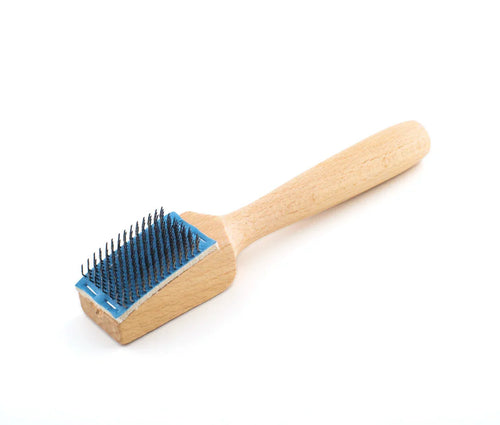
Don't forget the inside either. A damp cloth with some mild soap is often enough to freshen up the insole. If you notice the grip on the sole (the rubber part behind the front tap) becoming slippery due to dust and dirt, you can carefully roughen it with a small wire brush or a piece of sandpaper. This prevents you from slipping during a fast pullback or a slide. By making these small actions part of your routine, you ensure that your equipment never lets you down during an important lesson or performance.
Important Tips for Beginners
What I often see with students just starting tap dancing is that they underestimate the impact of the right shoe. You must realize that in tap dancing, you aren't just wearing a sneaker; you are wearing a percussion instrument on your feet. In practice, this means the smallest details in fit and material make a huge difference in how you perform your first 'shuffles' and 'ball changes'. A common mistake is buying shoes that are too loose, thinking this is more comfortable. Nothing could be further from the truth. If your foot slides in the shoe, you lose control over your timing and will get blisters from the friction in no time.
When you look for your first pair, I always recommend looking at the stiffness of the sole and the quality of the leather. For a beginner, sturdy tap shoes are essential because they provide your ankles with the necessary support while you are still learning how to shift your weight correctly. In the beginning, dancers often tend to work too much from their whole leg, while the power should actually come from the ankles and feet. A good shoe helps you master that isolation faster.
The fit: tighter than you think
A crucial tip I always give: your tap shoe should feel like a second skin. Unlike your daily sneakers, there should be hardly any extra space at the toes. Your toes should be able to lie flat and just touch the front of the shoe without curling. Leather always stretches a bit as you spend more hours on the floor. If the shoe is already 'comfortably loose' at purchase, you will notice that after three months of dancing, you literally fly out of your shoes during a fast exercise.
- Always wear the socks or tights you will wear during class when fitting.
- Test the shoe by standing on the ball of your foot; your heel must not slip out of the shoe.
- Watch the width: your foot must not slide sideways, as that ruins your balance during sideways steps.
The technique behind the tap plates
The metal plates under the sole, also called tap plates, determine your sound. What I often see in cheaper models is that the plates are riveted with nails. For an absolute beginner, this can be fine, but if you want to take lessons seriously, I always recommend shoes with screws. Why? Because with screws, you can influence the pitch. By turning the screws slightly looser or tighter, you change the resonance of the metal against the sole.
Don't forget that these parts need maintenance. In practice, I regularly see students damaging the dance floor because a screw has come loose and sticks out. It is therefore smart to immediately purchase some basic tap accessories, such as a small screwdriver to keep in your dance bag. Check before every class if everything is still secure. A loose plate not only causes a rattling, impure sound but can also be dangerous during fast combinations where you need grip on the wooden floor. Invest in a decent basic model with good sound quality in the beginning rather than a flashy appearance; your ears (and your teacher) will thank you.
Frequently Asked Questions
Should I get a size larger for tap shoes?
No, generally a size larger is not necessary. Tap shoes should fit snugly, similar to a regular shoe, but without your toes being cramped. Leather often stretches a bit during use. If they are too large, your foot will slide in the shoe, which negatively affects control over the tap plates and sound quality.
What should you definitely not do with tap shoes?
Never wear your tap shoes outside on the street or on rough surfaces such as concrete. This can seriously damage the metal tap plates, cause scratches, or even cause them to come loose. Furthermore, dirt and sand can clog or damage the fine screws. Use them exclusively on suitable wooden dance floors to optimally maintain both the lifespan of your shoes and the quality of the produced sound.
Is tap dancing difficult for beginners?
For beginners, tap dancing is mainly a matter of building coordination and a sense of rhythm. Although basic steps like the shuffle and toe tap are relatively quick to learn, mastering technique and speed requires regular practice. However, it is a very accessible dance form where you hear immediate results, making it very motivating and fun for starting dancers of all ages.
How do you choose the right tap shoes?
When choosing, pay attention to the material, the fit, and the quality of the tap plates. For beginners, synthetic leather shoes with a sturdy block heel are often ideal and affordable. Ensure the shoe fits well at the heel and instep. Check if the metal plates are secure and produce a clear sound. Preferably choose a renowned dance brand.
What is the difference between cheap and expensive tap shoes?
The biggest difference lies in the quality of the material and the resonance of the tap plates. More expensive shoes are often made of high-quality leather that molds to the foot and have professional taps for a fuller sound. Cheaper models often use plastic and simpler metal, which is fine for beginners who want to explore the sport quietly first without a large investment.
Do I need to tighten the screws of my tap plates regularly?
Yes, it is essential to check the screws of your tap plates regularly. Some advanced dancers loosen them slightly for a specific sound, but for beginners, it is safer to tighten them firmly. Loose screws can seriously damage the dance floor or cause you to lose a plate. Use a small screwdriver to periodically check everything thoroughly.
Which socks are best to wear in tap shoes?
Preferably wear thin, cotton socks or special dance tights in your tap shoes. Too thick socks can negatively affect the fit and ensure you have less feeling for the floor. Thin socks absorb moisture and prevent friction, which helps prevent blisters during intensive lessons. Ensure the socks fit well and do not slide down, so your full focus remains on your footwork.
The beauty of tap dancing is that you are not just a dancer, but also immediately a musician. What I especially want to give you when buying your first pair is that the fit and the quality of the tap plates make the difference between frustration and pure dancing pleasure. Above all, remember that a good tap shoe should fit firmly around the instep without pinching, so you have full control over every sound you make. A clear sound, after all, starts with equipment that fits your feet perfectly. Are you ready to strike your first rhythms? Then take a look at our women's tap collection for comfortable models specially designed for beginners. Also, don't forget that proper care is essential for a longer lifespan of your equipment; check out our women's tap accessories collection for all the extras you need. Let your feet speak and discover the unique beat that only you can create.


