

Table of Contents
\n- \n
- Official Clothing Regulations Competition Dancing \n
- Costumes for Female Dancers \n
- Men's Clothing for Standard Dances \n
- Choosing the Right Ballroom Shoes \n
- Prohibited Items in Competition Clothing \n
- Rules per Competition Class \n
- Frequently Asked Questions \n
Nothing is as frustrating as standing on the competition floor full of adrenaline and realizing just before the first waltz that your outfit does not comply with the official regulations. Competition clothing for ballroom dancing is bound by strict rules, ranging from the permitted amount of glitter to the specific heel height of your ballroom shoes. In my years as an instructor, I have seen countless couples who had their nerves perfectly under control, but went wrong on the technical details of their clothing or footwear, which sometimes even led to disqualification.
\n\nWhen you start standard dancing with an association such as the NADB, specific restrictions often apply to the lower classes to keep the sport accessible and fair. Think of regulations for the length of the skirt, the color of the waistcoat, or the type of material of the men's shirt. The point is that the jury can assess your technique and frame clearly without being distracted by unnecessary frills that do not yet belong to your competition level. In this overview, I list the most important regulations and share my practical experience to appear on the floor both comfortably and in accordance with the rules. Because believe me, the right suede sole under your shoe really makes the difference between a controlled turn and an unexpected slip at the wrong moment.
\n\nOfficial Clothing Regulations Competition Dancing
\n\nIn practice, I notice that many dancers, especially when they are just starting their first ballroom dance competitions, get quite overwhelmed by the thick rulebooks of associations like the NADB or the WDSF. However, the rules are not there to limit your creativity, but to create a level playing field. What I often see is that couples in the lower classes (such as the Debutants) are in danger of being disqualified because they appear on the floor with glitter or 'stones' too early. In these classes, the clothing is often limited to 'social clothing' or simple competition clothing without decorations, so that the jury can concentrate purely on the basic technique and foot placement.\n\nA common mistake among the ladies is the length of the skirt in standard dances. Although a long, flowing skirt looks beautiful during a Waltz, a hem that is too long can be dangerous. I have seen several times a heel get caught in the fabric during a fast link to the right, which almost led to falls. The official regulations prescribe that the ankles must be visible or that the skirt must float just above the floor. To do this safely and stylishly, it is essential that you invest in high-quality women's ballroom shoes that offer the right balance between grip and slide, specifically designed for the heel-swing that is so characteristic of Ballroom.\n\nSpecific requirements for men and women
\n\nFor men in the higher classes, the tailcoat is the standard, but in the lower classes, a neat waistcoat or even just a crisp white shirt with a tie will suffice. What I often give as a tip to my students: make sure your clothing supports your frame and does not work against it. A jacket that is too loose at the shoulders ruins your entire silhouette as soon as you put your arms in position. In addition, the shoes for the gentleman are often bound by stricter rules than one might think. In standard dances, black men's ballroom shoes with a low heel are mandatory to be able to correctly perform the fluid roll of the foot (from heel to toe).\n\nHere are a few concrete points that the competition committee checks strictly:\n\n- \n
- \nCleavage and cutouts: For the ladies, the cutout often may not be lower than the bottom of the breastbone and the back must be covered to a certain height (depending on the class). \n
- \nUse of materials: In the lower classes, fabrics with glitter, sequins, or fluorescent colors are often prohibited. \n
- \nHeel protectors: At almost every competition location, the use of plastic heel protectors is mandatory to protect the parquet floor. \n
- \nJewelry: Excessive jewelry that distracts from the dance or could be dangerous for the partner is often discouraged or explicitly prohibited in the regulations for juniors. \n
The role of footwear in the regulations
\n\nAlthough the focus is often on the dresses and suits, the shoes are technically the most important part of your equipment according to the regulations. The sole must almost always be made of suede. This is not just a tradition, but a functional requirement for safety on the competition floor. A rubber sole would provide too much friction, causing knee injuries during rotations, while a leather sole is often too slippery for the powerful push-off in a Tango. \n\nIn practice, I see that dancers who switch from recreational dancing to competitions sometimes try to dance in their normal going-out shoes. This is an absolute no-go. The anatomy of a real dance shoe supports the arch of the foot during stretching, something that is crucial for the aesthetics that the jury is looking for. So make sure your shoes meet the technical requirements of the association you dance with, so that on the day itself you only have to worry about your choreography and your appearance.\n\nCostumes for Female Dancers
\n\nIn practice, I often see female dancers lose themselves completely in the glitter and the color of a dress, while the technical aspect of the costume is at least as important for your performance on the floor. A ballroom dress for standard dances is not just an ordinary evening dress; it is a technical garment designed to accentuate the movements of the Waltz, Tango, and Slowfox. What I often see with beginners is that they choose a skirt that is too heavy or has too many layers, causing the natural 'swing' of the dance to be lost.
\n\nThe dynamics of the Standard dress
\nIn ballroom dancing, everything revolves around the 'topline' and the fluid movement across the floor. A good competition dress has strategically placed 'floats' – strips of fabric attached to the arms or the back. These are not just for decoration; they help the jury to assess the width of your frame and the stillness in your upper body. A common mistake is wearing floats that are too long, causing you to get tangled in them during a fast Quickstep or hindering your partner.
\n\nWhen purchasing or having a costume made, pay attention to the following points:
\n- \n
- The length of the skirt: It must fall exactly to the ankles. If the skirt is too long, you will step on it during backward steps; if it is too short, you lose the elegant 'room-filling' effect. \n
- The body: Make sure there is a sturdy bodysuit in the dress with a good closure at the bottom, so that the dress does not ride up during powerful stretch movements. \n
- Choice of fabric: Materials such as lycra for the body and light fabrics like chiffon or georgette for the skirt work best in practice for the necessary 'flow'. \n
Footwear and technical support
\nYou can have the most beautiful dress in the room, but without the right foundation, you literally and figuratively do not stand strong. In practice, I see that many injuries and balance problems stem from incorrect footwear. For standard dances, you need shoes that force you to correctly shift your weight over the ball of the foot. These specific ballroom shoes usually have a closed toe, which is essential for safety and technique when closing the feet.
\n\nA technical detail that I always emphasize to my students is the heel height and stability. For beginners, a 'flare' heel is often more pleasant because it widens slightly at the bottom, offering more stability during heel steps in the Waltz. Also, don't forget that harmony with your partner is crucial; if you are on extremely high heels, your partner must also wear the correct ballroom shoes to compensate for the height difference and balance in the posture.
\n\nRegulations and the 'Panty Line'
\nThe NADB and other associations apply strict rules, especially in the lower classes (Debutants). A common mistake is the use of skin-colored mesh in places where it is not allowed according to the regulations, such as cutouts that are too deep in the side or on the back. The rule of thumb is often that the 'intimate areas' must be completely covered with opaque fabric. Also, your underwear must always be invisible; a visible panty line or a bra strap can cost you valuable points in the presentation score. Therefore, always use a built-in cup in your dress and make sure the bodysuit's panty is cut low enough to cover the buttocks completely, in line with the athletic requirements of the sport.
\n\nMen's Clothing for Standard Dances
\n\nIn ballroom dancing for men, especially in the Standard category (Waltz, Tango, Slowfox), it's all about creating an uninterrupted, powerful line. Where the lady often draws attention with volume and color, the gentleman is the frame that presents it all. In practice, I often see that men think a standard wedding suit will suffice, but a competition suit is a technical garment with a totally different anatomy.\n\nThe competition jacket and the 'Frack' (Tailcoat)
\n\nA common mistake among beginners is wearing a jacket where the shoulders rise as soon as the arms are put in the dance position. In the higher classes, men wear a 'frack' (tailcoat). This garment is cut so that the sleeve attachment is extremely high. This allows you to lift your arms without the entire panel of your jacket rising with them. What I often see on the competition floor is that dancers lose their shoulder line because their jacket was not specifically made for ballroom. When purchasing, make sure the back length is exactly right; the panels must follow your movement, not work against it.\n\nUnder the tailcoat, you wear a stiffly starched shirt, often with a detachable collar and a piqué front. A practical tip I always give my students: use 'shirt stays' or elastics that connect your shirt to your socks or trousers. Nothing ruins the clean line of a Tango as much as a shirt that bulges out of the trousers during a pivot.\n\nThe right foundation: Shoes and Trousers
\n\nThe trousers in the standard discipline must fall high in the waist, often above the navel, to make the legs appear longer. The trouser legs are often cut slightly wider at the bottom so that they fall smoothly over the shoes without getting caught. Speaking of shoes: this is the most important part of your equipment. For standard dances, men use a shoe with a low, wide heel (usually around 2 to 2.5 centimeters).\n\nIn practice, I notice that men often hesitate between suede or patent leather. Patent leather is the standard for competitions because it reflects the shine of the parquet floor and gives a chic look. However, patent leather can 'stick' together when passing the feet. A drop of oil or a special anti-stick spray is then essential. For those just starting out or training a lot, high-quality men's ballroom shoes with a suede sole are indispensable for maintaining the correct grip on the floor.\n\nDetails that make the difference
\n\nThe jury doesn't just look at your footwork, but at the overall picture. A messy tie or a crooked pocket square can distract from an otherwise technically strong performance. In the lower classes, where a waistcoat is often allowed instead of a tailcoat, the fit of the trousers is even more crucial. Make sure the color of your socks exactly matches your trousers; white socks are an absolute 'no-go' in the ballroom world because they interrupt the visual line of your leg.\n\nAlthough the focus here is on the men, harmony with your partner is essential. I always advise couples to match their materials; if the gentleman appears in high-gloss patent leather, it looks beautiful if the lady also chooses professional women's ballroom shoes with a refined finish. It's about unity on the floor.\n\nFinally, don't forget the technique behind your footwear. A good ballroom dance shoe must provide sufficient support in the instep, but be flexible enough in the forefoot to perform deep 'lowers' in the Waltz. In practice, I see that dancers who invest in specific footwear make progress much faster in their balance and foot placement.\n\nChoosing the Right Ballroom Shoes
\n\nYour shoes are literally your only point of contact with the parquet floor, and in the world of ballroom dancing, the right choice can make or break your performance. In practice, I often see dancers, especially at their first competitions, choosing a shoe that looks fantastic but does not technically provide the right support. In standard dancing, everything revolves around the 'heel lead' and the fluid, rolling movement of the foot. A shoe that does not have the right flexibility in the right places blocks your natural ankle flexion, which is immediately reflected in stiff movement.
\n\nStability and Heel Height for Women
\n\nWhat I often advise ladies starting competitions is not to go for the highest heel immediately. A common mistake is thinking that a higher heel looks more elegant, but if your ankles are not yet strong enough, you lose stability in your frame and your balance during fast turns in the Quickstep. For standard dances, we almost always use closed pumps. This is not just a matter of style, but also of safety and technique; the closed toe helps you distribute your weight better over your toes. These ballroom shoes for women often have a suede sole which is essential to maintain just enough grip without sticking to the floor. An extra tip: preferably choose a skin-colored (flesh) satin shoe. This optically extends the line of your leg, which gives the jury a much calmer and cleaner image than a contrasting color.
\n\nThe Functional Requirements for Men
\n\nWith the men, I often see that it is underestimated how important the heel construction is. A standard competition shoe for men has a heel of about 1 inch (2.5 cm). This might seem low, but the angle of the heel is crucial for correctly executing forward steps where the heel hits the ground first. In practice, I notice that men who try to train in regular dress shoes often suffer from their shins or lower back because the cushioning and angle are not correct for ballroom dancing. The flexibility of the sole is the decisive factor here; you must be able to roll your foot completely. These specific men's ballroom shoes are made of lightweight materials that ensure your feet get tired less quickly during a long competition day with multiple rounds.
\n\nRegulations and Maintenance on the Competition Floor
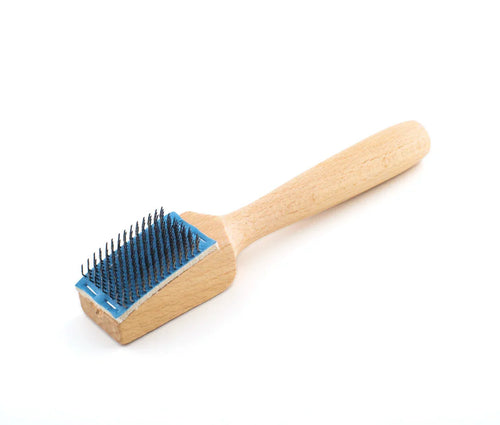
\n\nIn addition to the technical aspects, there are also strict regulations you need to take into account. At many competition locations, the use of heel protectors for ladies is mandatory. This is not only to protect the parquet floor, but it also gives you a fraction more surface area at the back of your heel, which benefits your stability. Another common mistake is not properly maintaining the suede soles. If the soles become slippery due to accumulated dust and wax, you lose your grip. Always use a steel shoe brush for this to set the hairs of the suede upright again.
\n\n- \n
- \nFit: Always buy your ballroom shoes tight. Leather and satin stretch due to the heat and pressure of your feet; a shoe that feels 'comfortably spacious' in the store will be too big after three competitions, causing your foot to slide. \n
- \nSole control: Brush your soles before every round. The grip you have in the first minute of your Waltz determines your confidence on the floor. \n
- \nMaterial: Satin is the standard for ladies at competitions because it can be dyed to match your dress exactly, while men usually choose patent leather or fine calf leather. \n
Remember that your shoes are an extension of your body. In practice, I see that dancers who invest in a high-quality shoe with the right fit make technical progress much faster because they are not constantly busy correcting their balance. Make sure you break in your shoes well before the competition, but keep them exclusively for the dance floor to keep the suede soles in top condition.
\n\nVerboden Items bij Wedstrijdkleding
\nIn practice, I often see dancers staring blindly at the glitter and glamour, but overlooking the fine print of the competition regulations. A disqualification or an official warning just before you have to go on the floor causes unnecessary stress that absolutely does not benefit your dance performance. In ballroom dancing, the rules regarding clothing are stricter than you think, especially in the lower classes and in youth categories where 'costume restrictions' apply to keep the sport fair and affordable.
\n\nThe illusion of nakedness
\nWhat I often see is a misunderstanding about the use of skin-colored fabrics, also known as 'flesh-colored mesh'. In many competition regulations for standard dances, it is forbidden to use fabrics that suggest nakedness in places where it is not appropriate. This applies particularly to the torso and the hips. A common mistake is choosing a back neckline that is cut too deep or using transparent inserts in the waist that give the impression that the skin is exposed. The jury must be able to clearly see where the clothing ends and the skin begins, to avoid confusion during the assessment of body posture and the 'frame'.
\n\nFootwear and floor management
\nAnother critical point that is often underestimated is the type of footwear. Although it is tempting to go for the most striking heel, there are strict rules for safety and the preservation of the dance floor. In practice, this means that wearing shoes with a rubber or plastic sole is often prohibited on the competition floor; you need suede for the right balance between grip and slide. For the ladies, it is essential that the ballroom shoes are fitted with well-fitting heel protectors. Without these protectors, you are not even allowed on the floor in many halls, because the metal pin in the heel can irreparably damage the parquet. For the men, the heels may not be too high; classic men's ballroom shoes have a fixed heel height of about 2 to 2.5 centimeters to guarantee the correct heel strike in the swing dances.
\n\nDangerous accessories and loose parts
\nWhen dancing the Quickstep or a fast Viennese Waltz, you reach high speeds and make powerful rotations. Loose items can then be life-threatening for yourself and for the other couples on the floor. Here are a few specific things I often see going wrong in practice:
\n- \n
- \nLong, loose-hanging jewelry: Large earrings or necklaces that are not firmly attached to the dress can get tangled in your partner's hair or whip in your own face during a fast spin. \n
- \nPoorly attached feathers and boas: Although they move beautifully, shedding feathers are a nightmare on the competition floor. If another dancer slips on a feather that you have lost, this can lead to dangerous situations and point deductions. \n
- \nToo long skirts: A common mistake with beginners is a skirt that touches the floor. During backward steps in the Tango, your partner can step on your hem, resulting in a fall. \n
- \nReligious or political expressions: Competition clothing should be neutral regarding ideology; it's purely about the sporting and artistic performance within the framework of the dance sport. \n
A tip I always give my students: always have your outfit checked by your trainer before you go to a major competition. What seems beautiful in the mirror of the fitting room can suddenly form a problem under the bright lights of the competition hall and according to the rules of the association. Make sure your clothing supports your dance and does not hinder it. With a pair of high-quality ballroom shoes and a regulation costume, you can enter the floor with peace of mind and concentrate fully on your technique and presentation.
\n\nRules per Competition Class
\n\nIn the world of ballroom dancing, clothing regulations are often just as strict as the judging of the technique itself. What I often see in practice is that dancers enthusiastically purchase an outfit that is then rejected by the competition committee at the first competition. The rules are not there to limit your creativity, but to create a level playing field, especially in the lower classes where the focus must be entirely on basic skills.
\n\nAt associations such as the NADB or the WDSF, a sharp distinction is made between the 'Debutants' and the higher classes. A common mistake with beginners is wanting to wear sequins or shiny fabrics. In the lower competition classes, this is absolutely prohibited. The jury wants to see your footwork and your frame without being distracted by reflective decorations. For the ladies, this often means a simple dress or a combination of a skirt and top in one color, without applications.
\n\nThe Debutants and Lower Classes
\n\nIn the starting classes, everything is about simplicity. For the ladies, a maximum skirt length and restrictions on material use often apply; think of avoiding lace or translucent fabrics in strategic places. What I often advise my students is to invest in a good base that accentuates the movement of the knees. A crucial part of this is the choice of shoe. In practice, I see that beginning ladies often reach for a very high heel too quickly, while stable ballroom shoes with a lower flare heel of 5 or 6.5 centimeters offer much more support when learning the correct heel-toe roll in the English Waltz.
\n\n- \n
- No glitter, stones, or sequins allowed. \n
- Limited choice of fabrics (often no skin-colored mesh or lace). \n
- Men usually wear a white shirt with a black tie and black trousers. \n
- Heel protectors are mandatory on almost all competition floors to save the wood. \n
The Main Class and Professionalism
\n\nAs soon as you are promoted to the B or A class, the doors to 'glamour' literally open. Here, the tailcoat for men and the well-known 'floaty' ballroom dress for ladies are the standard. A technical detail that is often overlooked with the tailcoat is the sleeve attachment. A good competition suit has an extremely high armhole cutout, so the shoulders do not rise when the dancer takes his frame. This is essential for maintaining that clean, horizontal line across the back.
\n\nFor men in these classes, the finish of the footline is essential. A common mistake is wearing shoes that are too stiff under a tailcoat. In practice, I see that top players choose specific men's ballroom shoes of patent leather that have a split sole or extra flexibility at the instep. This allows the dancer to stretch the foot to the maximum in the Quickstep, while the shine of the patent leather visually extends the line of the leg into the tip of the shoe.
\n\nAnother practical point for the ladies in the higher classes: pay attention to the weight of your dress. The more stones and layers of fabric, the heavier the dress becomes. This directly affects your stamina and how you can control the 'swing' in the Slowfox. Always make sure your outfit supports your anatomy; a dress must move with the rotation of your spine and not work against it. Always check the most recent regulations of the specific association you dance with before every competition, as the rules regarding, for example, the depth of the back necklines change regularly.
\n\nFrequently Asked Questions
\nWhat should you avoid when wearing clothing for ballroom dancing?
\nAvoid clothing that is too loose, which hinders your freedom of movement or in which your partner can accidentally get caught. Also, fabrics that are too heavy are unfavorable because they do not breathe well during intensive ballroom dancing. Furthermore, avoid shoes with rubber soles, as these are stiff and make turns difficult. Instead, wear specific ballroom shoes with suede soles to prevent injuries and glide smoothly across the dance floor.
\nIs there a dress code for ballroom dancing?
\nYes, strict regulations apply to official ballroom dancing competitions, varying by level and age category. In lower classes, regulations are often more sober, while higher classes allow more decoration such as rhinestones and feathers. For standard dances, the garments must emphasize the couple's elegance and technique. Always consult the specific rules of the dance association to prevent disqualification or point deductions during a competition.
\nWhat do female ballroom dancers wear?
\nFor standard dances, female dancers usually wear a long, flowing dress that reaches the ankles to keep the foot movements partially visible. These dresses are often fitted with 'floats' on the arms to accentuate the frame movements. The outfit is completed with special ballroom shoes with a medium-height heel and a suede sole. The goal is to create a silhouette that maximizes elegance and fluid movements on the floor.
\nWhat is the costume for a ballroom dance?
\nA traditional ballroom costume for men consists of a tailcoat with a white starched shirt, a white bow tie, and a waistcoat. For ladies, this is an ankle-length ballroom gown with a wide skirt that moves dynamically during dancing. In less formal categories, this can vary to trousers with a waistcoat or a neat blouse for men. Crucial for every costume is that it supports the specific dynamics and posture of the standard dances.
\nWhy are specific ballroom shoes essential for competitions?
\nSpecific ballroom shoes are essential because they feature a flexible suede sole. This sole offers the perfect balance between grip and glide, which is necessary for the technical steps of ballroom dancing. Unlike normal shoes, they optimally support the arch of the foot and prevent injuries during fast turns. For standard dances, men's shoes often have a low heel, while ladies choose a stable heel that helps with correct weight distribution.
\nWhich fabrics are most suitable for ballroom clothing?
\nThe most suitable fabrics for ballroom clothing are lightweight, elastic, and breathable. Materials such as lycra, stretch mesh, and satin are popular because they are form-fitting yet offer full freedom of movement. For the skirts of standard dances, chiffon or organza is often used to create a voluminous and floating effect. These fabrics ensure that the clothing responds beautifully to the accelerations and decelerations characteristic of the dance style.
\nHow do you maintain your ballroom clothing and shoes after a competition?
\nAfter a competition, it is important to hang out your clothing immediately to air it out and minimize perspiration odor. Carefully clean stains by hand, as many competition outfits with stones cannot go in the washing machine. For your ballroom shoes, a suede brush is indispensable; brush the soles regularly to restore the grip. Always store your precious clothing in a breathable garment bag to prevent damage to decorations and delicate fabrics.
\n\nThe beauty of ballroom dancing at a competitive level is that you find the perfect balance between strict regulations and your own unique appearance. What I especially want to tell you is that those rules are not there to limit you, but to create a level playing field in which your technique and elegance can truly shine. Above all, remember that your outfit and ballroom shoes are your allies on the floor; a dress that falls perfectly or a suit that moves with every turn makes the difference in how the jury perceives you. For the men, a sharp, regulation look is essential, so be sure to take a look at our men's ballroom standard collection for clothing that effortlessly combines comfort and class. For the ladies, the right materials and fit form the basis for those floating movements that make standard dances so magical. In our women's ballroom standard collection, you will find everything to face the jury with full confidence. Ultimately, it's about you feeling invincible as soon as you take that first step on the parquet floor. Let your passion speak through every movement and wear your outfit with the pride of a true champion.
\n


