

Table of Contents
- Basic Care for Dance Shoes
- Effectively Brushing Suede Soles
- Keeping the Suede Exterior Beautiful
- Lifespan of Ballroom Shoes
- Optimal Storage and Ventilation
- Protection During Dancing
- Frequently Asked Questions
Nothing is as frustrating as slipping in the middle of an elegant pivot because your soles have lost their grip. Proper maintenance of your ballroom shoes is essential to keep dancing safely and to extend the lifespan of your suede soles by regularly roughening them with a steel brush and storing them dry. In my years on the dance floor, I have seen countless pairs end up in the trash prematurely, simply because they weren't given the chance to air out after an intensive lesson or were treated the wrong way.
During ballroom dancing, we demand a lot physically from our footwear; just think of the constant friction during a powerful tango or the lateral pressure during standard dances. I remember a student who showed up to class with shiny polished, but slippery soles; a recipe for injury and a lack of control. Your shoes are your most important tool on the floor. By learning a few simple habits, such as consistently using heel protectors and avoiding moisture, you ensure that your equipment remains as flexible as your own footwork.
Basic Care for Dance Shoes
What I often see in the dance studio is that dancers stuff their shoes directly into their bag after intensive training and leave them there until the next lesson. That is truly a mortal sin for your equipment. Ballroom shoes are precision instruments, specifically designed to maintain the delicate balance between grip and friction. Whether you are working on the fluid, progressive movements of the English Waltz or the powerful, grounded steps of the Tango, your shoes take a beating from perspiration, heat, and constant friction on the parquet floor.
In practice, I notice that the lifespan of your footwear simply doubles if you give them the chance to breathe. Especially with men's ballroom shoes, which are often made of supple calfskin or patent leather, moisture penetrates deep into the fibers of the material. If this moisture doesn't get the chance to evaporate naturally, the leather loses its resilience and will eventually crack or deform. A common mistake is drying shoes near a heater; this makes the leather brittle. Instead, use wooden shoe trees made of cedar. These absorb moisture and maintain the anatomical shape of the instep, which is essential for correct foot placement during ballroom dancing.
The suede sole: your connection to the floor
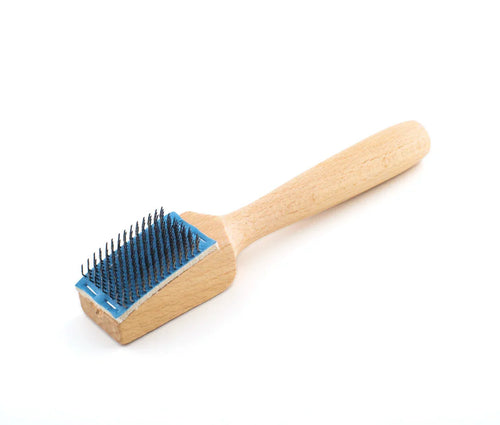
Technically, the sole is the most important part of your equipment. In standard dances, everything revolves around the interaction with the floor. When the suede sole becomes saturated with dust, wax, and skin oils from the dance floor, it becomes slippery and hard. This is dangerous for your ankles and knees because you lose control over your 'slides'. I always advise my students to have a special steel sole brush on hand during every training session.
Always brush with short, vigorous strokes from heel to toe to bring the suede fibers back up. This provides the much-needed traction required for an explosive Quickstep. For refined women's ballroom shoes, extra caution is required. The satin of the shoe is fragile; ensure the brush only touches the sole and not the sides of the shoe, as the steel pins can immediately damage the satin weave. If you notice the sole looks truly black and 'greasy', it's time for a thorough brushing until the original gray or beige color of the suede is visible again.
Daily habits for preservation
In addition to major maintenance, there are a few small, practical actions that make a huge difference in the durability of your shoes in practice:
- Let your shoes rest for at least 24 hours after each dance session. If possible, alternate between two pairs of shoes if you train several days in a row.
- Always use heel protectors for satin women's shoes. This not only prevents the heel layer from wearing down to the metal pin but also provides extra stability when turning pivots.
- Clean patent leather after use with a soft, damp cloth and a drop of special patent oil. This prevents the shoes from 'sticking' together when your feet pass each other in basic movements, which can prevent nasty falls.
- Always store your shoes in a breathable cotton shoe bag. Avoid plastic bags, as they promote condensation and allow unpleasant odors to settle in.
An aspect that is often underestimated is the hygiene of the insole. Due to the intensity of ballroom dancing, a foot sweats more than in normal walking shoes. What I often recommend to keep the insole supple is to wipe it occasionally with a slightly damp cloth and a mild, pH-neutral soap solution. This removes the salt crystals from your sweat that would otherwise make the insole hard and slippery. Ultimately, good maintenance is not just a matter of aesthetics; it is directly linked to your technical performance and your safety on the dance floor.
Effectively Brushing Suede Soles
Anyone serious about ballroom dancing knows that the connection to the floor starts with the sole. What I often see with dancers who are just starting out is that they only brush their shoes when they are almost slipping during a fast turn or a powerful heel lead. That is actually too late. A suede sole works optimally because of the small fibers that stand upright; these provide the perfect balance between sliding and grip. After a few hours on the dance floor, dust, floor wax, and microscopic dirt particles accumulate, causing the sole to "glaze". This creates a smooth, shiny surface that we also call 'glazing' in the dance world.
With high-quality women's ballroom shoes, this suede is often very delicate. This means you must brush with care to extend the life of the sole. In practice, I often see dancers pressing much too hard, simply scraping the suede off instead of roughening it. The goal is not to remove material, but to loosen the fibers from the accumulated cake of dirt and wax.
The right technique for maximum grip
Always use a special steel shoe brush with a handle. A common mistake is to lay the brush flat on the sole and make long strokes. What works much more effectively is making short, powerful movements from the wrist. Start in the center of the sole and work towards the edges. You will see a grayish powder released; this is the accumulated dirt that was blocking your grip.
Especially with the sturdier men's ballroom shoes, which often have to endure more pressure during standard dances, it is essential to also include the heel edges. During a powerful drive in the Waltz or Tango, the stability of your heel is crucial. If the edges of your sole are slippery, you lose that vital control the moment you shift your weight.
Tips from dance practice
- Always brush away from your body: The steel bristles of a dance shoe brush are razor-sharp. I have seen students cut their hands more than once because they were brushing towards themselves.
- Use a protective cover: Never put your brush loose in your bag. The metal wires can irreparably damage the satin or leather of your expensive shoes.
- Look at the floor: In practice, I notice that the condition of the dance floor determines how often you need to brush. On a very greasy floor, you sometimes have to roughen your soles every thirty minutes to stay safe while turning.
- Do not wet: A persistent myth is that you make suede soles rougher with water or oil. Never do this. This makes the suede hard and brittle, eventually causing it to detach from the sole plate.
What I often advise is to make brushing a standard part of your warm-up. By briefly roughening your soles before you hit the floor, you force yourself to check the state of your footwear. Do you notice the suede getting very thin in certain places or starting to peel off? Then you're in time to have them repaired before dangerous situations arise during the dancing of your routine.
Keeping the Suede Exterior Beautiful
Nothing looks more elegant on the dance floor than a pair of deep black or flesh-colored suede shoes that are perfectly maintained. But let's be honest: suede is a magnet for dust, resin, and scuffs from your dance partner's heels. In practice, I often see dancers only take action when their shoes already look worn out, while preventive maintenance makes the difference between a pair that lasts one season or continues to shine for three years. The material is delicate because it has an open structure, meaning dirt can penetrate deep into the fibers if you don't address it immediately.
Brushing: The key to a fresh look
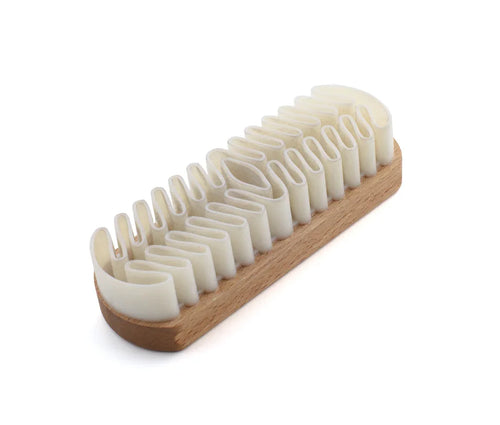
What I often see with beginners is that they put their shoes directly into a closed bag after class. This is a common mistake. Suede needs to breathe, especially after it has become warm from the friction of ballroom dancing. An essential part of maintenance is using a soft suede brush. Unlike the steel brush used for the soles, you should use a brush with rubber nubs or soft hog hair for the upper part of your women's ballroom shoes.
Always brush in one direction. If you go back and forth, you damage the 'nap' of the suede, making the material look patchy and dull. For stubborn scuffs, for example from a gentleman's black heels that accidentally hit your foot during a fast Quickstep, you can use a suede eraser. You use this to erase the stain, as it were, without crushing the fibers. This works much better than trying to rub the stain away with a damp cloth, which often only worsens the damage.
Protection and prevention
A technique I always recommend to my students is to waterproof the shoes before the very first dance step. A good dirt- and water-repellent spray applies an invisible layer over the fibers. This is especially crucial for men's ballroom shoes, which often have intensive contact with the floor and collect dust faster at the toe. Be careful to spray from at least 20 centimeters away; if the shoe gets too wet, rings can form that you can never get out.
- Never use water: Suede and water are enemies. Water causes the leather to harden and permanent color change.
- Resin is the enemy: If resin from the dance floor gets on the upper of your shoe, let it harden completely before trying to remove it with a small brush.
- Shoe trees are essential: After an intensive training session in standard dances, your shoes are often slightly damp from perspiration. Use cedar shoe trees to maintain the shape of the suede and extract moisture naturally.
- Color restoration: Is the black no longer as deep black as when purchased? There are special suede sprays with pigment that can refresh the color, but always test this first on an inconspicuous spot at the heel.
Common practical mistakes
A mistake I regularly encounter is using regular shoe polish on suede. This might sound logical to a layperson, but it ruins the texture immediately by flattening the fibers with grease and wax. Once this has happened, the shoe is actually no longer salvageable for the competition ring. Also, drying your shoes near a heater is out of the question. The heat causes the suede to dry out and crack at the points where your foot bends, such as at the base of the toes. Always let them dry at room temperature, preferably in a fabric shoe bag that keeps dust out but lets air in. By including these small habits in your routine, you ensure that your material stays looking as professional as your footwork.
Lifespan of Ballroom Shoes
In practice, I often see dancers only replace their shoes when holes literally appear or the sole has completely come loose. That's a shame, because the lifespan of your footwear has a direct impact on your technique and your joints. How long a pair lasts depends heavily on the intensity with which you train. A recreational dancer who takes an hour of lessons once a week can often use a pair for two years. But do you train three to four times a week for competitions? Then you're lucky if you reach six months without the support noticeably decreasing.
What I often see with beginners is that they underestimate how much friction the floor exerts on the material. In ballroom dancing, and specifically in standard dances like the English Waltz or the Tango, we make extensive use of 'brushes' where the feet glide past each other. This constant contact causes wear on the inside of the shoe. Therefore, it is essential that women's ballroom shoes are made of high-quality satin or leather that can take a beating, but even the best material has a limit.
Factors that accelerate wear
A common mistake is wearing the shoes outside the dance hall. The suede under the sole is extremely vulnerable to moisture and dirt from the street. As soon as suede gets wet or comes into contact with grease, it loses its unique grip-and-glide properties. Additionally, perspiration plays a huge role. During an intensive Quickstep, you produce a lot of heat and moisture. If you leave your shoes in a sealed bag immediately after class, the leather doesn't get a chance to breathe and the salts in your sweat will break down the material from the inside out.
- Floor quality: A rough or poorly maintained parquet floor acts like sandpaper on your soles.
- Body weight and technique: The more pressure you apply during your 'drive' from the heel, the harder the heels have to work.
- Storage: Shoes not kept on a shoe tree lose their shape faster, which affects the fit and support around the instep.
When is it time for a new pair?
The most important indicator that you need a replacement is not always the exterior, but the stability of the shank (the steel or plastic reinforcement in the sole). In practice, you notice this because your foot tires faster or because you feel less balance during turns. With men's ballroom shoes, you often see the leather around the forefoot stretch too much over time. This causes the foot to slide in the shoe, which causes blisters and reduces your control over the floor.
Another critical point is the heels. For women, it is an absolute must to use heel protectors. As soon as the heel tip has worn down to the metal pin, the shoe is actually already irreparably damaged and you risk damaging the dance floor. Also, regularly check the thickness of your suede sole. If you notice that you're starting to feel the hard inner sole through the suede, you no longer have cushioning. At that point, it's not just a matter of comfort, but also of injury prevention for your knees and back. Better to invest in a new pair on time than to continue on "dead" shoes that hinder your dance performance.
Optimal Storage and Ventilation
After an intensive training evening at the dance school, it's tempting to throw your bag in the corner and not look at it again until the next lesson. What I often see with students who have to replace their shoes after a few months is that they simply leave their footwear in their bag. That is disastrous for the lifespan of your material. Sweat is the biggest enemy of both leather and satin, the materials that most high-quality ballroom dance shoes are made of.
When you train for standard dances, your feet produce a lot of heat and moisture. If you leave your men's ballroom shoes in a closed plastic bag or a cramped sports bag immediately after dancing, the moisture has no chance to escape. This affects the glue bonds of the sole and causes the suede on the bottom to become hard and slippery. In practice, you notice this because your grip on the parquet floor suddenly decreases, which can be dangerous during fast turns or powerful pivots in the tango.
How to air them out
A common mistake is drying shoes near a radiator or in full sun. The direct heat causes the leather to dry out and crack, while satin loses its shine and becomes brittle. What you should do instead is take your shoes out of the bag immediately upon arriving home and place them in a dry spot at room temperature. For women dancing in women's ballroom shoes with a satin finish, I advise never to store them in a damp basement or shed, as mold can quickly attach to the delicate fibers of the fabric.
Use the right tools
To maintain the shape of your shoes, shoe trees are essential. Especially with the sturdier men's models, this prevents deep wrinkles from forming in the leather at the instep, which eventually leads to cracks. For the inside of the shoe, you might consider using cedar shoe trees; these not only absorb moisture but also neutralize odors naturally without using chemical sprays that can damage the lining.
In practice, I see that dancers who maintain a fixed routine for their care last up to twice as long with their footwear. Here are a few concrete steps you can apply immediately:
- Take your shoes out of your bag immediately after class to prevent the material from suffocating.
- Use a cotton shoe bag instead of a plastic bag; cotton breathes and protects your standard dance shoes from scratches from other items in your bag.
- Always briefly brush the suede soles with a steel brush before storing them, so accumulated dirt and wax don't penetrate the fibers during storage.
- If possible, alternate between two pairs of shoes if you train several days in a row, so each pair has at least 24 hours to dry completely.
It might sound like a lot of extra work after a tiring lesson, but proper ventilation is the difference between shoes that fall apart after six months and shoes that maintain their support and elegance for years. Your feet (and your wallet) will thank you the next time you step onto the dance floor for a smooth English Waltz or a powerful Quickstep.
Protection During Dancing
What I often see on the dance floor is that dancers only start caring for their shoes when they get back home. But the actual protection of your equipment begins the moment you step into the dance hall. Ballroom dancing is physically demanding, not only for your body but also for your footwear. By being conscious of your equipment while dancing, you significantly extend the life of your investment and prevent unnecessary wear on the delicate suede soles.
Heel Protectors: Indispensable for Women
A common mistake among beginning dancers is ignoring heel protectors. In practice, I often see the heel of elegant ballroom shoes wear down to the metal pin within a few weeks. This is not only harmful to the dance floor – which often earns you a stern reprimand from the hall owner – but it also compromises your stability. A transparent plastic heel protector provides an extra layer of grip and prevents the heel from making direct contact with the parquet.
My tip: replace your heel protectors as soon as you see they are worn through. If you wait too long, you risk the protector melting onto the heel due to the friction and heat during turns, which can damage the entire heel layer when removed. For men, a different form of protection applies; although they don't use plastic caps, it is essential to check if the heel of the ballroom shoes is starting to wear inward or outward due to incorrect weight distribution during the 'heel lead' in the Waltz or Quickstep.
The Enemy of the Suede Sole
The suede sole of a dance shoe is designed for a perfect balance between glide and grip. In practice, however, I often see dancers quickly walking to the bar or leaving the locker room without changing their shoes. A small amount of spilled drink or even a damp floor in the hallway can irreparably damage the suede fibers. When suede gets wet and then dries, it becomes hard and slippery, causing you to lose the essential grip for your spins.
If you notice during a competition or lesson that the floor is very slippery, resist the temptation to spray water on your soles. This is a short-term solution that ruins the sole in the long term. Instead, use a steel sole brush to stand the fibers back up. Always do this from the toe to the heel to respect the structure of the leather.
Conscious Foot Placement and Technique
Protection is also in the way you move. During standard dances, we make extensive use of the sides of the foot and deep 'brushes' along the floor. A common problem is that dancers let their feet hit each other too hard during a chassé or a lockstep. This causes ugly scuff marks on the satin or leather of your ballroom shoes.
- Watch your 'tracking': ensure your feet pass each other closely without the insides of the shoes hitting hard.
- Check the floor for splinters or loose nails, especially at temporary competition venues; these can gouge deep scratches into your soles.
- Use castor oil only in extreme emergencies on extremely slippery floors, and realize that this clogs the pores of the suede.
- Regularly switch pairs if you train several hours in a row, so the material has the chance to wick away perspiration moisture.
By integrating these small habits into your dance routine, you ensure that your material supports you instead of hindering you. The result is not just a shoe that looks like new for longer, but above all a constant quality of your footwork, lesson after lesson.
Frequently Asked Questions
How do you care for ballroom dance shoes?
Care for ballroom dance shoes by letting them air out properly outside the bag after every training session. Use cedar shoe trees to maintain the shape and absorb moisture. Regularly clean the leather with a damp cloth and special shoe polish. For satin shoes, use a mild cleaner. Avoid direct sunlight or heaters, as this can dry out or irreparably damage the material of your dance shoes.
How do you keep suede shoes looking good?
To keep suede shoes looking good, regular brushing with a special suede brush is essential. Always brush in one direction to roughen the fibers and remove deep-seated dirt. Use a protective spray against moisture and stains before wearing them. For stains, you can use a suede eraser. Wear suede dance shoes only indoors on the dance floor to prevent wear and stubborn dirt from outside.
How long do dance shoes last on average?
On average, dance shoes last between six months and two years, depending on the intensity of the ballroom dancing. With weekly use, the soles and internal support wear out over time. Professional dancers often replace their shoes faster, while recreational dancers use them longer. Good maintenance, such as timely brushing and airing, significantly extends their lifespan. Replace them as soon as the grip decreases or the support fails.
How to brush dance shoes?
Brushing dance shoes is done with a steel shoe brush specifically designed for suede soles. Place the brush on the sole and pull it with firm pressure from the heel to the toe. This removes accumulated dirt and wax from the dance floor, immediately restoring grip. Preferably do this before every dance lesson or competition. Be careful not to touch the delicate upper material of the shoe to prevent damage.
Why shouldn't I wear my ballroom shoes outside?
Ballroom shoes have a soft, flexible suede sole specifically made for wooden dance floors. When you walk outside with them, the rough asphalt immediately damages the delicate sole. Moreover, moisture and dirt soak into the suede, causing loss of grip and making the sole hard and slippery. Therefore, always use separate shoes for outside and only put on your dance shoes upon arrival at the dance school.
How do I prevent my dance shoes from smelling?
Prevent unpleasant odors by taking your dance shoes out of your bag immediately after ballroom dancing. Let them dry in a cool, well-ventilated place. Use cedar shoe trees or special odor eaters that absorb excess moisture and bacteria. Additionally, always wear clean dance socks or tights to limit sweat absorption by the insole. If necessary, you can use a mild disinfectant spray that is safe for the shoe's material.
When should I replace the soles of my dance shoes?
The soles of ballroom shoes should be replaced if the suede layer is completely worn through or if regular brushing no longer restores the grip. In standard dances, you often notice this by an unsafe, slippery feeling on the floor. A cobbler specialized in dance shoes can glue a new suede sole over the old one. Do this in time to prevent the internal structure of the shoe itself from being irreparably damaged.
The beauty of ballroom shoes is that they are much more than just an accessory; they are your most important instrument on the dance floor. What I especially want to share with you is that consistent maintenance – such as regularly brushing the suede soles and letting them air out properly after every training – makes the difference between a rough dance experience and


