

Table of Contents
- Why you really should leave those sneakers in the closet
- The anatomy of the perfect ballroom shoe
- My favorite brands: From Werner Kern to Rummos
- Standard vs. Latin: Why you can't keep dancing on just one pair
- Wide feet, bunions, and blisters: The honest guide to fit
- How do you keep your shoes (and your ego) shiny?
- Frequently asked questions about the ballroom scene
Be honest: did you also sit with your feet in a bowl of cold water last night after your first dance lesson because they were glowing so much? I know exactly how it feels. You think: "I'm just starting, those old pumps or sneakers will probably work too," but before you know it, you're slipping like Bambi on ice or sticking to the floor as if there's chewing gum under your soles. Ballroom standard shoes are not an unnecessary luxury or a marketing trick of the dance world; they are your best friend on the floor. A good ballroom shoe has a suede sole for the perfect balance between grip and glide, a closed toe for stability during those long forward steps, and a heel that is positioned exactly under your heel so you don't tip backward during an elegant waltz.
If you want to get serious, I recommend first reading my complete Latin & Ballroom Dancing: Styles, Shoes and Clothing Guide so you understand the bigger picture. But today we're really diving deep into those beautiful, closed shoes we call 'Standard'.
Why you really should leave those sneakers in the closet
Listen, I get it. You've just spent a fortune on your first series of lessons and now you need special shoes too? But believe me, as your instructor I see it happening every week: ladies trying to do the Quickstep in their favorite sneakers. Spoiler alert: that often ends in a sprained ankle or at least a very frustrated dancer. Sneakers have a rubber sole. Rubber is made to have grip on the street. On a dance floor, you actually want to be able to glide in a controlled way. If you try to turn on a rubber sole, your feet stay put while your knees keep turning. That's a one-way ticket to the physio, and nobody wants that.
Real ballroom shoes, like those in our Ballroom & Standard collection, have a chrome leather (suede) sole. This material is magical. It gives you enough grip not to slip during a powerful Tango step, but lets you float effortlessly during an English Waltz. Moreover, they are feather-light. Your regular pumps often weigh a kilo each (emotionally speaking), while a dance shoe from a brand like Werner Kern or Anna Kern is so light you almost forget you're wearing them. That makes quite a difference in calf fatigue after an hour of intensive training!
What I often see with my students is that they're afraid dance shoes aren't sturdy enough. "They look so fragile," they say. But the opposite is true. A good dance shoe has a steel shank in the sole that supports your arch. This is crucial because in ballroom you dance a lot on the ball of your foot, but also make powerful 'heel leads' (steps where you land on your heel). Without that support, you'll get cramps under your foot, and that's a real buzzkill.
The anatomy of the perfect ballroom shoe
Let's talk about what such a shoe looks like, because there's a reason they're different from the open sandals you see in Latin. In Ballroom (Standard), we dance much more 'through' each other. You stand close to your partner and make large, flowing movements forward and backward.
The closed toe: This is the most striking feature. Why no open toes? Well, first of all for safety. In the hustle and bustle of a dance floor, everyone occasionally gets a nudge from their partner's shoe. A closed toe protects your toes. But technically, it's even more important: a closed toe ensures your foot stays compact. In 'swing' dances (Waltz, Quickstep, Slow Foxtrot), you have to be able to place your feet very precisely. A closed toe helps you maintain that tight line.
The heel height and shape: For beginners, I always recommend a heel between 5 and 6.5 centimeters. Don't go straight for those 8 cm 'killer heels' from Portdance if you've never stood on a dance floor before. The heel of a Standard shoe is often slightly wider and positioned more centrally under the heel than in a regular pump. This gives you that much-needed stability. Brands like Ray Rose are known for their fantastic balance; you feel grounded immediately.
The material: Usually you see satin or leather. Satin (often in a skin color or 'flesh' tone) is the standard for competitions because it makes your legs look longer and doesn't distract from the movement. However, for training in class, many of my friends choose leather or suede because it's a bit easier to keep clean and molds to your foot faster. If you're starting out, a beautiful satin shoe from Diamant is truly a classic you won't regret.
My favorite brands: From Werner Kern to Rummos
If you look around a dance school's locker room, you'll see a few names popping up repeatedly. And for good reason. Each brand has its own 'vibe' and fit.
- Werner Kern: This is the Mercedes of dance shoes. They come from Germany and the quality is indestructible. What I love about Werner Kern is that they work with high-quality Italian leather and their footbeds often have an extra cushion (comfort fit). If you have foot pain, this is your go-to brand.
- Anna Kern: The younger, trendier sister of Werner Kern. Slightly more affordable, often with more modern designs, but still with that great fit. Perfect if you're buying your first 'real' pair.
- Rummos: These Portuguese know what dancing is. Rummos shoes are often incredibly flexible. They have a special sole technology that absorbs shocks. I often recommend these for dancers who put in many hours because they really save your feet.
- Portdance: Want something that looks like it came straight off the catwalk? Portdance makes beautiful shoes with a bit more glitter or special straps, without compromising on the technical requirements of a ballroom shoe.
- Paoul: If you really want to go all out. This Italian brand is pure craftsmanship. You pay a bit more for it, but the balance and finish are unparalleled. It's like having angels on your feet.
Don't go for a brandless cheapie from a vague Chinese website for your first pair. Your feet are your instrument. If you dance on bad shoes, you'll teach yourself incorrect technique because you're constantly compensating for the lack of balance. That's a waste of your talent!
Standard vs. Latin: Why you can't keep dancing on just one pair
I get this question so often: "Can't I just buy one pair for both?" In the beginning, during your very first trial lesson, I'll turn a blind eye. But as soon as you notice the difference, you won't want to go back. It's a bit like playing tennis with a squash racket; it's possible, but far from ideal.
In Latin (Salsa, Bachata, Chacha, Rumba), you dance much more on the front of your foot. The shoes are open, super flexible, and the heel is often placed slightly further back to help you with those fast hip movements. In Ballroom Standard (Waltz, Tango, Quickstep), however, you make those 'heel leads'. You land on your heel and roll your foot. If you try this with a Latin shoe, there's a good chance your heel will buckle or you'll stub your toes because they slide out of the open front.
Furthermore, the balance is different. In a Standard shoe, you are placed slightly more 'back' in your heel support, which is essential for the posture (the frame) you assume with your partner. If you're serious about both styles, invest in two pairs. You'll notice your technique in both styles leaps forward as soon as you use the right tools. Just look at our Ballroom & Standard collection to see the difference in construction compared to the Latin models.
Wide feet, bunions, and blisters: The honest guide to fit
Let's talk about the elephant in the room: foot problems. We don't all have those perfect narrow 'model feet'. Maybe you have a wide forefoot, a hallux valgus (that annoying bunion by your big toe), or you simply get blisters easily. Don't panic, there's a shoe for every foot.
Wide feet: Brands like Werner Kern have specific 'Wide Fit' models. Never try to cram your wide foot into a shoe that's too narrow in the hope that it will stretch. Yes, leather stretches a bit, but satin hardly at all. If a shoe already pinches your little toe when trying it on, it's not the right match. A dance shoe should fit like a second skin – tight, but without cutting off your circulation.
The 'bunion' (Hallux Valgus): Many dancers suffer from this. Look for shoes with a softer upper or models specifically designed to reduce pressure on that joint. Some suede models from Rummos are fantastic for this because the material is much more forgiving than stiff leather.
Preventing blisters: Don't buy your shoes too big! This is the biggest mistake beginners make. In a regular shoe, you want some space at your toes, but in a dance shoe, your foot must be rock solid. If your foot slides in the shoe, you get friction, and friction means blisters. My tip: try on your shoes at the end of the day when your feet are a bit swollen. That's also how they'll be after half an hour of dancing.
And if you do feel a spot? Use blister plasters before the blister forms. I always have a supply in my dance bag. But let's be honest: a well-fitting shoe from a quality brand like Bloch or Capezio should actually be comfortable from day one.
How do you keep your shoes (and your ego) shiny?
You've finally scored that perfect pair of Werner Kerns. How do you ensure they last longer than one season? The secret is in the sole.
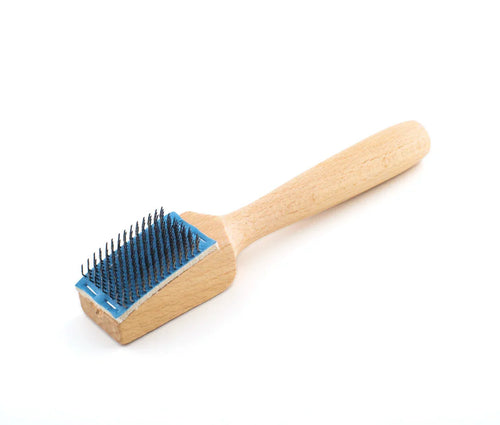
That suede sole we talked about? It gets slippery over time. Dust, floor wax, and dirt get into the suede fibers, causing it to be flattened. You'll notice it immediately: you start slipping again. The solution? A shoe brush with steel bristles. Brush the soles roughly after every two or three lessons. Do this carefully and always from the center outwards, otherwise you'll tear the sole. You'll see that the sole becomes rough again and you'll have that wonderful grip back.
Another golden tip: heel protectors. These are small plastic caps that you slide over your heel. Why? First, they protect the heel of your shoe from wear and tear. Second, they give you just that little bit of extra surface area for stability. And third (and dance schools love this): they prevent you from making scratches on the parquet floor. They are even mandatory at many competitions and some dance schools!
And finally: let your shoes air out! Don't throw them in a sealed plastic bag at the bottom of your closet after class. Dance shoes get damp from sweating (yes, even you sweat, girl!). Take them out of your bag, put them in a dry place (not on the radiator, as the leather will dry out!) and let them dry slowly. This prevents unpleasant odors and keeps the material looking good much longer.
Frequently asked questions about the ballroom scene
Because I know you have a thousand questions when you're just starting out, I've listed the most Googled questions for you. Nice and easy!
1. What exactly does ballroom mean?
Ballroom is actually a collective name for a set of partner dances that are danced the same way all over the world. The 'Standard' category includes the English Waltz, Tango, Viennese Waltz, Slow Foxtrot, and Quickstep. It's about elegance, flowing movements, and a tight posture. The term comes from the Latin 'ballare', which simply means to dance. So it has nothing to do with a 'ball' in the sense of a round object, but everything to do with the 'ball' (the party).
2. Which ballroom dances are there?
As I already mentioned, we have the 'Big Five' in Standard:
- English Waltz: Slow, romantic, lots of rising and falling.
- Tango: Powerful, staccato, full of passion (and no, not that rose between your teeth, that's for movies).
- Viennese Waltz: Fast, turning, you're guaranteed to get dizzy at first.
- Slow Foxtrot: The hardest! Very technical and fluid, as if you're gliding across the floor on clouds.
- Quickstep: Cheerful, fast, full of little jumps and lightning-fast footwork.
3. What is the ballroom scene?
This is a funny question because there are actually two 'ballroom scenes'. You have the classic world of dance schools and competitions (which we're talking about). But if you're young and spend a lot of time on TikTok, you might have also heard of the 'Ballroom Culture' from the LGBTQ+ scene (think of the series Pose or 'voguing'). Although both worlds revolve around expression and competition, they are very different. We focus here on classic ballroom dance, but the passion is just as great in both scenes!
4. Is ballroom two words?
In English, it is usually written as one word: ballroom. In Dutch, you sometimes see 'balzaal dansen', but we actually always use the English term. So: ballroom, one word, lowercase (except at the beginning of a sentence, of course).
5. How long do dance shoes last?
If you dance once a week and maintain them well (brushing!), you can easily last a year or two with a good pair. Do you dance three or four times a week? Then you'll probably need a replacement after a year. You often notice it by the support; if the shoe starts to feel 'flimsy', it's time for a new pair from our Ballroom & Standard collection.
6. Can I wear ballroom shoes outside?
NEVER! Really don't do it. The suede sole is only made for indoor floors. One walk across a wet sidewalk and your sole is ruined. The suede becomes hard, picks up dirt, and loses all its dancing qualities. Wear your regular shoes to the dance school and only change into your dance shoes there. It's also a kind of ritual: as soon as those shoes go on, you're a dancer.
Girl, I hope you're a bit wiser now in the jungle of dance shoes. The most important thing is that you enjoy the process. Yes, those first lessons are tough and yes, your feet will protest occasionally, but with the right shoes on your feet, you're already 1-0 ahead. Have questions? Text me or stop by the shop. We'll find that perfect pair for you, promised!
Ready to conquer the floor? Take a look at our latest additions and give your feet the love they deserve. You'll notice the difference from the very first step!
View all Ballroom & Standard shoes here and find your perfect match!


