

Table of Contents
- Why Choose Foxtrot Shoes
- Essential for Standard Dancing
- Comfort in Ballroom Shoes
- Materials and Classic Design
- Tips for the Right Fit
- Maintenance of your Shoes
- Frequently Asked Questions
Nothing ruins the magic of a tight Slowfox faster than a stiff sole or a heel that doesn't offer quite enough support during a powerful turn. In my years on the dance floor, I have noticed that Foxtrot shoes are the best choice for ballroom because they offer the perfect balance between the necessary flexibility for your footwork and the stability that is essential in ballroom dancing at every level. Whether you are a beginner taking your first steps or an advanced dancer training for competitions, the right equipment determines how confidently you move across the parquet.
During my lessons, I often see students struggling with their balance, simply because their footwear is not suitable for the specific techniques of standard dances. Good ballroom shoes should feel like a second skin, with a suede sole that gives exactly enough grip for a controlled push-off without sticking to the floor. I always advise my dancers to invest in a brand that understands how pressure distribution works during a heel lead or a floating waltz. In this article, I explain why this specific brand is my personal favorite and what you should look for when purchasing your next pair.
Why Choose Foxtrot Shoes
In the dance school, I daily see the difference between dancers who stay stuck in their sneakers and dancers who make the switch to specific footwear. In ballroom dancing, and particularly the standard dances such as the English Waltz or the Quickstep, everything revolves around control over your center of gravity and the fluid rolling of the foot. What I often see is that dancers struggle with their balance during a 'heel lead'. A regular shoe often blocks this movement, while Foxtrot shoes have exactly the right curve in the sole to let this transition proceed smoothly.
In practice, I notice that many beginners think a sturdy street shoe will suffice, but nothing is further from the truth. The sole of a dance shoe must combine two extremes: you must be able to glide, but you must not slip. The chrome leather (suede) soles of Foxtrot offer exactly that balance. A common mistake is that dancers continue too long on shoes whose soles have become 'clogged' with dirt and grease, causing them to lose their grip during powerful movements such as a pivot or a spin.
The anatomy of stability and support
What distinguishes Foxtrot is the attention to the internal structure of the shoe, also known as the 'shank'. This is the bridge in the shoe that supports your instep. In standard dances, you put a lot of pressure on the midfoot during the rise and fall. Without the right support, your feet become tired within an hour, which immediately negatively affects your posture. Heel placement is crucial here. The heels of the ladies' ballroom shoes from Foxtrot are placed exactly under the natural center of the heel. This ensures that your weight does not fall too far back, which is essential to maintain that characteristic 'swing' in the Waltz without losing your balance.
For the gentlemen, a different technical aspect applies. Where a Latin shoe often has a higher heel to push the weight forward, a standard shoe must provide a stable, lower base for the powerful steps forward. The men's ballroom shoes in our collection are designed with a heel that absorbs the shocks of the heel lead, which prevents injuries to the knees and lower back in the long term.
Why material choice makes the difference
I often get the question whether leather or satin is better. In practice, this depends on how intensively you dance. Satin is the standard for competitions because of its elegant appearance, but leather or suede molds faster to the unique anatomy of your foot. Foxtrot uses materials that 'breathe', which is not a luxury during an intensive training evening. Here are a few points I always look for when advising on shoes:
- Flexibility: The shoe must bend at the ball of the foot but remain stiff at the arch.
- Heel closure: There should be no space between your heel and the back of the shoe; this prevents blisters and instability.
- Sole maintenance: Always use a suede brush to keep the fibers of the sole open for optimal grip.
A common mistake I see with advanced dancers is continuing to wear worn-out shoes for too long. If the lateral support disappears, your ankles will wobble during fast side steps in the Quickstep. The construction of Foxtrot shoes is built to maintain that lateral stiffness even after months of intensive use. This gives you the confidence to go all out in your choreography, knowing that your shoe will not let you down during a sudden stop or turn.
Essential for Standard Dancing
In practice, I often see that dancers underestimate the impact of their footwear on their technique, especially when they make the switch from recreational dancing to serious ballroom dancing. In standard dances, such as the English Waltz, the Slowfox, or the Quickstep, the way your foot hits the floor is fundamentally different than in Latin or Salsa. Where in Latin you dance a lot on the ball of the foot, the standard disciplines revolve around the 'heel lead'. Without the right shoe, it is virtually impossible to make that fluid, gliding movement that the Foxtrot is known for. A common mistake I see in beginners is that they try to dance in shoes with a rubber sole or, worse still, in shoes with a heel that is too high and narrow. For the ladies, a closed toe in standard dancing is not an aesthetic choice, but a functional one. While dancing backwards in a Waltz or Quickstep, there is a high chance that your partner will accidentally step on your toes. A sturdy, closed shoe protects your feet. When selecting the right ballroom shoes for ladies, it is therefore essential to pay attention to the sturdiness of the heel counter and the placement of the heel; it must be directly under the center of your own heel for maximum stability during the descent.The anatomy of a good standard shoe
What truly makes a shoe suitable for standard dances is the construction of the sole and the heel. In practice, I notice that dancers who complain about pain in their instep often wear shoes that are too flexible in the middle section. In standard dances, you need a certain degree of stiffness in the 'shank' (the steel arch in the sole) to support your foot during the 'rise and fall'.- Suede soles: This is the standard for every serious dancer. Suede offers the perfect balance between grip and slip. You have enough resistance to push off powerfully for a large step in the Quickstep, but you can still pivot effortlessly without straining your knees.
- Heel height and shape: For men, a heel of 2 to 2.5 cm is the norm. This heel must be wide enough to absorb the impact of the heel lead. For men, good technique is impossible without the right heel shape, something you can immediately see in our collection of ballroom shoes for men.
- Cushioning: The constant upward and downward movement in the Waltz requires excellent shock absorption under the ball of the foot to prevent fatigue in the metatarsals.
Why the right shoe improves your technique
I often explain to my students that your shoes are your tools. If you dance in regular shoes, you are constantly compensating for a lack of balance or grip. This leads to a cramped posture in the shoulders and a loss of the 'frame' that is so important in ballroom. In practice, I see that dancers who switch to specialized ballroom shoes immediately radiate more self-confidence on the floor. You simply dare to take larger steps because you know your shoe 'grabs' the floor. In the Tango, where the movements are sharp and staccato, a sturdy shoe helps you to shift your weight faster without losing your balance. The lateral stability that a good standard shoe provides ensures that your ankles do not buckle outwards during fast side steps or chassés. So it's not just about how the shoe looks in the dance school mirror, but especially about how it supports your biomechanics during every step you take.Comfort in Ballroom Shoes
In practice, I often see that dancers confuse comfort with 'softness'. But in ballroom dancing, comfort is primarily about the right support during complex movements such as the heel-flat action in the Waltz or the powerful push-off in the Quickstep. If your feet already burn after half an hour of training, it's usually not due to your condition, but to the construction of your footwear. A good shoe must act as an extension of your foot, where arch support is crucial to prevent fatigue in the midfoot.The anatomy of a comfortable dance shoe
What I often see is that beginners underestimate how important the flexibility of the sole is in combination with a stable heel. In standard dances, you constantly move through your knees and ankles, with your weight moving fluidly from the heel to the ball of the foot. High-quality ballroom shoes for ladies are therefore equipped with a suede sole that offers exactly the right balance between grip and slide. This is essential; a sole that is too stiff causes friction that directly transfers to your ankle and knee joints during rotational movements. A few specific features that make the difference between a painful evening and hours of dancing pleasure are:- Extra latex padding under the ball of the foot for shock absorption during powerful steps.
- A reinforced heel counter that keeps the heel in place and prevents lateral instability.
- Linings made of microfiber or leather that absorb moisture and prevent the foot from sliding in the shoe.
- A balanced heel that is placed directly under the center of gravity of the heel.
The balance between stability and freedom of movement
A common mistake when fitting ballroom shoes is choosing a size that is too loose "so the toes have room". In the dance world, that is precisely a recipe for blisters and instability. The shoe must fit snugly, almost like a second skin, so that no empty space is created where the foot can rub. For male dancers, the heel height and the firmness of the instep support are often points of attention. The ballroom shoes for men usually have a heel of about 2 to 2.5 centimeters. This slight elevation is not for show; it helps the dancer to bring the weight more to the ball of the foot, which significantly increases mobility in the standard dances. In practice, I notice that dancers who invest in shoes with an ergonomic footbed can train much longer without cramps in the arch of the foot. Comfort is not just about cushioning, but also about the angle at which the foot stands in the shoe. In a quality ballroom shoe, this angle is calculated so that the pressure is evenly distributed over the entire foot, even when you make a deep 'swing' or place your weight entirely on one leg. Don't forget that a shoe must 'breathe'. Materials such as high-quality satin or supple calf leather mold over time to the unique shape of your foot, which only benefits the ultimate comfort. A well-broken-in shoe specifically designed for ballroom ultimately feels more natural than your daily walking shoes.Materials and Classic Design
When I walk onto a dance floor, I immediately feel whether the shoes I am wearing are working with me or against me. In ballroom dancing, and especially the standard dances such as the English Waltz or the Quickstep, the interaction between the sole and the floor is crucial. What I often see with dancers who switch to Foxtrot shoes is an immediate improvement in their balance. This is not due to magic, but to the conscious choice of materials specifically tailored to the mechanics of the foot during a 'heel lead'.
In practice, I see that many beginners make the mistake of choosing shoes with a rubber or synthetic sole. This is disastrous for your knees. Foxtrot shoes are standard equipped with a high-quality suede sole. This sole offers exactly the right amount of resistance: enough grip not to slip during a powerful push-off, but sufficient smoothness to be able to turn effortlessly in a Natural Spin Turn. Maintenance of this material is essential; I always advise my students to have a suede brush in their bag to keep the fibers rough when the floor becomes slippery due to dust.
The anatomy of the shoe
The design of a good ballroom shoe goes beyond just the exterior. It's about the internal structure that supports the arch of the foot. When performing standard dances, you constantly shift your weight from the heel to the ball of the foot. A common mistake is wearing shoes that are too flexible in the middle section, causing the foot to fatigue faster.
- Satin and Calf Leather: For the ladies, satin is the standard, not only for the appearance, but also because it molds to the foot without stretching out. These ladies' ballroom shoes offer the necessary firmness around the instep.
- Padded insoles: Extra cushioning under the ball of the foot is not a luxury, especially during long training evenings where you practice the same chassé hundreds of times.
- Heel stability: The heel of a ballroom shoe is strategically placed under the center of the heel to absorb the upward pressure during rising and falling.
Functionality over aesthetics
Although the classic design of Foxtrot shoes looks timeless, every seam is functional. For the gentlemen, I often see that patent leather or supple calf leather is chosen. An important detail here is the heel height, which is usually around 2.5 centimeters. This specific height helps in maintaining the correct body posture, where the weight is placed slightly more forward over the ball of the foot. In practice, high-quality men's ballroom shoes ensure that the foot roll from heel to toe proceeds fluidly, without the heel 'clapping' on the floor.
What I often recommend to dancers who suffer from their ankles is to pay attention to the sturdiness of the heel counter. A weak heel counter causes instability during fast lateral movements in the Quickstep. The materials that Foxtrot uses, such as reinforced leather in the heel, prevent the foot from sliding in the shoe. This not only reduces the chance of blisters but also gives you the confidence to go all out in your movement across the floor. The classic design is therefore not just a matter of tradition, but a result of decades of biomechanical optimization for dance sports.
Tips for the Right Fit
When you start ballroom dancing, the temptation is great to choose shoes that 'fit nicely' like your daily sneakers. But what I often see in practice is that the same comfortable shoe becomes a weight on your leg after three lessons. A real ballroom shoe should not fit like a slipper, but like an extension of your foot. If there is space left, you lose the precision needed for the complex footwork patterns of the standard dances.Why a tight fit is essential
In ballroom, everything revolves around the foot roll and constant contact with the parquet floor. If there is even a little bit of space between your heel and the back of the shoe, you lose the stability that is crucial for a powerful heel lead in the Tango or the Slowfoxtrot. A common mistake is buying a size where the toes have all the room to wiggle. In practice, the satin or leather of high-quality ladies' ballroom shoes always stretches a bit after a few hours of intensive dancing. So you want them to feel almost too tight when fitting for the first time, as if they are firmly hugging your foot.The anatomy of the heel and the arch
An aspect that is often overlooked is the support of the arch and the position of the heel. In men, I often see them choosing a model that is too wide at the instep. This causes the foot to 'swim' in the shoe, which negatively affects the balance during fast turns in the Viennese Waltz. The right men's ballroom shoes must firmly enclose the metatarsals without pinching the circulation. This gives you the necessary control to steer from your ankles and shift your weight correctly. Here are a few practical things to look for when fitting:- Fit at the end of the day: Your feet expand slightly during the day. If a shoe still fits well in the evening (and therefore fits tightly), you know that you won't get any pressure points even during a long dance party or competition.
- The 'Rise and Fall' test: Stand on the ball of your foot and slowly come back down. Do you feel your heel slipping in the heel counter? Then the shoe is probably too big or the heel shape is not suitable for your foot.
- Thickness of the sole: The sole must be thin enough to feel the floor, but must offer sufficient stiffness at the arch. This is what we call the 'shank' of the shoe, which prevents your foot from fatiguing too quickly.
- Socks and tights: Always fit your shoes with the hosiery you also wear while dancing. A thick cotton sock can make a world of difference compared to smooth dance tights.
Maintenance of your Shoes
You've finally found the perfect shoes for your ballroom dancing, but the lifespan of that pair depends entirely on what you do the moment you leave the dance floor. What I often see in practice is that dancers stuff their shoes directly into a closed bag after an intensive training session and leave them there until the next lesson. This is a common mistake. The moisture from your feet absorbs into the leather or satin and attacks the glue connections and the structure of the shoe. Always let your shoes air out for at least 24 hours in a dry place, but never directly near a heater, because then the leather dries out and starts to crack.
The sole: The heart of your dance shoe
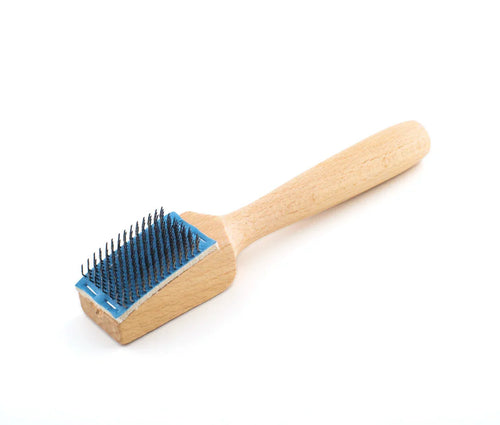
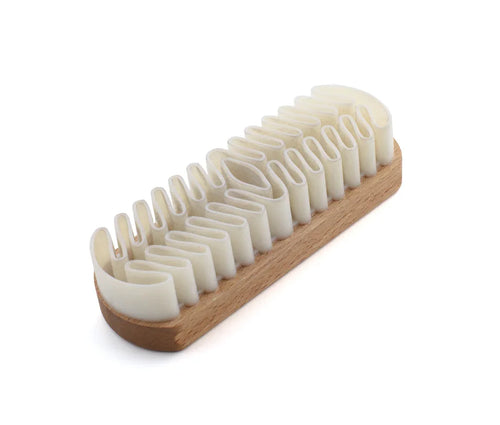
In ballroom shoes, everything revolves around the suede sole. This ensures the perfect balance between grip and glide, essential for those fluid movements in the English Waltz or the Quickstep. Over time, dust, floor wax, and skin oils accumulate under the sole, making it mirror-smooth. A steel shoe brush is your best friend here. A tip I always give: always brush from the toe to the heel to 'open' the fibers of the suede again. Do this regularly, even before you notice you're starting to slip during a pivot or a powerful drive forward.
- Brush your soles every two to three dance sessions for optimal contact with the floor.
- Never use water to clean the soles; this makes the suede hard and unusable.
- Wear your dance shoes exclusively indoors on a suitable dance floor to prevent damage from stones or moisture from outside.
Specific care for ladies and gentlemen
For the gentlemen who invest in high-quality men's ballroom shoes, the use of wooden shoe trees, preferably made of cedar wood, is not a luxury. Cedar wood extracts moisture from the leather and helps maintain the shape of the shoe, which is crucial for the intensive foot roll we make in the standard dances. With patent leather shoes, I often see them 'sticking' together during dancing, which can cause dangerous trips; a small drop of silicone oil or special patent oil on a cloth can prevent this and ensures your feet continue to move smoothly past each other.
With the elegant ladies' ballroom shoes, I often see that the heels are the first point of wear. In practice, I always advise using heel protectors immediately upon purchase. This not only protects the heel tip from wearing down to the metal pin but also gives you just that little bit of extra surface area for more stability during your balance moments. For satin shoes: be extremely careful with liquids. If a stain appears, you can sometimes carefully dab it away with a very slightly damp cloth, but never rub too hard, as you will permanently damage the delicate weave of the fabric.
By making these small routines part of your weekly dance schedule, you ensure that your equipment does not let you down at the moments when it really matters. Whether you are training for a technical exam or preparing for your first competition in standard dancing, well-maintained shoes give you the grip and self-confidence needed for a technically perfect performance.
Frequently Asked Questions
What are the best shoes for ballroom dancing?
The best shoes for ballroom dancing are specially designed with a suede sole for the right balance between grip and glide. Foxtrot shoes offer excellent arch support and stability during rotational movements. For standard dances, ladies often choose a closed model, while men choose a classic lace-up shoe with a low heel for maximum control on the dance floor.
Why do I need special shoes for ballroom dancing?
Special shoes for ballroom dancing are essential for both your performance and your safety. Thanks to the flexible sole, you can roll your feet correctly, which is crucial for technique. Additionally, the suede bottom prevents you from slipping or sticking to the floor. This significantly reduces the strain on your knees and ankles compared to normal shoes with rubber soles.
How do I choose the right heel height for standard dancing?
In standard dancing, the ideal heel height usually varies between 5 and 7 centimeters for ladies. Beginners are best starting with a lower, wider heel for extra stability and balance. Experienced dancers often choose a slightly higher heel to improve their posture and line. It is important that you can stand comfortably without your weight tilting too far forward.
What is the difference between ballroom and latin shoes?
The main difference lies in construction and flexibility. Ballroom shoes for ladies are usually closed to provide support during backward steps. Latin shoes are often open sandals with a more flexible sole for more foot movement. For men, ballroom shoes have a low heel, while latin shoes have a higher heel to shift weight to the front of the foot for fast movements.
How do I maintain the suede soles of my dance shoes?
To maintain the grip of your dance shoes, you must regularly roughen the suede soles with a special steel sole brush. During dancing, dirt and wax accumulate, making the sole slippery. By going over the sole with the brush, you open the fibers again. Always avoid wearing your dance shoes outside, as moisture and dirt can irreparably damage the suede.
Should ballroom shoes be very tight upon purchase?
Yes, ballroom shoes should fit snugly upon purchase, almost like a second skin. Because dance shoes are usually made of leather or satin, they stretch over time and mold to your foot. If a shoe is already too loose in the beginning, you will lose grip later and blisters may form due to friction. However, make sure your toes are not painfully pinched.
Can I use regular shoes for a dance lesson?
Although you can wear regular shoes with a smooth sole for a very first trial lesson, this is not recommended for the long term. Regular shoes lack the necessary flexibility and the specific grip of a suede sole. This can cause you to learn technical errors or even sustain injuries. Investing in quality ballroom shoes directly improves your dance pleasure and technique from the first official lesson.
The beauty of ballroom dancing is that every step is an interplay between technique and emotion. What I especially want to give you is that your shoes form the foundation of that story. Remember above all that a quality ballroom shoe not only immediately improves your posture but also gives you the necessary grip to perform those fluid movements with full control. Whether you choose a classic look or a modern design, the right fit prevents unnecessary fatigue and significantly extends your dancing pleasure. Are you ready to take your technique on the dance floor to a higher level? Then take a look at our ladies' ballroom standard collection or discover the perfect match for your next training in the men's ballroom standard collection. Let go of the technique as soon as the music starts and trust completely in your equipment. Because when your feet and your heart move in the same rhythm, true magic arises in the ballroom.


