

Table of Contents
- Importance of a Good Fit
- Suitable Brands for Width
- Materials for More Space
- Tips for Thick Feet
- Jazz Shoes for Modern Jazz
- Choosing the Right Size
- Frequently Asked Questions
Nothing takes the flow out of a modern jazz class faster than pinching shoes that make your toes numb after just fifteen minutes. The best jazz shoes for wide feet are generally models with a split-sole and strategic stretch inserts, made of supple leather or breathable canvas that molds to the natural shape of your forefoot without pinching. In my years as a teacher, I have seen countless dancers struggle with standard sizes that are simply too narrow for the average foot, which is not only painful but also seriously hinders your technique and balance.
During an intensive jazz dance session, your feet also swell slightly due to heat and effort. If your shoe offers no room at the metatarsals, the midfoot bones, you lose grip on the floor and precision in your jumps. I remember a student who thought she simply had no talent for pirouettes until we switched to a specific wider model; suddenly she could distribute her weight correctly and truly feel the floor. Based on my experience in the studio, I have selected the most comfortable options that provide the right support at the arch, while giving your forefoot all the space it needs to work.
Importance of a Good Fit
In the dance studio, I regularly see students kicking off their shoes halfway through class because they are suffering from cramps or tingling toes. What I often see is that dancers with wider feet tend to buy a size larger to avoid pinching at the sides. This is a common mistake that directly hinders technique. A shoe that is too long creates 'dead space' at the toes, causing you to trip during fast footwork combinations or lose your grip during a powerful push-off for a jump. In modern jazz, contact with the floor is essential. Your feet are your instrument and the connection to the ground. When you choose the right jazz shoes, the width of the shoe must allow for the natural spread of your metatarsals (midfoot bones). In practice, this means that when you stand on one foot and bring your weight forward, your toes should have the space to fan out without being pressed against the side walls of the shoe. If this does happen, you lose a large part of your stability and proprioception — your ability to feel where your body is in space.Consequences for technique and anatomy
A fit that is too tight is not only uncomfortable, it affects the anatomical function of the foot. If the shoe pinches at the sides, the muscles in the arch of the foot are restricted in their freedom of movement. This has direct consequences for specific movements:- Pliés and landings: When landing after a jump, the width of your forefoot acts as a natural shock absorber. If your foot is in a shoe that is too narrow, the pressure cannot be distributed properly, which in the long term can lead to strain on the shins or knees.
- Pirouettes and turns: For a good turn, your weight must be centered exactly over the ball of your foot. In pinching jazz dance shoes, your balance point is distorted, causing you to fall out of the axis of your turn more quickly.
- Articulation: In jazz dance, articulating the foot — moving fluidly from the heel to the toe — is crucial. A shoe that does not fit the width of the instep properly hinders this fluid movement, making your footwork look stiff.
The right balance between support and flexibility
In practice, I often advise dancers with wide feet to look for models with a split-sole construction. This type of sole offers more flexibility in the midsection of the foot, allowing the shoe to adapt more easily to the width of the arch. The material also plays a major role here. Leather has the property of molding to the shape of your foot over time, while synthetic materials often remain stiffer. A good test I always have my students do: put the shoes on and stand in a deep second position plié. Do you feel the edges of your foot pressing over the edge of the shoe sole? Then the shoe is too narrow. The sole of your jazz shoes for wide feet must be wide enough to support your entire footprint, so you can perform any choreography with confidence without fear of injury or discomfort. Remember that a good dance shoe should support you in your movement, not work against you.Suitable Brands for Width
In the dance studio, I regularly see students immediately throwing off their shoes after an intensive modern jazz class because their feet feel constricted. What I often see is that dancers with a wider forefoot try to fit into standard models that are simply cut too narrow. This not only causes blisters but also hinders your technique; if your toes cannot spread flat, you lose your balance during pirouettes and landings. Fortunately, there are a number of brands that have proven in practice to work excellently for the wider foot.Capezio: Flexibility and Width Sizes
Capezio is one of the few brands that truly understands that the anatomy of a foot differs per dancer. The Capezio E-Series (EJ2) is a model I almost always recommend to dancers who struggle with pinching sides. What makes these jazz shoes so suitable is the extremely supple leather. In practice, this leather stretches exactly around the widest points of your foot, such as the knuckles of your big and little toe, after three or four classes. Furthermore, Capezio often offers specific width sizes (M for medium and W for wide). A common mistake is that dancers with wide feet order a size larger in a standard width. Better not do this; you will then have space left over at your heel or your toes, which can be dangerous during fast movements. Instead, choose a brand that carries width sizes so that the length of the sole exactly matches your foot.Bloch and the Power of Neoprene
Another brand that scores high with dancers with wide feet is Bloch. Especially the models that use a 'split-sole' construction with a neoprene insert in the arch, such as the Bloch Neo-Flex, are very forgiving. The neoprene acts as a kind of elastic that stretches in width as soon as you put weight on your foot. While practicing jazz dance, your foot must be able to 'breathe' and expand, especially during jumps where you have to absorb the impact. The materials Bloch uses ensure that the shoe does not cut into your instep. In my experience, these shoes also retain their shape after months of intensive use without the material becoming baggy, provided you choose the right width when purchasing.What to look for when fitting
When comparing different brands for modern jazz, I recommend paying attention to the following points:- The shape of the toe: Look for a rounder toe rather than a tapered model. Brands like Papillon often have a slightly wider base in their standard models compared to French or Italian brands which often run very narrow.
- The stretch factor: Choose leather or a combination of leather and stretch textile. Synthetic leather hardly gives way and will always pinch at the little toe on a wide foot.
- Laces versus slip-on: Models with laces give you more control over pressure distribution. You can leave the laces slightly looser at the bottom to give more room to your forefoot, while tightening them at the top for the necessary stability around the ankle.
Materials for More Space
When you are blessed with a wider foot, fitting new dance shoes can sometimes feel like an impossible task. What I often see in the dance studio is that dancers buy a size larger out of frustration to compensate for the width. This is a common mistake. You end up with extra space at the sides, but your toes no longer have grip and your heel slips out of the shoe with every jump. In practice, the search for the perfect fit is not about the size, but about the choice of material and the construction of the shoe.
The material determines how much the shoe will 'work' while you train. For a wide foot, the elasticity of the material is your best friend, but you don't want to compromise on the support needed for the explosive movements of modern jazz.
The power of supple leather
If you ask me which material is most suitable for wide feet, leather is definitely number one. Unlike synthetic fabrics or stiff canvas, leather has a natural memory. It adapts to the anatomy of your foot. A pair of quality leather jazz shoes may feel a bit tight around the ball of the foot at first, but after two or three lessons you will notice the material becoming softer and stretching exactly where you need those extra millimeters.
What I often recommend to students who suffer from pinching shoes is to break the shoes in at home first with a pair of thick hiking socks. The heat from your feet and the light pressure from the socks force the leather to take the shape of a wider foot more quickly. When purchasing, make sure you choose cowhide or nappa leather; these types are significantly more supple than the cheaper, stiffer variants often seen in entry-level models.
Neoprene and elastic inserts
Another smart solution for more space in width is the use of hybrid materials. Many modern jazz dance shoes nowadays use neoprene inserts around the instep and the arch of the foot. Neoprene is the same material used for wetsuits: it is extremely stretchable, breathable, and retains its shape without becoming baggy.
In practice, I see that dancers with a wide forefoot and a high instep especially benefit enormously from this. Because the neoprene stretches in all directions, the foot gets the space to spread out while landing a jump, without the shoe cutting in anywhere. This is essential during intensive jazz dance sessions where you stand on your forefeet a lot. Moreover, the combination of leather at the toes and neoprene in the middle section creates a beautiful line of the foot, which can sometimes be difficult to accentuate with wide feet.
Here are a few practical tips to look for when assessing materials:
- Avoid thick seams: Seams that run exactly over the outside of the little toe or the knuckle of the big toe do not stretch. Look for models with a smooth finish on these pressure points.
- Choose laces over slip-ons: Although slip-ons are easy, women's jazz shoes with laces allow you to regulate the pressure over the entire width of the foot yourself.
- Check the lining: A thin cotton lining helps with moisture wicking, but too much lining makes the shoe unnecessarily thick and tight. For wide feet, often: less is more regarding internal padding.
Remember that a good dance shoe should fit like a glove: firm but not constricting. By consciously choosing materials that move with your foot, you prevent injuries and can fully focus on your technique instead of on painful feet.
Tips for Thick Feet
When we speak of 'thick feet' in the dance world, we are usually talking about a combination of a wide forefoot and a high instep. In dance class, I regularly see students struggling with pinching shoes, which is not only painful but also seriously hinders your technique. If your foot is being constricted, you cannot spread your toes properly during a landing after a jump. This spreading is essential for shock absorption and balance within jazz dance. What I often see is that dancers simply buy a size larger to compensate for the width. This is a common mistake. This creates empty space at the heel and toes, causing your foot to slide in the shoe. This results in blisters and an unsafe feeling during turns. For dancers with a fuller foot, supple leather women's jazz shoes are often the best solution. Leather has the unique property of molding to the anatomy of your foot as the material warms up through movement and perspiration.Choose laces instead of slip-ons
Although slip-on models with elastic are popular for their convenience, they often offer too little adjustability for a thick foot. The constant pressure of the elastic over the instep can restrict circulation, especially when the foot begins to expand during an intensive warm-up. In practice, I always recommend choosing models with laces. This allows you to regulate the tension locally. A specific technique I often advise for dancers with a high instep is 'window lacing'. This involves skipping a few eyelets at the point where your foot is thickest, while lacing the rest of the shoe normally. This provides immediate relief and extra volume in the middle of the shoe, without losing overall stability. Make sure you choose quality jazz shoes with sturdy eyelets that won't tear when you pull them a bit tighter at the ankle for the necessary support.The anatomy of the sole and material use
In modern jazz, the articulation of the foot — rolling from the heel to the toe — is a core part of the technique. For someone with a fuller foot, a full sole can feel too stiff, causing the foot to be pressed even wider against the bottom. A split-sole (divided sole) is the solution here. Because there is no stiff connection between the heel and the ball of the foot, the shoe can bend much more easily with your specific foot shape.- Wear thin, seamless dance socks or special footies. Thick cotton socks add unnecessary volume and cause extra friction in an already tight shoe.
- Lightly dampen leather shoes with a spray bottle before breaking them in at home for an hour; this speeds up the process of the material molding to your wide forefoot.
- When fitting, pay attention to the 'pinch test': when you stand on your toes (relevé), the material should not painfully cut into your instep. If this happens, the cut of the shoe is not deep enough for your foot type.
Jazz Shoes for Modern Jazz
Modern jazz is all about the balance between sharp technique and fluid, earthy movements. What I often see in the dance studio is that dancers with wide feet tend to buy their shoes too small, hoping that they will then experience more support. In practice, however, this only causes cramps in the arch and pinched toes, which directly disrupts your balance during a pirouette. For modern jazz, it is essential that your toes can fully spread (so-called 'toe splay') when you land after a jump or when you stand in a deep second position. A common mistake is underestimating the impact of floorwork on your footwear. In modern jazz, you make a lot of contact with the floor, rolling over the instep or making slides. If you have a wide forefoot, extra friction often arises at the sides of the shoe. That is why I always advise looking for models with a split-sole. This sole construction ensures that the shoe moves with your arch, regardless of the width of your foot. The right jazz shoes for this style should feel like a second skin, where the material gives enough to accommodate the width of the metatarsals (midfoot bones) without the heel slipping.Flexibility and Grip on the Floor
In modern jazz class, we alternate fast movements with slow, controlled adagio exercises. For dancers with a wider foot, the choice between leather and canvas is crucial. In my experience, leather is often the superior choice for wide feet in modern jazz. Leather has the natural property of stretching and molding to the specific shape of your foot. After a few lessons, you will notice that the shoe gives space exactly where you need it, for example at the knuckle of the big toe. When choosing quality jazz dance shoes, pay specific attention to the toe of the shoe. A toe that is too pointed is disastrous for wide feet; rather look for a rounder finish. This gives the necessary freedom during 'pointing' the foot, a fundamental part of jazz technique. If the shoe is too narrow at the front, the toes are pressed together, which is not only painful but in the long run can also encourage injuries such as Morton's neuroma.Practical tips for the right fit
If you find that you are between two sizes because of the width of your foot, use the following rules that we often apply in practice:- Always fit your shoes at the end of the day, when your feet have swollen slightly from heat and movement. This simulates the situation during an intensive dance class.
- Pay attention to the lace closure or the elastic. For wide feet, laces are often more pleasant because you can manually regulate the pressure over the entire instep.
- Check if the sole under the ball of the foot is wide enough. If your foot 'hangs' over the edge of the sole, you lose stability during turns.
- Look at the lining. A suede insole helps against the foot sliding inside the shoe, which often happens when dancers buy a size larger to compensate for the width.
Choosing the Right Size
What I often see in the dance studio is that dancers with wider feet tend to buy their jazz shoes a size larger than necessary. They hope to avoid pinching at the sides this way, but in practice, this almost always works against them. A jazz shoe that is too long causes your foot to slide during fast movements or jumps. This not only hinders your technique during a pirouette but also increases the risk of injury because your foot does not get the proper support in the places where the anatomy of the foot requires it.
When fitting jazz shoes, it is essential that the shoe fits your foot like a second skin. For dancers with wide feet, this means you should specifically pay attention to the space at the ball of the foot, also known as the metatarsals. A good indicator is that your toes should be able to lie flat in the shoe without sliding over each other, but there should absolutely be no empty space at the toe. During a relevé, the shoe should move with you without the heel slipping out, which often happens if the size is chosen too large to compensate for width.
Elasticity and Material Choice
A crucial aspect in choosing the right size for wide feet is the material of the shoe. In practice, leather is in most cases the best choice for dancers who need a bit more room in width. Leather is a natural product that will mold itself through the heat of your feet and the intensity of the jazz dance sessions. If you choose quality leather jazz shoes, the shoe may feel a bit tight when first fitted. After a few modern jazz lessons, you will notice that the material has become more supple and has adapted exactly to the width of your forefoot.
- Always measure your feet at the end of the day, as they can swell slightly during the day due to heat and movement.
- When fitting, wear exactly those socks or tights that you also wear during class; a thick cotton sock can make the difference between a perfect fit and a shoe that is too tight.
- Pay attention to the sole construction: a split-sole often offers more flexibility for wide feet than a full sole, because the shoe adapts more easily to the instep and the width of the arch during stretching of the foot.
The Test in Practice
A common mistake is to only stand still while fitting. To really know if the size is right for your wide feet, you have to move as you would in class. Try a deep plié; if the sides of the shoe painfully cut into your foot at that moment, the shoe is simply too narrow and not the right last for you. Also, do a few quick chassés through the space. Do you feel your foot sliding in the shoe? Then the size is probably too large, regardless of how nice the width feels.
The right jazz shoes should support you in every contraction and release, without you having to worry about pinching pressure points or a lack of stability. Remember that the anatomy of every foot is unique. Some dancers have a high instep combined with a wide forefoot, while others have a flatter foot structure. In modern jazz, direct contact with the floor is sacred for your balance. If the sizing is not correct, you lose that essential connection with the dance floor. So take your time for the fitting process and do not automatically assume your normal shoe size, as dance sizes often deviate from your daily sneakers.
Frequently Asked Questions
Which shoe brands are suitable for wide feet?
For dancers with wide feet, brands such as Capezio, Bloch, and Sansha are excellent choices. These manufacturers often offer specific 'wide' models within their jazz shoe collections. Capezio's leather models, in particular, are known for molding perfectly to the shape of the foot over time, providing extra comfort during intensive jazz dance lessons and performances.
Which shoes for thick feet?
For thick or full feet, jazz shoes made of supple leather or stretch canvas are the best option. Preferably choose models with laces instead of slip-ons, as this allows you to regulate the width and instep height yourself. Brands like Papillon often offer models with a split sole that provide extra flexibility, ensuring the foot is not constricted during complex modern jazz movements.
Why are specific jazz shoes important for modern jazz?
Specific jazz shoes are essential for modern jazz because they offer the perfect balance between grip and glide. The suede or rubber sole allows you to turn smoothly without slipping, while the flexible materials accentuate the arch. Unlike normal sneakers, these shoes protect your joints by absorbing shocks during jumps and landings on the dance floor during class.
Should I buy jazz shoes a size larger for wide feet?
It is not always necessary to buy a size larger, but it is recommended to look specifically at the width size. With leather jazz shoes, you must take some stretching into account; they should fit tightly like a second skin. If a brand does not offer a wide last, a half size larger can sometimes help, provided the shoe does not slip at the heel.
What is the difference between leather and canvas jazz shoes?
Leather jazz shoes are more durable and mold to your foot over time, which is ideal for wide feet. Canvas models, on the other hand, breathe better and are often immediately comfortable, but offer less support. For intensive jazz dance, we often recommend leather because of its long lifespan and the way the material molds to unique contours over time.
How tight should jazz shoes be at the instep?
Jazz shoes should fit snugly without restricting circulation. For dancers with wide feet, a good fit at the instep is crucial to prevent injuries. The shoe must support the foot during stretching and flexing. If the fabric wrinkles, the shoe is too large; if your toes pinch painfully, you really need a wider last or a larger size for comfort.
How do I maintain my jazz shoes for a longer lifespan?
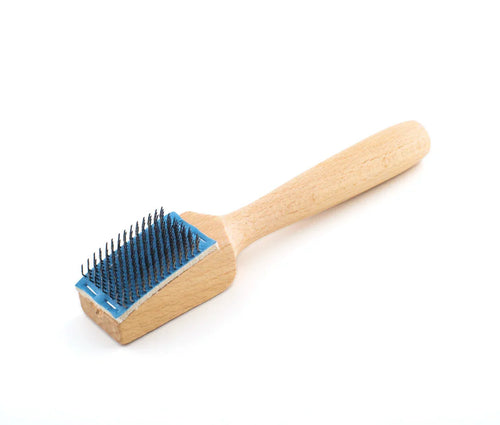
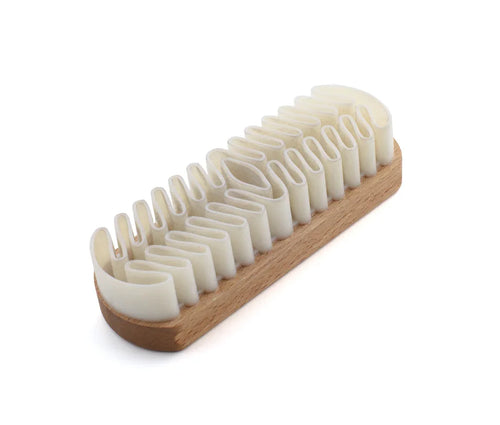
To keep your jazz shoes in top condition, it is important to let them air out well after every class. For leather shoes, use a special conditioner to keep the material supple, which is essential for a good fit with wide feet. Clean the soles regularly with a suede brush to maintain grip, so you can continue to dance safely during every modern jazz session.
The beauty of jazz dance is the unprecedented freedom of movement, and that freedom starts with a foundation that truly fits well. What I especially want to tell you is that wide feet should never be an obstacle to your technique or your pleasure on the floor. Remember above all that the ideal jazz shoes should breathe with you and support the natural shape of your foot, instead of painfully constricting it. Whether you focus on powerful jumps or work on the fluid lines of modern jazz, the right fit gives you the confidence to complete every movement with conviction.
Treat yourself to the comfort and stability you need to grow as a dancer. If you are ready to step into the studio without pinching toes, check out our women's jazz collection for models that offer both space and flexibility. Ultimately, your body is your most important instrument; take good care of it so you can hit every beat with full dedication. The dance floor is yours, and with shoes that fit perfectly, no choreography is too challenging.


