

Table of Contents
- Starting with Jazz Dance
- Determining the Right Size
- Socks or Bare Feet
- Material for Modern Jazz
- Choosing Laces or Elastic
- Maintenance and Durability
- Frequently Asked Questions
That first jazz dance lesson is a magical moment for many children, until they notice they have no grip on their socks during a pirouette or move too stiffly across the floor in regular sneakers. The right jazz shoes are the most important investment for a beginner; they offer the perfect balance between flexibility for technical footwork and the necessary grip for explosive jumps. In the fifteen years I have been teaching, I have seen countless students struggle with a wrong fit or soles that are too stiff, which directly affects their enjoyment and technique.
Modern jazz is all about expression and dynamics, and that starts with the basics: contact with the floor. Whether you choose a model made of supple leather that molds to the foot or a breathable canvas variant, the shoe should feel like a second skin without pinching the toes. I usually advise parents to look for a 'split-sole' design, as this helps young dancers to stretch their feet to the maximum and build strength in the arch. In this article, I share my practical tips on materials, sizes, and maintenance, so your child enters the studio with the right equipment.
Starting with Jazz Dance
Jazz dance is one of the most energetic and dynamic styles a child can choose. What I often see in dance class is that children come in with a background in classical ballet, but soon notice that the dynamics and body use are completely different. Where ballet revolves around verticality and a sense of weightlessness, jazz dance is much more about using the ground, deep pliés, and isolating specific body parts. It is a rich mix of African rhythms and Western techniques, resulting in those recognizable powerful jumps and lightning-fast footwork we see in modern choreographies.
In practice, I notice that students who are just starting often have trouble with 'grounded' dancing. They stay on their toes too much, as they learned in ballet, instead of using their whole foot for push-off and balance. A common mistake is also the assumption that regular gym shoes or sneakers will suffice for the first few lessons. However, sneakers have far too much grip on a dance floor. When a child starts a pirouette or a 'chainé turn' with stiff soles, the knees cannot absorb the rotation, which can lead to nasty injuries. Good jazz shoes are therefore not a luxury, but an essential part of safety and technical development.
Technique and Anatomy of the Foot
When teaching the basics of modern jazz, we look critically at how a child distributes their weight. Anatomically, children's feet are still fully developing; the bone structure is flexible and the muscles still need to gain strength. A shoe that is too stiff hinders the natural rolling motion of the foot. In class, we focus on the 'jazz walk' with beginners. Here, the dancer must fully roll the foot from toe to heel while keeping the center of gravity low. In practice, I see that children with the right shoes understand much faster how to stretch their instep (point) during jumps.
- Isolations: Moving the head, shoulders, chest, or hips separately without moving the rest of the body.
- Contractions: Tensing the abdominal muscles where the back takes a rounded shape, a fundamental element in many modern jazz styles.
- Parallel positions: Unlike ballet, where the legs are always turned out, jazz works a lot from a parallel position of the feet.
The Transition to Professional Equipment
As a child progresses, the movements become more complex and the turns faster. A snug fit then becomes increasingly important. If the shoe does not fit like a second skin around the instep, the dancer loses stability during fast weight shifts. What I often see during the transition to teenage groups is that the feet are almost fully grown. In those cases, I often advise switching to high-quality models that are also used by adults. These women's jazz shoes often offer just that little bit of extra support in the arch of the foot, which is crucial for advanced techniques such as multiple pirouettes and large jumps (grand jetés).
The most important thing when starting with jazz dance is the fun and expression. In class, I see that children move much more confidently when they feel like a 'real dancer' because of their equipment. It helps them get into the right mindset for the explosive and sometimes theatrical movements that belong to this style. So make sure the shoes are not too stiff on the dance floor, but certainly not so slippery that they lose control during a powerful push-off. A good balance between technique, the right materials, and passion lays the foundation for years of dancing pleasure.
Determining the Right Size
When parents buy jazz shoes for their child for the first time, I often see the same hesitation: should there be a thumb's width of extra space for growth? In practice, that is exactly what you don't want in jazz dance. A jazz shoe must fit the foot like a second skin. If there is too much space at the toes, I regularly see students stumble during a jump or a 'chassé' because the nose of the shoe folds over on the floor. This not only hinders technique but can also be dangerous on a slippery dance floor.Why 'buying for growth' is a risk
What I often see is that parents tend to fit dance shoes the same way as sneakers. With regular shoes, that extra centimeter of space is desirable, but with jazz shoes, that space causes friction. In practice, friction inevitably leads to blisters, exactly in the places where the foot does the most work, such as the ball of the foot and the heel. Moreover, a child loses the feeling for the floor. In modern jazz, contact with the surface is essential for balance; if the foot slides in the shoe, the dancer cannot rely on his or her grip during a pirouette. A common mistake is fitting the shoes with thick sports socks. In class, children usually wear thin dance socks or tights. So always have your child try on the shoes with the socks they also wear during class. If the shoe is made of leather, it should even feel a bit tight the first time it is fitted. Leather has the property of molding to the foot and stretching slightly as it warms up through movement.The practice test in the dance studio
To check if the size is really right, I always have students perform a few specific movements during fitting. Use these steps to check if you have made the right choice:- The Point Test: Have your child fully stretch the foot (point). If a large gap is created at the back of the heel where you can easily fit a finger, the shoe is too big.
- The Toe Check: The toes must be able to lie flat in the shoe. They should not be painfully curled (too small), but there should also not be an empty 'flap' of leather left at the front (too big).
- The Relevé Test: Have your child stand on the balls of their feet. The shoe should enclose the instep nicely without the heel slipping out.
Socks or Bare Feet
In the dance studio, I get the question from parents of beginning dancers almost weekly: "Should my child wear socks in those shoes, or do they belong on bare feet?" The answer is not always black and white, but in practice, I see that the choice has a huge impact on both the enjoyment of dancing and the lifespan of the shoes. Although some advanced dancers prefer the direct contact of the skin with the shoe for a better feel for the floor, I almost always advise children to start with socks or dance tights.
What I often see with young dancers who step into their jazz shoes without socks is that irritations arise in no time. The skin of children's feet is often still soft and not used to the constant friction that arises during fast turns or pushing off for a jump. Without a protective layer between the foot and the leather or canvas, blisters quickly develop, especially on the heel and at the ball of the foot. A thin, seamless sock acts as a buffer and prevents the shoe from rubbing directly against the skin.
Hygiene and Maintenance of the Shoe
An aspect that is often underestimated when starting with jazz dance is hygiene. Feet sweat considerably during an intensive lesson, especially when there is a lot of jumping. If a child dances in the shoes with bare feet, this moisture is drawn directly into the material of the sole and the lining. In practice, this means that the shoes not only start to smell faster, but the material also becomes stiff faster and can start to tear.
A common mistake is wearing thick, cotton sports socks. Although these absorb moisture well, they make the foot much too wide for the streamlined fit of the shoe. This hinders the technique because the child can no longer 'point' (stretch) the foot properly. I therefore always recommend choosing:
- Special thin dance socks that do not slip off during movement.
- Microfiber dance tights, because these make the foot smooth, making the shoe easier to put on and take off.
- Cotton ankle socks, provided they are thin enough and do not have a thick seam at the toes.
Feeling for the Floor and Technique
In modern jazz, everything revolves around the connection with the floor. Some teachers swear by bare feet because the child then learns better how to 'grip' the floor with the toes. However, in a jazz shoe, that effect is largely gone. The shoe itself already offers the necessary grip and protection. If your child chooses socks, make sure they are not too slippery inside the shoe. If the foot starts to slide in the shoe, the dancer loses stability during pirouettes and balance exercises.
What I often advise students who suffer from sweaty feet but still want to maintain grip is the use of a little bit of talcum powder. This keeps the feet dry and prevents the skin from sticking to the inside of the shoe. Remember: if you are going to fit the shoes, do so with the socks your child also wears during class. A shoe that fits perfectly with bare feet can suddenly be much too tight at the instep with a sock, which can hinder blood flow during dancing.
Material for Modern Jazz
In the dance studio, I often see the difference between students who dance on their socks and students who invest in good equipment. In modern jazz, the connection with the floor is sacred. You are constantly busy with weight shifts and 'floorwork', where your knees and feet rub over the dance floor. Without the right protection, I regularly see blisters or stiff movements that interrupt the flow of the choreography. In practice, children who dance on bare feet suffer more from stiff landings because the skin sticks to the floor. A common mistake for beginners is choosing a shoe that is too stiff. In practice, with modern jazz, you need a shoe that follows the natural line of the foot and gives complete freedom when stretching the instep. That's why I always advise looking for jazz shoes with a so-called split-sole. This means that the sole is interrupted under the arch of the foot, allowing the shoe to bend effortlessly when the dancer fully 'points' the foot. This is crucial for the aesthetics of jazz dance, where the line of the leg continues to the tips of the toes.The choice between leather and canvas
When choosing material for modern jazz lessons, you often face the choice: leather or canvas? What I often see is that leather is preferred because of its durability. Leather molds completely to the anatomy of the child's foot after a few lessons, almost like a second skin. This gives a huge sense of control during turning. Canvas, on the other hand, is often more breathable but offers less support on the sides of the foot. In practice, I advise parents to pay attention to the following points when purchasing:- Choose supple leather if you want the shoe to grow with the shape of the foot and withstand long-term intensive use.
- Pay attention to the nose of the shoe; in modern jazz, you often use the top of your toes for transitions across the floor, so the material must be strong enough for that.
- Ensure that the modern jazz shoes fit closely at the heel, so the foot does not slip during jumps such as a grand jeté.
Sole and grip on the floor
The sole of a jazz shoe is usually made of rubber or suede. For modern jazz, a small rubber heel is often pleasant because it gives just that little bit of extra cushioning during landings. I often notice that children who dance on their socks get heel pain faster during jump combinations across the diagonal. A high-quality jazz dance shoe absorbs that first shock and saves the joints. Another important aspect is friction. A shoe behaves differently on a wooden floor than on a professional marley floor. As a teacher, I see that students with the right shoes start their turns much more confidently. They don't have to be afraid of slipping, but they don't stick to the ground either. It's about that 'sweet spot' where you can slide in a controlled manner without losing control over your ankles. A good shoe supports the arch, protects the toes during rolling, and ensures that the focus can lie entirely on technique and expression instead of on painful feet.Choosing Laces or Elastic
In the locker room, I often see the same struggle: parents hurriedly trying to tie laces while the lesson is already starting, or children tripping over a loose loop during a fast diagonal. The choice between laces or elastic for jazz shoes may seem like a detail, but in practice, it largely determines the self-confidence and safety of a young dancer on the floor. Both options have their own technical advantages, depending on the anatomy of the foot and the specific style of the dance lesson.The precision of laces
What I often see with children with a very narrow foot or an extremely high instep is that a slip-on model with elastic just doesn't offer the right fit. Laces give you the opportunity to distribute the pressure very specifically over the entire length of the foot. This is essential in **modern jazz**, where the foot must frequently articulate and roll from heel to toe. A common mistake, however, is that the laces are left too loose 'because it's comfortable'. In practice, this causes the foot to slide in the shoe, causing blisters and reducing stability during pirouettes. For the somewhat older students who already dance in larger sizes, these jazz shoes are often a good transition because they provide the necessary firmness for more complex footwork. If you choose laces, teach your child immediately to tie a double knot and possibly tuck the loops under the laces at the instep. This prevents them from getting caught behind a heel during a jump.The convenience and safety of elastic
For the youngest groups, I almost always recommend the 'slip-on' models with elastic inserts. The biggest advantage is simple: there are no laces that can come loose. In a busy jazz class, there is often no time for the teacher to constantly tie laces, and a loose lace is a direct fall hazard during fast movements through the room. Modern slip-on models today are so well designed that they fit like a second skin around the foot. The elastic sides ensure that the shoe moves with the arch of the foot when it is pointed. When fitting elastic models, pay attention to the following points:- The shoe must be tight, but must not let the toes curl.
- No 'gap' (opening) should appear at the heel when the dancer stands on the ball of the foot.
- The elastic must feel firm; if it is too loose, the foot loses grip during turning.
Maintenance and Durability
In practice, I often see that the lifespan of jazz shoes depends on how they are handled after class. After an intensive modern jazz lesson, children are often inclined to throw their bag in a corner and not look at it again until the following week. For the preservation of the material, however, that is disastrous. Because jazz dance is a discipline with a lot of floorwork, slides, and jumps, the material — whether that is leather or canvas — takes a beating. A well-maintained shoe supports the anatomy of the growing child's foot much better than a shoe that is stiff or deformed.Cleaning and material preservation
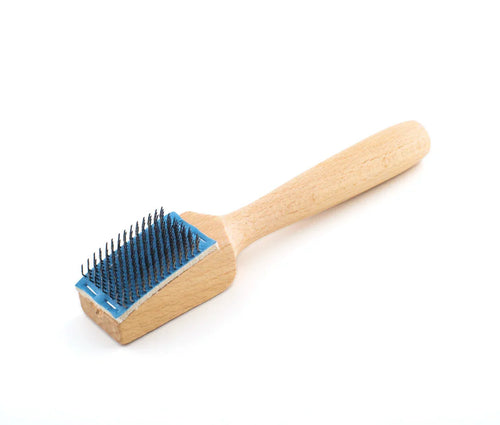
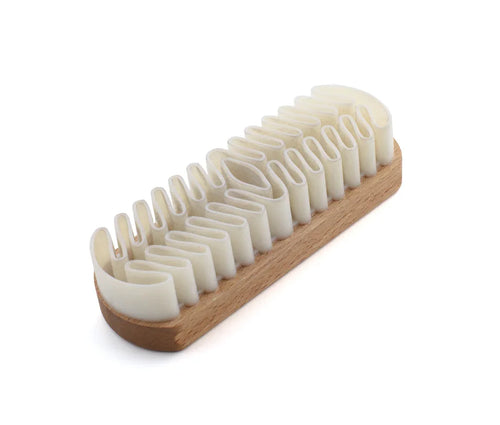
What I often see with young dancers is that their shoes start to spread an unpleasant odor over time. This is due to sweat soaking into the lining. A common mistake is to throw the shoes in the washing machine. Never do this, especially not with leather. The warm water extracts the natural oils from the leather, making it hard and prone to cracking at the base of the toes. For daily care of leather jazz shoes, I recommend taking them out of the bag after each lesson and letting them air dry. If they have become really dirty from contact with the dance floor, you can wipe them with a slightly damp cloth. For canvas variants, you can use a mild soap solution, but never fully submerge them in water. Don't forget the sole; on most jazz shoes, the split sole is made of suede or rubber. Suede soles can be roughened again with a special brush if they have become too slippery from accumulated dust from the studio floor.Tips for a longer lifespan
In practice, it turns out that the greatest damage to dance shoes occurs outside the studio. It sounds logical, but I still regularly see students walking in their dance shoes from the car to the locker room. Asphalt and street dirt act like sandpaper on the soft soles. So make sure your child only puts on the jazz shoes at the moment they enter the dance hall. This not only protects the shoe but also prevents stones or dirt from ending up on the dance floor, which in turn can cause damage to the shoes of other dancers. Here are a few practical steps I always give my students:- Airing out is essential: Take the shoes out of the bag immediately after class. If necessary, use cedar shoe trees or just some newspaper to absorb moisture and maintain the shape.
- Avoid heat sources: Never put wet or damp shoes on or under a heater. This accelerates the drying process of the leather and the glue connections in the sole.
- Check the fit: Children grow quickly. A shoe that is too tight puts too much tension on the seams, which does not benefit durability. Check every few months if there is still enough space at the toes.
- Use talcum powder sparingly: If the shoes feel stiff on the inside, a little talcum powder can help, but be careful not to get this on the suede sole, as that reduces grip on the floor.
Frequently Asked Questions
Should I take a size larger or smaller for jazz shoes?
For jazz shoes, the right fit is essential. Generally, you choose the normal shoe size, but because they must fit snugly like a second skin, this can vary per brand. A size too large hinders technique, while too small causes pain. Always check the size chart of the specific brand, as jazz shoes often fit differently than regular sneakers or daily children's shoes.
Do children wear socks with jazz shoes?
Whether children wear socks in jazz shoes depends on personal preference and the rules of the dance school. Usually, thin cotton socks or special dance tights are worn for extra hygiene and comfort. Bare feet can rub and cause sweaty feet in the leather or canvas. Preferably choose seamless socks that are not too thick, so that close contact with the dance floor is maintained.
Do children's jazz shoes run small?
Yes, children's jazz shoes often run smaller than normal street shoes. Many well-known dance brands use specific sizes that are more compact to provide good support during jazz dance. It is therefore advisable to measure your child's feet accurately and consult the manufacturer's size chart. Sometimes it is wise to order a half or full size larger than usual.
What do you wear on your feet with jazz shoes?
With jazz shoes, children usually wear thin dance socks or special dance tights. This prevents blisters and helps absorb moisture during an intensive modern jazz lesson. Some dancers prefer bare feet for more grip, but socks make putting them on and taking them off easier and protect the inside of the shoe. Make sure the socks are smooth and do not have thick seams at the toes.
What is the difference between a full sole and a split sole?
The difference between a full sole and a split sole is in the flexibility. A full sole offers more resistance and support, which is good for beginners to train foot muscles. A split sole has no sole under the arch of the foot, allowing the dancer to bend and point the foot more easily. For modern jazz, advanced children often choose a split sole to better accentuate their technique and foot lines.
How do you best maintain children's jazz shoes?
To keep jazz shoes in top condition, regular maintenance is necessary. Clean leather shoes after class with a slightly damp cloth and let them dry naturally, away from heaters. For canvas variants, use a soft brush to remove dust. Always take the shoes out of the sports bag after the jazz dance lesson, so that the material can breathe and unpleasant odors from perspiration are prevented.
Which material is better for jazz shoes: leather or canvas?
The choice between leather and canvas depends on use and budget. Leather jazz shoes are very durable, mold perfectly to the foot, and offer the best support for children. Canvas is lighter, often cheaper, and breathes better, but wears out faster on the floor. For most beginners in jazz dance, leather is recommended because this material lasts longer and optimally encloses the child's foot.
The beauty of jazz dance is the unprecedented freedom and energy it gives a child from that very first lesson. What I especially want to give you in the search for the perfect jazz shoes is that comfort and flexibility should always be the deciding factor over appearance. Remember especially that a high-quality, flexible sole not only supports technique but also increases the self-confidence of a young dancer during the most challenging modern jazz movements. A good shoe molds to the foot, keeping injuries away and pure dancing pleasure always at the forefront. If you also become inspired by your child's infectious enthusiasm, view our women's jazz collection to enter the dance studio together stylishly and comfortably. Give your child that firm foundation needed to grow technically. Because when the feet feel good, the rest follows naturally and every jump transforms into pure magic on the dance floor.


