

Table of Contents
- The Power of Accessories
- Choose the Right Salsa Shoes
- Bachata Shoes for Comfort
- Jewelry for Latin Dancing
- Hair Accessories and Makeup Tips
- Maintenance of Your Dance Equipment
- Frequently Asked Questions
How often have I seen in my classes that a student loses balance halfway through a double turn, simply because the grip of their sole isn't cooperating? It's a frustrating and relatable problem that is often solved immediately with the right equipment. The essence of comfortable Latin dancing lies in the combination of technical salsa shoes, flexible bachata shoes, and accessories that do not restrict your freedom of movement.
In the past fifteen years on the dance floor, I have learned that the right suede sole makes the difference between a smooth spin and a painful knee injury. But jewelry also plays a bigger role than you think; I've experienced enough during socials where a necklace that was too long or a sharp ring caused uncomfortable moments during a 'cross body lead'. Good bachata shoes should enclose your heel firmly for those sensual hip movements, while your jewelry should be subtle and safe for your dance partner. In this article, I share my personal experiences and practical tips on the best accessories for Latin dancing, so that you step onto the dance floor with confidence and the right look.
The Power of Accessories
What I often see on the dance floor is that dancers underestimate the impact of their accessories. Accessories in the world of salsa and bachata are much more than just an aesthetic addition; they directly influence how you move and how you communicate with your partner. A common mistake is wearing jewelry that looks beautiful at a dinner, but turns into dangerous projectiles during a fast turn. In practice, I have regularly experienced a long necklace getting tangled in a partner's fingers during a 'hair comb' or a heavy earring flying out during a powerful spin. The right accessories help you dance with more confidence. It's about the balance between functionality and style. Think, for example, of hair accessories that keep your hair tightly out of your face, so that you don't constantly get a strand of hair in your eyes while 'spotting' during your turns. This is not an unnecessary luxury, but a technical necessity if you want to keep up with the speed of an advanced salsa social.The foundation starts with the right shoe choice
Although we often think of sparkles and hairpieces when it comes to accessories, the most important 'accessory' for a Latin dancer is the connection with the floor. In practice, I notice that many beginners start in regular sneakers, which often leads to knee injuries because the sole has too much grip on the wooden floor. A good set of salsa shoes is essential because they provide the right amount of 'slide' and grip, allowing your hip action to proceed more naturally without straining your joints. For the gentlemen, a similar principle applies. A common problem is that men dance in shoes that are too bulky, making the footwork in a fast bachata look sloppy. Specific salsa shoes for men are designed with a flexible sole and a slight heel elevation, which helps to shift your weight to the ball of your foot. This is crucial for the right connection and to be able to react quickly to the music.Practical tips for jewelry and hair
When choosing jewelry for a night out, take the anatomy of the dance into account. In Latin dancing, there is a lot of physical contact, especially around the hands and neck. Here are a few concrete things I always look out for:- Earrings: Choose studs or small hoops. Large hoops can easily get caught on your partner's arm during a turn.
- Bracelets and watches: For men, a watch with a smooth strap is recommended. Avoid sharp edges that could scratch your partner's skin during a 'lead'.
- Necklaces: Short necklaces that sit close to the skin are safer than long, dangling ones that swing back and forth.
- Hair: Use sturdy hairpins or a good gel. There is nothing more annoying than having to redo your hair halfway through a song while the dance floor is full.
Choose the Right Salsa Shoes
In the dance school, I see it happen every week: enthusiastic dancers stepping onto the floor in their regular sneakers. The result is almost always the same: they 'stick' to the floor during a turn, which puts enormous strain on the knees and ankles. Good salsa shoes are not an unnecessary luxury, but a necessity to prevent injuries. A suede sole is the most important feature here; it offers just enough grip not to slip, but lets you turn smoothly without the dreaded resistance you experience with rubber soles.Stability and Heel Height for Followers
What I often see with ladies who are just starting with bachata or salsa is the tendency to immediately choose an extremely high stiletto heel. My practical advice? Start lower than you think. Stability is the foundation of every good dancer. If you wobble on your heels, you cannot transfer your weight correctly to the ball of your foot, making your basic step restless and making it harder for your partner to lead. For most followers, a flare heel of 5 to 7 centimeters is the ideal start. This heel shape widens slightly at the bottom, which offers significantly more support than a stiletto. These specific salsa shoes ensure that your heel stands firmly, while the flexible sole allows you to fully articulate your foot. A common mistake is buying a shoe that is too large. A dance shoe should fit like a second skin; as soon as there is space between your foot and the footbed, you lose control over your spins.What the Leader Should Look Out For
Also for men, the choice of shoe determines the quality of the dance. In practice, I see that men often think their daily dress shoes will suffice. The problem is that these often have a hard, inflexible sole. Good salsa shoes for men usually have a split-sole or a very flexible continuous sole. This is essential for techniques such as the 'cross body lead', where you need to be able to roll your foot. A tip I always give to male students: pay attention to the heel. Many Latin shoes for men have a slightly raised heel (the typical 'Cuban heel'). Although this helps to place your weight forward on the ball of the foot — which is essential for the correct Latin posture — it can take some getting used to for your balance in the beginning. If you're going purely for social salsa and bachata, a flat dance shoe with a suede sole is often a safer and more comfortable choice for long evenings on the dance floor.Maintenance and Use
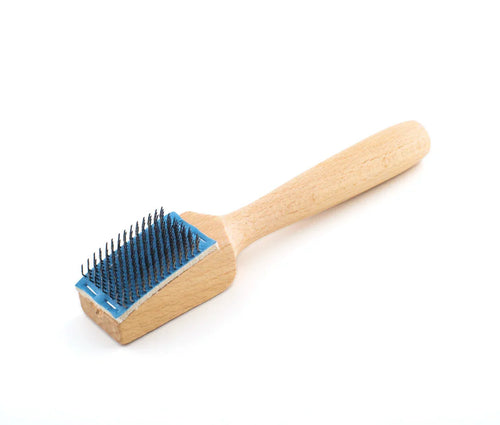
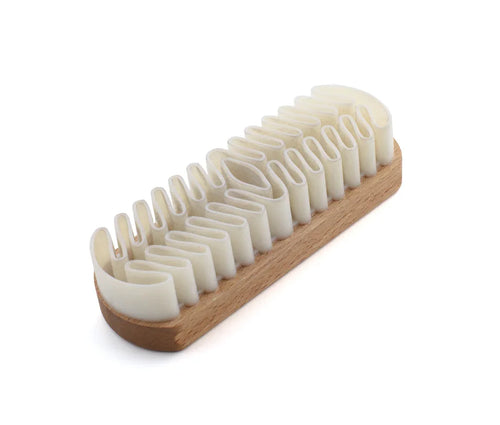
An essential part of your equipment that is often forgotten is the shoe brush. In practice, I see that suede soles become slippery and hard after a few nights of dancing by absorbing dust and grease from the floor. By regularly roughening your soles with a steel dance shoe brush, you maintain the necessary grip.- Never wear your dance shoes outside; the rough asphalt ruins the delicate suede sole within minutes.
- For open shoes, choose a model where your toes just don't come over the edge, so that you maintain maximum control over your footwork.
- For bachata, where ground contact and 'flow' are even more important, a shoe with an extra soft insole is recommended to absorb lateral movements.
Bachata Shoes for Comfort
What I often see on the dance floor is that dancers kick off their heels after an hour and continue barefoot or in socks. This is a common mistake that usually stems from the wrong shoe choice. In bachata, and especially the Sensual style, you stand on the ball of your foot much longer than you are used to in daily life. In practice, this means the pressure on your forefoot (the metatarsals) increases enormously. Without the right cushioning and support, this inevitably leads to burning feet or even injuries to the plantar fascia.
When selecting shoes for bachata, the flexibility of the sole is the most important thing. Unlike ballroom, where the sole is often a bit stiffer, in bachata you need a sole that moves with your arch. This is essential for the 'grounding' that is so characteristic of the Dominican style, but also for the fluid weight transfers in modern variants. For the ladies, it is advisable to look for a heel that is placed exactly under the center of the heel for maximum balance. These salsa shoes are extremely suitable for bachata because they provide the necessary lateral support during hip movements, while the suede sole allows you to turn without straining your knees.
The anatomy of a good bachata shoe
A technical aspect that is often overlooked is the thickness of the insole. In practice, I see that dancers who choose shoes with extra 'memory foam' or latex cushioning last much longer on the social dance floor. The shoe should fit your foot like a second skin; every millimeter of space between your foot and the shoe can cause friction and blisters. When trying them on, pay particular attention to the following points:
- The heel cup: This must be sturdy and keep your heel in place during fast footwork combinations.
- The suede sole: This is the standard for salsa shoes and bachata shoes because it provides the perfect balance between grip and glide.
- The straps: For ladies, cross straps over the instep or around the ankle are often more stable than a single strap over the toes.
- Flexibility: You must be able to fully point your foot without the shoe resisting.
For the gentlemen, comfort is often synonymous with a good fit around the instep. A common mistake is wearing regular sneakers with rubber soles. Although this looks 'cool', the grip of rubber ensures that your ankles and knees have to absorb the rotation instead of the shoe. In practice, this often leads to meniscus problems. High-quality salsa shoes with a split-sole or a thin suede sole give you much more feedback from the floor, which immediately improves your balance during complex turns.
Heel height and stability
If you are just starting with bachata, I often recommend not going straight for a 7 or 9 centimeter heel. In practice, a 5 centimeter 'flare' heel is an excellent starting point. The wider bottom of a flare heel gives you more contact surface with the floor, which is crucial for the side steps of the bachata basic. As your technique improves and your ankles get stronger, you can switch to a thinner heel. Don't forget that in bachata you step 'flat' much more often on count 4 (the tap) than in salsa, making a stable heel position essential to avoid twisting your ankles. Comfort on the dance floor starts with a shoe that supports your technique instead of hindering it.
Jewelry for Latin Dancing
In the world of salsa and bachata, everything revolves around expression and movement, but in practice, I often see that dancers completely underestimate the impact of their jewelry on the dance experience. It's not just about aesthetics; it's about safety, balance, and the connection with your partner. If you make a fast spin or dance in a tight 'close hold' in bachata, you don't want your partner to get stuck in a long necklace or a heavy earring to throw you off balance during a double turn.Safety and the dynamics between leader and follower
What I often see with beginning followers is wearing large rings with protruding stones or long, dangling necklaces. During a 'cross body lead' or a 'hammerlock', a ring can painfully scrape or even cut the leader's hand. In practice, I always advise choosing smooth rings or, even better, no rings at all on your right hand, as this is the hand that receives the most pressure and rotation. Long necklaces pose another risk that often only becomes clear on the dance floor. During a fast turn on your salsa shoes, a necklace swings outward due to centrifugal force. This can not only hit your partner in the face, but the necklace can also get tangled in the buttons of a shirt or the leader's watch strap. A common mistake is thinking that 'statement jewelry' is necessary to stand out, while subtle jewelry often moves much more elegantly with your body.The balance between accessories and your dance shoes
The choice of your accessories should always be in balance with the rest of your outfit, and specifically with your footwork. If you choose eye-catching bachata shoes with lots of glitter or bright colors, you're better off keeping your jewelry minimalist. Latin dancing is about the visual lines your body makes; a bracelet that is too heavy can visually 'break' the line of your arm styling and make your arm feel heavier during fast patterns. For the gentlemen, a similar principle of functionality applies. Although a watch looks stylish, I often see that a watch that is too large or sharp irritates the partner's wrist during complicated 'wraps'. If you invest in professional salsa shoes for men, make sure your accessories have that same refinement. Choose a watch with a smooth leather strap or a flat metal band without sharp edges.Practical tips for the social dance floor
In addition to the visual aspect, the durability of your jewelry is crucial. During an intensive evening in a warm club, you produce a lot of heat and sweat. Cheap metals can oxidize and leave green stains on your skin or, worse, on your dance partner's light clothing. In practice, materials such as surgical steel, sterling silver, or gold work best because they do not react to the acidity of your skin while sweating.- Wear studs instead of large hoops to prevent your partner's finger from getting caught in them during a 'hair comb' or a fast hand change behind the head.
- Choose jewelry with a sturdy 'lobster clasp' closure; magnetic closures often fly off as soon as you start a powerful 'double turn'.
- Pay attention to the length of your earrings; they should not touch your shoulders, as this can disturb your proprioception (your sense of where your body is in space) while turning.
- Ensure bracelets don't rattle; the sound can disturb the concentration on the timing of the music, such as the 'clave' in salsa, for both you and your partner.
Hair Accessories and Makeup Tips
During an intensive evening of salsa or bachata, your appearance is more than just a style choice; it is a functional part of your dance. What I often see on the dance floor is that dancers look beautiful, but halfway through the evening struggle with loose hairpins or smudged makeup. In practice, Latin dancing requires a specific approach because your body temperature rises significantly and you are constantly in motion.
Functional hairstyles for fast turns
A common mistake among ladies who are just starting with Latin dancing is wearing hair in a loose, nonchalant style. Although that looks beautiful when you're standing still, it works against you as soon as you start turning. Centrifugal force causes your own hair to lash like a whip in your face (or your partner's). This can disturb your orientation, which makes 'spotting' — focusing on one point during a turn — significantly more difficult.
What I often recommend is a tight bun, a sturdy braid, or a high ponytail that is well secured. Here are a few practical tips for your hairstyle:
- Always use 'non-slip' hair elastics. The constant shocks of the footwork can slowly pull ordinary elastics down.
- Fix loose strands with a strong hairspray, but avoid products that make your hair too sticky. You don't want your fingers or your partner's to get stuck during a 'hair flick' or 'head roll'.
- Are you wearing a ponytail? Then make sure your salsa shoes offer enough grip, so that you can absorb the extra balance needed with a swinging hairstyle from your ankles and core.
- For the gentlemen: a good water-based hair wax stays in place better during perspiration than an alcohol-based gel, which often starts to flake when it gets warm. Just as high-quality salsa shoes are essential for your technique, a good hair styling ensures you don't constantly have to wipe hair out of your eyes while leading.
Makeup that survives a social dance
In practice, the biggest challenge for your makeup is not applying it, but maintaining it. An average salsa social lasts three to four hours in a warm, often poorly ventilated room. What I often see is that dancers get the infamous 'panda eyes' after an hour. Therefore, always use waterproof mascara and a liquid eyeliner that is quick-drying.
The lighting in dance schools and clubs is often dimmed with warm, red, or blue tones. This causes soft colors to fade quickly. In the Latin scene, your makeup can therefore be a bit bolder than your daily look. Think of a strong contour to accentuate your face shape and a lipstick that is 'transfer-proof'. Nothing is more annoying than a lipstick stain on your dance partner's white shirt after a close bachata hold.
Don't forget the details: a shiny hair clip or a subtle glitter in your eyeshadow can reflect beautifully in the disco light. These small accents enhance your appearance and draw attention to your face and expression, which is essential for the connection with the audience or your partner. Ensure these accessories are well secured with extra bobby pins that you slide crosswise over each other for maximum grip.
Maintenance of Your Dance Equipment
In practice, I often see dancers spending hundreds of euros on the perfect outfit, but then neglecting their most important tool: their shoes. Whether you are on the social dance floor three times a week for a sweaty salsa night or you focus on the technical precision of Bachata Sensual, your equipment takes a beating. Good care is not just a matter of hygiene; it is essential for your safety on the floor. When you invest in high-quality salsa shoes, you naturally want the suede soles to maintain their grip and the fit to remain intact.How to maintain your soles A common mistake I see with beginners is that they put on their dance shoes at home and walk on the street with them. Never do this. The suede sole of a Latin shoe is designed for smooth parquet floors, not for rough asphalt or the dampness of the sidewalk. As soon as dirt, grease, or moisture gets into the suede, the sole loses its ability to slide and turn in a controlled manner. To keep your soles in top condition, a steel sole brush is indispensable. In practice, I notice that dancers often only start brushing when they are already almost slipping. My advice: be proactive.- Always brush from the heel to the toe to 'open' the fibers of the suede again.
- Remove accumulated wax and dust that settles in the sole; this often forms a smooth, shiny layer that is dangerous during fast spins.
- If the soles of your salsa shoes eventually become completely bare, you can have them resoled by a specialist, but prevention is always better than cure.
Moisture and odor control
Latin dancing is a high-performance sport. During an intensive Bachata session, your feet produce an enormous amount of heat and moisture. What I often see is that dancers throw their shoes directly into a closed plastic bag after class and leave them there until the next training session. This is the fastest way to ruin the leather or satin and give bacteria free rein. The anatomy of the foot ensures that most perspiration is released around the ball of the foot and between the toes. This moisture soaks into the insole and can weaken the glue bonds. A technique I always use myself is using cedar shoe trees or simply newspaper immediately after dancing. The wood absorbs the moisture and neutralizes odors without drying out the shoe. Let your shoes air out for at least 24 hours in a dry place, but never directly near a heater, because then the material becomes brittle and can tear at the base of the instep.Protection of the details
For the ladies, there is another specific point of attention: the heels. In many bachata movements, the pressure is often on the ball of the foot, but in salsa spins, enormous torsion is placed on the heel. A common problem is that the heel tip (the plastic cap at the bottom) wears down to the metal pin. If that happens, you not only damage the dance floor, but you also lose your stability, which can lead to ankle injuries. Therefore, always use heel protectors. These plastic covers slightly increase the surface area of the heel, which provides more balance during balances and spins. Moreover, they prevent the satin of the heel from being damaged if you accidentally rub against the edge of a step or another shoe. Don't forget your jewelry either; sweat corrodes metals. Clean your earrings and bracelets after a night of dancing with a dry microfiber cloth before storing them, so the shine is preserved for your next performance or social evening.Frequently Asked Questions
What are the best shoes for Latin dancing?
The best shoes for Latin dancing are specifically designed salsa shoes or bachata shoes with a suede or leather sole. These materials offer the right balance between grip and glide on the dance floor. For ladies, heels with a sturdy heel closure are ideal, while men choose flexible dance shoes. Good shoes prevent injuries to knees and ankles during turns and spins.
Why are special salsa shoes important for dancers?
Special salsa shoes are essential because they have a flexible sole that supports the natural movement of the foot. The suede bottom ensures you can turn smoothly without overstressing your joints. Unlike normal shoes, they offer the necessary lateral stability and cushioning. This not only increases your dance comfort but also significantly reduces the risk of long-term foot complaints.
What should I look out for when buying bachata shoes?
When buying bachata shoes, the fit is the most important thing; the shoe must fit tightly around the foot like a second skin. Also pay attention to the heel height; choose a height where you remain stable during fast footwork. A suede sole is indispensable for the fluid movements that characterize bachata. Also check if the ankle straps provide enough support for intensive dance nights.
Which jewelry is most suitable for Latin dancing?
For Latin dancing, jewelry that is well-secured and cannot snag is most suitable. Choose short necklaces, small earrings, or snug-fitting bracelets to prevent your partner from getting tangled in them during fast salsa figures. Avoid long, dangling accessories that can swing into your face. Choose materials that are resistant to perspiration, such as stainless steel or high-quality metals, for a durable look.
How can I maintain my Latin dance shoes with suede soles?
Maintenance of your Latin dance shoes starts with regularly brushing the suede soles with a special steel shoe brush. Through dancing, dirt and wax accumulate, making the sole slippery and losing grip. By roughening the sole with a brush, you restore the grip on the dance floor. Additionally, use your shoes only indoors to prevent the soles from being damaged.
Can I wear regular sneakers during a salsa or bachata party?
Although it is possible to dance in regular sneakers, it is discouraged for Latin dancing. Rubber soles often have too much grip, which complicates turns and can cause knee injuries. If you prefer to dance in flat shoes, choose special dance sneakers with a pivot point in the sole. These offer the look of a sneaker but the functionality of professional salsa shoes for optimal safety.
Which accessories make a Latin dance outfit complete and functional?
In addition to the right salsa shoes, functional accessories complete your outfit. Think of hair clips to keep your hair out of your face and a small hand fan for cooling down between dances. A shoe bag is essential for safely transporting your bachata shoes. For the finishing touch, you can wear shimmering tights, which not only look beautiful but also offer light compression during intensive dancing.
The beauty of Latin dancing is that your passion and personal style flow seamlessly together on the dance floor. Whether you choose subtle jewelry that sparkles with every turn or accessories that give your outfit just that little extra flair, it ultimately comes down to the confidence you radiate. What I especially want to give you is that the right details not only complete your look, but also give you the freedom to fully immerse yourself in the music without distraction. A beautiful necklace is an eye-catcher, but the true foundation for any salsa or bachata starts with the right support for your feet.
Above all, remember that quality materials make the difference between an evening of moving cautiously and daring to dance all out. If you want to take your dance experience to the next level, we invite you to view our women's Latin dance collection, or discover the perfect combination of style and functionality in our men's Latin collection. The right equipment is the ultimate investment in your own dancing pleasure. Step onto the floor with pride, let yourself be led by the rhythm, and enjoy every moment the music brings you.


