

Table of Contents
- Starting with Latin Dancing
- Popular Dance Styles for Beginners
- The Basics of Salsa
- Buying Essential Salsa Shoes
- Choosing Comfortable Bachata Shoes
- Tips for Learning to Dance Quickly
- Frequently Asked Questions
Have you ever felt like your feet were glued to the floor while the music wanted to make you spin? In the fifteen years I've spent in the studio, I've seen that latin dancing for beginners is mainly about finding the right balance between a sense of rhythm and technical comfort. It is about mastering the basic step — whether that's the 'on one' of salsa or the swaying four-four time of bachata — while learning how to shift your weight correctly without losing your balance.
I remember my own first social dance night well; I showed up in regular sneakers and soon noticed my knees protesting with every turn. That is exactly why I always advise my students not to skimp on good footwear. High-quality salsa shoes with a suede sole make the difference between a wooden movement and a fluid spin, simply because they offer the right amount of resistance on the dance floor. Specific bachata shoes are also essential for the sensual, shorter steps to give your ankles the necessary support. Latin dancing is a beautiful adventure full of passion and self-confidence, provided you start with the right technique and equipment that truly supports your movements on the floor.
Starting with Latin Dancing
What I often see with beginners in the dance school is a kind of 'freezing' as soon as the first Salsa beat blasts from the speakers. People try to rigidly reproduce the steps they just learned from memory, while latin dancing is fundamentally about the connection with the floor and your partner. In practice, a good dance adventure starts not with the steps themselves, but with your weight transfer. A common mistake is dancing with a center of gravity that is too high. In styles like Salsa and Bachata, you must learn to keep your knees slightly bent and constantly place your weight on the ball of your foot. This enables you to create that typical 'Cuban motion,' where the hip movement is a natural consequence of stretching and bending your legs, rather than a forced action from the back.
When you just start, you quickly notice that the surface and your grip determine your progress. I often see students appearing in regular sneakers. While that is fine for a first trial lesson, the rubber sole blocks the necessary rotation in the ankles and knees. For the ladies, it is essential to invest in footwear specifically designed for these movements; these salsa shoes are perfect for making fast spins without your joints having to absorb the friction of the floor. Good dance shoes have a suede sole that offers just enough 'slide' to turn, but also gives enough grip not to slip during a fast cross-body lead.
Technique and Body Posture
A crucial aspect of latin dancing is the 'frame'. This is the posture of your arms and upper body that ensures the communication between leader and follower runs smoothly. In practice, I see that beginners often have arms that are too loose (the well-known 'spaghetti arms') or, conversely, apply way too much force. The art is to maintain a constant, light tension. Here are a few points I always emphasize during class:
- Always keep your elbows in front of your body, never behind it.
- Focus on your 'core' – your abdominal muscles are the engine of your movement.
- Take small steps; large steps make it impossible to stay on the tempo of the music.
- Keep your shoulders low and relaxed, even when the music goes faster.
The right equipment for men and women
It's not just the ladies who need to pay attention to their footwear. For the men, stability while leading is of great importance. What I often see is that men lose their balance during a lady's double turn because their shoes have too much grip or offer no support in the heel. These salsa shoes are perfect for men who want to seriously work on their footwork, because the heel height is specifically adjusted to push the weight forward, which promotes stability.
If you specifically choose the more sensual styles, such as Bachata, the dynamics of your footwork change. Where Salsa is more explosive, Bachata requires a more rolling movement of the foot. In practice, this means you need shoes that are flexible enough in the instep. Many dancers use the same pair for both styles, and high-quality bachata shoes offer that necessary flexibility while supporting the arch of the foot during the characteristic 'tap' on the fourth beat of the measure. The most important thing is to choose equipment that doesn't hinder you, but rather supports your growth as a dancer. Ultimately, it's about standing on that dance floor with self-confidence, knowing that your technique and equipment are in order.
Popular Dance Styles for Beginners
When you first walk into a dance school, the range of latin dances can be overwhelming. What I often see with beginners is that the choice usually falls on Salsa or Bachata. This makes sense, as these styles form the basis of almost every social dance event. The most important thing is to choose a style that fits your personal pace and the music you like to listen to.Salsa: Energy and Technique
Salsa is explosive, fast, and technically challenging. In practice, I notice that students often make the mistake of taking too large steps. Salsa is all about compact movements that take place directly under your own center of gravity. This helps you keep up with the fast 1-2-3, 5-6-7 steps without losing balance. For ladies, stability is crucial here; a sturdy heel positioned exactly under the center of the heel makes a world of difference during many turns. These salsa shoes are perfect for practicing your spins, because the suede sole offers just enough grip without your knees becoming overloaded while turning on a wooden floor.Bachata: Rhythm and Connection
Bachata is often labeled as 'easier' because the tempo is lower, but don't be mistaken by the subtle hip movements and the close connection with your partner. A common mistake is forcing the hip movement on the fourth beat (the 'tap'). In practice, that movement should come from fully stretching your standing leg and relaxing the other hip, not from forcedly pulling up your pelvis. For men, it is essential that they wear a shoe that is flexible enough to guide the roll of the foot properly. Good latin dancing shoes for men often have a split-sole or a very flexible sole, giving you more control over your footwork and a better feel for the 'grounding' in the floor.Merengue: The Ideal Entry Point
If you have truly never set a foot on the dance floor and are worried about complicated steps, then Merengue is the most accessible style. The rhythm is a simple 1-2 march beat. What I often advise people who are afraid of being out of time is to start with Merengue. Here you learn the basics of 'Cuban Motion' – the technique where your knees bend and stretch alternately, causing that characteristic latin hip movement. Once you have mastered this, the transition to the more complex footwork patterns of Salsa becomes much more natural. In practice, I see that a beginner's learning process accelerates significantly when the equipment is right. Wearing specific bachata shoes with the right heel height, for example, ensures that your weight is automatically shifted more towards the ball of your foot. This is anatomically necessary to correctly perform the rapid weight shifts that latin dancing requires without straining your back.- Salsa: Focus on speed, spins, and dynamic footwork.
- Bachata: Focus on flow, hip movements, and partner connection.
- Merengue: The perfect basis for rhythm and hip technique.
The Basics of Salsa
Salsa is often the first introduction to the world of latin dancing. What I often see with beginners is that they fixate on the fast steps, while the real magic lies in the timing and the weight transfer. In practice, salsa revolves around an eight-beat cycle, where you have a rest moment on the fourth and eighth beat. So you count 1, 2, 3 (pause) 5, 6, 7 (pause). That pause is not a standstill, but a moment when you completely transfer your weight to your standing leg, so you are ready for the next movement.
Weight Transfer and Footwork
A common mistake is taking steps that are too large. If you take too large steps, you lose your balance and never get back in time for the next beat. Keep your steps small, directly under your body. What is essential for good technique is that you always dance on the ball of your foot. If you land on your flat foot, you block the rotation in your knees and hips, which can cause injuries in the long run. That is why it is so important to invest in good footwear. Specific salsa shoes for ladies often have a suede sole that offers just enough grip not to slip, but allows you to spin effortlessly without straining your joints.
- Always keep your knees slightly bent; this acts as your natural shock absorber while dancing.
- Land on the ball of the foot and then roll down to the heel in a controlled manner.
- Keep your upper body relatively still while your hips follow the natural movement of your legs, the so-called Cuban Motion.
The Role of the Leader and Follower
In practice, I often see beginners trying to 'steer' the dance with their arms. We call this 'arm-leading,' and it's something you want to unlearn immediately. Communication in salsa comes from the 'frame' – the light tension in your arms and back that acts as a connection between both partners. For the men, stability is key here. Good salsa shoes for men provide a solid base and the right heel height, allowing you to maintain the connection with your partner without losing your balance during a cross-body lead or a turn.
When practicing the basic step, the 'mambo step,' as a leader you step forward with the left on 1, replace the weight on the right on 2, and close the left again on 3. For the follower, this is exactly mirrored. It sounds simple, but the challenge lies in 'dissociation': your lower body moves independently of your upper body. This requires flexibility in the spine and a strong core. What I often advise students who also look at other styles is that decent latin dancing shoes are often versatile enough for both fast salsa beats and more romantic bachata tracks.
Also think about the cultural context; salsa has deep roots in Afro-Cuban rhythms and Spanish melodies. The Clave is the beating heart of the music. If you learn to listen to this specific rhythm instrument, you will find that finding the '1' becomes much more natural. Whether you are training for a social dance night or taking your first lessons, make sure your equipment is in order. Although you can start in regular sneakers, you will notice that professional shoes help you make those typical hip movements much easier because the heel height subtly shifts your center of gravity to the ball of the foot.
Buying Essential Salsa Shoes
What I often see on the dance floor is that beginners follow their first lessons in regular sneakers or shoes with rubber soles. Although that seems fine for the first basic steps, you notice the limitation immediately as soon as the first turns come into play. In practice, rubber soles create too much resistance on the floor. This is not only frustrating because you "stick" to the ground, but it also places a serious strain on your knee joints and ankles. A good dance shoe is therefore not a luxury, but a necessary investment in your own body and dancing pleasure.
The technique behind the suede sole
The core of a functional latin shoe lies in the suede sole. This specific material offers a unique balance: it is smooth enough to spin smoothly without twisting your joints, but rough enough to maintain control over your movements. A common mistake is thinking that a smooth leather sole has the same effect. Leather often slides uncontrollably, meaning you constantly have to tense your muscles to avoid slipping. In practice, this often leads to cramped calves and an insecure posture.
For ladies, ankle stability is crucial when making fast spins, and these salsa shoes are specifically designed to provide that balance. What I often advise students who are just starting out is to choose a heel height between 5 and 7 centimeters with a so-called 'flare' shape. A flare heel widens slightly at the bottom, which provides significantly more support during weight shifts than a thin stiletto heel. Furthermore, the flexible insole ensures that you can fully roll off your foot, which is essential for the typical 'Cuban motion' in the hips.
Fit and anatomy for men
Men also often make the mistake of dancing in regular shoes for too long, while good salsa shoes significantly reduce the risk of injury. In men's latin dance shoes, you often see a slight heel elevation, usually around 2.5 to 4 centimeters. In practice, this elevation helps you shift your center of gravity slightly more towards the ball of the foot. This is fundamental for both salsa and bachata, as it allows you to react faster to the music and makes the lead to your partner clearer.
Pay close attention to the fit at the instep. A dance shoe should feel like a second skin. If there is space between your foot and the material, you lose the connection with the floor. For men who also dance a lot of bachata, where the footwork is often 'earthier' and flatter, a model with a split-sole is an excellent choice. This offers maximum flexibility in the arch of the foot, allowing you to put more expression into your steps.
Long-term maintenance
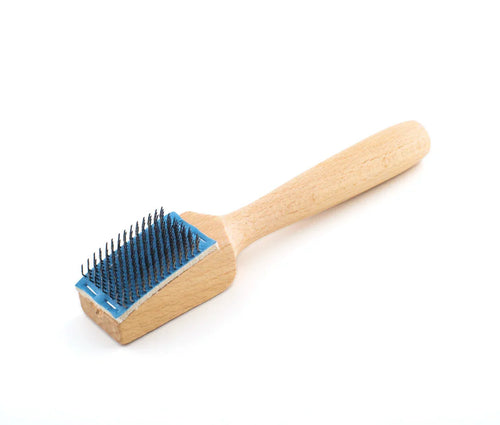
An essential part that is often forgotten is the maintenance of the soles. Due to dust and wax on the dance floor, suede soles become smooth and hard over time; we call this the 'glazing' of the sole. Use a special steel sole brush for this to roughen up the hairs of the suede again. Do this regularly, because in practice I see dancers only start brushing after they have already slipped once.
- Never wear your dance shoes outside; rough asphalt destroys the suede sole within minutes.
- Beginners should preferably choose a closed heel counter for extra stability around the ankle.
- Ensure the shoes fit tightly when purchased; leather and satin always stretch a bit more after a few hours of dancing.
Whether you choose a classic sandal or a closed men's shoe, remember that your equipment supports your technique. When you no longer have to fight the resistance of the floor, you can concentrate fully on the connection with your partner and the beat of the music.
Choosing Comfortable Bachata Shoes
When you first walk into a Bachata class, you might think your favorite sneakers will suffice. In practice, however, I often see beginners quickly hitting physical limits because of this. Bachata is a dance that revolves around subtle footwork and fluid hip movements. If your shoes have too much grip on the dance floor, you block the natural rotation of your knees and ankles. This is a common mistake that not only hinders your technique but can also lead to annoying injuries in the long run. The biggest difference between a regular shoe and a real dance shoe is the sole. A good bachata shoe usually has a sole made of suede or leather. This material offers exactly the right balance: you have enough grip not to slip during a 'sensual' movement, but you can still turn effortlessly without your foot sticking to the floor. For women, it is essential that the ladies latin dance shoes have a sturdy heel placed directly under the heel bone, ensuring optimal weight distribution over the ball of the foot.The balance between style and stability
In the Bachata community, I often see beginners wanting to go for the highest heels immediately because they look elegant. My advice is always: start low. If you are still learning how to shift your weight between the 'tap' and the basic step, you need stability. A heel height of 5 to 7 centimeters is a perfect starting point for most ladies. It's about feeling the connection with the floor. The choice is also crucial for men. Men often make the mistake of wearing shoes that are too stiff, while high-quality men's latin shoes should actually have a flexible sole. In Bachata, you use a lot of 'grounding'; you push yourself off the floor, so to speak. A flexible shoe allows you to fully roll off your foot, giving your basic step that characteristic smooth look.What to look for when fitting
When picking out your first pair, there are a few technical details you can look for to avoid a bad purchase:- The fit: A dance shoe should feel like a second skin. Unlike your daily shoes, there should be absolutely no space left at the toes. If your foot slides in the shoe, you get blisters and lose control during turns.
- The heel counter: Check if the back of the shoe is sturdy enough to support your ankle. In Bachata, you move sideways a lot; a weak heel counter makes you more likely to roll your ankle.
- The flexibility of the instep: Hold the shoe and bend the sole. A good shoe for latin dancing bends with the arch of your foot, allowing you to stretch your toes properly.
- The material: Leather and satin are popular. Leather molds to your foot over time, which is ideal for people with a slightly wider foot.
Tips for Learning to Dance Quickly
What I often see with beginners is that they tend to look at their feet while dancing. This is a logical reaction if you haven't fully mastered the steps yet, but in practice, it actually works counterproductively. You lose your balance and the connection with your partner disappears completely. If you want to make faster progress in latin dancing, my most important advice is: trust your muscle memory and invest in the right basic equipment. A common mistake is underestimating the effect of your footwear on your technique.
Invest in the right technique and grip
In practice, I see that students who start in normal sneakers often have trouble with their turns. The rubber sole of a sports shoe provides too much grip on the dance floor, placing extra strain on your knees and ankles with every pivot. This is exactly where specific dance shoes make the difference. Good salsa shoes have a suede or leather sole that gives you just enough slide to turn smoothly, while you still maintain control over your balance. The same applies to men: sturdy salsa shoes offer the necessary stability in the heel, which is essential for leading your partner well without wobbling yourself.
Here are a few concrete tips to speed up your learning process:
- Practice your basic step on the ball of your foot: In the latin world, whether it's salsa or bachata, you rarely land flat on your foot. By shifting your weight slightly forward, you are much more maneuverable.
- Isolation is key: Practice in front of the mirror at home to move your hips independently of your upper body. A common mistake is that the whole body moves as one stiff block.
- Choose the right shoe for the dance style: Although you can dance in many shoes, I notice that students who wear specific bachata shoes with a flexible sole master the subtle foot roll characteristic of this dance much faster.
Listen to the instruments, not just the beat
A technique I always give my students is learning to recognize the instruments. In salsa, you listen to the 'clave' or the cowbell, while in bachata, you often follow the 'bongos.' In practice, this helps you not only keep time but also feel the flow of the music. If you have trouble with timing, try slowing the music down. There are countless apps that allow you to lower the tempo of a song by 20% without changing the pitch. This gives you time to truly understand the anatomy of the step before dancing at full speed.
Focus on your 'frame' and connection
What I often see with beginners is that they keep their arms too loose (so-called 'spaghetti arms') or apply way too much force. A good 'frame' means you maintain a light tension in your arms and back muscles. This is the only way a leader can pass signals and a follower can receive them. In practice, this means your elbows should always stay slightly in front of your body. Also, make sure your shoes support you in this; if you stand stable on professional latin dancing shoes, you don't have to pull on your partner to keep your balance. This immediately makes the dance experience a lot more pleasant and professional for both partners.
Frequently Asked Questions
Can you learn to dance at a later age?
Definitely, you can learn to dance at any age. Latin dancing is a great way to stay fit and meet new people, regardless of your birth year. Many dance schools offer classes for different levels and age groups. Wearing good salsa shoes or bachata shoes provides the necessary support and comfort, making the learning process for beginners of all ages enjoyable and safe.
What is the easiest Latin American dance to learn?
Merengue is often considered the easiest Latin American dance because of its simple two-four time and marching basic step. However, for many beginners, Bachata is also very accessible due to its calm tempo and clear rhythmic structure. When you start with latin dancing, the right bachata shoes help you master the basic steps smoothly without placing unnecessary strain on your joints while practicing on the dance floor.
What is the basis of salsa?
The basis of salsa consists of an eight-beat rhythm, where you usually take a step on six of those beats. The most common basic step is the forward-and-backward movement. It is essential to invest in high-quality salsa shoes with a suede sole. This allows you to turn and slide more easily on the dance floor, which is crucial for mastering the fundamental techniques of this energetic dance form.
Which dance is easy to learn?
Besides Merengue, Bachata is one of the easiest dances to start with. The basic steps are clear and the rhythm is easy to follow for beginners. Salsa, especially the LA style, is also very popular and easy to learn with the right guidance. Do ensure you have suitable latin dancing clothing and specific footwear to immediately increase your self-confidence, stability, and freedom of movement during your first lessons.
Why are special salsa shoes important for beginners?
Special salsa shoes are crucial because they have a suede or leather sole that offers just enough grip and slip. This prevents annoying knee injuries during turns, which often happens with normal sneakers with rubber soles. For beginners in latin dancing, these shoes also ensure the correct balance and body posture. Whether you choose salsa shoes or bachata shoes, good footwear makes the learning process safer.
What should I wear to my first latin dancing class?
For your first latin dancing class, comfortable clothing in which you can move freely is the most important thing. Think of stretch pants, leggings, or a flexible skirt. Although you can start on regular shoes with smooth soles in the beginning, we recommend switching to real salsa shoes quickly. These offer the flexibility needed for footwork and turns, which will significantly improve your technique and enjoyment.
How often should I practice to master the basics of latin dancing?
To master the basics of latin dancing, consistency is more important than training for hours on end. Taking a class once a week combined with short practice sessions at home often works best for beginners. By regularly putting on your bachata shoes or salsa shoes and repeating the steps, you develop muscle memory faster. Within a few months, you will notice yourself standing on the dance floor with full confidence.
The beauty of latin dancing is that it's not about perfectly executing every step, but about the pure energy and the connection you feel on the floor. What I especially want to tell you is that the right basis – literally and figuratively – gives your self-confidence a huge boost. Whether you fall for the fast footwork of salsa or the fluid movements of bachata, specific bachata shoes are essential to turn smoothly and protect your joints. Above all, remember that every experienced dancer once started with those same first, awkward steps. To get started comfortably right away, you can view our ladies latin dancing collection for footwear that combines elegance with stability. For men, too, the right salsa shoe makes the difference between sliding awkwardly and gliding effortlessly across the floor; view our men's latin collection for the perfect technical support. Step onto that dance floor with your head held high; your unique rhythm is waiting for you and the magic happens the moment you simply allow the music in.


