

Table of Contents
- Importance of Suede Maintenance
- Essentials for Salsa Shoes
- Step-by-Step Guide to Brushing Soles
- Restoring and Maintaining Grip
- Prevent Damage to Dance Shoes
- When to Have Soles Replaced
- Frequently Asked Questions
Do you constantly slip away during that double turn, or do your shoes stick to the floor? Maintaining your suede soles by regularly brushing them with a special steel shoe brush is essential to preserve grip and flexibility. In my years as an instructor, I have seen countless students struggle with salsa shoes that lost their grip due to accumulated dirt and floor wax from the dance floor. When that soft suede layer turns into a smooth, hard mirror, Latin dancing becomes not only more difficult but also dangerous for your knees and ankles.
I still remember my first pair of professional bachata shoes; I genuinely thought they were worn out after three months, while they actually just needed a thorough maintenance session. A few minutes of work per week significantly extends the lifespan of your precious equipment and saves you a lot of money in the long run. The secret lies in the correct technique of brushing and the timely removal of grease residues and dust. I will explain exactly how to get those soles like new again, so you can move across the floor with full control without taking unnecessary risks of injuries.
Importance of Suede Maintenance
In the dance school, I see it happening weekly: a dancer losing grip or abruptly sticking during a spin halfway through a fast salsa combination. Often the cause is not the technique or the floor, but simply the condition of the soles. Suede is the absolute standard for salsa shoes because the material has a unique property: it offers just enough resistance to stand controlled, but allows you to turn effortlessly without straining your joints. As soon as you neglect this maintenance, you throw those advantages straight out the window.
What I often see is that dancers only take action when their soles have become mirror-smooth or look like hard plastic. At that point, you are actually already too late. The suede is then 'vitrified', a process where dust, skin oils, and tiny particles from the dance floor are pressed into the fibers. In practice, this means you no longer have control over your pivots. Your knees and ankles then have to compensate for the lack of glide or grip, which is a recipe for annoying injuries in the long run.
Safety and injury prevention
A common mistake is underestimating the impact a dirty sole has on your anatomy. During Latin dancing, you make many rotations where the ball of the foot forms the pivot point. If your sole is saturated with dirt, irregular friction occurs. The shoe can block at one point while sliding through at another. This puts enormous torsion on the meniscus and cruciate ligaments. By regularly roughening your soles with a special brush, you ensure that the fibers stand upright again and the dirt is removed, making the turning movement fluid again as the shoe manufacturer intended.
The lifespan of your investment
Good dance shoes are an investment in your hobby and your body. If you invest in high-quality bachata shoes, you naturally want to enjoy them for more than one season. Suede that is not maintained dries out and becomes brittle. The dirt that accumulates acts like sandpaper; every step you take grinds the fibers apart instead of them moving with you. By performing consistent maintenance, the sole retains its flexibility and the connection to the insole remains intact.
In practice, I always advise my students to keep the following points in mind regarding the importance of their soles:
- Consistency in grip: A clean sole reacts the same on every floor, whether you are dancing on professional parquet or a smooth resin floor in a club.
- Moisture regulation: Suede has a natural breathable effect. If the sole is completely clogged with dirt and wax, moisture (sweat) can escape less easily, which can affect the glue layers of the shoe.
- Direct contact with the floor: The cleaner the sole, the better you 'feel' the floor. This is essential for your balance and the correct execution of your footwork.
Maintaining your suede soles is therefore not a cosmetic issue, but an essential part of your dance equipment. You notice the difference between a sole that is 'closed' and a sole that is freshly brushed immediately during the very first cross body lead or spin. You move lighter, faster, and above all with much more confidence because you know your shoes are doing what you ask of them.
Essentials for Salsa Shoes
What I often see in practice is that dancers only think about maintenance when they are literally slipping across the floor during a fast turn or a cross-body lead. A common mistake is thinking that a damp cloth with some water is the solution for a slippery sole, but with high-quality salsa shoes, that actually has the opposite effect. Water eventually makes the suede sole hard and shiny, causing you to completely lose the natural grip that is so essential for Latin dancing. To keep your shoes in top condition, you need a specific set of tools that goes beyond the standard shoe polish kit you use for your daily shoes.
The steel sole brush: Your most important tool
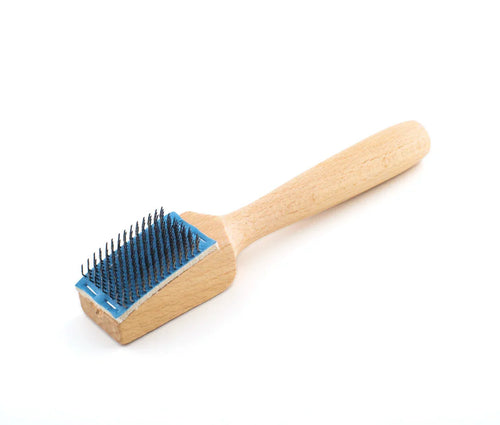
If you are serious about salsa or bachata, a steel sole brush (also called a suede brush) is absolutely indispensable in your dance bag. In practice, I see that the pores of the suede sole become completely clogged with dust, floor wax, and tiny dirt particles after a few nights of intensive dancing. This creates a shiny, slippery layer that can be dangerous during fast spins. By carefully pulling the steel bristles of the brush from the heel to the toe over the sole, you 'open' the fibers of the suede again. This gives you that essential control back. Especially with the often more delicate salsa shoes for women, it is important to do this with care; you want to roughen the fibers to regain grip, not wear away the material unnecessarily.
What else should be in your maintenance kit
Besides the brush, there are a few other things I always advise my students to have with them as standard. For men, this is often even more urgent, as salsa shoes wear out faster under the ball of the foot due to the often higher body weight and powerful push-off when leading. A good maintenance kit significantly extends the life of your shoes. Consider the following items for your basic equipment:
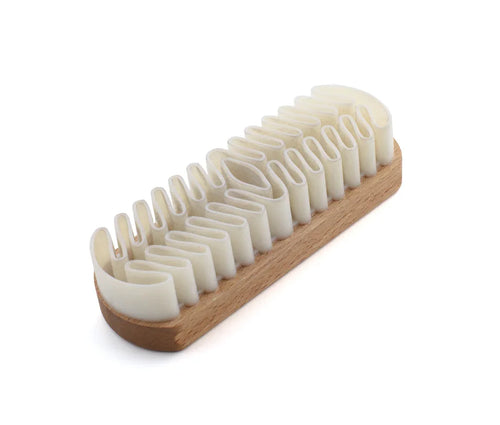
- A suede eraser: This is a block of rough material that is ideal for removing specific stains or sticky residues, such as dried drink spills often found on club floors, without damaging the structure of the leather.
- Cedar shoe trees: After an intensive evening of Latin dancing, your shoes have absorbed a lot of moisture and sweat. Cedar wood absorbs this moisture and neutralizes odors, which is crucial for maintaining the shape and hygiene of your bachata shoes.
- A soft microfiber cloth: Use this not for the bottom, but for the upper. Whether you wear satin, leather, or synthetic material, wiping away dust and sweat immediately after class prevents the material from becoming dull or cracking.
- A protective cap for your brush: A common mistake is throwing the steel brush loose into the bag. The sharp metal bristles can irreparably damage the lining of your bag or the delicate material of your other dance shoes.
In practice, I notice that dancers who spend just five minutes a week on this basic ritual get on average twice as much life out of their shoes. It's not just about aesthetics; it's about your stability on the floor. Whether you are training for a choreography or just enjoying a social dance evening, the right essentials ensure that your soles offer the perfect balance between glide and grip. So make sure you always have these items at hand before stepping onto the dance floor.
Step-by-Step Guide to Brushing Soles
In the dance school, I see it happening weekly: a dancer starts a double spin and slips mercilessly. The culprit is almost always a 'glazed' sole. Through a combination of dust on the dance floor, perspiration, and the constant pressure of your feet, the fine hairs of the suede are flattened and caked with dirt. You lose the grip that is essential for controlled Latin dancing. Brushing your soles is not a luxury, but a dire necessity for both your safety and your technique.
The right technique for maximum grip
A common mistake is that dancers brush much too cautiously. You don't have to pet the sole; you really need to pull the fibers 'open' again to get that rough texture back. What I often see is that people only hit the middle of the sole, while the edges under the ball of the foot are crucial for your balance during a cross body lead or a fast turn. Once the sole of your salsa shoes shines like a mirror, you are actually already too late. Follow this step-by-step plan to get the soles back in top condition:
- Hold the shoe firmly with your hand inside the toe of the shoe. This gives you the necessary counter-pressure without deforming the heel or the shaft of the shoe.
- Place the steel dance shoe brush on the sole and make short, powerful movements. In practice, it works best to work from the toe towards the heel, or diagonally across the width of the sole.
- Always brush away from your body. The steel pins of a professional brush are razor-sharp. I have seen more than once a dancer cut their own hand or knee because they brushed too wildly towards themselves.
- Keep brushing until the sole looks dull and 'fuzzy' again. The gray or black shine of accumulated dirt must have completely disappeared.
When and how often should you brush?
The frequency depends heavily on the floor you are standing on. On a perfectly maintained parquet floor in a dance studio, your soles stay clean much longer than on the often somewhat sticky or dusty floors in a salsa café. What I often advise my students is to briefly check their salsa shoes before every social dance party or class. Does the sole feel slippery when you run your thumb over it? Then it's time for the brush.
An important practical tip: never brush your shoes if the soles are still damp from sweat. Let them dry thoroughly after dancing first. If you brush wet suede, you tear the fibers apart instead of just roughening them. With intensively used men's Latin shoes, you often see that the sole around the ball of the foot wears out fastest due to frequent pivoting. Pay extra attention to that during your maintenance. If you notice the sole in those areas is becoming truly 'bald' and the hairs no longer stand up, then the suede is saturated. But by brushing consistently, you postpone that moment by months, if not years.
Restoring and Maintaining Grip
Nothing is more frustrating than losing your balance in the middle of a sharp cross-body lead because your soles feel like ice skates. What I often see in dance class is that dancers work unnecessarily hard to control their pivots, simply because the suede sole of their shoe is completely 'clogged'. Due to the dust on the dance floor and the natural oils of the leather, the hairs of the suede are flattened, creating a smooth, shiny layer. In practice, we also call this the 'graying' of the sole.
To get that much-needed traction back, the wire brush is your most important tool. A common mistake I see beginners make is that they only start brushing when they are already almost slipping. Actually, you are already too late then. For optimal control during Latin dancing, it is essential to regularly pull the fibers of the suede 'open'. You do this by brushing firmly from the center of the sole to the outside with a special shoe brush with steel bristles. You will immediately see the leather become dull and rough again, exactly what you need for those controlled spins.
The right technique for long-lasting grip
In practice, I often see that dancers only brush the ball of the foot. Although that is where most pressure is applied during turning, it is a false economy to skip the rest of the sole. Especially with salsa shoes, where the heel is often higher, the pressure constantly shifts. If you only treat the front, you lose stability the moment you shift your weight back slightly during a styling moment in bachata. Therefore, always brush the entire sole, including the small piece of suede under the heel if present.
When brushing, pay attention to the following points:
- Always brush away from your body to prevent getting the steel bristles in your hands or damaging your clothing.
- Apply enough pressure to truly remove the dirt and wax layer from the floor, but don't overdo it; you don't want to sand away the leather itself.
- Tap the shoes together after brushing to remove the loosened dust before stepping onto the floor.
Dealing with sticky or overly slippery floors
Sometimes the problem is not your shoes, but the condition of the dance floor. With bachata shoes, you often notice this faster during the sideways basic steps. If a floor is extremely sticky due to moisture or spilled drinks, brushing alone is not enough. What I advise in such cases is to put a very small amount of talcum powder on a dry cloth after brushing and briefly dab your soles on it. Never do this directly on the floor, as it is dangerous for other dancers.
Is the floor actually extremely slippery, like a freshly polished parquet floor? Then I sometimes see experienced dancers use a drop of water or castor oil. My advice: be very careful with this. Water causes the suede to become hard once it dries, which shortens the life of your shoes. Regularly brushing the fibers open remains the most sustainable way to maintain grip without affecting the anatomical support of the sole. Good grip ensures that the small muscles in your arch have to work less hard to keep you stable, which prevents injuries in the long term.
Prevent Damage to Dance Shoes
What I often see with enthusiastic beginners is that they put on their dance shoes at home and walk to the dance school in them. This is the fastest way to irreparably damage your soles. The suede sole of your shoe is designed for a controlled environment: the wooden dance floor. As soon as you walk on the street with them, the pores of the suede attract dirt, grease, and small stones. In practice, I see that this dirt settles deep into the fibers, making the sole as slippery as ice or causing it to stick due to picked-up street dirt.
A common mistake is underestimating the impact of moisture. Suede is essentially the inside of leather and acts like a sponge. When you step on a damp floor – think of a spilled drink at a salsa party – the fibers swell. If this then dries without proper care, the suede becomes hard and brittle. When wearing high-quality salsa shoes, it is therefore essential to check immediately after dancing if your soles are dry before putting them in your bag.
The influence of floor conditions on your soles
In the world of Latin dancing, you don't always have control over the floor you stand on. During a bootcamp in a rented hall, the floor can sometimes be much too grippy. What I often advise my students is not to force spins if the resistance is too high. The enormous friction created during a double turn on a grippy floor generates heat. This heat can weaken the glue bond between the suede sole and the shoe.
- Avoid concrete and laminate: These surfaces act like sandpaper for your suede.
- Watch out for wax: Some venues use floor wax; this fills up the hairs of your suede sole, causing you to lose all grip.
- Clean before dancing: Always use a shoe brush before you start to remove accumulated dust from the previous session.
For men too, good salsa shoes are an investment you want to protect. In practice, I see that men often land heavier on their heels during the basic step of bachata. This causes uneven wear of the suede that continues under the heel. By consciously working on your weight distribution – more on the ball of the foot – you not only relieve your joints but also significantly extend the life of your soles.
Smart habits after class
A routine I always maintain myself is letting the shoes air out. Never put your bachata shoes directly into an airtight plastic bag. The sweat from your feet soaks into the suede and leather, and if this cannot evaporate, the fibers will rot. Use a cotton shoe bag that breathes. This prevents bacteria from accumulating and the suede from losing its flexibility.
Additionally, the anatomy of the shoe is important in maintenance. The 'nap' (the small hairs of the suede) must remain open to provide the right amount of grip and slide. When you notice the sole getting shiny spots, it is a sign that the fibers have been flattened by skin oils and dust. Don't wait until the entire sole is slippery, but brush these spots immediately. By brushing preventively, you avoid having to cut deep into the fiber with a steel brush, which ultimately only makes the sole thinner.
When to Have Soles Replaced
The moment comes for every dancer: you brush like crazy with your steel sole brush, but after fifteen minutes on the dance floor, your soles already feel slippery again. What I often see with students is that they continue walking on worn soles for much too long. That is not only annoying during turns but also downright dangerous for your joints. If the fibers of the suede are completely worn away, you no longer have grip and you lose control over your stops and spins. With high-quality salsa shoes, the sole is thick enough to last hundreds of hours, but even the best suede has an expiration date.
When brushing no longer helps
A common mistake is thinking you can keep roughening a sole forever. In practice, I often see soles that look 'glazed'. This happens when grease, dirt, and moisture from the dance floor have worked so deep into the pores of the leather that the hairs no longer stand up, no matter how hard you brush. If you still see shiny, hard spots after cleaning that feel like smooth plastic, the suede is 'dead'. For men who train intensively, you often see this faster at the ball of the foot. Good men's Latin shoes have a sole that must remain flexible; as soon as that sole becomes hard and stiff, you lose the essential contact with the floor.
Pay particular attention to the following signals during your training or a social dance evening:
- The sole is so thin in certain places that you can see the glue layer or the insole shimmering through.
- You feel every unevenness or grain on the floor directly through the sole, which often leads to burning feet after dancing.
- The suede is coming loose at the edges of the shoe, which creates a dangerous tripping hazard during fast footwork combinations.
- Even after a thorough brushing, you slip away during a simple cross body lead or a double spin.
Resole or buy new shoes?
If you notice that your favorite bachata shoes no longer offer the stability you are used to, you face a choice: resole or replace. A specialized dance shoemaker can often glue a new layer of chrome leather (suede) over the old sole. This is a fine solution if the upper of the shoe is still in top condition and the fit is still tight around the foot.
However, what I often notice in practice is that by the time the sole is completely finished, the heel lining and the internal support of the shoe have also had their best time. During intensive Latin dancing, the entire construction of the shoe takes a beating due to the constant torsion and pressure shifting on the ball of the foot. If the sole shows holes AND you notice your foot starting to 'swim' in the shoe because the material has stretched, then it is safer and more comfortable to invest in a new pair. Nothing is as detrimental to your technique as dancing on shoes that have lost their structural integrity.
Frequently Asked Questions
How do I clean the suede soles of my salsa shoes?
To clean the suede soles of your salsa shoes, use a special steel dance shoe brush. Brush firmly from the heel to the toe to remove accumulated dirt and wax residues from the dance floor. This causes the hairs of the suede to stand up again, providing the necessary grip and flexibility while turning on the dance floor during Latin dancing.
Why do the soles of Latin dance shoes become slippery over time?
The soles of Latin dance shoes become slippery because the suede is flattened by friction and pressure during dancing. Additionally, dirt, dust, and floor wax from the dance floor accumulate in the fibers of the sole. This creates a hard, shiny layer that takes away the natural grip of the material, making dancing on slippery floors difficult and sometimes even dangerous.
How often should I brush my bachata shoes for optimal maintenance?
For optimal maintenance, it is advisable to briefly brush your bachata shoes after every intensive dance class or party. If you notice you have less grip or that the soles are starting to shine, it is time for a thorough maintenance session. Regular brushing prevents dirt from soaking deep into the suede, making your shoes last longer and allowing you to keep turning safely.
Can I use water or cleaning agents on my suede dance soles?
No, it is strongly discouraged to use water or liquid cleaning agents on the suede soles of your dance shoes. Moisture can make the suede hard and stiff, causing the unique sliding properties to be permanently lost. Use only a dry dance shoe brush to remove dirt. If the sole is extremely dirty, consult a specialist before using liquids on your precious salsa shoes.
What is the best way to get immediate grip back on Latin shoes?
The best way to get immediate grip back on your Latin shoes is by roughening the soles with a steel brush. Brush against the direction of the hairs until the suede feels soft and dull again. In emergencies, some dancers use a small drop of water, but a good brushing with an official brush remains the most sustainable and safe method.
Do I need a special brush for my salsa dance shoes?
Yes, for salsa dance shoes, a specific dance shoe brush with steel bristles is essential. These brushes are designed to pull the compressed fibers of the suede open again without damaging the material. Often these brushes come with a handy protective cover to prevent the sharp bristles from damaging your other dance gear. A regular clothes brush is unfortunately not powerful enough for this maintenance.
How do I significantly extend the life of my suede dance soles?
You extend the life of your suede dance soles by wearing them exclusively indoors on a clean dance floor. Never walk on the street with your dance shoes, as moisture and rough surfaces irreparably damage the suede. Additionally, regular brushing and storing your shoes in a breathable shoe bag helps to keep the material in top condition for many hours of salsa and bachata fun.
The beauty of well-maintained shoes is that you feel it directly in your movements on the dance floor. What I especially want to give you is that those few minutes of brushing after an intensive salsa or bachata evening make the difference between uncertain slipping and turning with full confidence. Remember above all that your suede soles are your most important tool; keep them rough and clean to maintain that perfect grip and prevent injuries. When you notice that your current pair is truly in need of replacement despite all care, or if you simply want a fresh start with a new design, take a look at our women's Latin dancing collection for shoes that offer both style and stability. For men too, the right base is essential for every powerful movement, so be sure to discover our men's Latin collection. Your shoes are an extension of your passion; care for them with love, so you only have to focus on the music and the pure joy of dancing.


