

Table of Contents
- Importance of Good Ballroom Shoes
- Speed and Grip in Quickstep
- Cushioning and Comfort for Dancers
- Durability of Standard Dance Shoes
- Carbon Technology in Dance Shoes
- Tips for the Right Choice
- Frequently Asked Questions
Are you ready for the first chassé of the Quickstep, but do you feel your feet slipping dangerously halfway through the turn or, on the contrary, sticking painfully to the parquet floor? Specific ballroom shoes for the Quickstep are crucial in ballroom dancing because, thanks to their suede sole, they offer the perfect balance between grip for push-off and gliding ability for fast movements. In the thirty years that I have been teaching standard dances, I have noticed that the right shoe makes the difference between clumsily running across the floor and feeling like you are truly floating above it.
In my lessons, I often see beginners underestimate the impact of footwear, but at a tempo of fifty measures per minute, every detail counts. A good dance shoe must not only be lightweight but also provide sufficient support to the arch of the foot during those characteristic hops and fast turns. Whether you are just starting your first bronze course or have been competing in the competition class for years, investing in quality ballroom shoes is the only way to achieve that explosive speed and technical precision without unnecessarily stressing your joints. A regular pump or leather men's shoe simply lacks the flexibility needed for the subtle footwork that makes this dance so spectacular.
Importance of Good Ballroom Shoes
In the dance hall, the floor is your most important instrument, and your shoes are the only direct connection to that instrument. A common mistake I often see in practice with beginners is that they think their regular, neat evening shoes will suffice for a ballroom dance lesson. Nothing could be further from the truth, especially when looking at the technical requirements of standard dances. In the Quickstep, you move across the floor at an enormous speed; without the right footwear, you are simply fighting the surface instead of using it. Good men's ballroom shoes are specifically designed to facilitate the 'heel lead'. This is the step where you land on the back of your heel and roll your weight smoothly forward. With a regular shoe, the heel is often too stiff or the angle of the sole is incorrect, causing your movement to stall. In standard dances, you want to create a fluid, uninterrupted line. The construction of a real dance shoe, with a flexible core and a suede sole, ensures that you can maintain that flow without your joints having to fully absorb the impact of every step.Stability and Anatomical Support
What I often notice with dancers who complain about tired feet or calf pain after a training session is that their footwear does not support the arch of the foot sufficiently during the 'rise and fall'. In the Quickstep, you are constantly on the ball of your foot to generate that characteristic lightness and speed. Quality women's ballroom shoes have a built-in reinforcement under the instep that prevents the foot from collapsing. This is crucial because as soon as your foot becomes fatigued, you lose control over your ankles and thus your balance in fast figures such as the 'chassé'. Additionally, the position of the heel in women's ballroom shoes is essential. Unlike fashion heels, the heel of a dance shoe is placed exactly under the center of the heel. This ensures a vertical center of gravity. In practice, this means you are much more stable during powerful turns and less likely to tip backwards when coming down from a high position.Why the suede sole makes the difference
The suede sole is perhaps the most underrated part of your equipment in ballroom dancing. It offers a unique balance between grip and glide that you will never achieve with rubber or leather. In the Quickstep, you need this specific resistance for various technical aspects:- Making explosive sideways movements without your foot slipping.
- Executing controlled turns where the sole provides just enough 'slip' to spare your knees.
- A direct feel with the parquet floor, allowing you to make precise corrections if you lose your balance.
- Absorbing shocks during fast hops and jumps typical of advanced Quickstep variations.
Speed and Grip in Quickstep
The Quickstep is without a doubt the most physically demanding dance within standard dancing. With a tempo often exceeding 50 measures per minute, everything revolves around explosiveness and precision. What I often see in practice is that dancers try to get the speed from their upper body, while the real speed comes from contact with the floor. Your shoes act as the only interface between your body and the parquet. If that connection is not optimal, you lose precious milliseconds with every chassé or lock step. In ballroom dancing, the balance between grip and glide is crucial. For the Quickstep, you need a sole that allows you to glide during linear movements but 'bites' immediately once you place weight for a powerful push-off or a sudden stop. In practice, this means the suede sole of your shoe must be in top condition. A common mistake is dancing on a floor that is too slippery with worn-out soles, causing you to unconsciously tense your muscles to avoid slipping. This blocks your natural swing and results in a stiff movement.The anatomy of a fast push-off
To master the speed of the Quickstep, your foot must be able to roll through technically correctly. In a forward step in the Quickstep, you land on the heel, then quickly roll to the ball of the foot. For women, the heel height and positioning are essential for balance. A heel that is too far back forces your weight onto your heels, which is disastrous for your speed. Quality ballroom shoes for women are designed so that the pressure falls exactly under the center of the heel, helping to maintain an active posture. For the men, the flexibility of the sole is the most important aspect. During fast pendulum movements and hops, the shoe must follow the natural curve of the foot arch. If a shoe is too stiff, you cannot build up enough pressure in the forefoot for a powerful jump or acceleration. Good men's ballroom shoes offer that necessary flexibility without sacrificing the sideways support needed during rotations.Grip control on the dance floor
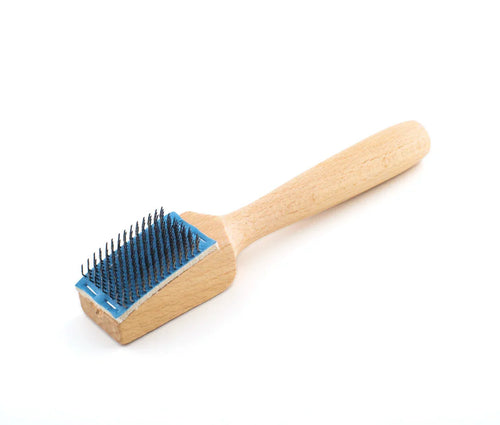
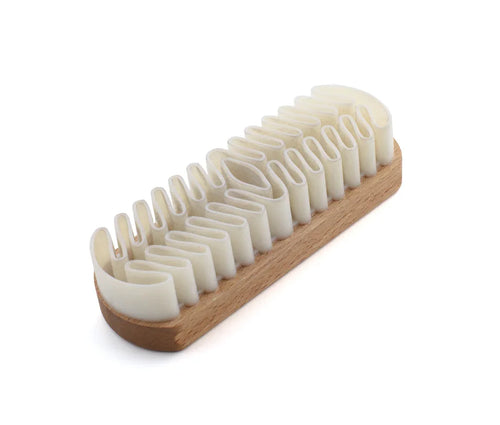
A technical aspect often underestimated is how you actively use the grip of your shoe during the dance. In the Quickstep, we make extensive use of 'rise and fall', but in a much faster and more compact way than in the English Waltz. Here are a few practical tips I always give my students for better grip:- Use a suede brush to regularly roughen the sole of your ballroom shoes. This restores the leather fibers, giving you control over friction again.
- Pay attention to the spread of your toes in the shoe. The better your toes can 'grip' the sole, the faster you can react to tempo changes.
- Avoid too much wax on the floor; this can lead to unpredictable grip. Better to rely on the quality of your own soles.
- Check when choosing shoes if the heel cup fits firmly. During fast sideways movements, your foot must absolutely not slide in the shoe, as this directly negatively affects grip.
Cushioning and Comfort for Dancers
The quickstep is without a doubt the most physically demanding dance within the standard program. What I often see with dancers who are just moving to a faster tempo or a higher class is that they experience pain in the ball of their foot or even their knees at the end of a training session. That is no coincidence. In the quickstep, you are constantly making jumps, fast movements, and 'hops' where your weight shifts from one foot to the other in a fraction of a second. Without the right cushioning, your skeleton absorbs all those impacts instead of your shoe. A common mistake is prioritizing a wafer-thin sole for the 'feel' of the floor, while you actually need protection in a dance with so much impact. In practice, it appears that quality ballroom shoes for women equipped with a multi-layer insole significantly delay fatigue in the legs. The extra padding under the forefoot acts as a shock absorber, which is crucial during the explosive movements of the quickstep.The anatomy of a good landing
In my lessons, I notice that comfort is not just about how soft a shoe feels when you first put it on, but about how the pressure is distributed during a 'chassé' or a 'lock step'. During these movements, you often land with great force on the forefoot. If your shoe offers too little support there, the small metatarsal bones become overloaded. For the men, this aspect is just as important, although the heel plays a larger role here. When selecting standard dance shoes for men, I always advise paying attention to the firmness of the heel cup in combination with the cushioning in the heel. A good men's shoe must hold the heel firmly in place to prevent sliding, while the sole remains flexible enough to roll the foot properly. This prevents lower back or calf pain after a long evening of dancing.What to look for when trying them on
When you go to try on new shoes for the quickstep, I recommend not just walking a few steps. Immediately do a few pendulum swings and a small series of hops. Specifically pay attention to the following points:- Sole resilience: The cushioning should not only be soft but also spring back. If the insole is completely flattened after one training session, it no longer offers protection.
- Arch support: There should be no empty space between your instep and the insole. Good support here prevents your foot from 'collapsing' during powerful push-offs.
- Heel stability: Especially in women's models, the heel must be directly under the center of gravity of the heel. This provides the necessary stability during fast turns and stops.
Durability of Standard Dance Shoes
When you are on the floor three nights a week for a rigorous Quickstep training, your shoes take a beating. What I often see in practice is that dancers underestimate the durability of their footwear. Standard dancing is about fluid movements and prolonged contact with the parquet floor, which causes constant friction. Especially in the Quickstep, where the speed is high and stops are abrupt, a lot is asked of the glue bonds and the quality of the suede under the sole. A shoe is not simply 'finished' if there is a scratch on it, but the structural integrity determines whether you can continue to dance safely without straining your ankles.The impact of technique on wear
A common mistake with beginning dancers is that they do not slide their feet correctly across the floor, but instead 'stomp' or shift their weight incorrectly during chassés. This causes uneven wear of the sole. In practice, I see that the inside of the ball of the foot becomes bare first. This is due to the constant 'rise and fall' movement that is so characteristic of standard dances. The suede (chrome leather) of the sole loses its grip and becomes as smooth as glass. When selecting new women's ballroom shoes, it is therefore essential to pay attention to the firmness of the shank. The shank is the reinforcement in the sole that supports your arch. In cheaper models, I often see this collapse after a few months, causing the shoe to lose its shape and giving you less control over your heel work. For men, a similar principle applies; sturdy men's ballroom shoes made of quality calfskin or patent leather not only provide the necessary look but also maintain their shape under the intense lateral pressure created during a fast turn or a powerful swing.Practical tips for a longer lifespan
To maximize the lifespan of your ballroom shoes, maintenance is not a luxury but a necessity. I always advise my students to follow a set routine. Here are some concrete points that make the difference in practice between a shoe that lasts one season or three years:- Brush your soles consistently: Use a steel sole brush after every dance lesson to roughen the suede again. This removes accumulated dirt and wax from the dance floor, restoring the grip.
- Use heel protectors: For the ladies, this is crucial. Heel protectors prevent the plastic heel tip from wearing down directly to the metal pin, which can cause irreparable damage to both the floor and the shoe.
- Let the shoes breathe: Never put your shoes directly into a sealed plastic bag after dancing. Moisture (sweat) affects the leather and the glue. Use a fabric bag and let them air dry at home, but never near a heater.
- Alternate: If you train seriously, it is wise to have two pairs of shoes. By giving your shoes a day of rest, the material can recover and take on its original shape.
Carbon Technology in Dance Shoes
In the dance world, people often talk about the 'feel' of the floor, but in a dance like the Quickstep, the technical construction of your shoe is at least as important as your technique. What I often see in practice is that dancers struggle with the speed of their footwork simply because their shoes are too heavy or too flexible in the wrong places. This is where carbon technology plays a crucial role. Where traditional shoes often use a steel or wooden shank for strength, modern top models use carbon fiber. The big advantage of carbon is the combination of extremely low weight and enormous stiffness. During the fast 'locks' and 'chassés' in the Quickstep, you want the shoe to respond immediately to every muscle movement in your foot. A common mistake is wearing shoes that lose their shape in the instep over time. A carbon shank retains its resilience, meaning the energy you push into the floor is returned immediately. We also call this the 'snap-back' of the shoe.Explosiveness and Energy Return
In ballroom dancing, and specifically in standard dances, the transition from a low 'drive' to a high 'rise' is essential. In practice, I notice that dancers who switch to men's ballroom shoes with carbon elements become fatigued in their calves less quickly. This is because the shoe supports the arch without blocking natural movement. The carbon fibers act like a kind of spring: they bend during push-off and snap back immediately into their original shape as soon as the foot leaves the floor. Some concrete benefits I experience with the use of carbon in dance shoes:- Weight reduction: Every gram you don't have to lift during a fast wood-block or pendulum swing saves energy over an entire competition day.
- Structure integrity: The shoe is less likely to twist, which is crucial during powerful turns on the ball of the foot.
- Thin sole with maximum support: You can use a thinner sole for more floor feel, while the carbon provides the necessary protection and stability to the midfoot.
Stability in the Women's Heel
For the followers, the load on the shoe is different, but certainly no less intense. During fast pivots and constant pressure on the ball of the foot in the Quickstep, the connection between the heel and the sole is a critical point. In the dance studio, I regularly see heels start to 'wobble' after a few months of intensive training. In high-quality women's ballroom shoes, carbon is often used to reinforce the transition from the heel to the sole. This ensures that your center of gravity remains stable, even when initiating a turn at top speed. A technical detail often overlooked is the anatomical shaping of the carbon shank. This follows the natural curve of the foot arch much more accurately than steel can. This makes the shoe fit better, preventing blisters because the foot does not slide within the shoe during explosive movements. In practice, I advise dancers who want to work seriously on their speed to always look at the stiffness of the sole. If you can fold the shoe in half in the middle with two fingers, that is going to work against you in a fast Quickstep. Carbon technology offers that much-needed resistance without the shoe feeling like a block of concrete on your foot. The result is a dance shoe that feels like an extension of your own body, ready to effortlessly handle every acceleration in the music.Tips for the Right Choice
In practice, I often notice that dancers underestimate the Quickstep in terms of material. It is the fastest dance within the standard program, and that demands a lot from your footwork. A common mistake I see with beginners is that they think a standard shoe with a smooth sole will suffice. Nothing could be further from the truth. In the Quickstep, it's all about the balance between grip for the powerful push-off and enough smoothness for the lightning-fast 'glides' over the parquet.The sole: Control over your friction
What I often see on the dance floor is that dancers lose their grip during a fast chassé or a 'lock step'. This is usually because the sole is not made of quality suede. Suede gives you exactly the control you need on a professional dance floor. If you have too much grip, such as with rubber soles, you block your knees during the turn; if you have too little grip, you literally fly off course during a 'natural turn'. Therefore, make sure you invest in specialized men's ballroom shoes that have a sole you can roughen with a steel brush. In practice, I see that dancers who maintain their soles well perform their 'woodpecker' actions and jumps much more confidently because they know they won't slip upon landing.Stability and the anatomy of the heel
A crucial point in choosing the right shoe is the stability of the heel. In the Quickstep, you constantly use the 'rise and fall' technique. When you stand on the ball of your foot, the shoe must support your arch perfectly to prevent cramping. For women, it is essential that the heel is placed exactly centrally under the heel. A shaky heel means a shaky posture, which directly affects the connection with your partner and your upper body (the frame). I often advise making a few 'pendulum swings' when trying on new ballroom shoes. Do you feel yourself tipping sideways? Then the last is probably too wide or the heel is not stable enough for your specific foot shape.Practical points of attention for the perfect fit
When choosing shoes for ballroom dancing, pay specific attention to the following technical details that make the difference between an enjoyable training session and blisters:- Sole flexibility: You must be able to fully stretch (point) your foot for a beautiful finish to your steps, but the midfoot must remain firm enough to absorb your weight after a jump.
- Fit around the heel: In the Quickstep, you lift your heels up and down continuously. If your shoe slips at the heel, you lose direct control over the floor and your footwork becomes sloppy.
- Material choice: Leather molds to your foot over time, which is pleasant for wide feet. However, satin is the standard for competitions because it gives a more elegant line and stretches less quickly.
Frequently Asked Questions
How much faster are you with carbon shoes?
Although carbon is mainly known in the running world for a speed gain of approximately 4%, carbon-reinforced soles in ballroom dancing primarily offer extra stability and explosiveness. In the Quickstep, this material ensures more efficient power transfer during jumps and fast movements. You don't literally become faster in kilometers per hour, but your footwork looks sharper and more powerful due to the improved energy return of the shoe.
How quickly do dance shoes wear out?
Just as running shoes lose their cushioning after 500 to 800 kilometers, ballroom dance shoes wear out depending on training intensity. With intensive use in the Quickstep, standard dance shoes last an average of six to twelve months. The suede sole becomes smooth from dust and wax, while the internal support weakens. Regular maintenance with a sole brush is essential to extend the life and grip of your shoes.
What makes a running shoe fast?
With a fast shoe, it's all about the combination of low weight, flexibility, and grip. For the Quickstep, this means a shoe that is light enough for fast footwork but sturdy enough for stability during turns. The suede sole acts as the engine: it provides just enough resistance to push off and enough smoothness to glide effortlessly over the parquet floor during fast combinations.
Which shoes provide the most cushioning?
Shoes with a thicker midsole or specific gel inserts offer the most cushioning. In ballroom dancing, these are often the more luxurious standard shoes that have extra padding under the ball of the foot and in the heel. This cushioning is crucial during the Quickstep to absorb the impact of the characteristic hops and jumps, relieving your joints and allowing you to dance longer without pain.
Why are suede soles essential for Quickstep shoes?
Suede soles are indispensable for ballroom dancing because they offer the perfect balance between grip and glide on a wooden floor. During the Quickstep, you must be able to glide in a controlled manner without slipping. The texture of the suede ensures that you can stop immediately after a fast movement. By regularly roughening the sole with a steel brush, you maintain the necessary control for technically sharp standard dances.
How do I choose the right size for my ballroom shoes?
The right size for ballroom shoes should be snug, similar to a second skin. There should be no space between your foot and the shoe, as this reduces stability during the Quickstep. A shoe that is too large can cause blisters and disturb your balance. For optimal ballroom dancing, choose a size where your toes just touch the front, so the shoe offers maximum support with every powerful step.
What is the difference between standard shoes and latin shoes?
Standard shoes, which you use for the Quickstep, have a closed toe and a lower, wider heel for maximum stability and a fluid heel-to-toe roll. Latin shoes often have an open toe and a higher, thinner heel for maximum flexibility of the ankle. For the Quickstep, standard shoes are necessary because the closed toe and specific heel support the correct technique and balance required for this fast dance.
The beauty of the quickstep is that unique combination of feather-light floating and explosive power. What I especially want to tell you is that your technique only truly comes to life when you can fully trust your equipment. Remember above all that the right ballroom shoes not only provide that much-needed grip during fast turns but also give you the stability to fly across the floor with speed without losing control. Once you experience that perfect balance between suppleness and support, ballroom dancing no longer feels like a series of steps, but like pure freedom.
Give yourself that advantage and discover the high-quality models in our women's ballroom standard collection or view the technical refinement in our men's ballroom standard collection. The right choice makes the difference between simply following the steps and truly dominating the dance floor. Your passion for standard dancing deserves footwear that is just as ambitious as you are; let your feet set the pace and enjoy every fluid movement you make from now on.


