

Table of Contents
- Difference between Cuban and LA Style
- Characteristics of Salsa LA Style
- Shoes for Salsa Dancing
- Soles for Latin Dancing
- Bachata Shoes vs Salsa
- Making the Best Choice
- Frequently Asked Questions
Turning in salsa seems simple until you notice that after five seconds you are out of balance or that your knees start to protest during a double spin. In my classes, I often see students struggling with the wrong salsa shoes: what works perfectly for the fluid, circular movements of Salsa Cubana is often a drag on your leg during the explosive, linear spins of LA Style. The right choice for your footwear depends entirely on the specific technique and the way you shift your weight on the dance floor.
If you take latin dancing seriously, your shoe is your most important tool. For the authentic Cuban style, I often recommend a more stable sole and a lower heel, because you dance much more 'grounded' and constantly change direction relative to your partner. With LA Style, everything revolves around precision on the line; here you need a suede sole that provides just enough grip not to slip, but is smooth enough to pivot smoothly without straining your joints. At the beginning of my career, I made the mistake of dancing in regular sneakers, which almost gave me a nasty meniscus injury. Whether you're looking for the right bachata shoes for those sensual hip movements or a technical pair for fast salsa combinations, the right balance between grip and comfort determines whether you'll dance effortlessly all night long.
Difference between Cuban and LA Style
In practice, I notice that many dancers only really start to feel the difference between Salsa Cubana and LA Style in their bodies after a few months. Although the basic steps are similar, the dynamics are completely different. What I often see is that people starting with LA Style (also called 'On1') struggle with their balance during turns, while Cuban dancers often report that their feet get tired from the constant 'walking' in circles. Understanding these differences is essential before you invest in your equipment. LA Style is danced on an imaginary line, the so-called 'slot'. It is a linear style where speed, technical precision, and spectacular spins are central. Because you are constantly moving back and forth on that line, there is a lot of pressure on the ball of your foot. A common mistake is wearing shoes with too much grip; during a double spin on a stiff floor, your knees can take a real beating. For the ladies, stable heel placement is crucial here. These salsa shoes are specifically designed to absorb that sideways pressure while you maintain your axis during a Cross Body Lead.Salsa Cubana: Dancing in Circles
Salsa Cubana, or Casino, is a completely different story. Here you don't move on a line, but in circles around each other. It is more 'grounded' and less focused on acrobatic spins. Instead, you make extensive use of complex arm movements and 'nudos' (knots). Because the movement is rounder, you use the sides of your feet in a more active way. What I often see with men dancing Cuban is that they need a shoe that is both flexible and sturdy. You are constantly navigating around your partner, which requires a sole that bends smoothly with the rolling motion of your foot. These salsa shoes for men offer exactly that balance between the necessary grip for the Cuban 'guapea' and the smoothness needed for a quick turn.The Technical Differences at a Glance
To make the right choice, it is helpful to look at the specific strain on your feet:- Turning technique: In LA Style you often turn on one foot (pivot), which makes a suede sole almost indispensable for the right amount of friction.
- Foot placement: In Cuban salsa you step 'through' the movement more often, comparable to a natural walking motion, which requires a shoe with good shock absorption in the heel.
- Body posture: LA Style requires a slight forward lean (on the ball of the foot), while Cuban style has a more relaxed, central posture.
Characteristics of Salsa LA Style
In practice, I see that dancers switching from Cuban salsa to LA Style often need time to get used to the tight, linear structure. Where in the Cuban style you mainly dance around each other in circles, LA Style moves on an imaginary track, also known as the 'slot'. This directly influences how you use your feet and what type of footwear you need. Because the dance explodes on the first beat (On 1), the dynamics are much shorter and more powerful than in many other styles.
What I often see with beginners is that they try to make these fast, linear movements in shoes with too much grip. LA Style is all about precision and speed. You are constantly stopping and starting, which puts enormous strain on the ball of your foot. A common mistake is wearing regular sneakers; these often offer too much resistance on the dance floor, causing your knees to take the blow during a fast Cross Body Lead. Good salsa shoes with a suede sole are not a luxury here, but a necessity to prevent injuries and improve your technique.
Focus on Spins and Footwork
One of the most recognizable characteristics of LA Style are the impressive spins and 'shines' (solo footwork). In practice, this means that as a follower you sometimes have to turn three or four times in a row on one beat. This requires a shoe that offers perfect balance. For the ladies, the position of the heel is crucial: it must be directly under the heel bone for maximum stability during turns.
- Linear movement: All figures are executed on a straight line, which requires shoes that provide lateral stability.
- Explosivity: The push-off on the first beat requires a sole flexible enough to push off from the toes.
- Speed: Because the music often has a high tempo, the shoe must not be too heavy; you want to keep your feet light and agile.
For the men, I often see that they underestimate how important a smooth sole is for their spins. Although the lead's role involves less turning than the follower's, the 'shines' in LA Style are technically challenging. These salsa shoes are specially designed to find that balance between grip for basic steps and smoothness for double turns. A small heel lift also helps men bring their weight more to the ball of the foot, which is essential for an active dance posture.
The Switch to Bachata
On most social dance nights, LA Style salsa is alternated with bachata. In practice, I see that dancers often want one pair of shoes that works for both styles. Although bachata has fewer spins and is more 'grounded', the technical properties of high-quality latin dancing shoes work excellently for both. When choosing your bachata shoes, make sure the sole is flexible enough for sensual hip movements and footwork that is often performed flatter on the floor than in salsa.
An important anatomical detail I always emphasize to my students: make sure the shoe fits like a second skin around your instep. In LA Style, you make many abrupt stops. If your foot slides in your shoe, you not only lose the connection with the floor but also risk blisters. Whether you choose an open sandal or a closed dance sneaker, the sturdiness around the ankle determines how confidently you perform those fast combinations on the floor.
Shoes for Salsa Dancing
In the dance school, I often see beginners underestimating the impact of their footwear. They appear on the dance floor with sneakers that have too much grip or, even worse, with pumps that offer no contact with the floor. What I often see is that dancers experience pain in their knees or ankles after an hour. This is almost always because the shoe does not work with the constant turning movements that are so characteristic of salsa and latin dancing. A good dance shoe is not a luxury, but an essential tool to prevent injuries and improve your technique.
In practice, everything in salsa revolves around the 'pivot'. Whether you dance the linear LA Style or the circular Salsa Cubana, your foot must be able to turn without your joint being blocked by a rubber sole. For ladies, the stability of the heel is decisive here. These salsa shoes are perfect for absorbing the pressure on the ball of the foot, which is essential because in salsa you almost never put your weight fully on your heels.
The Technical Side: Sole and Stability
A common mistake is thinking that regular evening shoes will suffice. The big difference lies in the sole. Professional dance shoes usually have a sole made of suede or specially treated leather. This material offers the perfect balance between grip and glide. You don't want to slip during a fast cross body lead, but you also don't want your foot to 'stick' to the floor during a spin.
- Suede soles: Provide maximum control on wooden dance floors. You can precisely control how much resistance you give.
- Flexibility: The shoe must be flexible at the instep, so you can fully stretch and roll your foot.
- Heel counter: A sturdy heel counter ensures that your foot does not slide in the shoe, preventing blisters and uncertainty during turns.
For the men, the choice is often slightly simpler, but no less important. In practice, I see that men often choose a shoe with a small heel (the so-called Cuban heel) or a flat latin shoe. These salsa shoes are perfect for maintaining the correct body posture, with your weight placed slightly forward. This helps with the connection with your partner and ensures that you can react faster to the music.
Difference in Style and Use
The choice of your shoe is also closely related to the style you dance. In Salsa Cubana, where the movements are often more earthy and compact, I see many dancers preferring a slightly lower heel or even a high-quality dance sneaker with a split-sole. This gives more freedom for footwork and the typical Cuban 'afro' movements where the whole foot touches the floor.
In LA Style salsa, known for its flashy spins and acrobatic figures, a shoe with a sturdy ankle strap and a stable heel height (often between 5 and 7 centimeters for ladies) is crucial. If you also dance bachata, a shoe with extra cushioning is recommended. Because bachata shoes often require softer movements and more 'rolling' of the feet, a flexible sole helps accentuate the hip movement through a better rolling of the toes. Remember that your shoes are your tools; invest in quality and you will notice that you learn faster and stand on the dance floor with much more confidence.
Soles for Latin Dancing
The sole of your shoe is essentially the gearbox of your dance movement. What I often see in practice is that dancers focus blindly on the appearance of a shoe, while the sole determines whether you go home at the end of the evening with supple muscles or a painful knee. In latin dancing, whether you're making the explosive turns of LA Style salsa or the shorter, circular movements of Salsa Cubana, the interaction with the floor is crucial.
A common mistake is wearing shoes with a rubber sole on a wooden dance floor. Rubber creates too much friction. When you start a pivot (turn on the ball of the foot), the shoe locks on the floor while your knee wants to keep turning. This is a recipe for meniscus problems. That's why most high-quality salsa shoes are equipped with a suede sole. Suede offers exactly the right balance: enough grip not to slip away during a powerful push-off, but sufficient 'slide' to spin effortlessly.
Suede versus Leather Soles
In the dance world, we usually distinguish between two types of soles for latin dancing. Your choice depends heavily on the locations where you dance:
- Suede (Chrome leather): This is the standard for indoor floors. It is soft, flexible, and gives you a very good feeling of the floor (grounding). I always recommend these soles for students who want to refine their technique.
- Smooth leather: These soles are more commonly seen on salsa shoes for men who also dance at street festivals or rougher locations. Leather is less sensitive to dirt and moisture than suede, but also offers less grip on a smooth parquet floor.
What I often advise advanced dancers is to look at the flexibility of the sole. In latin dancing, you must be able to fully articulate your foot. A stiff sole prevents you from stretching your instep, which is essential for that typical latin look. Good salsa shoes often have a split-sole or a very flexible continuous sole that follows the arch of your foot.
Maintenance of Your Dance Soles
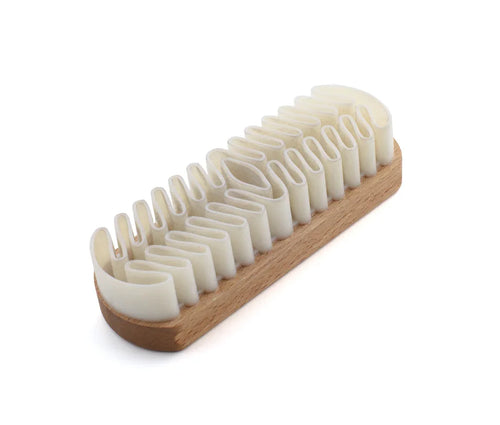
An aspect that is often forgotten is that suede soles need maintenance. In practice, I often see dancers complaining after a few months that their shoes have become too slippery. This is because the suede is flattened by dust and wax from the dance floor. The result is a sole that feels like a smooth mirror.
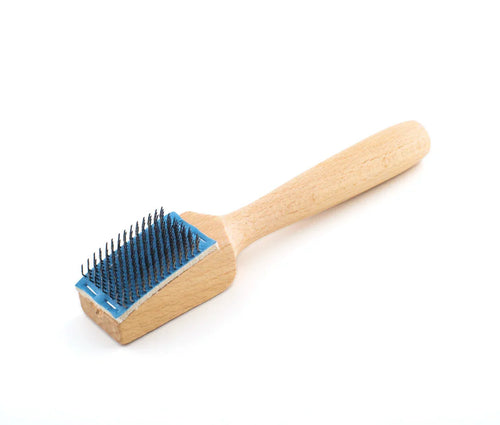
To solve this, use a steel sole brush. This roughens up the suede fibers again, restoring the grip. However, do this carefully; if you brush too hard, the leather will wear away too quickly. A good practical tip: always brush your shoes from heel to toe to keep the fibers in the right direction.
For those who dance a lot of bachata, the choice of sole is just as relevant. Although movements in bachata are often more 'grounded' and contain fewer fast spins than LA Style salsa, you still need a sole that supports lateral movements without straining your ankles. The right salsa shoes are therefore also perfectly suitable as bachata shoes, provided the sole allows you to slide smoothly over the floor during typical bachata steps.
Bachata Shoes vs Salsa
In the dance school, I am often asked by students whether they need different shoes for bachata than for salsa. Although both dances fall under the category of 'Latin', the physical demands you place on your feet are substantially different. In practice, I see that dancers who exclusively dance bachata often get away with a more flexible shoe, while with salsa — and especially LA Style — you really can't do without a solid base. The difference lies mainly in the way you use the floor and the speed of your turns.
What I often see is that beginners think any shoe with a suede sole will suffice. But if you look at the mechanics of the dance, you immediately see the difference. In salsa, the focus is on fast pivots and explosive movements on the ball of the foot. In bachata, especially the Sensual variant, you are much more concerned with 'grounding' and fluid body movements where your foot more often makes full contact with the floor. A common mistake is wearing a shoe that is too stiff during bachata, causing you to miss that beautiful, rolling foot movement (from heel to toe) that supports the hip action.
For the ladies, this often means a choice between stability and flexibility. These latin dancing shoes, for example, are designed to both absorb the lateral pressure of a salsa spin and provide the flexibility for a bachata tap. However, if you dance a lot of Salsa Cubana, where you are constantly circling each other, the strain on your ankles is different than with the linear movements of Bachata Moderna.
Why Flexibility Works Differently in Bachata
In bachata, everything revolves around the accentuation of the fourth beat (the tap). In practice, I see that dancers who wear shoes that are too stiff cannot relax their knees properly, resulting in a stiff hip movement. The anatomy of the foot must be able to 'work' more in bachata. Your metatarsals must be able to bend to absorb those typical wavy movements in your body.
For men, this contrast is also noticeable. Where a salsa leader benefits from a sturdy heel to correctly place his weight above his supporting leg during a double spin, a bachata dancer often seeks more contact with the floor. Good men's latin shoes offer a balance in this: they have enough grip not to slip during a deep 'dip', but allow you to turn smoothly without straining your joints. A shoe with a split-sole can be a solution for the advanced dancer who wants to put more expression into his footwork.
The Technical Requirements of Salsa Turning
If we look at salsa, and specifically the LA or New York style, the 'torque' (turning force) on the shoe is enormous. In practice, I often see injuries occurring because dancers wear shoes that have too much grip on a stiff floor. Your shoe must allow you to pivot on the ball of your foot without your ankle or knee having to absorb the friction.
- Turning speed: Salsa requires a sole that offers minimal resistance during fast rotations, while bachata requires more controlled friction for body rolls.
- Heel placement: In salsa, the heel must often be exactly under the center of gravity of the heel for balance during spins. In bachata, the heel can sometimes be slightly wider for extra stability while leading complex partnerwork figures.
- Cushioning: Bachata music is often a bit slower, but the movements are more constant. Good cushioning under the forefoot is essential to prevent fatigue in the metatarsals.
My advice to students is always: look at what you dance the most. If you dance salsa 70% of the time and occasionally a bachata song, choose specific salsa shoes that offer the necessary support for your spins. The technique you need for a safe salsa experience is simply more demanding for your footwear than the average bachata social. Ultimately, it's about your shoe not hindering your natural movement, whether you're performing a fast cross-body lead or a sensual bachata wave.
Making the Best Choice
In practice, I often notice that dancers only really think about their shoe choice when they notice their technique stagnating or when they experience knee pain after an evening of social dancing. The choice between shoes for Salsa Cubana or LA Style is not just a matter of aesthetics; it's about how the shoe communicates with the floor and supports your specific dance style. A common mistake is to think that any shoe with a heel or a smooth sole will suffice, but the mechanics of a Cuban turn differ substantially from a technical spin in the 'slot' of the LA style.
Surface and Turning Technique
What I often see in Salsa Cubana is that the movements are much more earthy and circular. You are constantly moving around your partner, with your feet maintaining frequent contact with the floor. For the men, stability is the keyword here. In practice, this means that a shoe with a slightly wider heel and a flexible split-sole is often preferred, because it gives you more control over your weight shift during complex 'nudos' (knots). These salsa shoes for men are equipped with the right suede sole that offers just enough resistance not to slip, but is smooth enough to turn easily without straining your ankles.
In LA Style (Salsa on 1), the focus is much more on speed, explosivity, and multiple spins on one line. Here you often see ladies choosing a slimmer heel that forces the weight directly to the ball of the foot. This is essential for balance during a double turn. A sturdy ankle strap is not a luxury here; it prevents your foot from sliding in the shoe when centrifugal force increases. These salsa shoes offer that necessary firmness around the instep, which is crucial to prevent injuries during fast cross body leads.
The All-rounder for Socials
Nowadays, you see a mix of styles at most dance parties. You might dance salsa for an hour and then switch to a sensual bachata. In practice, most dancers don't want to change shoes halfway through the evening. What I then advise is to look at the flexibility of the arch. Good bachata shoes must be soft enough to fully 'point' the foot at the tap on the fourth beat, while offering enough support for the fast footwork sections in salsa.
Pay attention to the following practical matters that I see every day in the dance school when making your choice:
- Sole maintenance: Always use a suede brush. If your soles become slippery due to accumulated dust and wax from the floor, you lose control over your stops, which can be dangerous for your joints.
- Fit: A dance shoe should be almost too tight when purchased. Satin and leather always stretch due to the heat of your feet and intensive movement.
- Heel height: Don't overestimate yourself. In practice, I often see dancers on 9-centimeter heels who can no longer stretch their knees. A lower, stable heel of 5 or 7 centimeters often improves your technique more than an unstable high heel.
- Cushioning: Feel inside to see if there is extra padding under the ball of the foot. This is the difference between dancing for two hours or making it through the whole night without a burning sensation.
Ultimately, the best choice is the shoe you forget as soon as the music starts. Whether you prefer the raw energy of the Cuban style or the technical precision of LA, your shoe should be an extension of your body, not an obstacle that hinders your movement.
Frequently Asked Questions
What is the difference between Cuban salsa and LA-style?
The main difference is in the form of movement. Cuban salsa, also called Casino, is danced in circles where partners rotate around each other. LA-style, on the other hand, is linear; dancers stay on an imaginary straight line, also called the 'slot'. While the Cuban style is more focused on playful interaction and rhythm, LA-style focuses on technical precision, speed, and spectacular visual presentation.
What is the difference between LA Style and Cuban salsa?
In addition to the form, the timing and the general experience of the dance also differ. LA-style is strictly danced on the first beat and emphasizes clean lines and show elements for an audience. Cuban salsa is more organic and revolves around the connection between the dancers themselves. Where LA-style often looks more technical and athletic, the Cuban variant often feels more relaxed, grounded, and rhythmically complex.
What kind of shoes for salsa dancing?
For salsa dancing, shoes with a smooth suede or leather sole are essential to be able to turn smoothly without risking knee injuries. Ladies usually choose latin shoes with a heel for better weight distribution, while men often choose flexible leather dance shoes. Good salsa shoes offer a combination of firm support around the ankle and sufficient flexibility in the sole for footwork.
What is salsa LA style?
Salsa LA-style is a modern, linear form of salsa that originated in Los Angeles. This style is known for its flashy spins, powerful footwork, and the use of show elements such as dips and lifts. It is danced 'on 1', which means the main accents are on the first beat of the music. It is one of the most popular styles in dance schools worldwide.
Are bachata shoes the same as salsa shoes?
Yes, in practice, bachata shoes and salsa shoes are virtually identical. Both fall under the category of latin dancing shoes and feature a suede sole for the right grip on the dance floor. Because bachata often emphasizes hip movements and shorter steps, many dancers prefer extra flexible soles. However, you can practice both dance styles excellently with one good pair of latin shoes.
Why are special salsa shoes important for beginners?
For beginners, special salsa shoes are crucial for learning to turn safely. Regular sneakers often have rubber soles that provide too much grip, putting heavy strain on your knees during rotations. Dance shoes with suede soles let you glide and turn in a controlled manner. Furthermore, the construction of a dance shoe forces you to place your weight correctly on the ball of your foot, which is essential for correct basic technique.
How do you maintain the suede sole of your salsa shoes?
The suede sole of salsa shoes becomes slippery or hard over time due to dust and dirt on the dance floor. You maintain them by regularly roughening the soles with a special steel dance shoe brush. This removes dirt and restores the grip of the suede. It is important never to wear your dance shoes outside, as moisture and street dirt can irreparably damage the delicate soles.
The beauty of salsa is that the style you choose really reflects your own rhythm and personality, whether you go for the flashy turns of LA Style or the energetic, round movements of Cubana. What I especially want to tell you is that your shoes form the indispensable connection between your technique and the dance floor. Remember above all that the right balance between grip and flexibility not only makes your spins smoother, but also protects your joints during an intensive night of latin dancing. If you are ready to move with more confidence and comfort, we invite you to take a look at our women's latin dance collection or our specialized men's latin collection. Ultimately, dancing is about freedom and fun; make sure your equipment supports you so that you can lose yourself completely in the music. The floor is waiting for you, make it your moment.


