

Table of Contents
- Importance of Good Salsa Shoes
- Different Types of Latin Dance Shoes
- Sole Types and Material Choice
- Finding the Perfect Fit
- Clothing Advice for Salsa Lessons
- Related Dance Styles and Techniques
- Maintenance of Your Dance Shoes
- Frequently Asked Questions
Spinning salsa on your daily sneakers feels a bit like skating on asphalt: you move forward, but it is certainly not elegant. Good salsa shoes are the most important investment for any dancer, because with their suede soles they offer exactly the right balance between grip and turning ability on the dance floor. In the years that I have been teaching, I see students every week struggling with stiff soles or painful feet after an hour of latin dancing. That's a shame, because the right shoe protects your joints and gives you the confidence to finally achieve that double spin in a controlled manner.
Whether you are looking for elegant bachata shoes with a lower heel for more stability, or professional latin pumps for advanced moves, the choice depends heavily on your level and the surface you dance on. Over the years, I have seen countless brands and materials pass by and know exactly where the pitfalls are when purchasing, from heel straps that are too loose to soles that wear out too quickly. In this guide, I share my practical experience so that you don't make a bad purchase and can step onto the dance floor immediately with the right comfort and technique.
Importance of Good Salsa Shoes
What I often see on the dance floor is that beginners start on their regular sneakers or pumps that they also wear to an office job or a party. Although that might work for the first lesson, in practice you quickly notice that your technique suffers. A common mistake is underestimating the interaction between your sole and the dance floor. In salsa, everything revolves around weight transfer and fast pivots. If you dance on shoes with a rubber sole, your feet stick to the ground while your upper body is already starting the turn. This creates enormous torsion on your knees and ankles, which is guaranteed to lead to injuries in the long run. Good salsa shoes are not just an aesthetic choice; they are your most important tool. A real dance shoe has a sole made of suede or leather. This material offers the perfect balance between grip and glide. You don't want to slip during a fast Cross Body Lead, but you also don't want your foot to lock during a double spin. When you switch to professional footwear, you immediately notice that your movements become smoother and that you need to apply less force to complete your turns.Stability and Anatomy on the Dance Floor
Another essential aspect is stability. When dancing latin styles like salsa and bachata, your center of gravity is often slightly more forward, on the ball of the foot. In practice, I see that men dancing in normal flat shoes often have a tendency to hang 'on their heels', which takes the dynamics out of the dance. Specific salsa shoes for men often have a small heel elevation (usually 2.5 to 4 cm). This elevation forces your weight forward, allowing you to react faster to the music and your partner. For the ladies, the fit is even more critical. A regular pump is not designed to move intensively on for hours. Dance shoes have a built-in steel shank in the sole that provides support to the arch, while the front of the shoe remains extremely flexible. This allows you to fully 'point' and roll your foot, which is essential for that typical latin look. If you invest in quality latin dance shoes, you will notice that the heel cup closes much more firmly around your ankle, making you less likely to twist your ankle during complex footwork combinations or 'shines'.Why the Right Shoe Increases Your Confidence
In addition to the physical aspect, the mental part also plays a role. If you know that your shoes are not going to slip and that your ankles are well supported, you dare to take more risks in your dance. Your focus shifts from "will I stay standing?" to the connection with your partner and the interpretation of the music. Over the years, I have seen many students blossom simply because they no longer had to fight against their own footwear. The benefits of investing in the right material are clear:- Protection of your joints: The suede sole prevents your knees from taking the impact during turns.
- Better balance: The specific heel placement ensures optimal weight distribution.
- Flexibility: You can use your feet better for technical details and styling.
- Durability: Dance shoes are made to withstand the heat and friction of the dance floor, unlike street shoes that fall apart quickly.
Different Types of Latin Dance Shoes
In the dance world, I often notice that beginners do not immediately see the difference between a regular evening shoe and a specific shoe for latin dancing. In practice, however, that difference is enormous, especially when looking at how your feet touch the floor. In styles like salsa and bachata, your footwork is the basis of everything. If your shoes are too stiff, you risk knee injuries when turning; if they are too slippery, you lose control over your balance.
What I often see is that dancers start on sneakers, but soon notice that they 'stick' to the dance floor. A real latin shoe distinguishes itself by the suede sole. This sole offers the perfect balance between grip and glide. This allows you to spin in a controlled manner without your ankles or knees having to absorb the friction of the floor.
Women's Latin Shoes: Heels and Flexibility
For the ladies, the choice is often overwhelming. A common mistake is choosing a heel that is too high purely for looks. In my experience, a heel of 5 to 7 centimeters is the ideal starting point for most salsa dancers. The most important feature of these shoes is the open toe and the flexible shank. These women's latin dance shoes are designed so that you can fully 'point' your foot, which is essential for the aesthetics of latin dancing.
- The Flare Heel: This tapers out slightly at the bottom and therefore offers more stability during fast footwork sections (shines).
- The Stiletto Heel: Thinner and more elegant, but requires much stronger ankle stability and technique.
- Satin vs. Leather: Satin often molds to the foot faster, while leather maintains more support in the long run.
Men's Latin Shoes: The Cuban Heel
For men, latin dancing is mainly about weight distribution. Where a standard men's shoe has a flat heel, you often see a 'Cuban heel' of about 3.5 to 4 centimeters in more traditional latin models. A tip I always give to students who struggle with their balance: try a shoe with a slightly higher heel. It forces your weight to the ball of your foot, exactly where you want to be for a good connection with your partner. These men's latin shoes often have a split-sole, which means the sole consists of two parts. This gives you the freedom to execute your foot roll perfectly during a basic step or a mambo step.
Bachata Shoes: Comfort for Socials
Although salsa shoes are often also used for bachata, I see a shift in practice. Because bachata is often danced lower to the ground and puts more focus on hip movements and 'grounding', many dancers choose slightly more cushioning. For long nights at a social dance event, bachata shoes with a thicker insole or even dance sneakers with a suede sole are very popular. It prevents those burning forefeet that many dancers suffer from after two hours of dancing. When buying salsa shoes, always make sure that the heel cup is sturdy; if your heel slips in the shoe, you immediately lose power in your leading or following.
Sole Types and Material Choice
The sole of your shoe is in fact the most important point of contact between your body and the dance floor. In practice, I often see dancers underestimate the importance of this. The wrong sole can significantly get in the way of your technique. If your sole is too stiff, you lock during a spin, which causes enormous friction on your knee joints. If the sole is too slippery, you lose control over your push-off during fast footwork combinations (shines).The Suede Sole: The Gold Standard
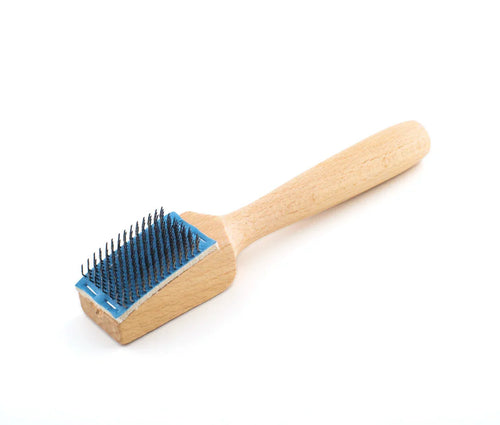
For most indoor dance floors, a sole made of suede (also called chrome leather) is the absolute standard. What I often see is that beginners think they can start on their normal sneakers, but sneakers are designed to provide grip on asphalt, not to turn on wood. Good salsa shoes for men almost always have this suede bottom because it gives you the ability to glide in a controlled manner without slipping. The great advantage of suede is the feedback you get from the floor. You feel exactly where your weight rests on your forefoot. A common mistake, however, is forgetting maintenance. Suede soles become slippery over time because they absorb dust and wax from the dance floor. Therefore, regularly use a steel sole brush to roughen the fibers again. This way you maintain that essential balance between grip and slip that you need for complex turns.Shoe Material: Leather versus Satin
In addition to the sole, the material of the upper plays a major role in how the shoe molds to your foot. In practice, I often advise different materials depending on how intensively you dance:- Leather: This is the most durable material. It stretches slightly over time and molds to the unique anatomy of your foot. For men, this is the standard choice, but many high-quality salsa shoes for women are also made of supple leather for extra strength during long social dance nights.
- Satin: You see this a lot in women's models. Satin is lighter and gives that classic, elegant look on the dance floor. The disadvantage is that it gives less than leather and gets dirty faster. For competitions or performances, this is beautiful, but for weekly lessons, leather is often more practical.
- Synthetic Leather/Vegan: Nowadays there are good alternatives, but pay attention to the breathability. Nothing is more annoying than overheated feet halfway through a Bachata set.
The Hardness of the Sole
A technical detail that experienced dancers pay attention to is the stiffness of the sole plate. In latin dance shoes, the sole must be flexible enough to be able to fully extend (point) your foot. If the sole is too stiff, you cannot transfer your weight properly to your metatarsals, which adversely affects your balance when dancing Bachata or Salsa. In practice, I see that dancers who suffer from their arch often benefit from a shoe with a slightly thicker suede sole that offers just a bit more cushioning. It's about being able to "read" the floor without every unevenness hurting. Preferably choose a material that fits closely; a dance shoe can be quite tight in the beginning, because materials such as leather and suede always stretch a bit due to the heat and sweat of your feet during dancing.Finding the Perfect Fit
In the years that I have been on the dance floor, I have seen countless students leave the lesson with blisters or painful ankles, simply because they fitted their shoes in the same way as a pair of sneakers. What I often see is that beginners have a tendency to buy dance shoes too large. In practice, however, a dance shoe is not a piece of clothing, but an extension of your anatomy. If there is even a millimeter of space between your foot and the footbed, you lose control over your spins and your balance.
When looking at salsa shoes for women, it is essential that the toes come exactly to the edge of the sole, or even fall over it by a fraction. This may sound counterintuitive, but it allows you to 'grab' the floor during fast footwork sections (shines). If the sole sticks out too far, you will trip over your own shoe during a fast cross body lead or a double turn.
Why 'too tight' in the beginning is actually good
A common mistake is choosing immediate comfort in the store. Most high-quality shoes for latin dancing are made of leather or satin, materials that mold to your foot over time. A shoe that fits 'just right' in the store will feel too loose after three nights of intensive dancing. Your foot will then slide, which not only causes friction and blisters, but also jeopardizes your stability during technical movements such as 'spotting' during a turn.
A snug fit is also essential for men; these salsa shoes must enclose the foot firmly, especially around the instep and the heel. When you move weight from your heel to the ball of your foot, the back of the shoe must not 'slip'. If this does happen, you force your calf muscles to keep the shoe in place, which leads to rapid fatigue and cramps.
Checklist for the ideal fit
To be sure you make the right choice, I always recommend checking the following points during fitting:
- The heel closure: There should be no space between your heel and the back of the shoe. In an open model, the heel cup must hold your foot firmly in place without pinching at the Achilles tendon.
- The ball of the foot: This is the most important point of contact with the floor. The shoe should be wide enough here so that your toes do not overlap, but tight enough so that you do not slide sideways during a side step.
- The arch support: The sole must follow the natural hollow of your foot. If there is a gap between your arch and the insole, you are guaranteed to suffer from your feet after an hour of dancing.
- Toe space: With closed shoes, such as many models for men or closed women's models for bachata shoes, your toes should just not touch the front, but there should certainly not be a centimeter of play left.
The influence of heel height on your technique
In practice, I often see that the choice of heel height is based on what people are used to from evening shoes. In salsa and latin dancing, this works differently. The height of the heel determines where your center of gravity lies. A higher heel forces your weight more to the ball of the foot, which is ideal for fast latin movements. However, if you notice that you have trouble keeping your balance during a basic step, it is wiser to start with a lower, more stable heel (such as a flare heel) before switching to a higher stiletto style.
Clothing Advice for Salsa Lessons
What I often see during the first lessons of a new course is that students dress much too warmly. Salsa is an intensive cardio workout where your heart rate goes up considerably. In practice, this means that after fifteen minutes of warming up, you already start to sweat. A common mistake is wearing heavy fabrics such as thick denim or stiff shirts. These not only restrict your freedom of movement during complex figures like the 'Enchufla', but also prevent your body from losing its heat.
Choose clothing in which you can move freely. For the legs, I often recommend pants with stretch. When you perform a cross body lead, you don't want your pants to tighten at the groin or knees. For ladies, leggings or supple skirts are ideal, provided they are not too long; after all, you don't want your heel to get caught in your own hem during a fast spin. Make sure your footwork remains visible to the instructor, so we can correct whether your weight is correctly resting on the ball of your foot.
Laying the right foundation with footwear
The most important investment for your lessons is without a doubt your footwear. In practice, I often see beginners start on normal sneakers with rubber soles. This is risky for your joints. Rubber has too much grip on a wooden dance floor, causing your knees to have to absorb the torsion during turns instead of your foot turning smoothly. These salsa shoes are specifically designed with a suede sole that offers exactly enough friction to glide in a controlled manner without slipping.
A similar principle applies to men. A heavy shoe makes your footwork slow and clumsy. In practice, you notice that a lighter shoe helps you react faster to the timing of the music, especially with fast combinations. These salsa shoes offer the necessary flexibility in the sole, which is essential to keep your heel off the floor while dancing on the forefoot. This prevents fatigue in the calves and lower back after a long lesson evening.
Practical tips for the dance floor
In addition to the right latin dance shoes, there are a few practical matters you should take into account to keep the experience pleasant for yourself and your dance partner:
- Wear layers: Start with a cardigan or jacket and make sure you wear a breathable T-shirt or top underneath.
- Avoid large accessories: Long necklaces or loose bracelets can get tangled in your partner's hands or clothing during a 'Hammerlock' or other turning movements.
- Towel and extra shirt: In intensive lessons, it is very normal to bring a small towel and possibly a clean shirt for after the break.
- Shoe maintenance: Use a wire brush to roughen the suede soles of your shoes if they have become too slippery due to dust on the floor.
An aspect that is often underestimated is the anatomy of the foot during dancing. In Salsa and Bachata, you are constantly shifting your weight. A good dance shoe supports the arch and ensures that you stand stably, even when you turn on one foot. What I often advise students who get pain in their forefoot is to look for shoes with extra cushioning under the metatarsals (the heads of the metatarsal bones). This makes the difference between going home in pain after an hour or standing on the dance floor full of energy all evening.
Related Dance Styles and Techniques
In practice, I rarely see someone strictly limit themselves to one dance style. If you go to a salsa party, chances are the DJ will also play Bachata, Kizomba or even a fast Merengue. What I often see with students is confusion about whether they need a separate pair of shoes for each style. The short answer is no, but you do need to understand how the techniques of these related styles influence your shoe choice.The dynamics of Bachata versus Salsa
Bachata is the most common partner of Salsa on the dance floor. Where Salsa is about speed, linear patterns (in LA-style) or circular movements (in Cuban), Bachata is often more compact and more grounded. In Bachata, you use the sides of your feet much more for the characteristic hip action and the 'tap' on the fourth beat. A common mistake is wearing shoes with a sole that is too stiff. For the sensual movements in Bachata, you need a flexible split-sole that allows you to fully articulate your foot. These latin dance shoes are perfect for this combination because they offer the necessary flexibility for the foot roll in Bachata, while maintaining the stability that is essential for the fast spins in Salsa.Techniques that put your soles to the test
A specific technical aspect that is often overlooked is the 'weight transfer'. In Salsa, you are constantly on the ball of your foot to be ready for the next fast step or turn. In practice, this means that the pressure on the forefoot is enormous. With men, I often see them choosing standard men's shoes with a rubber sole, which is a recipe for knee injuries. Because you 'spin' a lot on the ball of the foot in Salsa, the sole must have sufficient gliding ability without you losing control. Good latin shoes for men usually have a suede sole that offers exactly the right balance between grip and slip. This is crucial for techniques such as the 'Cross Body Lead' with a double turn, where a stiff sole can lock your ankle while your body is already going through the turn.Anatomy of the turn and stability
If we look at the anatomy of a dance movement, then the heel tension in ladies is a critical point. In styles such as Mambo or Salsa On2, the timing is different, but the load on the arch remains the same. What I often advise dancers who also do Latin styles like Cha-cha-cha is to pay attention to the placement of the heel. The heel should be straight under the middle of your own heel for maximum balance.- Salsa (LA/New York): Requires shoes with a smooth sole for repeated spins on a small surface.
- Bachata: Requires extra flexibility in the instep for the sideways 'chassé' movements and isolations.
- Kizomba: Here, a lower heel or even a flat shoe is often more pleasant because of the close contact and sliding steps, but an all-round latin shoe usually suffices fine for beginners.
Maintenance of Your Dance Shoes
You have finally found the perfect pair, but what I often see in the dance school is that dancers simply leave their shoes at the bottom of their bag after an intensive lesson. That's a shame, because quality salsa shoes are an investment in your technique and the health of your joints. In practice, I see that shoes that are poorly maintained wear out three times faster than necessary. The suede sole is the most critical part; as soon as it becomes saturated with dust and wax from the dance floor, you lose the grip needed for controlled spins and footwork.
Keeping the suede sole in top condition
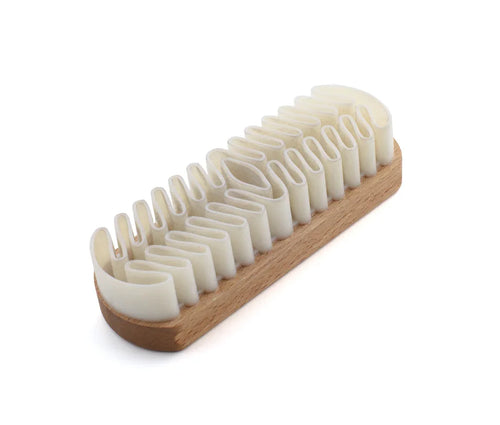
A common mistake is waiting to brush the soles until they are mirror-smooth. When the suede fibers are flattened and mix with dirt, a hard, slippery layer is created. This makes your shoes dangerous on a slippery wooden floor. What I always advise my students is to purchase a steel dance shoe brush. Use this brush not only when you slip, but preventively after every two or three dance nights.
- Always brush from the heel towards the toe to 'roughen up' the fibers again.
- Do not apply too much force; you only want to remove the dirt, not scrape away the suede.
- If the sole looks really black and greasy, you can use a tiny bit of special cleaning agent for suede, but do this sparingly.
What I often see with men is that they also wear their shoes outside the dance floor. That is disastrous. Suede soles are intended exclusively for indoor use. One walk across a wet sidewalk can permanently damage the sole, causing your men's latin shoes to lose their flexibility and the sole to become as hard as cardboard.
Moisture management and hygiene
Salsa and bachata are physically demanding dances. Your feet sweat, and that moisture draws directly into the leather and the lining of your shoes. A common mistake is immediately storing your shoes in a closed plastic bag. In practice, this causes bacterial growth and unpleasant odors, but it also affects the adhesive bonds of the shoe.
Take your shoes out of your bag immediately after dancing. Preferably use wooden shoe trees (cedar wood works best) to maintain the shape and absorb the moisture. Don't have those? Then stuff some newspaper in the toes. This is especially important for bachata shoes which often have a softer, more flexible structure; without support during drying, they can lose their fit, meaning you experience less support at your ankles over time.
Protection of the heels
For the ladies, there is another specific point of attention: the heel tips. In practice, I often see dancers continue until the metal of the heel comes through the heel tip. At that point, you damage not only the dance floor but also the balance of the shoe. The use of plastic heel protectors is essential. They not only provide extra grip and stability during turns, but they also protect the heel from wear. Replace these protectors as soon as you see them getting thin or tearing. It is a small investment that significantly extends the lifespan of your salsa shoes and prevents you from having to have expensive repairs carried out by the cobbler.
Frequently Asked Questions
What kind of shoes for salsa dancing?
For salsa dancing, special salsa shoes with a suede or leather sole are essential. These soles offer the perfect balance between grip and glide on the dance floor, which is crucial for fast turning movements. Ladies often choose heels between 5 and 7 centimeters for an elegant posture, while men usually choose flat dance shoes. Good support and flexibility prevent injuries to your knees and ankles during intensive dancing.
What clothing is suitable for salsa class?
In a salsa class, comfortable clothing in which you can move freely is the most important thing. Choose breathable fabrics such as cotton or sports material, as you get warm quickly while dancing. For ladies, supple pants or a skirt with leggings are ideal. Men often wear jeans with stretch or a chino combined with a T-shirt. Avoid clothing that is too tight and restricts your freedom of movement during practice.
Which shoes are suitable for dancing?
Suitable dance shoes always have a sole that facilitates turning, such as suede or smooth leather. For styles such as salsa and bachata, specific latin shoes are recommended because of their high flexibility. Sneakers with a thick rubber sole are unsuitable because they offer too much grip, which is stressful for your joints. Invest in shoes that fit firmly around your foot and offer sufficient cushioning to prevent fatigue and injuries during long dance nights.
Which dances are similar to salsa?
Several latin dances show similarities to salsa in terms of rhythm and technique. Bachata is very popular and is often played at the same parties, although the tempo is lower. Merengue also resembles salsa due to the cheerful music and simple basic steps. In addition, Mambo and Cha-cha-cha have many technical commonalities with salsa. All these dance styles use similar latin dance shoes, so you can often practice multiple styles effortlessly with one pair of shoes.
How do I choose the right heel height for salsa shoes?
The ideal heel height for salsa shoes depends on your experience and personal comfort. Beginners often start with a lower heel of 5 centimeters for extra stability while learning the steps. Advanced dancers regularly choose 7 centimeters or higher for a more elegant line and better weight distribution on the ball of the foot. It is important that the heel is centered under your heel for optimal balance during spins.
Why are suede soles important in latin dancing?
Suede soles are crucial in latin dancing such as salsa and bachata because they offer the right resistance on wooden dance floors. They let you turn smoothly without slipping, which is essential for your safety and technique. Unlike rubber soles, suede soles protect your knees from harmful friction. Keep in mind that these soles should only be worn indoors; outside they wear out immediately and lose their unique gliding properties.
How do I best maintain my salsa shoes?
Good maintenance significantly extends the lifespan of your salsa shoes. Use a special steel brush to regularly roughen the suede soles when they become slippery or dirty from dust. Clean the outside of satin or leather shoes with a slightly damp cloth and always let them air out well after dancing. Store your shoes in a breathable bag and avoid damp areas to maintain the shape and quality of the material.
Can I wear regular sneakers to a salsa party?
Although regular sneakers are sometimes worn, they are not ideal for a salsa party. The rubber soles often have too much grip, making turning difficult and putting a heavy load on your knees. Do you still want to wear sneakers? Then choose special dance sneakers with a smooth sole or a "spin-spot". These offer the comfort of a sporty shoe, but let you turn safely on the dance floor. However, real salsa shoes remain the best choice.
The beauty of latin dancing is the pure freedom and connection you experience on the dance floor, but that flow only truly arises when you can fully rely on your feet. What I especially want to give you is that the right salsa or bachata shoes are not a luxury, but an essential part of your pleasure and technique. Remember especially that a suede sole not only helps you with those smooth turns, but also protects your knees and ankles from unnecessary strain. A good fit ensures that your shoe feels like a second skin, so you take every step with full conviction.
Are you ready to give your confidence a boost? You can view our women's latin dance collection here immediately for a stylish match that effortlessly combines comfort and elegance. For men too, the right support is crucial for powerful and controlled footwork; take the time and view our men's latin collection to discover what real quality does for your movements. Give yourself that stability and let your passion for dance run free. The most beautiful dances start at the foundation you stand on.


