

Table of Contents
- What are standard dance shoes?
- Difference from regular shoes
- Choosing the right heel
- Materials for ballroom shoes
- Maintenance of your shoes
- Comfort during ballroom dancing
- Frequently Asked Questions
Nothing undermines the magic of a tight Tango or a fluid English Waltz faster than a heel that isn't quite stable enough or a sole that refuses to glide. Good ballroom shoes for women are essential for correct posture and balance; these shoes are characterized by a closed toe, a suede sole for the perfect amount of grip, and a heel placed centrally under the heel for maximum stability during standard dancing. In my lessons, I often see beginners underestimate the importance of specific footwear, but the right choice really makes the difference between awkward shuffling and confidently gliding across the parquet.
When you get serious about ballroom dancing, you immediately notice that an ordinary pump falls short during the powerful 'drive' of the Quickstep or the deep knee bends in the Waltz. I always advise my dancers to pay attention to the firmness of the footbed and the flexibility of the sole. A good fit not only prevents blisters but also ensures that your feet tire less quickly during a long evening of dancing or intensive training. In this article, I share my experience on exactly what to look for when selecting elegant and functional shoes that take your technique to a higher level.
What are standard dance shoes?
In the world of ballroom dancing, we make a clear distinction between Latin and Standard. When we talk about standard dance shoes, we are specifically talking about footwear designed for the five official ballroom dances: the English Waltz, Tango, Viennese Waltz, Slowfoxtrot, and the Quickstep. What I often see in the dance school is that beginners don't recognize the difference immediately, but as soon as you take your first steps of a Waltz, you notice the difference in technique and the need for specific support immediately. One of the most striking features of these shoes is that for women, they almost always have a closed toe. This is not an aesthetic choice, but a purely functional one. In standard dances, you stand very close to your partner in a closed position. The chance of hitting each other's toes during a complex choreography in the Quickstep is high. A sturdy, closed toe offers that necessary protection against accidental knocks from your partner. Moreover, the closed shape helps keep your foot more compact, which is essential for the powerful 'drive' from the legs that characterizes these dance styles.The technique behind the sole and the heel
In practice, everything in standard dancing revolves around the heel lead. Unlike Latin, where you dance a lot on the ball of your foot and shift your weight forward, you start most standard steps with your heel. That is why quality ballroom shoes for women are constructed so that the heel is exactly under the natural center of gravity of your heel. This gives you the stability needed for the 'swing and sway' movements and the deep lowering in the knees during the English Waltz. A common mistake I often see is dancers thinking they can use their normal dress heels on the dance floor. That is a recipe for injuries and poor technique. A real dance shoe is equipped with a suede sole. This sole offers the perfect balance between grip and gliding on a wooden floor. You don't want to slip during a fast turn in the Viennese Waltz, but you also don't want your foot to 'stick' to the floor, as that is disastrous for your knee and ankle joints. For men, the same principle applies; good standard dance shoes have a lower heel that is wide enough to absorb the full body weight during powerful forward steps.Important features of a standard shoe
If you are going to look for ballroom dancing shoes for the first time, pay attention to the following specific characteristics that define a standard shoe:- Closed toe: For protection of the toes and maintaining a clean line of the foot during roll-off.
- Suede sole: Ensures controlled movement and the right resistance on the parquet floor.
- Heel placement: The heel is more centered under the heel than in a regular shoe, which is essential for balance during backward steps.
- Flexibility: The shoe must be firm in the arch of the foot for support, but flexible enough at the ball of the foot to perform the heel lead correctly.
Difference from regular shoes
In the dance studio, I often see beginner dancers thinking that their trusted dress heels or neat pumps are perfectly adequate for a ballroom dancing lesson. A common mistake, because after the very first 'chassé' or 'natural turn', they notice that balance is nowhere to be found. The biggest difference between regular shoes and real dance shoes lies not only in appearance, but especially in technical construction and the way the shoe communicates with the parquet. When you switch to specially designed ballroom shoes for women, you immediately notice that the shoe becomes an extension of your foot instead of a hindrance.
The sole and grip control
The most crucial difference is the sole. Regular shoes usually have a rubber or hard plastic sole. Rubber creates too much friction, which puts a heavy load on your knees and ankles during a turn because the shoe 'sticks' to the floor. Hard plastic, on the other hand, is often too slippery, giving you no control over your push-off. In practice, we work with suede soles for standard dancing. These offer the perfect balance between gliding and grip. You can sweep across the floor in a controlled manner, but have enough resistance to push off powerfully for a large step in the Quickstep.
- Suede sole: Provides controlled friction on wooden dance floors.
- Flexibility: The insole is much more flexible, allowing you to roll your foot better.
- Weight: Dance shoes are significantly lighter, which prevents fatigue in the legs during long training evenings.
Anatomy and heel placement
What I often see is that dancers in regular heels have difficulty with their balance during backward steps. This is because the heel of a normal shoe is often too far back or has an unstable shape. In standard dance shoes, the heel is strategically placed under the center of your heel bone. This shifts your center of gravity to the right place, which is essential for the 'heel lead' that is so characteristic of the English Waltz and Slowfox. Proper heel placement prevents you from tilting backwards or losing your balance during the swing movement.
This technique is not only important for women; also in men's ballroom shoes, you see that the heel height and the firmness of the heel counter are specifically tailored to the rolling movement of the foot. In practice, this ensures that a dance couple moves across the floor much more stably as a single unit.
Support and arch support
A common problem with regular shoes is the lack of specific support in the arch. In ballroom dancing, you use muscles in your feet that you probably didn't even know existed. Quality dance shoes have a built-in steel shank that provides support where needed, but remains flexible enough to allow the foot to work. This prevents cramps and injuries in the long term.
If you are serious about standard dancing, investing in the right equipment is not a luxury but a necessity for your technique. The difference in how you perform a 'tango link' in regular shoes versus professional standard dance shoes is truly a world of difference. You feel the floor better, your ankles are better protected, and your movements look smoother because you don't have to constantly correct for a lack of stability.
Choosing the right heel
When picking out new ballroom shoes, the heel is often the first thing dancers look at, but also the point where most doubt arises. In practice, I often see that the choice of a heel height is based purely on aesthetics, while the technique of ballroom dancing actually depends on the right support under the heel. In standard dances, such as the English Waltz or the Slowfox, we make extensive use of the 'heel lead'. This means that on forward steps, you touch the floor with your heel first before rolling off to the ball of the foot. If your heel is too high or too unstable, you immediately lose control over your balance and your 'swing'.Shape and stability: Flare versus Slim
A common mistake when purchasing standard dance shoes is underestimating the shape of the heel. We roughly distinguish the 'flare' heel and the 'slim' or 'contour' heel. What I often see with beginner and recreational dancers is that they benefit much more from a flare heel. This widens slightly at the bottom, spreading the pressure point over a larger surface. This gives you that little bit of extra security during powerful turns or when you have to shift your weight quickly. The slimmer heels are more often seen with competitive dancers who have a very refined technique. Although a thinner heel beautifully accents the footline, it requires enormous ankle strength to avoid 'wobbling'. Not only women should pay attention to this; also when choosing ballroom shoes for men, the stability of the heel is crucial for a solid posture and correctly performing the heel closures.The ideal height for your level
The height of the heel usually varies between 5 and 7.5 centimeters. In practice, I often advise my students to stick to the following:- 5 cm (2 inch): Ideal for beginners or dancers who put in many hours consecutively. It offers a stable base to master the basic steps and correct foot placement without overstraining the calves.
- 6.5 cm (2.5 inch): The most chosen height for advanced recreational dancers. It gives an elegant lift to the body and forces you to place your weight slightly more forward, which is essential for a good connection with your partner.
- 7.5 cm (3 inch): Primarily intended for competition level. The impact on the anatomy of the foot is significantly greater at this height, increasing the chance of fatigue in the forefoot faster.
Materials for ballroom shoes
In practice, I notice that dancers often underestimate how much influence the material of a shoe has on their final technique. In ballroom dancing, and specifically the standard disciplines such as the English Waltz or the Slowfoxtrot, the transition from heel to toe is crucial. The material must therefore not only be beautiful, but also offer the right balance between flexibility and firmness. A common mistake is choosing a material that is too stiff, which prevents the foot from 'breathing' properly on the floor and causes the contact with the parquet to be lost.Satin: The standard for competitions
What I often see on the competition floor is that satin is the absolute favorite for women. This is not only because of the elegant, shiny appearance that colors beautifully with long ballroom dresses. Satin has the unique property that after a number of intensive training hours, it will mold exactly to the shape of your foot. These ballroom shoes can also be professionally dyed, which is essential if you want your shoes to exactly match the color of your competition outfit. A practical disadvantage is that satin is very delicate. In practice, I always advise my students to put their shoes on at the very last moment and always wear protective covers outside the dance floor to keep the material clean.Leather and patent leather for durability and stability
For daily training or social dance evenings, leather is often a wiser and more durable choice. Leather is more robust than satin and often offers slightly more natural support around the instep. What I often see with beginner dancers is that they build confidence faster in a leather shoe, because it stretches less easily and keeps the foot more compact. For men, patent leather is the standard for competitions because of its formal appearance, but you see patent leather less often in the standard discipline for women. This is because the shoes can 'stick' to each other while passing the feet, which can be dangerous during fast figures in the Quickstep. Although the focus here is on women, it is interesting to see that the materials for men's ballroom shoes are often even stiffer to ensure stability during powerful swing movements.The suede sole and internal cushioning
The most important part of any shoe for standard dancing is the suede sole. Unlike normal shoes, suede provides the perfect amount of friction: you can turn smoothly without slipping. A common mistake in maintenance is forgetting the sole brush. As soon as the suede sole becomes smooth due to accumulated dirt and floor wax, you lose control over your pivots. When you invest in quality ballroom shoes, you will also notice that the insole is often equipped with latex cushioning. This is anatomically necessary because in ballroom you exert a lot of pressure on the ball of the foot during 'rising'.- Satin: The most elegant choice, molds perfectly to the foot but is vulnerable to dirt.
- Calf leather: Very breathable and durable, ideal for hours of training sessions and social dance evenings.
- Suede: The only material that offers the right balance between grip and slide on a wooden floor.
- Microfiber lining: Often used on the inside to absorb moisture and prevent sliding in the shoe.
Maintenance of your shoes
In practice, I often see dancers invest hundreds of euros in a beautiful pair of shoes, only to simply throw them in a plastic bag after class and forget about them until the following week. What I often see is that the lifespan of your footwear decreases by as much as fifty percent because of this. Good maintenance in ballroom dancing is not a luxury, but a necessity for your own safety on the floor. A slippery sole on a polished parquet floor is a recipe for injuries.
If you have just purchased a new pair of ballroom shoes for women, you will notice that the suede sole offers perfect grip in the beginning. Over time, however, dust, floor wax, and skin oils accumulate in the fibers of the suede. The sole then becomes 'glazed': it becomes hard, slippery, and shiny. A common mistake is to use water to make the sole rougher. This works for five minutes, but then the suede dries out and becomes even more slippery.
Treating the suede sole
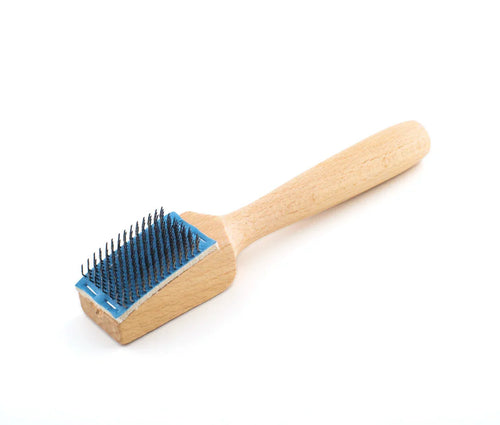
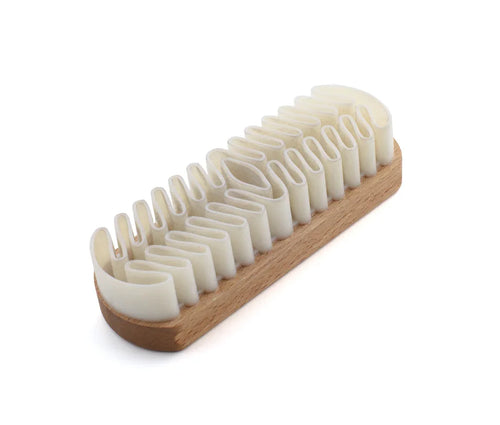
The only correct way to maintain grip is by using a special steel shoe brush. In the dance world, we also call this 'roughing up' the sole. Here are a few specific techniques I always recommend to my students:
- Always brush from the inside of the foot towards the outside. This prevents you from unnecessarily loosening the edges of the suede from the sole plate.
- Do not apply too much force; you want to lift the fibers, not scrape away the suede. If you go too deep, you will brush the sole to pieces within six months.
- Make it a habit to do this before every lesson or competition. The same applies to your partner; well-maintained men's ballroom shoes provide the necessary stability during powerful turns and swings.
- Remove caked-on dirt first with an old cloth before using the brush, so you don't push the dirt deeper into the fibers.
Ventilation and storage
Another crucial aspect that is often underestimated is moisture management. During intensive training in standard dancing, your feet produce a lot of perspiration. This moisture soaks into the satin or leather of your shoe and into the insole. If you leave your shoes directly in a sealed bag, the material gets no chance to recover. The glue bonds can weaken and the satin can become stained.
What I advise in practice is to put your shoes in a cotton shoe bag immediately after dancing, never in plastic. Once home, it is essential to take them out of the bag and let them dry naturally. Never put them near a radiator; the heat causes the leather to dry out and the satin to become brittle. For women, it is also wise to always use heel protectors. These transparent caps not only protect the floor but also prevent the heel of your shoe from wearing down directly to the metal pin, which can cause irreparable damage to the balance of the shoe. By consistently performing these small actions, you ensure that your ballroom shoes retain their elegant appearance and technical support much longer.
Comfort during ballroom dancing
In the dance school, I often see dancers confuse comfort with 'softness'. Although a padded insole feels pleasant when you first put the shoe on, comfort in ballroom dancing is about much more than just a cushion. In practice, stability is the most important factor for comfort. If your foot is not securely in the shoe, the small muscles in your feet and ankles must constantly correct to maintain your balance. This leads to quick fatigue and cramping, something I often see with dancers looking for the right balance between elegance and technique. A technical detail that many people overlook is the placement of the heel. In quality ballroom shoes for women, the heel is placed exactly under the center of your heel bone. This is essential for the 'heel lead' in the English Waltz or the Slowfox. When the heel is too far back, you are pulled out of balance, which directly affects your posture and your frame. A common mistake is choosing a heel that is too high before the basic technique is fully mastered. I often advise students to start with a lower, stable 'flare' heel, so the focus can be on the fluid movement across the floor instead of simply staying upright.The anatomy of a comfortable dance shoe
The inside of the shoe must fit closely to the arch of your foot. Standard dancing requires a specific roll-off of the foot that is different from daily walking. The sole must be flexible enough to allow your foot to articulate, but firm enough to offer support during the powerful push-off in a Quickstep. What I often see in practice is that dancers suffer from their forefoot because the shoe offers too little cushioning there. Good dance shoes therefore have extra padding under the ball of the foot, exactly where the most pressure is placed during turning. This is not only important for women; proper support is also a must for men. A solid men's ballroom shoe, for example, must have a heel that absorbs shocks, so the knees and lower back don't take the full brunt during an intensive training evening. A shoe that doesn't breathe well or is too stiff will inevitably cause irritation after an hour of dancing.- The heel counter: This must be firm and enclose the heel well without cutting into the Achilles tendon. If your heel slips, you lose control over your steps.
- Suede soles: This is the secret to comfortable gliding. A suede sole offers the perfect balance between grip and slip, which is essential to prevent injuries to the joints.
- Width size: A common mistake is buying a shoe that is too narrow at the toes. Your toes must be able to lie flat to feel the floor properly; curled toes lead directly to balance problems.
Materials and durability in practice
In practice, I notice that materials such as satin and soft leather are the most comfortable because they mold to the shape of your foot over time. Satin is the standard for competitions because it can be dyed, but for training hours, leather is often more durable. It is a misunderstanding that a shoe that fits tightly is uncomfortable. On the contrary: a dance shoe should feel like a second skin. As soon as space is created between your foot and the shoe, friction points arise that cause blisters. If you are serious about ballroom dancing, invest in footwear specifically made for this discipline. Street shoes often have rubber soles that are too stiff, which can be dangerous for your knee ligaments during turns. By choosing specialized ballroom shoes, you ensure that your body gets the right support, allowing you to dance longer without pain. Remember that your feet are your most important instrument on the dance floor; treat them with the care they deserve by choosing quality over a quick fashion choice.Frequently Asked Questions
Which shoes are good for dancing?
Good dance shoes are specifically designed for optimal floor contact and flexibility. For ballroom dancing, shoes with a suede sole are essential because they provide the right balance between grip and glide on wooden floors. They must fit snugly around the foot to prevent injuries. Choose specialized brands to guarantee quality, comfort, and the necessary support during all your intensive dance movements.
Which type of shoe is most suitable for dancing?
For standard ballroom dancing, closed pumps are most suitable for women. These shoes offer stability and protection during the typical gliding movements of the waltz or tango. For Latin American dances, open sandals are often preferred for better toe articulation. Always choose a shoe with a suede sole to be able to turn smoothly without overstraining your knees or ankles during ballroom dancing.
Which heels are suitable for dance class?
For dance classes, it is best to choose a lower, stable heel, such as a flare or block heel of 4 to 6 centimeters. This type of heel offers a wider surface area, which helps in maintaining your balance and correct posture while learning new steps. As you gain more experience, you can switch to higher or slimmer heels, but comfort and stability remain the priority.
What is the difference between dance shoes and regular shoes?
The main difference lies in the sole and the flexibility of the shoe. Dance shoes have a thin, flexible suede sole that allows for precise floor contact and easy turning. Regular shoes often have rubber or hard leather soles that provide too much or too little grip, which can lead to injuries. Additionally, dance shoes are lighter and provide specific support for the arch during athletic movements.
How do I maintain my ballroom shoes with suede soles?
To keep your ballroom shoes in top condition, you must regularly brush the suede soles with a special steel dance shoe brush. This removes dirt and accumulated floor wax from the dance floor, restoring the necessary grip. Never wear your dance shoes outside; moisture and rough surfaces like asphalt permanently damage the delicate suede soles and the structure of the shoe, making them unusable for dancing.
Should dance shoes fit tight or loose when purchased?
Dance shoes should fit very snugly when purchased, almost like a second skin. Because dance shoes are usually made of soft leather or satin, they will stretch over time and mold to your feet. If they are too loose at the start, your feet will slide in the shoe, causing blisters and instability. Make sure there is no extra space at the toes.
How long do quality ballroom shoes last on average?
The lifespan of ballroom shoes depends on the frequency of use and the intensity of the dancing. For a recreational dancer who dances once or twice a week, a good pair lasts an average of six months to a year. Competitive dancers who train daily often have to replace them every few months. Proper maintenance, such as regular brushing of the soles, significantly extends durability and performance.
The beauty of standard dancing is the unique balance between technical precision and pure elegance. What I especially want to tell you is that your shoes are much more than an accessory; they form the foundation of every slide and turn you make on the dance floor. Above all, remember that the right heel height and a flexible suede sole make the difference between uncertain shuffling and gliding across the parquet with full control. When you choose quality, you invest directly in your own self-confidence and technique. Whether you are looking for the perfect match in our women's ballroom standard collection or want to make a stylish statement with your dance partner with shoes from the men's ballroom standard collection, the right foundation gives you the freedom to truly experience the music. Dancing is the ultimate expression of movement; make sure your feet never hold you back from being the star of the evening.


