Tango Shoes: Argentine vs. Ballroom - The Guide

Table of Contents

Are you wondering why those beautiful ballroom shoes that serve you so faithfully don't feel quite right when you try those complex ochos and ganchos in Argentine tango? Or why your favorite salsa shoes suddenly no longer suffice? Today we dive into a subject that I often see recurring in my classes: the essential, but often overlooked, difference between tango shoes for the Argentine variant and those for Ballroom tango.

After years of being on the dance floor myself and guiding countless students, I can tell you that the right shoe is half the battle. It's not just about comfort; it's about functionality, the connection with the floor, and with your partner. Many dancers think a dance shoe is just a dance shoe, but the nuances are crucial. Whether you are passionate about the intimate embrace of Argentine tango, the energy of latin dancing, or the elegance of ballroom, the construction of your shoe plays a key role. Where a ballroom shoe is designed for fluid, sweeping movements and stability, Argentine tango demands a completely different kind of flexibility and ground contact, especially during those fast pivots and complex foot movements. Even your beloved salsa shoes, although flexible, often lack the specific heel placement or sole you need for the authentic tango experience. Let's take a look at why this is and how you find the perfect match for your dance style.

Tango Shoes: Essential

If you're just starting with tango, or have been dancing for a while, there is one thing I always emphasize to my students: the importance of the right shoes. What I often see is beginners trying to dance in regular street shoes, or even sneakers, at the start. Understandable, as it's an extra investment. But in practice, you quickly notice that this is not only uncomfortable, it also hinders your technique and can even be dangerous. Tango shoes are not a fashion accessory; they are an essential part of your dance equipment, just as important as the music itself.

Why special dance shoes are a must

The reasons why you cannot go without the right shoes are manifold and have everything to do with the specific requirements of the tango.
  • Safety and Stability: One of the biggest risks with regular shoes is the lack of support. The intense turning movements, pivots, and rapid changes of weight that are characteristic of the tango demand a lot from your ankles. A well-designed tango shoe provides the necessary lateral support to prevent sprains, while the stable heel helps you maintain your balance, even during complex figures. A common mistake is wearing shoes with a heel that is too soft or unstable, leading to insecurity and extra strain on your joints.
  • Optimal Technique: The sole of a dance shoe is crucial. For tango, a suede sole is usually used. This sole provides the perfect balance between grip and glide, allowing you to pivot smoothly without straining your knees. Just try to make a good pivot with a rubber sole; you immediately feel the tension in your knees and hips. The flexibility of the sole also allows you to stretch your feet correctly and use your toes for adornos and for a better connection with the floor. This is a world of difference compared to the stiffness of everyday shoes.
  • Feeling and Connection: Tango is a dance of connection and subtle communication. Your feet are your direct connection to the floor and to your partner. The right shoes significantly improve this feeling. You feel the nuances of the floor, the reactions of your partner, and can move more precisely. This applies not only to tango; in latin dancing such as salsa and bachata, the feeling with the floor is also essential for those fast, rhythmic movements.
  • Posture and Balance: The heel height and placement on a dance shoe are not arbitrary. They are designed to distribute your body weight correctly, naturally helping you adopt a better posture. This helps in finding your axis and performing that characteristic "pendulum" movement in tango. Without the right heel, it can be difficult to keep your weight consistently on the ball of your foot, which is essential for agility and balance.
My advice is therefore: invest in a good pair of dance shoes as soon as possible. It is an investment in your dancing pleasure, your technique, and your health. Whether you embrace the passion of Argentine tango, prefer the elegance of ballroom standard, or the energy of latin, the right shoes make a world of difference. They allow you to concentrate fully on the dance, the music, and the connection with your partner, without being distracted by discomfort or the fear of falling.

Argentine Tango Shoes

When someone asks me what distinguishes a good pair of Argentine Tango shoes, I always say: "It is an extension of your foot, your partner, and the music." It's not just about aesthetics; it's about functionality in a dance that revolves around improvisation, close contact, and complex foot movements. Unlike many other dance styles, where the focus is more on linear movements, Argentine Tango requires a lot of turning, pivots, and micro-movements. Your shoes should not hinder this freedom of movement, but rather support it.

What I often see with beginners is that they think any high heel will do. But an Argentine Tango shoe is specifically designed with the unique demands of this dance in mind. Take the heel, for example. It is often higher, slimmer, and sometimes placed slightly inward or has a slight flare. This is crucial for balance and for making those smooth pivots. A heel of 7 to 9 centimeters is very common. Personally, I find that a higher heel (around 8.5 cm) helps me keep my weight more forward, which is essential for the connection with my partner and performing accelerations and braking movements. The sole is almost always made of suede or smooth leather. This is to let you glide and turn without resistance. A common mistake is to wear shoes with too much grip; then you quickly notice that your knees and ankles take a heavy beating with every giro or molinete.

Stability is everything. Without the right support, you can forget about those fast ganchos or elegant boleos. That's why you often see straps that run firmly around the ankle or over the instep on Argentine Tango shoes, such as a T-strap or a cross strap. This ensures that your foot does not slip out of the shoe during intensive movements. In practice, I see many dancers complaining about painful feet after a salon, and often that is due to insufficient firmness. The shoe should fit tightly, almost like a second skin, but without pinching. Your toes should not hang over the edge, but also shouldn't have too much room to slide. The right fit is essential to prevent blisters and discomfort, so you can fully immerse yourself in the dance.

Compare this to, for example, latin dance shoes. Although both styles are dynamic and use high heels, latin shoes are often designed for more forward and backward movements, with a slightly more flexible sole that can offer more grip for fast shimmies and stops. In Tango, the emphasis is more on 'grounding' and the continuous flow of turning movements. I always recommend, if you're just starting out, to invest in a good set of Tango shoes. It really makes a world of difference in how you feel the floor, how you balance, and how you can follow your partner's intention. A misconception is that you first have to be able to dance well before you need "real" shoes. In fact, the right shoes help you develop correct technique and prevent injuries. And don't forget: they should be comfortable from the first step, because you will be standing and dancing on them for hours. They are an investment in your dancing pleasure and your feet.

For those making the switch from, for example, Ballroom, it will take some getting used to the higher, slimmer heel and the smooth sole. Ballroom shoes generally have a wider heel and a sole that gives more grip, which is suitable for the open posture and the fluid, linear movements of Standard. However, the specific construction of Argentine Tango shoes is indispensable for the unique demands of this passionate dance. They are the foundation upon which you build your technique and bring your expression to life.

Ballroom Tango Shoes

When you delve into the world of Tango, you quickly encounter the nuance between Argentine and Ballroom Tango. And believe me, that nuance is nowhere as palpable as on your feet. Where Argentine Tango revolves around improvisation, intimate connection, and often more compact movements, Ballroom Tango, part of the Standard dances, is much more structured, fluid, and revolves around longer lines and continuous movement across the dance floor. This requires a completely different type of shoe.

What I often see with students making the switch is that they think 'a tango shoe' is universal. Nothing could be further from the truth. For Ballroom Tango, you need shoes that offer stability, support, and a controlled gliding experience. You are constantly in motion, often with deep edges and powerful swinging movements. Here are the key features I always emphasize:

The Essential Features

  • The Heel: This is perhaps the most distinguishing element. In Ballroom Tango, you choose a lower, wider heel, often between 2 and 2.5 inches (about 5-6.5 cm). Think of a flared heel or a Cuban heel. Why? Because your weight is continuously distributed over your entire foot and you land on the heel or roll over it a lot during movements such as the 'promenade'. A higher, thinner stiletto heel, as often seen on latin dance shoes, would throw you off balance and put too much pressure on the forefoot, which can cause injuries during the long, fluid steps characteristic of Standard dances.
  • The Sole: A suede sole is absolutely essential. This provides the perfect balance between grip and glide. You don't want to stick to the floor, but you don't want to slip away either. The suede sole allows you to turn and pivot smoothly, which is crucial for the complex figures of Ballroom Tango.
  • The Upper and Support: Ballroom Tango shoes are almost always closed at the front. This not only offers protection for your toes but also provides extra lateral support, which is indispensable for the powerful, continuous movements and the deep edges. Materials such as satin or leather are popular, with satin often being preferred for competitions due to its elegant appearance. In practice, I see that these closed models, such as the ballroom standard shoes, are superior in providing the necessary stability, while in more open models, such as some Argentine tango shoes, you experience less lateral support.
  • Fit: A good fit is crucial. The shoe must fit tightly around your foot without pinching and must absolutely not slip at the heel. Your foot must become one with the shoe to feel the smallest cues from your partner and to optimally maintain your own balance.

Practical Tips for the Dance Floor

A common mistake I see is beginners choosing a heel that is too high too quickly, purely because it looks elegant. But for Ballroom Tango, functionality goes above aesthetics, especially in the beginning. Start with a lower heel and work your way up if you find your stability and technique allow it. Focus on good weight distribution and the rolling of your foot. The shoe should help you with that, not hinder you.

Remember that Ballroom Tango is about a constant, fluid energy through your body and feet. Your shoes are your connection to the floor and must support that movement. They are an extension of your intention and technique. Invest in a pair that fits well and is specifically designed for the demands of this beautiful dance style, and you will notice that your progress is much faster and more comfortable.

The Major Differences

When you're just starting to dance, or even if you've been at it for a while, it's easy to think that "dance shoes" are all the same. But believe me, there is a world of difference between the shoes you wear for Argentine Tango and those for Ballroom Tango. And in practice, I often see that choosing the wrong shoe is not only uncomfortable but can also significantly get in the way of your technique. It's not just about the looks; the construction, the sole, the heel – everything is designed with a specific purpose in mind, matching the movements of that specific dance style.

The Argentine Tango Shoe: Flexibility and Feeling

For Argentine Tango, it's all about connection, improvisation, and those characteristic, fluid movements – think of ganchos, boleos, and fast pivots. What I often see is that dancers need a shoe that offers maximum flexibility. The sole is often thinner, extremely pliable, and the heels are generally higher and narrower. These heels are often placed slightly further under the foot, which helps in finding your balance on the ball of your foot, essential for those fast turns and 'ochos'.

The materials are often softer, sometimes leather, sometimes suede, and the straps are designed to hold the foot firmly without restricting freedom of movement. A common mistake is choosing a shoe that is too tight or too loose. You want your foot to become one with the shoe, so to speak, so that you feel every nuance in the floor and the movement of your partner. The shoes should encompass your foot, almost like a second skin, so you can maintain that intimate connection with the floor and your partner. If you are looking for shoes that perfectly combine this flexibility and 'feeling', then our women's tango shoes are an excellent choice. They are specifically designed to support the specific demands of Argentine Tango.

The Ballroom Tango Shoe: Stability and Strength

Ballroom Tango, as part of the Standard Ballroom dances, is a completely different beast. Here it is about long, powerful steps, clear lines, and stability. The movements are often larger, more structured, and require a different kind of support from your footwear. What immediately strikes me about Ballroom shoes is that the heels are often lower and wider, and placed more centrally under the heel. This provides a much more stable base, crucial for the powerful 'heel leads' and the long, gliding steps characteristic of this style.

The soles of Ballroom shoes are also made of suede, but are often slightly thicker and less flexible than those of Argentine Tango shoes. This contributes to overall stability and helps the dancer to push off the ground more effectively. The straps are often more robust, sometimes a T-bar or crossed straps over the instep, to provide maximum support to the foot during rapid changes of direction and powerful movements. You definitely don't want your foot to shift in your shoe during a fast step! For dancers seeking the stability and strength needed for Standard dances, our ballroom standard shoes are designed to offer optimal support.

Why the right choice is crucial (and the link with Latin)

In practice, I often see that people are a bit confused about the differences in the beginning. Sometimes they try to use Latin dance shoes for Argentine Tango because the heel height can be similar. Although some latin dance shoes have a high heel, they are designed for the fast, explosive movements and the 'ball-of-foot' technique of Salsa, Cha-cha, or Rumba, not specifically for the subtle pivots and thorough footwork of Argentine Tango. The flexibility and balance points can be slightly different, which can affect your technique. The wrong shoe can lead to unnecessary tension in your feet, ankles, or even knees, and can also hinder you from fully performing the specific techniques of the dance.

In short, the right shoe is not a luxury, but an essential part of your dance equipment. It not only helps you dance better but also protects you from injuries and significantly increases your dancing pleasure. Invest in shoes specifically designed for your dance style; your feet will thank you!

Choose Your Perfect Pair

Choosing the right pair of dance shoes is, in my eyes, just as crucial as learning the basic steps. I have often seen dancers, both beginners and advanced, struggle with technique or comfort simply because their shoes don't match the dance style. It's not just about the look; it's about functionality, support, and how they help you find your expression on the dance floor. Whether you embrace the passion of Argentine Tango, seek the elegance of Ballroom Standard, or feel the energy of Latin dancing, your shoes are your most important partner.

The Crucial Role of the Sole

Let's start at the base: the sole. For Argentine Tango and Latin dancing, such as salsa, a flexible suede sole is essential. What I often see with new tango dancers is that they choose shoes with a sole that is too stiff. This limits your ability to feel the floor, which is crucial for the complex pivots and ochos in Argentine Tango. You need that directness to be able to follow the smallest movements of your partner and shift your own weight smoothly. The sole must offer enough grip for control, but also be smooth enough to turn easily without straining your knees. My advice is to look for Argentine tango shoes that feel a bit 'danced in' in terms of flexibility right out of the box.

For Ballroom Standard dancing on the other hand, such as the Viennese Waltz or the Foxtrot, the need is slightly different. Here you are looking for a sole that enables a smooth, constant gliding movement. The focus is less on sharp pivots and more on fluid, long lines and a stable frame. The suede sole here is often a bit thicker and stiffer to provide that stability, and the heel is wider. A common mistake is wearing Latin shoes for Ballroom; the higher, narrower heel and more flexible sole can disturb your balance in the Ballroom posture, leading to unnecessary tension in your back and legs. For an optimal Ballroom experience, I recommend specifically designed Ballroom Standard shoes.

Heel Height and Stability

The heel is more than just an aesthetic element; it is a fundamental part of your dance posture and balance. In practice, I see many ladies tempted by extremely high, slender heels. Although these look beautiful and make your legs appear longer, they can seriously affect your stability, especially if you are not yet used to dance heels. For Argentine Tango, heels between 7 and 9 cm are very common. This height helps you shift your weight forward, which is essential for connection and the axis in tango. However, ensure that the heel is well-centered under your heel and not too far back or forward, as this affects your balance with every step.

In Latin dances such as Salsa or Bachata, you often see heels ranging from 6 to 9 cm, often in a stiletto style. These heels support the fast foot movements and the dynamic leg lines. What I teach my students is to always test if you can stand stably on one leg with the heels on, even before you take a step. A stable heel means a more stable dance. For Ballroom Standard, heels are usually lower, between 5 and 7 cm, and wider. This provides a larger contact surface with the floor, which benefits stability during gliding movements and the constant pressure exerted on the feet.

Fit: Your Second Skin

The fit is perhaps the most important thing of all. Your dance shoes should feel like an extension of your foot, a second skin. They must absolutely not slip at the heel, as that causes blisters and reduces your control. I always recommend fitting dance shoes at the end of the day when your feet are slightly swollen. Then you can be sure they are also comfortable during a long night of dancing. The material also plays a role; leather stretches slightly and forms to your foot, while satin retains its shape better. For Latin dance shoes, you often see open toes and straps that keep the foot well in place.

Also pay attention to the straps: a cross strap over the instep offers extra support and helps prevent your foot from sliding forward, which in turn reduces pressure on your toes. Ankle straps are essential for Argentine Tango and Latin because they fix the shoe firmly to your foot, even during the most dynamic movements. Without good straps, you risk your shoe coming loose during a fast turn or a complex figure, and that is the last thing you want on the dance floor. Try out different styles and sizes; the perfect shoe is one you almost forget you're wearing, so you can concentrate fully on the dance.

Maintenance & Longevity

Your dance shoes are more than just a pair of shoes; they are your most important instruments on the dance floor. They determine your grip, your stability, your feeling with the floor, and ultimately also your dancing pleasure and performance. Proper maintenance is crucial, not only to extend their lifespan but also to prevent injuries and always feel your best. What I often see is that dancers only really pay attention to their shoes when something is already wrong. Prevention is better than cure, and in dance practice, that means regular maintenance.

The Soles: Your Contact with the Floor

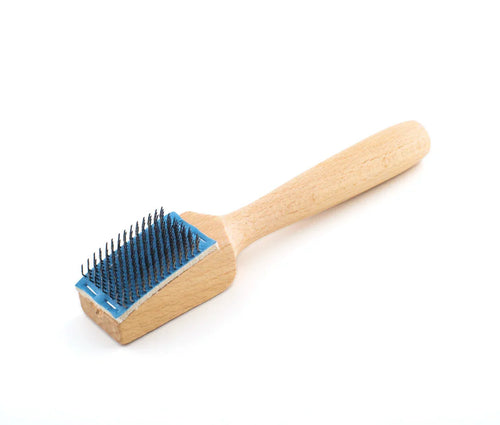
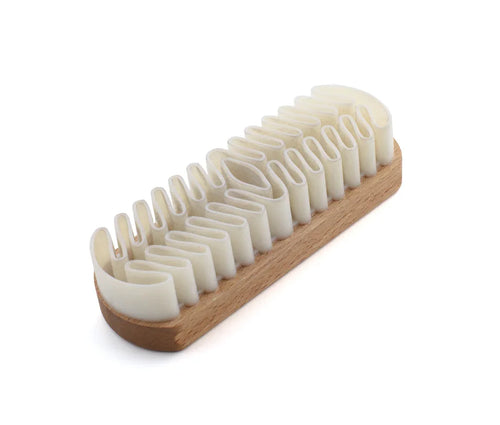
The soles of most dance shoes – whether it's tango, latin, or ballroom – are made of suede. This material offers the perfect balance between grip and glide, essential for the complex foot movements we make. But suede is sensitive. It absorbs dust, dirt, and moisture, which can change the structure and make the sole smoother. That's why a suede brush is your best friend.

  • Regular brushing: Brush the soles after every dance session. What I often see is that people think brushing is only for grip, but it also removes dirt and sweat that degrades the sole. By doing this, you keep the fibers of the suede open and maintain optimal grip and glide.
  • Prevent moisture and dirt: Never wear your dance shoes outside. The smallest grain of sand or drop of water can irreparably damage the suede and make your soles slippery. A common mistake is to quickly walk to the car with your dance shoes on. Always use protective covers or change shoes as soon as you leave the dance hall.

If you perform many pivots and fast foot changes, such as in latin dancing, then the soles of your latin dance shoes will wear out faster. Regular brushing is extra important here to maximize the lifespan.

Upper, Heels and Storage

Not only the soles need attention; the upper and the heels are just as important.

  • Upper:
    • Satin: This is a delicate material. Stains settle in quickly. Clean satin shoes carefully with a slightly damp cloth and mild soap, and pat them dry. Avoid rubbing. A common mistake is ignoring small stains; they can be difficult to remove later.
    • Leather: Leather shoes, often seen in tango shoes, are more robust but also need care. Wipe them clean with a damp cloth and occasionally use a leather cleaner and conditioner to keep the leather supple and prevent drying out.
    • Synthetic materials: These are usually the easiest to maintain; wiping with a damp cloth is often sufficient.
  • Heels and heel tips: The heels and especially the heel tips are essential for your balance and the sound you make. Check the heel tips regularly for wear. In practice, I often see dancers waiting until the metal core of the heel is visible, which not only damages the floor but also affects your balance and posture and can lead to ankle injuries. Replace them on time! Especially with the higher and thinner heels of many tango shoes, this is essential.
  • Storage: Store your shoes in a breathable shoe bag to protect them from dust and damage. Don't just stuff them into an overfilled gym bag. For leather shoes, shoe trees can help maintain the shape and absorb moisture.

When is it Time for New Shoes?

No matter how well you maintain your shoes, there comes a time when they need to be replaced. This is not a matter of luxury, but of necessity for your dance and your body.

  • Soles: If the suede has become so thin that you can feel the sole construction through it, or if the suede no longer brushes well and remains smooth, the sole is worn out. For ballroom dancers, where a fluid gliding movement is crucial for the elegance of, for example, a Viennese waltz, a perfect sole is indispensable for your ballroom standard shoes.
  • Support: Do you feel that the shoe no longer offers the support it once did? Perhaps the arch feels weaker, or your foot slides more in the shoe. This can lead to strain on your feet and ankles.
  • Upper: Tears, loose seams, or severe deformation of the upper mean the shoe is losing its structural integrity.
  • Cushioning: The cushioning in the insole is crucial for shock absorption. If it has collapsed and you feel the ground too much, it's time for a new pair.

I always tell my students: your shoes are your most important instrument. If they no longer do what they are supposed to do, it's time to invest in a new pair. Your body will thank you, and your dancing will only get better.

Frequently Asked Questions

What is the main difference between Argentine tango and ballroom tango shoes?

Argentine tango shoes are designed for close embrace, fast pivots, and complex footwork on smaller floors, often with a more flexible sole and higher, narrower heel. Ballroom shoes focus on stability, gliding, and support for open embrace and larger, fluid movements on smoother floors, which is essential for the dynamic nature of the dance.

Can I use my ballroom tango shoes for Argentine tango, and vice versa?

While technically possible, it is not ideal and is discouraged. Ballroom shoes may lack the flexibility and ground feel needed for Argentine tango pivots. Argentine tango shoes, in turn, provide insufficient stability for the extensive ballroom movements, which can lead to reduced performance or even an increased risk of injury due to incorrect support.

Are there specific differences in heel height or shape?

Yes, absolutely. Argentine tango shoes often have higher, narrower heels (7-10 cm) to improve posture and optimize weight distribution during pivots, which is crucial for balance. Ballroom shoes, on the other hand, typically have lower, wider heels (5-7 cm) that offer more stability during fast, sweeping movements and ensure a larger contact surface with the floor for more control.

What are the main differences in the soles of these shoes?

The soles differ significantly. Argentine tango shoes often use a suede sole that provides a balance between grip and glide, essential for controlled pivots on various floors and intimate contact with the ground. Ballroom shoes typically have a chrome leather or suede sole that allows for more gliding. This is ideal for smooth ballroom floors and the continuous, fluid movements of the dance.

What about the flexibility and support of the shoes?

Argentine tango shoes emphasize maximum flexibility in the forefoot, which is crucial for intricate footwork and close contact with the floor. Ballroom shoes, conversely, offer more overall support and firmness, especially in the arch, to accommodate dynamic and extensive movements and ensure comfort during longer dance sessions and faster steps.

Why are the shoes designed so differently for two styles that are both called "tango"?

The different designs stem from the unique demands of each dance style. Argentine tango requires precision, fast changes of direction, and an intimate connection, which demands flexibility and a specific heel for weight shifts. Ballroom tango, however, emphasizes elegance, fluidity, and larger, more open movements, for which stability and broader support are essential to maintain the pace.

What should I look for when buying my first tango shoes?

Pay attention to your specific dance style, skill level, and comfort. For Argentine tango, look for flexibility, a secure fit, and a suitable heel height that improves your balance. For ballroom, prioritize stability, good arch support, and the right sole for the floor you dance on. Always fit well, as comfort is crucial for hours of dancing pleasure and injury prevention, regardless of the style.

The beauty of dancing is the pure expression, the connection, and the freedom you experience on the floor. And exactly in that, your footwear plays a crucial role. What I especially want to share with you is that the choice between Argentine and Ballroom tango shoes is not a matter of 'better', but of 'more suitable' for your unique dance style. Whether you seek the intimate embrace of Argentine tango with its flexible soles and focus on ground contact, or the streamlined elegance and stability of Ballroom for fluid movements, each shoe is designed with a specific purpose.

Remember above all: comfort and functionality are your best friends on the dance floor. They allow you to fully immerse yourself in the music and your partner, without distraction. Feel the call of the tango? Then investing in a pair of shoes that support your steps is essential. Discover the diversity and find your perfect match in our women's tango collection.

Back to blog
👗

Ready to shine on the dance floor?

Discover our collection ballroom shoes - by dancers, for dancers.

✓ 30 Day Returns ✓ Free Shipping €85+ ✓ 6 Month Factory Warranty

📚 More about ballroom

💬 Questions? Message Vanessa on WhatsApp!