

Table of Contents
- Shoes for your first lesson
- Determining the perfect heel height
- Soles for Argentine tango
- Footwear for the milonga
- Learning tango yourself at home
- Maintenance of your dance shoes
- Frequently Asked Questions
Your feet after a long milonga feel as if they are on fire, and that is usually not due to the passion of the dance, but because of the wrong sole. The best tango shoes for 2026 combine a flexible suede sole for smooth turning movements with a reinforced heel support that keeps your axis perfectly above your standing leg. In my lessons, I still too often see dancers struggling with their balance simply because their shoe doesn't cooperate during a complex ocho or giro.
After fifteen years on the dance floor, I have seen everything come by: from handmade Italian classics to the latest ergonomic models that are now conquering the Argentine tango world. It is not just about aesthetics; a good shoe is your most important tool for preventing injuries and refining your technique. Whether you are just starting with your first basic steps or have been found at a milonga every week for years, the right choice makes the difference between surviving on the floor and truly floating. I have listed the most important developments and tips of this year, so that you can step onto the dance floor without pain and with full confidence.
Shoes for your first lesson
The first time you step into an Argentine tango studio, you feel the tension: the music, the focus of the dancers, and the wooden floor waiting for your first steps. What I often see with beginners is an enormous uncertainty about what to wear on their feet. Should you immediately put on those sky-high heels? Or are your daily sneakers fine too? In practice, the answer is simple: you need shoes that let you turn without your knees protesting. A common mistake is wearing shoes with too much grip, such as sports shoes with rubber soles. In Argentine tango, almost everything revolves around the 'pivot' – a turning movement on the ball of the foot. If your sole sticks to the floor while your body turns, that torsion goes directly into your knee joint. This is the fastest way to injuries. For your first lesson, shoes with a smooth sole (for example, leather or smooth plastic) are sufficient, but if you want to start seriously, specific tango shoes for women are an investment in your dancing pleasure and your physical health.Stability and anatomy on the dance floor
For followers (often women), the beginning is mainly about balance. Many beginners think they have to stand on a stiletto heel immediately because that looks 'real' during a milonga. However, what I advise is to start with a lower, sturdy heel (between 4 and 7 centimeters) that is well-centered under the heel. This helps you bring your weight forward, to the metatarsals (the ball of the foot), which is essential for connection with your partner. For the men or the leaders in the dance, the challenge is often different. I regularly see men appearing in sturdy office shoes with a thick sole. Although these can be smooth enough, you completely lose contact with the floor. A good dance shoe must be flexible, so you can roll your foot properly. These tango shoes for men are often lighter and have a thinner sole, allowing you to feel exactly where your center of gravity lies. This is crucial for techniques such as the 'sacada', where you place your foot in your partner's space.What to look for in your first pair
If you decide to continue after that first trial lesson, pay attention to the following practical matters when purchasing, which I have found to be essential over the years:- The closure: For women, an ankle strap or a cross strap over the instep is not a luxury. It ensures that the shoe is 'glued' to your foot during backward steps.
- Sole material: Suede soles are fantastic for wooden floors because they offer exactly the right amount of friction and glide. Leather is also an excellent option, especially if you dance on different types of floors more often.
- Fit: A tango shoe must be tight. Leather stretches, and nothing is more annoying than a foot sliding inside the shoe while you try to perform a complex 'ocho'.
- Flexibility: Test if you can bend the sole of the shoe slightly. Stiff soles block your ability to move elegantly across the floor.
Determining the perfect heel height
In the dressing room of almost every milonga I visit, heel height is the talk of the day. What I often see is dancers staring blindly at the aesthetics of an ultra-high heel, while their technique is actually not ready for it yet. In Argentine tango, everything revolves around your axis (your eje). The heel is not just for decoration; it is a technical instrument that helps to subtly shift your center of gravity forward, towards the ball of your foot. This makes it easier to connect with your partner and pivot smoothly.
A common mistake for beginners is choosing a 9-centimeter heel immediately because they see professionals wearing them. In practice, this often results in 'sitting dancing', where the dancer bends the knees too much and pushes the buttocks back to maintain balance. If you are still working on your stability, I recommend starting with a modest height. For example, take a look at the various models of tango shoes for women with a heel of 6 or 7 centimeters. This gives you the necessary forward inclination without suffering from burning metatarsals after an hour of dancing.
Balance between technique and comfort
The ideal height depends heavily on the anatomy of your foot and the flexibility of your Achilles tendon. Someone with a high instep often feels more comfortable on a higher heel, as the arch is then better supported. However, if you have flatter feet, a high heel can cause unnecessary tension. During a long milonga, which can sometimes last four to five hours, every millimeter counts.
- 6 - 7 cm (Low/Medium): Ideal for beginners and dancers who put in many hours consecutively on the dance floor. It offers maximum stability during complex turns.
- 8 - 9 cm (High): The standard for advanced dancers. This requires a strong core and good control over your ankles to avoid 'wobbling'.
- Custom heights: Some brands offer intermediate sizes, which is a solution if you are exactly between two heights in terms of comfort.
The role of the heel for men
Although the focus is often on women, heel height for men is at least as important for good posture. In practice, I see that many men dance in standard shoes with a heel that is too low, causing their weight to remain too much on their heels. This makes leading fast traspié steps in the milonga unnecessarily heavy. A good tango-specific shoe for men often has a heel that is slightly higher (2.5 to 4 cm) and a shape that forces the axis forward. In our selection of tango shoes for men, you will find models specifically designed to support that active posture without it looking unnatural.
My advice is always: test your shoes not only by standing in them for a moment, but perform a few conscious ochos and giros. If you notice that you lose your balance when pivoting or set your heel down too heavily on the ground, the heel is probably too high for your current level or foot structure. Remember that the best tango shoes are those that you forget you are wearing by the end of the evening.
Soles for Argentine tango
In Argentine tango, the sole of your shoe is literally the interface between your body and the dance floor. What I often see with dancers switching from other dance styles or just starting out is that they underestimate the importance of the sole. Unlike ballroom or salsa, for example, where movements are often linear, tango revolves entirely around the 'pivote' – the rotation on the ball of the foot. If your sole does not offer the right balance between grip and glide, you will block in your turn, which results directly in torsion on your knees and ankles.The choice between suede and smooth leather
Most dancers choose suede soles, also known as chrome leather. In practice, this is the most versatile option. When you look at the collection of tango shoes for women, you will see that almost every model comes standard with suede. The big advantage is control; you can precisely dose how much pressure you apply to glide or stand still. A common mistake, however, is neglecting this material. Suede soles absorb dust and wax from the dance floor, making them mirror-smooth over time. I always advise my students to have a sole brush in their bag to roughen the fibers again before a milonga. For men, or for women dancing at a very advanced level, smooth leather is an interesting alternative. A hard leather sole offers less resistance than suede, which makes your footwork faster and lighter. You often see these soles on men's tango shoes, as they combine a traditional look with the ability to turn effortlessly on rough wooden floors. The downside? On a slippery floor, it feels like you are dancing on ice. In practice, I see that experienced dancers often have both types in their bag, so they can switch depending on the condition of the floor at the milonga.Anatomy of the turn and floor contact
A specific technical detail to look out for is the placement of the pivot point under the sole. In Argentine tango, the focus is on the metatarsals (the midfoot bones). A good sole must be flexible enough there to follow the natural bend of the foot, but sturdy enough to offer support during a 'parada' or 'boleo'. What I often see is that cheap shoes have a sole that is too thick, causing you to lose contact with the floor. In tango, you want to 'read' the floor. You must be able to feel if a floor is made of parquet, laminate, or stone. This 'floor feel' is essential for your balance. If you invest in quality tango shoes, you will notice that the soles are thinner and more refined. This is not a cost-cutting measure on material, but a conscious choice to optimize communication between your soles and the floor.Practical tips for different floors
In practice, you encounter all kinds of surfaces during milongas. A common complaint is a 'sticky' floor, often caused by humidity or wrong cleaning agents. In that case, a suede sole is your biggest enemy if you don't maintain it well. A handy trick I often see with old-timers in the field is using a small amount of baby powder on the soles, although this is not appreciated by many venue owners because it makes the floor dangerously slippery for others.- Suede soles: Ideal for beginners and for floors with average grip. Requires regular maintenance with a steel brush.
- Leather soles: Perfect for advanced dancers who want maximum speed and minimal resistance during their pivots.
- Sole thickness: Choose a thin sole to maintain contact with the floor, which is crucial for your stability in complex figures.
Footwear for the milonga
A milonga is quite different from a weekly technique class. Where in class you often stop for explanations or stand quietly on the side, at a milonga you are sometimes active on the floor for four or five hours straight. What I often see is dancers choosing shoes that look beautiful at first glance, but cause burning soles after just two tandas. In practice, your choice of shoe for a social dance evening determines how long you can last and, more importantly, how freely you can move in the crowded ronda.The balance between grip and sliding
A common mistake is underestimating the floor you are dancing on. In Argentine tango, almost everything revolves around the pivot: the turn on the ball of the foot. If your shoes have too much grip, like with a standard rubber sole, you put enormous strain on your knees and ankles with every ocho or turn. If they have too little grip, you feel unsafe during powerful steps. For women, a suede or smooth leather sole is essential to make those smooth turns without physical resistance. These women's tango shoes are specifically designed with this balance in mind, where the extra padding under the forefoot effectively absorbs the pressure on the metatarsals. In practice, I always advise taking the location into account. A perfectly maintained wooden floor in a dance studio requires a different approach than a rough stone floor in a cozy café where a milonga is organized. An experienced dancer often carries a small steel brush to roughen the suede soles if the floor has become too slippery due to dust or wear.Stability and the anatomy of the heel
For men, the stability of the heel is the decisive factor. A wobbly heel causes an uncertain leading role, which your partner feels immediately in the connection. A common mistake for beginners is wearing ordinary dress shoes. These often have a sole that "grabs" the floor the moment your body wants to turn, which can cause meniscus problems in the long run. High-quality men's tango shoes have a sturdy heel counter that fully encloses the foot, so your own axis (your vertical balance) remains stable, even during fast accelerations in a milonga or vals.- Cushioning and Padding: Always feel the inside of the shoe to see if there is enough cushioning under the ball of the foot. After three hours of dancing, this is the difference between continuing with pleasure or going home early.
- Closure and Ankle Support: For women, a sturdy ankle strap or a cross strap over the instep is necessary. It prevents the foot from sliding in the shoe, which is the main cause of blisters and instability during backward dancing.
- Heel Placement: The heel must be placed exactly under the natural center of your heel. If the heel is too far back, you will be pulled out of balance and lose connection with your partner.
Learning tango yourself at home
Nowadays, I see more and more dancers taking their first steps in Argentine tango right in their living room. Although a physical teacher is indispensable for the finer details, you can work excellently on your basic technique and balance at home. What I often see is beginners thinking they can practice barefoot or in socks, but in practice, this often backfires. Socks offer too little grip on a smooth parquet floor, while bare feet are actually too rough for the rotations that are so characteristic of tango.The mechanics of the pivot
An essential part of tango is the pivot: turning on the ball of the foot. A common mistake when practicing at home is keeping the heel too heavy on the ground during this turn. This puts enormous torsion on the knees. To practice this properly, you need footwear that offers the right balance between sliding and grip. Specific tango shoes for women are designed for this with a sole of chrome leather or suede, allowing your foot to rotate smoothly without your joint taking the hit. At home, you can, for example, practice 'ochos' (figure eights) along the edge of a table for extra support, but always make sure your weight rests on the metatarsals (the front of your foot).Stability and the 'Eje'
In tango, we constantly talk about the 'eje', or your axis. When you practice alone, it is tempting to let your posture slacken. I always advise students to also train at home with the correct heel height. For men, the transition from a flat sneaker to a shoe with a slight heel often takes some getting used to. Wearing real tango shoes for men forces you to shift your center of gravity slightly more forward, which is crucial for the connection you will need later at a milonga. If you practice in ordinary shoes, you often develop a 'sitting' posture that is very difficult to unlearn once you start dancing with a partner. Here are a few concrete tips to make your home training effective:- Practice your 'dissociation': keep your hips straight while you turn your upper body. This is the engine behind almost every complex movement in Argentine tango.
- Use a mirror to check if your free leg is relaxed. In practice, I often see people keeping their free leg stiff, which blocks the fluid movement.
- Train your arch. The muscles in your feet need to get used to the active posture. Good dance shoes support this, but you have to build the strength yourself.
- Focus on your 'walk'. The tango walk is different from your normal walk; you roll your foot differently and you step from your center.
Maintenance of your dance shoes
You have finally found that perfect pair with which you effortlessly perform your ochos and boleos. But what I often see in practice is that dancers spend hundreds of euros on their footwear, only to let them dangle at the bottom of a bag after an intensive milonga. That is a waste, because proper maintenance extends the life of your shoes by years. Argentine tango asks a lot of your feet, but also of the material. The constant friction during turning and the pressure on the heels cause rapid wear if you don't pay attention.
A common mistake is wearing your dance shoes on the street, even if it's just for that short distance from the car to the entrance of the salon. The soles of high-quality tango shoes for women are often made of suede or chrome leather, materials that are extremely sensitive to moisture and dirt from outside. One small stone in your sole can irreparably damage the wooden floor of a milonga, and that will not be appreciated by the organizers.
The sole: brushing is essential
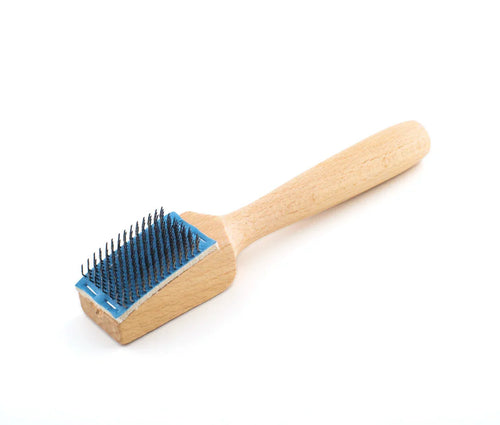
Grip on the floor is everything in tango. If your soles become slippery due to accumulated dust and wax from the dance floor, you lose control over your pivots. In practice, I often see dancers slipping during a fast turn because their soles are 'closed'. Use a special steel shoe brush for this.
- Always brush from the heel towards the toe to lift the fibers of the suede again.
- Preferably do this before every dance evening, so you step onto the floor with maximum grip.
- If the sole has become really greasy due to accumulated dirt, you can use a small drop of castor oil on the brush to restore flexibility, but be very careful with this.
Ventilation and anatomical shape
Tango is a physical sport and your feet sweat, period. The leather of your shoes absorbs this moisture. What I often advise my students is never to dance on the same pair two days in a row. The leather needs at least 24 hours to dry completely and regain its original shape. For men, this is extra important; high-quality tango shoes for men are often made of sturdier leather that can crack or hold unpleasant odors if there is a lack of ventilation.
Take your shoes out of your bag immediately after the milonga. Preferably use cedar wood shoe trees for your men's shoes. This not only pulls the moisture out of the leather but also ensures that the toe does not start to curl up over time. For women, it is wise to fill the shoes with some silk paper to maintain the delicate shape of the instep.
Check your heels
Nothing is as dangerous as dancing on a worn-out heel. With women's heels, you often see that the rubber cap (the heel tip) wears down to the metal pin. If this happens, you no longer have grip and can seriously scratch the dance floor. In practice, I often see dancers waiting too long to replace these caps. A good tip is to always have a spare pair of heel tips in your dance bag. For extra protection during class or on rougher floors, you can use 'heel protectors'; transparent plastic caps that fit around the heel. This also increases your stability while standing on the axis, which benefits your balance in complex figures.
Frequently Asked Questions
What shoes should you wear for a tango lesson?
For a tango lesson, it is preferable to wear shoes with a smooth sole made of leather or suede. This is crucial for being able to turn smoothly without straining your knees. Avoid rubber soles, as they offer too much grip on the dance floor and make pivots difficult. Ensure that the shoes fit firmly around your foot so that you are stable during technical exercises.
What shoes do you wear to a dance class for beginners?
As a beginner, you don't need to buy professional tango shoes immediately. Choose comfortable shoes with a sole that doesn't stick. For women, a stable, not too high heel is ideal, while men can start in dress shoes with a leather sole. However, as soon as you have mastered the basics of Argentine tango, real dance shoes make the learning process significantly easier.
Can I learn tango myself?
Although you can watch the basic steps via online videos, Argentine tango is a social dance that revolves around connection and communication. To truly master the technique of leading and following, lessons from a professional are indispensable. A teacher provides direct feedback on your posture, which is essential to prevent injuries and to be able to dance with confidence at a milonga.
What heel height is suitable for tango shoes?
The most suitable heel height for tango shoes usually varies between 6 and 9 centimeters. Beginners often choose a lower, wider heel of 6 or 7 centimeters for extra stability. Experienced dancers often prefer 8 or 9 centimeters because this promotes the correct weight shift to the front of the foot. Always choose a height at which you can remain standing comfortably.
Why are specific tango shoes better than normal shoes?
Specific tango shoes offer advantages that regular shoes do not, such as extra support for the arch and a perfectly centered heel for balance. They are designed to support the specific forward posture of Argentine tango. Furthermore, they are lighter and more flexible, allowing you to articulate your feet better. This prevents fatigue and helps you perform more complex movements with precision.
What is the difference between leather and suede soles for tango?
Leather soles are the standard for milongas because they are durable and allow for a constant gliding movement on wooden floors. Suede soles offer slightly more grip, which can be pleasant on a very slippery floor, but they require more maintenance with a special brush. Most dancers prefer leather because it feels more natural during pivots and wears out less quickly with intensive use.
How long do high-quality tango shoes last on average?
High-quality tango shoes last on average one to three years, depending on how often you dance and the maintenance. By wearing your shoes only indoors and letting them air out well after dancing, you extend their lifespan significantly. If you go to a milonga several times a week, the sole may wear out faster, but a good shoemaker can often easily replace a leather sole.
The beauty of Argentine tango is that the connection with your partner begins with the connection to the floor. What I especially want to share with you is that the right shoe is not just an accessory; it is your most important instrument for that perfect pivot and stability during an intensive milonga. Remember above all that the combination of a flexible sole and the right fit makes the difference between an evening of tired feet or effortlessly dancing through until the early hours.
Whether you choose an elegant heel that supports your axis or a sturdy shoe with the perfect grip, it pays to invest in quality that enhances your personal dance style. Therefore, take the time to discover what works for you in our women's tango collection or view the technical masterpieces in our men's tango collection. Ultimately, tango is about passion and complete surrender to the music; with the right pair of shoes under your feet, the technique disappears into the background and only the emotion of the dance remains. The dance floor is waiting for you.


