

Table of Contents
- What are ballroom shoes?
- Importance of good dance shoes
- Shoes for standard dances
- Difference with salsa shoes
- Tips for fluid movements
- Maintenance of your shoes
- Frequently Asked Questions
Do you ever have the feeling that your feet are glued to the floor the moment you want to start that big, sweeping step in the English Waltz? Good ballroom shoes are the absolute foundation for every dancer, because thanks to the specific suede sole, they offer the perfect balance between controlled grip and smooth gliding ability during ballroom dancing. In my years as an instructor, I have seen countless students struggle with their balance, simply because their footwear did not cooperate with the wooden floor. For standard dances, a shoe that supports the natural 'heel lead' and offers the right stability in the ankle is crucial to make those characteristic fluid movements. I often notice that a small adjustment in heel height or the flexibility of the sole immediately results in better posture and more self-confidence in my students. Choosing the right pair is not a luxury, but a necessary investment in your technique and the prevention of injuries. After thousands of hours on the parquet, I know that you can only truly dance freely when you can fully trust the contact between your shoe and the floor.
What are ballroom shoes?
When I teach beginners, I often see them trying to dance in their regular going-out shoes or even sneakers. In practice, however, you quickly notice that this gets in the way of technique. Ballroom shoes, specifically designed for standard dances such as the English Waltz, Tango, and Quickstep, are technically constructed very differently from your daily footwear or even Latin shoes. They are precision instruments that directly influence your balance and the way you glide across the floor.
What makes these shoes unique is the combination of flexibility and specific grip. In ballroom dancing, we make a lot of use of the 'heel lead'. This means that on a forward step, you touch the floor with your heel first before rolling through to the ball of the foot. A regular shoe often has a sole that is too stiff or a heel that is too heavy, making this movement stiff. The sole of real men's ballroom shoes is made of suede. This material provides exactly the right amount of resistance: you have enough grip not to slip, but you can still turn and glide smoothly without straining your knees.
The difference between Standard and Latin
A common mistake I often see is dancers thinking that one pair of shoes is suitable for all dance styles. While you can certainly dance a waltz in Latin shoes, you will notice that the balance isn't right. In standard dances, the posture is more compact and the center of gravity is different.
- Closed toe: For ladies, a closed toe is the standard. This is not just a matter of etiquette, but also of safety. Because you make many forward steps between your partner's feet in the waltz, a closed shoe protects your toes from unintentional contact.
- The heel position: In ladies' ballroom shoes, the heel is often placed more centrally under the heel compared to a Latin shoe. This helps you step backwards more stably and distribute your weight better during the powerful swinging movements of the waltz.
- Stability: The shoe must fit tightly around the instep. A slipping heel is disastrous for your balance; in practice, I see that dancers who wear shoes that are too large cramp their foot muscles to hold the shoe in place, leading to rapid fatigue.
Why the sole makes the difference
The suede sole is the heart of the ballroom shoe. Unlike the rubber soles of sneakers, which 'bite' into the parquet floor, suede allows you to communicate with the floor. You feel the ground better. An important aspect of ballroom dancing is maintaining contact with the floor (floor pressure). With the thin, flexible sole of professional shoes, you can fully articulate your foot.
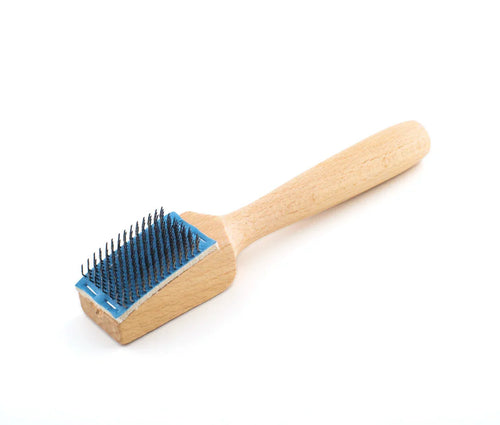
What I often advise my students is to wear their shoes exclusively indoors. As soon as suede soles go outside on the street, they pick up dirt and moisture, causing them to lose their unique gliding properties. Good ballroom dance shoes require maintenance with a special wire brush to roughen up the suede fibers again if they have become smooth from dancing. This ensures that you maintain that perfect control during a fast Quickstep or a sweeping Waltz, where the balance between grip and slip is essential for your confidence on the dance floor.
Importance of good dance shoes
In practice, I often see that beginning dancers underestimate the impact of their footwear. They show up on the floor with sneakers or regular pumps, only to find out after fifteen minutes that their feet are protesting or that they simply cannot make the right turn. In ballroom dancing, and specifically in the Waltz, your shoes are not just an accessory; they are your tools. A good dance shoe acts as the interface between your body and the parquet floor. Without the right foundation, learning techniques such as 'swing and sway' becomes an unnecessarily difficult task.The balance between grip and gliding
What I often see with dancers who dance in normal shoes is that they are either stuck to the floor due to rubber soles, or they slide all over the place due to smooth leather. In standard dances, the suede sole is crucial. This sole provides just enough resistance to push off in a controlled way, but also lets you turn effortlessly without straining your knees. A common mistake is thinking you can dance on any random heel. For the following movements in the Waltz, the position of the heel under the heel is essential for balance. Specially developed ballroom shoes for ladies have a heel that is placed slightly more forward, automatically moving your weight more towards the ball of the foot, which immediately improves posture.Technical support for the heel lead
The English Waltz is characterized by the powerful heel lead on the first beat. In practice, this means your shoe must be able to absorb the impact of your body weight while your foot rolls from heel to toe. A regular men's shoe is often too stiff in the sole, interrupting that fluid movement. The right ballroom shoes for men have a flexible shank (the support in the arch of the foot), which is essential for correctly performing that deep knee bend and subsequent extension. Here are a few reasons why switching to professional footwear immediately increases your dancing pleasure:- Injury prevention: The cushioning in the sole protects your joints during the descent (lower) in the waltz.
- Floor feel: The thin sole ensures you feel exactly where your center of gravity is.
- Stability: The narrow fit prevents your foot from sliding in the shoe, which prevents blisters and uncertainty.
- Technique: The specific shape of the heel helps with the correct execution of the 'rise and fall'.
Shoes for standard dances
In the world of ballroom dancing, we make a sharp distinction between Latin and Standard, and for good reason. In standard dances, such as the English Waltz, the Tango, or the Quickstep, it's all about a constant connection with the floor and a fluid movement through the room. What I often see in practice is dancers trying to waltz in shoes that are actually intended for Latin. That is a recipe for frustration, because the technique of foot rolling is completely different. In standard dance, we almost always use a 'heel lead'. This means that on a forward step, you put your heel down first before rolling over the rest of the foot. This requires a specific type of heel and a sole that supports this movement. A common mistake is choosing a shoe with a sole that is too flexible in the middle. For the waltz, you actually need a sturdy 'shank' (the bridge in the sole) that supports you during the 'rise and fall', the moment you go up on the ball of your foot.The anatomy of the ladies' pump
For ladies, the standard shoe is almost always a closed pump. This is not only an aesthetic choice that fits with the long dresses, but it has an important technical function. The closed toe ensures that the foot remains firmly in the shoe during powerful backward steps. When you go backwards as a lady, you must be able to trust that your shoe won't slip. These ballroom shoes usually have a heel that is placed slightly more towards the middle of the heel than an everyday pump. This helps you distribute your weight better across the entire foot, which is essential for balance during turns. In my lessons, I notice that ladies who switch from a regular heel to a specific standard shoe immediately experience more stability in their ankles.- Heel height: For beginners, I often recommend a heel of 2 inches (5 cm) or 2.5 inches (6.5 cm). The higher the heel, the more your center of gravity shifts forward, which can make control in the waltz more difficult.
- Material: Satin is the standard for competitions because you can dye it to the color of your dress, but leather or suede is much more durable in practice for training hours.
- Sole: The sole is always made of chrome leather (suede). This gives exactly the right amount of grip not to slip, but enough smoothness to turn flexibly.
Stability and control for the men
For men, the difference between a regular shoe and a dance shoe is perhaps even greater than for women. A normal men's shoe often has a thick rubber sole and a wide, heavy heel. For the Quickstep or the Slowfox, that is disastrous. You need a thin, flexible sole with which you can 'feel' the floor. The heel of these standard dance shoes is usually about 2.5 centimeters high. This seems like little, but it is crucial for the correct posture. It forces your weight slightly more towards the ball of the foot, while the rounded back of the heel facilitates the heel lead. A common problem with men who dance in street shoes is that they trip over their own heels or damage the floor because the heels are too sharp or too stiff. In practice, I see that men often hesitate about the size. A dance shoe should fit your foot like a second skin. If there is even a little space left at the heel, you lose control during the 'swing' movements. The leather will always stretch slightly over time, so buy them a bit on the tight side rather than too loose. Also, don't forget to regularly use a shoe brush on the suede soles; as soon as they become smooth from accumulated dust and floor wax, you lose the grip you need for that powerful push-off in the waltz.Difference with salsa shoes
In the dance school, I regularly see beginners who think that one pair of dance shoes is universally usable for every style. Although you can move in both, the difference between salsa shoes and specific shoes for ballroom dancing (especially the standard dances) is fundamental to your technique and balance. A common mistake is wearing open Latin or salsa shoes during an English Waltz. In practice, you then immediately notice that you lack the stability needed for the large, fluid steps that are so characteristic of ballroom.The rolling of the foot
The biggest technical difference lies in the way you move your feet across the floor. In salsa and other Latin styles, you dance primarily on the ball of your foot; your weight is directed forward to enable fast, spicy movements and hip action. In the waltz, this is exactly the opposite. Here you work with the so-called 'heel lead'. Every forward step begins with putting the heel down, after which you roll the entire foot to the toe. What I often see with students who try to waltz in salsa shoes is that they have difficulty with this rolling movement. The sole of a salsa shoe is often extremely flexible in the middle, while good ballroom shoes for ladies have a sturdier shank. This shank is the bridge under the arch of the foot that provides the necessary support. This extra support is essential to smoothly perform the 'rise and fall' – going up on the toes and descending in a controlled way – without your ankles wobbling.Construction and safety in standard dances
In addition to technique, the physical construction of the shoe also plays a major role in etiquette and safety on the dance floor. In practice, I always advise dancers to pay attention to the following specific features:- The toe of the shoe: Where salsa shoes for ladies almost always have an open toe, shoes for standard dances are always closed. This is not just an aesthetic choice; in the waltz, you stand very close to your partner in a closed position. A closed toe protects your toes if you accidentally touch each other's feet during a complex turn or a fast chassé.
- The position of the heel: In men's ballroom shoes, you often see a heel of about 2 to 2.5 centimeters placed directly under the heel. This helps with dancing backwards and maintaining a stable frame. Salsa shoes for men sometimes have a higher 'Cuban heel', which brings your center of gravity too far forward for a tight waltz, causing you to lose balance faster during powerful steps.
- Sole contact and friction: The sole of a standard shoe is designed to maintain constant contact with the floor (so-called 'gliding'). Salsa shoes are more focused on fast spins and coming off the floor for quick footwork, which actually creates an unstable image in ballroom.
Tips for fluid movements
In practice, I often see dancers struggle with the 'gliding' effect that is so characteristic of the English Waltz. The movement then looks jerky, as if there is a small glitch in the motor at every step. This usually has little to do with a lack of sense of rhythm, but everything to do with the way the foot is rolled and how the body weight is shifted. In ballroom dancing, contact with the floor is sacred; you must use the floor not only to stand on, but also to push yourself off against.The technique behind the 'Heel Lead'
When you move forward in the waltz, the heel should be the first to touch the floor. A common mistake I often see in beginners is that they lift their feet too high, as if they are stepping over an imaginary obstacle. This causes the foot to land flat, which immediately kills the forward energy. In practice, you should let your heel glide across the floor before transferring the weight fully. Good ladies' ballroom shoes are essential for this technique. The sole must be flexible enough to allow the rolling movement from heel to toe to proceed smoothly, while the heel provides the right stability for the landing. Make sure your knees always remain 'soft'. Bent knees act as the shock absorbers of your body and enable you to make those deep, fluid steps without your upper body jerking up and down.Mastering rise and fall
The 'rise and fall' is what the waltz gets its breathing, undulating character from. It is the moment when you come up on the ball of the foot on the second and third beats. What I often see is that dancers come up too abruptly, making the movement angular. The rise should come from the ankles and knees, not just by pressing your toes into the floor. The right men's ballroom shoes play a large role here. The suede sole must provide sufficient grip so that you do not slip during the rise, but at the same time be smooth enough to enable a fluid turn. A stiff sole will limit you in your 'rise', while a sole that is too soft provides insufficient support to the arch of the foot during the descent.- Keep your weight always slightly forward, centered above the ball of the foot, even when dancing backwards. This prevents you from falling 'on your heels' and interrupting the flow.
- Focus on closing the feet on the third beat. Many dancers leave their feet a fraction too far apart, making the next step less powerful.
- Use the inside of the ball of your foot for side steps. This gives more control over lateral movement and prevents you from losing balance.
Maintenance of your shoes
What I often see on the dance floor is dancers investing hundreds of euros in private lessons and technique, but then neglecting their most important tool. Your ballroom shoes are not just footwear; they are a technical instrument that directly influences your balance and the quality of your swing. In practice, I often see that the suede soles have become mirror-smooth after a few months due to a buildup of dust, floor wax, and skin oil. This is riskant for a dance like the English Waltz, where you must be able to glide in a controlled way without losing grip completely.
Suede sole and grip control
A common mistake is that dancers only start brushing their soles when they are already almost slipping during a spin or a powerful chassé. However, you want to maintain the sole preventively to keep the fibers open. Use a special steel shoe brush with a protective cap for this. Always brush with short, firm strokes from the heel towards the toe. This brings the suede back 'up', allowing you to find that specific balance between gliding and stopping. Especially with high-quality men's ballroom shoes, which often have a larger sole surface area, an even grip is essential for a stable foundation during the heel-toe roll.
- Brush your shoes after every two to three intensive dance sessions for optimal contact with the floor.
- Remove accumulated dirt or lint from the floor immediately, before they are pressed into the suede.
- Never use liquids such as water or oil on the sole; this makes the suede irreparably hard and smooth.
Moisture regulation and shape retention
In practice, I notice that many students leave their shoes in their bag after class until the next training session. This is disastrous for the life of the material. During ballroom dancing, your feet produce heat and moisture, which is absorbed into the leather and the satin lining. For the often refined ladies' ballroom shoes, this means that the glue joints and the shape of the shoe deteriorate faster if they cannot breathe. Take your shoes out of the bag immediately at home and let them dry at room temperature. Never put them near a heater, as this dries out the natural leather and can cause cracks at the instep.
Protection of the heels
In standard dancing, we frequently use heel steps, where the full pressure of your body weight comes onto the back of the shoe. For ladies, using plastic heel protectors is actually a must, not an option. These transparent caps not only protect the wooden dance floor from scratches, but also prevent the heel tip from wearing down to the metal pin. What I often advise my advanced dancers is to replace the heel protectors as soon as they wear through the bottom. This costs you a few euros, but saves you an expensive repair at the shoemaker or, worse, a slip in the middle of a Tango promenade.
Frequently Asked Questions
Which shoes for salsa dancing?
For salsa dancing, specific Latin or salsa shoes are essential for good performance. These shoes have a suede sole that provides the perfect balance between grip and turning ability on the dance floor. Ladies usually wear open sandals with a heel, while men choose flexible shoes with a raised heel. This type of footwear supports the fast footwork and turning movements characteristic of salsa.
What are ballroom dance shoes called?
Ballroom dance shoes are specifically distinguished into two categories in the dance world: standard dance shoes and Latin shoes. For ballroom (standard) dances, such as the English Waltz, we usually speak of standard shoes. These have a closed toe for ladies and a low, flat heel for men. In general terms, they are also often simply called dance heels or ballroom shoes, depending on the specific model and the discipline.
Why dance shoes?
Dance shoes are crucial for both your safety and your technique during ballroom dancing. The special suede sole prevents you from slipping, but allows you to turn smoothly without straining your knees or ankles. In addition, they are much lighter and more flexible than regular shoes, allowing you to maintain better contact with the floor. Good dance shoes support correct body posture and make fluid movements significantly easier.
Which shoes for ballroom dancing?
For ballroom dancing, you choose shoes with a suede sole that match the specific form of dance you practice. In standard dances, ladies wear closed shoes for stability and men wear shoes with a low heel. For Latin dances, open sandals for ladies and shoes with a higher heel for men are the norm. It is essential that the shoes fit tightly for optimal control over your movements.
How do you maintain ballroom shoes with suede soles?
Maintaining ballroom shoes is essential to maintain the right grip on the floor. Use a special steel shoe brush to regularly roughen the suede soles when they become smooth or dirty from dust and wax. Always brush carefully from the center to the outside. Furthermore, never wear your dance shoes outside, as moisture and street dirt can directly damage the delicate suede sole and fit.
What is the ideal heel height for ballroom shoes?
The ideal heel height for ballroom shoes depends on your experience and personal preference. For beginners, a 5-centimeter heel is often recommended for stability. Advanced dancers regularly choose 6.5 or 7.5 centimeters for a more elegant line of the leg. Men almost always wear a 2.5-centimeter heel for standard dances. The most important thing is that you stand stably and can distribute your weight correctly.
How tight should ballroom shoes fit when purchased?
Ballroom shoes must fit very tightly when purchased, comparable to a second skin. Because dance shoes are usually made of leather or satin, they stretch significantly over time. There should be no space between your foot and the shoe to prevent sliding and blisters. A snug fit is necessary for the stability and precision required for the complex foot positions in ballroom.
The beauty of the waltz is that feeling of weightlessness, as if you are floating across the parquet without any effort. What I especially want to tell you is that fluid movement starts with the right connection to the floor. A good ballroom shoe not only provides the stability you need for powerful turns, but also gives you the self-confidence to place every step with precision. Remember above all that your feet are the foundation of your dancing pleasure; therefore, treat yourself to equipment that supports your technique instead of hindering it.
Whether you are taking your first steps or taking your technique to the next level, an investment in quality makes a world of difference during ballroom dancing. Feel free to take a look at our ladies' ballroom standard collection or discover the perfect fit in the men's ballroom standard collection. Ultimately, dancing is about the harmony between you, your partner, and the music. As soon as you feel the right foundation under your feet, the technique fades into the background and only the pure joy of moving remains. Let yourself be guided by the rhythm and enjoy every glissade.


