

Table of Contents
- Why those extra layers are your best friend (and save your dance career)
- The anatomy of the perfect dance outfit: From leotards to 'sauna pants'
- Dance pants and leg warmers: Why your legs need extra love
- Materials that really work: Breathable vs. Heat retention
- Calentamiento para bailarines: The right exercises in the right clothing
- My favorite brands: Why I swear by Bloch, Capezio, and Rummos
- Frequently asked questions about warm-up clothing
Do you know that feeling? You walk into the dance studio, the floor feels like an ice rink and your muscles are as stiff as a board. You take off your jacket and stand there in your thin leotard... brrr! If you start right away with those high kicks or those deep pliés, you're asking for trouble. Warm-up clothing for dancers is essential because it quickly raises the core temperature of your muscles, stimulates blood circulation, and lubricates your joints, drastically reducing the chance of injuries such as strains and tears. By wearing layers like leg warmers, 'sauna pants', and a cross-over cardigan, you prepare your body physically and mentally for the top performance you're about to deliver.
Why those extra layers are your best friend (and save your dance career)
Listen, I'm going to be very honest with you. In my first years as a dancer, I thought I was 'tough'. I would walk into class, throw my bag in the corner, and start stretching immediately in just my tight dancewear. The result? A hamstring injury that kept me on the sidelines for three months. I want to save you from that, girl. It's one of the most common mistakes among beginners: underestimating how long it takes before your tendons and ligaments are truly warm.
When we talk about calentamiento para bailarines (that's a fancy term for a dancer's warm-up), we're not just talking about waving your arms a few times. Your muscles are like rubber bands. If you stretch a cold rubber band hard, it snaps. If you rub it warm between your hands first, it becomes super flexible. That's exactly what good warm-up clothing does: it's that warm hand that makes your muscles supple.
Before you lose yourself in all the glitz and glamour of performances, you need to have the basics in order. I really recommend you first take a look at our Buying Dancewear: Complete Style Guide for Dancers. There we explain the foundations, but here we go into depth about those crucial first thirty minutes of your class.
It's also about psychology. When I put on my warm leotards and throw an oversized sweater over them, a switch flips in my head. I'm no longer the woman who just came from a traffic jam or did the groceries; I'm a dancer. You need that focus to perform your exercises (your ejercicios de calentamiento) properly.
The anatomy of the perfect dance outfit: From leotards to 'sauna pants'
Okay, let's talk about layers. In the dance world, we call this the 'onion principle'. You start like a thick onion and as the class progresses and your heart rate goes up, you peel off the layers.
Layer 1: The basis. This is usually your leotard or a tight top. For the little ones, we have beautiful leotards for girls, but for us adults, it mainly needs to be functional and flattering. Brands like Bloch and Capezio are the absolute kings in this. Why? Because they use fabrics that wick away your sweat but don't let your body heat escape immediately.
Layer 2: The insulation. This is where the 'trashbag pants' or sauna pants come in. They might look a bit silly – they make a crinkling sound when you walk – but they are worth their weight in gold. They hold the heat around your hips and upper legs. This is crucial for your calentamiento. If your hips are cold, your entire range of motion is limited. I often see students struggling with their turn-out simply because their hip joints are still 'frozen'.
Layer 3: The protection. Think of a cross-over cardigan or a wide sweater. This protects your upper body and especially your shoulders and back. Nothing is more annoying than a stiff neck while doing pirouettes. Choose materials that don't itch. Nothing distracts more from a beautiful choreography than an itchy sweater.
Dance pants and leg warmers: Why your legs need extra love
Let's be honest: leg warmers are iconic. Thanks to movies like Flashdance, people think they're just for fashion, but as a dance instructor, I'm telling you: they are an absolute necessity. Your ankles and Achilles tendons have poor circulation naturally. They warm up slowly and cool down very quickly.
When you invest in good ballet shoes, you also want your feet and ankles to be safe. Leg warmers keep the heat exactly where your tendons have to work the hardest. I often even wear them over my heels during barre exercises.
And then the skirts and tutus. Although they are super cute, only put them on when the warm-up is over! During warming up, you want clothing that hugs your muscles. Dance pants are perfect for this. Whether you choose tight jazz pants or looser harem pants for hip-hop, make sure the fabric contains stretch. You need to be able to lunge without your pants tearing (yes, that happened to me once in front of a full class... believe me, you don't want that).
A good tip from me: if you notice that your knees are often painful during warm-up, buy extra-long leg warmers that you can pull over your knee. The difference in comfort is enormous. Your kneecap is supported by heat, which promotes the production of joint fluid. That's the 'oil' for your machine!
Materials that really work: Breathable vs. Heat retention
Not all fabrics are created equal. I often see girls arriving in 100% cotton oversized t-shirts. While that's comfortable on the couch, it's a disaster in the dance studio. Cotton absorbs sweat, becomes heavy, gets cold, and stays stuck wet against your skin. That's the fastest way to a cold or muscle pain.
What should you look for then?
- Nylon and Spandex: The classic combo for leotards. It stretches in four directions (4-way stretch), which is essential for dancers.
- Acrylic and Wool: Perfect for leg warmers and knitted cardigans. It retains heat extremely well without becoming leaden.
- Polyester blends: Nowadays you have high-tech fabrics that are 'moisture-wicking'. They pull moisture away from your skin. Brands like Capezio are masters at this.
Don't forget your feet. If you dance on pointe, you need specific pointe shoe accessories, but during the warm-up, thick wool 'booties' (a kind of lined slippers for dancers) are truly a lifesaver. You can even wear them over your ballet shoes while doing your ejercicios de calentamiento. Your feet stay lovely and warm, so you can give 100% immediately as soon as the shoes come off.
Calentamiento para bailarines: The right exercises in the right clothing
Now that you have the right outfit, what are you actually going to do in it? The term calentamiento para bailarines covers everything from light cardio to mobility exercises.
I always start my classes with 'isolations'. That means you only move your head, then only your shoulders, then your ribcage, and so on. While I do this, I wear my full warm-up outfit. I feel the heat starting to build up under my sauna pants. That's the signal to my body: "Hey, we're getting to work!"
A good warm-up always includes:
- Heart rate increase: Light skipping or walking through the room. (Keep your sweater on for a bit!)
- Joint mobilization: Rotating circles with ankles, knees, and hips. (Leg warmers are essential here.)
- Dynamic stretching: No static stretches where you stand still for 30 seconds (save those for after class!), but moving stretches. Think of large arm swings and gentle lunges.
Only when I feel the first drops of sweat on my forehead does the sweater come off. The leg warmers often stay on until after the pliés and tendus at the barre. Don't be afraid to take off those clothes when you get warm; overheating isn't good for your focus either. It's about the balance.
My favorite brands: Why I swear by Bloch, Capezio, and Rummos
If you invest in your hobby, you want gear that lasts longer than three washes. I've tried hundreds of brands over the years, but I always come back to the big names. Why? Because they understand the anatomy of a dancer.
Bloch: Their warm-up booties are world-famous. You see them at the largest ballet companies in the world. They are perfect for keeping your feet warm between rehearsals. Once you have them, you'll never want to be without them.
Capezio: For base layers like leotards and tights, there's none better. Their 'Hold & Stretch' technology ensures your clothing doesn't slip down during a jump. Nothing is more irritating than having to pull up your pants in the middle of a combination.
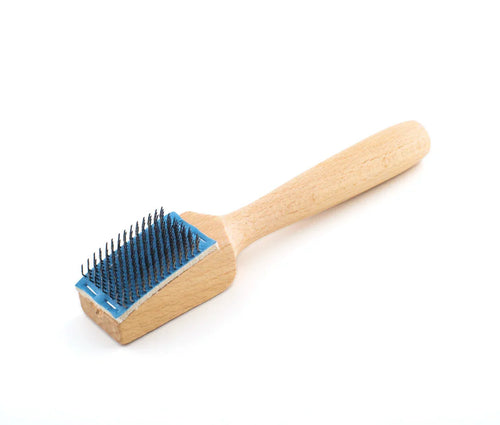
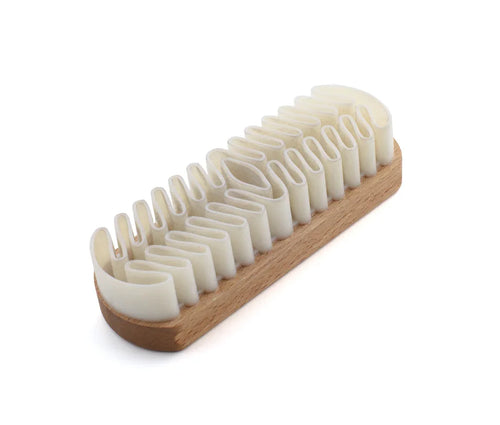
Rummos and Werner Kern: Although these brands are primarily known for their fantastic dance shoes (really, once you've danced on Werner Kern, other shoes feel like cardboard), they also have accessories that help you with your preparation. A good shoe brush for your suede soles is also part of your pre-dance ritual!
Always choose quality over quantity. You're better off with two sets of really good warm-up clothes that keep their shape for years than ten cheap pairs of pants that lose their stretch after one wash. At Miss Salsa, we only select the brands we would dance in ourselves (and we do!).
Frequently asked questions about warm-up clothing
¿Cuáles son los 5 ejercicios de calentamiento? (What are the 5 basic warm-up exercises?)
For dancers, the five essential exercises are: 1. Neck and shoulder isolations, 2. Ankle circles (both ways!), 3. Pliés in first and second position to lubricate the knees and hips, 4. Tendus to warm up the feet, and 5. Large arm circles (port de bras) to open your back and ribcage.
¿Cuál es el mejor calentamiento para hacer ejercicio? (What is the best warm-up?)
The best warm-up is specific to the activity you are going to do. For dancers, this means a combination of light cardio to get your blood flowing and dynamic mobility exercises that increase your joint range. Always do this with layers of clothing on to retain the heat!
¿Cuáles son los 4 tipos de calentamiento? (What are the 4 types of warm-up?)
In sports science, we distinguish: 1. General warm-up (walking/running), 2. Specific warm-up (dance movements at a low tempo), 3. Dynamic warm-up (bouncing movements), and 4. Preventive warm-up (exercises aimed at your weak spots, such as your ankles).
¿Cuáles son los 3 ejercicios básicos? (What are the 3 basic exercises?)
If you're really short on time, focus on these three: 1. Pliés (for your entire lower body), 2. Spinal rolls (slowly rolling down vertebra by vertebra to the floor), and 3. Foot articulation (slowly bringing your foot from flat to pointe and back).
When should I take off my leg warmers?
There is no fixed rule, but most dancers take them off as soon as they start the 'center' of the class (after the barre or the first technical exercises). If the studio is very cold, you can feel free to keep them on the whole class, as long as your teacher can still see your ankles clearly to correct your technique.
Can I use regular sportswear as warm-up clothing?
Yes, in principle you can, but 'real' dancewear is designed not to get in the way during extreme movements. A regular hoodie often has a hood that hits your head when turning, and normal sweatpants are often too wide, making it impossible for your teacher to see your knee alignment. Specific dance pants are therefore a much better choice.
So, now you're all caught up! Remember: your body is your instrument. You wouldn't leave a violin out in the freezing cold and then expect it to sound beautiful, right? Take good care of those muscles of yours, put on those layers, and shine on that dance floor!
Do you still have questions about what size you need or which material best suits your dance style? Send me a message or check our collections directly in the shop. We're happy to help you find the perfect outfit!
Ready to step into the studio warm and safe?
Check out our favorite items for the perfect warm-up:
- Discover the most beautiful Women's Leotards
- Keep your legs warm with our Ballet Accessories
- Complete your outfit with Skirts & Tutus
- Don't forget your feet: Pointe Shoe Accessories & Booties


