

Table of Contents
- What is West Coast Swing?
- Modern Music and Rhythm
- Difference with Lindy Hop
- Choosing Essential Swing Shoes
- Common Mistakes in West Coast
- The Unique West Coast Dance Style
- Frequently Asked Questions
Why do I suddenly see people on the dance floor swinging to top 40 hits instead of the usual big band music? West Coast Swing is a modern, social partner dance characterized by a linear movement in a 'slot' and an elastic connection between partners. Unlike traditional styles, you can perform this dance to almost any music genre, from contemporary pop and R&B to sultry blues.
In the years I've been teaching, I've seen many dancers switch from the energetic Lindy Hop to the fluid, almost sensual movements of West Coast. It's a technique that demands a lot from your footwork and subtle communication with your partner. Often students ask me in the studio if they can keep using their old jive shoes. While those are fine for fast kicks, you only really notice the difference in West Coast Swing when you invest in specific swing shoes with a suede sole. These offer exactly the right balance between grip and slip for those characteristic 'anchors' and 'sugar pushes'. It is that unique mix of improvisation and musicality that makes this style so addictive for every dancer. I'll explain exactly what makes this modern swing style so special and what you should look out for when you step onto the floor yourself.
What is West Coast Swing?
West Coast Swing (WCS) is, in my eyes, the most versatile partner dance there is. Where many people immediately think of the energetic jumps and high tempo of the lindy hop from the '30s when they hear 'swing', WCS is the modern, fluid evolution that continues to adapt to today's music. In practice, this means you are not limited to big band jazz; on dance floors today, I see everything passing by, from sultry R&B and blues to the latest top 40 hits and acoustic covers. What WCS truly unique is the concept of the 'slot'. Unlike dances that go in circles, the dancers move along an imaginary narrow strip on the floor. The follower moves from one side of the slot to the other, while the leader clears the way and blocks it again. What I often see with beginners is that they tend to hop or use too much vertical energy, but WCS is actually about a 'grounded' feeling. You stay low to the ground, with a slight bend in the knees and ankles, creating an elastic connection between the partners.The technique of connection and elasticity
In practice, I notice that the success of a good West Coast Swing dance stands or falls with the 'connection'. It is a constant game of pulling and pushing, which we call leverage and compression in technical terms. A common mistake is that dancers use their arms like stiff sticks or leave them too limp. Instead, you should see your arms as an extension of your back muscles. When the follower comes to the end of the slot, a natural tension arises that forms the basis for the next movement. This also requires specific footwear. Because you slide across the floor a lot and make constant weight shifts, high-quality swing shoes are essential. They must be smooth enough to turn without straining your knees, but must also offer enough grip to find that important 'anchor' at the end of a pattern. A suede sole is often the standard for this, as it offers the perfect balance between sliding and control.Why West Coast Swing is different from other styles
If you look at the anatomy of the dance, you see that the emphasis is extremely on improvisation. Where in a dance like the Jive you often see fixed patterns and a tight rhythm, WCS is a continuous conversation between two people. The leader suggests a movement, but the follower has complete freedom to add their own styling or rhythmic variations. Here are a few characteristics I always emphasize during lessons:- The Slot: The linear movement that ensures you keep your own spot even on a crowded dance floor without getting in anyone's way.
- The Anchor Step: These are the last two counts of a pattern where you shift your weight back to build the elasticity for the next movement.
- Rolling Count: Instead of flat steps, you roll your foot from the heel to the ball of the foot, which provides that typical 'smooth' look.
Modern Music and Rhythm
What truly distinguishes West Coast Swing (WCS) from other forms of swing is the enormous musical freedom. In practice, I often see that new dancers are surprised that we don't dance to traditional big band music, but to songs you simply hear on the radio: from Justin Timberlake and Dua Lipa to deep, acoustic blues. While the roots of the dance lie in swing music, the style has evolved to a tempo that is usually between 80 and 120 beats per minute (BPM). This lower tempo gives us room for 'extension' and musical interpretation that is often missing in faster styles.The shift in energy and flow
A common mistake I see in dancers making the switch from other disciplines is that they bring the upward 'bounce' to the West Coast Swing floor. In lindy hop, that upward energy is essential for the dynamics, but in WCS we strive for a horizontal 'flow'. Music today is often 'straight', as in modern pop or R&B, which means the constant swing feeling of the triplets sometimes makes way for a tighter rhythm. What I often explain to my students is that you shouldn't just hear the beat, but learn to 'stretch' it. In practice, this means we often dance just slightly behind the beat. This creates that characteristic elastic feeling between the leader and the follower. If the music slows down, we slow down our body displacement with it. This requires a specific technique where you move your weight in a very controlled manner. Because you slide across the floor a lot instead of jumping, the choice of your footwear is crucial. For those fluid movements, I always advise looking at swing shoes with a suede sole. You need that specific balance: enough grip not to slip during a spin, but smooth enough to make those subtle slides without straining your knees.Rhythm and the 'Rolling Count'
The basis of West Coast Swing consists of six and eight-count patterns, but the real magic lies in the syncopation and how you handle the 'rolling count'. Instead of stiffly counting the steps, we look at the accents in the music. Here are a few concrete things I always insist on in practice:- The delay on the 2: In a 'sugar push' or 'underarm turn', I often see people rushing toward the second count. Try to delay that count by slowly rolling your weight through your foot. This increases the visual effect of the stretch.
- The anchor point (Anchor Step): The last two counts are not simple steps in place. It is a moment of 'settling' into the floor where you bring the connection with your partner back to tension for the next pattern.
- Anatomical foot roll: Use your feet as shock absorbers. Land on the ball of your foot first and only then roll through to the heel. This gives you the stability needed for complex rhythms.
Difference with Lindy Hop
If you go to a social dance evening, you often see people confusing Lindy Hop and West Coast Swing. It makes sense, as they stem from the same family tree, but in practice, they feel completely different. Where Lindy Hop revolves around that explosive, bouncing energy of the '30s and '40s, West Coast Swing is much more understated and linear. What I often see with dancers switching from Lindy to West Coast is that they keep too much 'bounce' in their basic step. In West Coast Swing, your feet stay closer to the floor and you focus on a horizontal stretch instead of a vertical jump.The 'Slot' versus Circular Movement
The biggest technical difference is in the space you occupy. Lindy Hop is traditionally a circular dance; partners turn around each other and often move in a circular shape across the dance floor. West Coast Swing happens entirely in a 'slot': an imaginary narrow rectangle on the floor. The follower constantly moves from one side of this strip to the other, while the leader stays in the middle and only steps aside to clear the way. In practice, this means that West Coast Swing is much more compact. You can literally dance it in a busy bar without knocking everyone over. A common mistake I see with beginners is that they walk out of the slot, causing the connection with the partner to be lost. In Lindy Hop, you often use the kinetic energy of a 'swing-out' to gain speed, while in West Coast Swing, we rely on 'leverage' and 'compression'. You pull or push very subtly against each other's hands to create that elastic stretch. Because your feet keep constant contact with the floor in this technique, the right swing shoes with a smooth sole are crucial; you want to be able to slide without your ankle locking.Music Choice and Footwork
Another fundamental difference is the music. Lindy Hop is inextricably linked to swinging jazz and big band music. West Coast Swing has evolved to be danced to almost anything with a 4/4 time signature: from blues and R&B to the latest top 40 hits. This creates a very different anatomical load. Where in Lindy Hop you often dance on the ball of your foot with an active 'pulse', in West Coast Swing you roll your feet from heel to toe, which we call 'rolling of the feet'. What I often advise students who want to master both styles is to look closely at their footwear. For the fast, springy movements you also see in the Jive, you need a shoe that offers a lot of cushioning. Good jive shoes can also work fine in that case for the faster swing forms, but for the subtle footwork of West Coast Swing, advanced dancers often choose a flatter sole with maximum flexibility. In Lindy Hop, you see many 'kicks' and 'flicks', while West Coast Swing revolves around the 'anchor step' at the end of each pattern. This is a moment of rest and weight shift where you anchor yourself, as it were, into the floor before the next stretch begins. Without that anchoring, the dance feels rushed and you lose that typical 'smooth' look that makes this style so popular.Choosing Essential Swing Shoes
What I often see on the dance floor is that beginners underestimate how much influence their footwear has on their technique and, more importantly, their physical health. In practice, almost everyone starts on a pair of everyday sneakers with a rubber sole. While that's fine for your first trial lesson, you soon notice that your knees and ankles protest as soon as we start working on fast spins or the 'anchor step'. West Coast Swing is a linear dance where the 'slide' is essential; you want to be able to glide across the floor without your foot abruptly sticking. A common mistake is wearing shoes with too much grip. If your foot is stuck on the floor while your hips turn for a tuck turn, your joints absorb the torsion that the shoe should have facilitated. That's why I always recommend students invest in real swing shoes with a suede or smooth leather sole. This type of sole gives you exactly enough resistance to maintain control but lets you turn effortlessly without straining your meniscus.The balance between grip and sliding ability
Unlike ballroom, where the technique often requires a specific heel-toe roll, West Coast Swing is about a grounded, almost 'lazy' feeling. What I often advise is to look at the type of floor you usually dance on. Do you dance a lot in local community centers on stiff laminate? Then you need a smoother sole. Are you often on a professional parquet floor in a dance school? Then your sole can have a bit more 'bite'. In practice, I see that many advanced dancers choose hybrid models. For followers, a low heel of 2 to 4 centimeters is often ideal because this brings the weight slightly more to the ball of the foot, which helps with the connection with the leader. For the gentlemen, I often see them switching from heavy shoes to lighter, flexible models similar to lindy hop shoes, because these offer more freedom of movement in the ankles. A flexible sole is crucial; you must be able to 'point' your foot and feel the floor to maintain your balance during complex syncopations.Anatomy of the perfect swing shoe
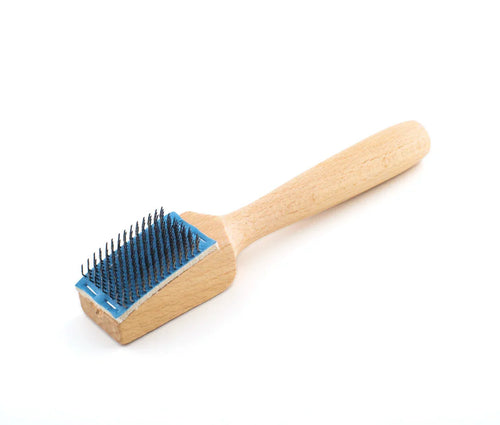
When fitting your first pair, the fit around the instep and heel is decisive. A common problem is a slipping heel. In West Coast Swing, you often lean back into your 'stretch', and if your heel then slips out of your shoe, you immediately lose your balance and your confidence in the connection. When buying, pay attention to the following points:- Sole material: Suede is the standard. It is versatile and you can adjust the roughness with a wire brush.
- Flexibility: You should be able to fold the shoe in half with one hand. Stiff soles limit your ability to move your weight smoothly.
- Cushioning: Because we often dance for hours at a time at conventions in WCS, good shock absorption under the heel is not a luxury but a necessity.
Common Mistakes in West Coast
In practice, I see that dancers switching from other styles often struggle with the specific elasticity that makes West Coast Swing so unique. A common mistake is holding onto a too-stiff arm connection. Unlike many traditional ballroom dances, where the frame is often more static, WCS is entirely about the dynamics between compression and extension. What I often see with beginners is that they unconsciously shrug their shoulders as soon as the music goes faster or when they try to perform a difficult pattern. This immediately blocks the energy flow to your partner. You must learn to keep the connection in your large back muscles (the latissimus dorsi) instead of in your biceps or hands. If you literally 'grab' your partner, you can no longer receive or pass on the subtle signals of a lead.The transition from other swing styles
Many dancers end up at West Coast Swing after gaining experience with swing shoes in the world of Lindy Hop. Although the historical roots overlap, the technical execution in the modern variant is completely different. A mistake I constantly see returning is the 'bounce' or the vertical movement that is so characteristic of Lindy. West Coast Swing is 'smooth', linear, and horizontally oriented. Instead of bouncing up and down, you want to keep your center of gravity low and glide across the floor. Your equipment plays a crucial role here that is often underestimated. If you try to glide in sneakers with a rubber sole, you force your knees to absorb the friction, which leads to injuries in the long term. In practice, you notice that with the right shoes it's much easier to make that fluid 'rolling count'. For the gentlemen and ladies who want a more direct contact with the floor, specific jive shoes are sometimes a good alternative because of their flexibility, provided the sole is smooth enough for the West Coast floor.Timing, the 'Slot' and Footwork
Another technical aspect where things often go wrong is maintaining the 'slot' (the imaginary narrow lane in which you dance). A classic mistake is the follower walking out of the line or the leader not clearing the way in time or completely. This disrupts the linear aesthetics of the dance. Additionally, I often see the timing of the feet not matching the connection.- Skipping the Anchor Step: This is perhaps the most common mistake. The anchor step at the end of a pattern is not a 'rest moment', but a moment where you actively move your weight back to build tension for the next movement. Without a good anchor, the dance feels 'loose' and messy.
- Taking too large steps: Especially with uptempo songs, I see dancers tripping over their own feet. In West Coast Swing, your steps must remain compact, ideally no wider than your own hips, to keep up with the speed of the music.
- Flat-footed dancing: What I often explain to students is the anatomy of the foot roll. You are supposed to roll your foot from the ball to the heel during backward movements. If you don't do this, you lose that typical 'swing' look and your movement feels heavy and cumbersome to your partner.
The Unique West Coast Dance Style
When you first step onto a West Coast Swing (WCS) floor, one thing immediately stands out: the dance is linear. Unlike the circular, energetic movements you see in lindy hop, WCS takes place in an imaginary 'slot'. This is a narrow lane on the floor where the follower moves back and forth, while the leader acts as a kind of traffic controller, clearing the way and blocking it again. What I often see in practice is that beginners have trouble staying in that line. They wander off to the sides, causing the elastic connection with the partner to be lost.
The magic of WCS lies in that elasticity. It feels like an elastic band that you stretch and release again. In my lessons, I often call this 'tension' and 'compression'. A common mistake is that dancers use their arms to move the partner, as if they are pulling on a rope. In practice, however, the movement comes from your core and your weight shift. When you lean back into an 'anchor step' at the end of a pattern, you create that much-needed tension that forms the starting point for the next movement.
Technique and Anatomy: Rolling the Foot
A technical detail that truly distinguishes WCS from other swing forms is how we use our feet. Where with fast jive shoes you often stay on the ball of the foot for that typical bounce and speed, WCS requires a much more grounded approach. We use a 'rolling count'. This means you roll your foot from the heel to the toe, which gives that fluid, almost 'snake-like' look the style is known for.
What I often see with dancers switching from ballroom dancing to West Coast is that they move too much 'up-and-down'. However, WCS is horizontal. Your head should ideally stay at the same height while your legs do the work. This requires a constant slight bend in the knees, which in turn calls for ankle stability. That's why choosing the right footwear is so crucial; you need flexibility in the sole to be able to make that rolling movement, but enough support not to roll your ankles during a fast turn.
Why Footwear Determines the Dance
In practice, I often see dancers struggling with their balance because their soles are too stiff on the dance floor. Because WCS contains many spins and 'slides', you need a sole that offers exactly enough grip for the takeoff, but is also smooth enough to turn effortlessly. Good swing shoes usually have a suede or smooth leather sole that maintains this balance. This is not just an aesthetic choice, but an anatomical one; a shoe with too much grip on a wooden floor is a recipe for knee injuries during those fast turning movements.
- The 'Anchor Step': This is the anchor point at the end of each pattern. It is not a simple step in place, but a moment when you bring your weight completely back to stabilize the connection with your partner.
- Posturing: Instead of standing bolt upright, in WCS you lean very slightly 'away' from your partner. This creates the constant stretch needed for improvisation.
- Musicality: WCS is unique because it can be danced to almost any 4/4 time signature, from blues and funk to the latest top 40 hits. This makes it the most versatile swing style at the moment.
A final tip I always give: focus on your 'pitch'. As a follower, you feel like you lean a bit more on your heels during the stretch, while the leader keeps his center of gravity more centered. Once you master that mutual dialogue between tension and relaxation, the dance no longer feels like a series of steps, but like a conversation without words. It's that constant interaction that makes West Coast Swing so addictive for both beginners and advanced dancers.
Frequently Asked Questions
What is West Coast Swing?
West Coast Swing is a modern partner dance that originates from the Lindy Hop. It is distinguished by a linear character, where the follower dances in a so-called "slot". The dance is elastic and improvisation-oriented, allowing a lot of room for personal expression. Unlike other swing forms, the rhythm is fluid and can be danced to various modern music styles.
What kind of music is West Coast Swing?
One of the greatest advantages of West Coast Swing is the enormous versatility in music choice. Where Lindy Hop is often danced to jazz, this style fits almost anything. You can dance to contemporary pop, R&B, blues, funk, and even country. The tempo usually varies between 80 and 120 beats per minute, which ensures a relaxed but rhythmic dance experience.
What are common mistakes in West Coast swing dancing?
Many beginners make the mistake of keeping too much tension in the arms or ignoring the "slot" structure. Forgetting the "anchor step" at the end of a pattern is also a well-known stumbling block. In addition, dancers sometimes wear the wrong shoes; good swing shoes with a smooth sole are essential for turning smoothly without putting unnecessary strain on the knees and ankles.
What is the West Coast dance style?
The West Coast dance style is characterized by a smooth, elastic connection between partners and a linear movement. It is a true "social dance" where improvisation and musicality are central. While styles such as Jive are often faster and jumpier, West Coast Swing looks more elegant and understated. It's about the visual conversation between the leader and follower within the structure of the chosen music.
Which shoes are most suitable for West Coast Swing?
For West Coast Swing, specific swing shoes with a suede or leather sole are recommended. Because the dance contains many turning movements and slides, you need a sole that does not stick to the floor. Although jive shoes are sometimes usable, lower heels or flat dance sneakers often provide more stability for the linear movements and the typical push-and-pull dynamics of this modern style.
What is the main difference between West Coast Swing and Lindy Hop?
The biggest difference between West Coast Swing and Lindy Hop is the movement path and the music. Lindy Hop is circular, energetic, and danced to fast swing jazz from the '30s. West Coast Swing is linear and danced to modern music. Furthermore, the posture in West Coast Swing is more upright and understated, while Lindy Hop has a more athletic and "bouncy" look.
Is West Coast Swing difficult to learn for beginners?
West Coast Swing has a challenging learning curve due to the emphasis on technique and connection. However, the basic steps are relatively quick to master for anyone with a basic sense of rhythm. The beauty of this style is that you can immediately practice to music you hear on the radio every day. With the right guidance and comfortable dance shoes, you can already be social dancing within a few lessons.
The beauty of West Coast Swing is that it is a living dance that constantly moves with today's music. You are not bound to one specific genre; whether you love sultry blues or the latest top 40 hits, this style gives you the ultimate freedom to truly express yourself on the dance floor. What I especially want to tell you is that the unique connection with your partner forms the basis for that characteristic elastic feeling. Unlike the explosive energy of the lindy hop, West Coast Swing is entirely about subtlety and fluid, linear movements.
To perfectly master those smooth slides and controlled spins, the right equipment is crucial. Above all, remember that high-quality swing shoes give you exactly the necessary contact with the floor to maintain that flow. Where you often see stiffer jive shoes in faster styles, this modern swing requires flexibility and precision. Dancing is ultimately a beautiful conversation without words. Give yourself time to learn to speak this unique language, and before you know it, you'll be telling your own story with every step you take.


