

Tango Techniques: Learning Ochos and Ganchos (Without Tripping Over Your Own Feet)
Are you standing there on the dance floor, feeling like a wooden board while your partner tries to lead you into a fluid movement? Believe me, I know exactly how that feels. My first time in a sweaty milonga in Buenos Aires almost ended in an ankle injury because I thought I could steal the show in my old sneakers. Spoiler: I couldn't. Argentine tango revolves around ochos (eights) and ganchos (hooks), but before you perform them gracefully, you need technique and the right tools. In this guide, I'll teach you how to master those movements, why your feet are screaming for a pair of real Argentine Tango Shoes, and how to stop fighting the floor.
What you will learn (Table of Contents)
- The Basics: Why Tango isn't 'dancing steps'
- Mastering Ochos: Turning from your soul (and your hips)
- Ganchos: Those sexy hooks without bruises
- Why you look like a robot (and how to fix it)
- Essential tango shoe tips: From Rummos to Tangolera
- Different styles: Which tango suits you?
- Frequently asked questions about tango movements
The Basics: Why Tango isn't 'dancing steps'
Let's be honest: most people think tango is a matter of a rose between your teeth and an intense gaze. But girl, when you really start, you notice it's primarily a conversation between two bodies. The question "cuáles son los movimientos del tango" (what are the movements of tango) is often asked, but the answer isn't simply a list of steps. It starts with your axis.
In tango, we call this the 'vertical axis'. If you are out of balance, you are heavy for your partner. And nobody wants to dance with a sack of potatoes, right? I see beginners so often trying to step with their entire weight behind their heels. Wrong! Your weight should be slightly forward, towards the ball of your foot. This is where a brand like Tangolera makes the difference; their shoes are designed so that your center of gravity automatically lies slightly more forward, making that connection with your partner a thousand times easier.
Argentine tango is based on improvisation. You have the salida (the basic step), but the real magic lies in dissociation. That's a fancy word for: your upper body turns one way, while your hips go the other way. Without that separation in your body, you can never make a beautiful ocho. It feels like you're twisting yourself into a knot at first, but once it clicks? Then you'll fly across the floor.
Action plan: Practice at home in front of the mirror. Set your feet straight ahead and try to turn your shoulders left and right without your knees moving. Feel that stretch in your waist? That's the start of your tango career.
Mastering Ochos: Turning from your soul (and your hips)
The ocho is probably the most iconic movement in tango. You literally draw a figure eight on the floor with your feet. There are two flavors: ocho adelante (forward) and ocho atrás (backward). Sounds simple, but the devil is in the details.
The biggest problem I see with my students? They 'step' the eight instead of 'turning' it. A good ocho starts with a pivot. You turn on the ball of your foot, and only when your hips are pointing the right way do you take that step. If you try this on stiff soles (like those hip sneakers you're wearing), you'll ruin your knees within a month. You need a suede or smooth leather sole that lets you glide. Brands like Werner Kern have fantastic soles that give just enough grip not to slip, but offer enough 'slide' for that perfect pivot.
When you do an ocho atrás, you have to trust that the space behind you is clear. Your partner (the leader) indicates the direction by turning his chest. You react to that. It's a delay: first your torso, then your hips, then your legs. It's almost like a rubber band you stretch and then release.
Pro-tip for the ladies: Keep your free leg 'active'. Don't let it dangle behind you like a limp string. Keep your ankles close together when passing. Not only does that look more elegant, but it also ensures you don't trip over your partner's feet. For the gentlemen reading this: check our Tango men's shoes for models with good heel support, because for the leader, a stable pivot is the foundation of everything.
Ganchos: Those sexy hooks without bruises
Ah, the gancho. The 'hook'. This is the moment when one person hooks their leg around their partner's leg. It looks lightning fast and super sexy, but if you do it wrong, you literally kick your partner out of the milonga. And that's not the goal of a pleasant evening, right?
The secret of a good gancho is not strength, but timing and space. A gancho occurs when the movement of your leg is interrupted by your partner's leg. It's a natural reaction of your knee bending. If you force it, it becomes a kick. And believe me, I've seen enough bruises to know you want to avoid that.
Safety first. You must anchor your standing leg firmly into the floor. This is where the quality of your footwear comes in again. If you're wobbling on a heel that's too thin, you won't dare to make that gancho with full abandonment. Rummos shoes are known for their fantastic cushioning and stability. They give you that 'grounded' feeling that allows your leg to move freely without losing your balance.
Exercise for your next lesson: Try to do the gancho very slowly. Focus on the contact point between your leg and your partner's. It should feel soft, like a click. Only when the technique is correct can you add speed (and passion).
Why you look like a robot (and how to fix it)
We all started as robots. You're thinking so hard about where your feet should be that you forget to breathe. Your shoulders are up at your ears and you're looking at the ground as if the answers to all your life's questions are there. Spoiler: the answers aren't on the floor, they're in the music.
The biggest mistake is missing 'verticality'. People sag in their hips or bend their backs. In tango, we want a proud posture. Think of a thread at the crown of your head pulling you up. But at the same time, you have to be 'down to earth'. That tension between reaching up and pushing the floor away is where the power comes from.
Another classic: taking too large steps. We aren't hurdlers! In a crowded milonga, you often only have thirty centimeters of space. Learn to make small, controlled movements. If your shoes are too big or slip at the heel, you'll automatically start taking larger, clumsier steps to maintain grip. So make sure your shoes fit like a glove. Do you have narrow feet? Then take a look at specific models from Tangolera for men or the refined ladies' lines that really hug your foot.
Actionable tip: Dance an entire song with your eyes closed (just ask your partner if they're paying attention). You'll notice you start feeling much more and thinking less. Your balance will be tested, but your 'feeling' for the tango will grow exponentially.
Essential tango shoe tips: From Rummos to Tangolera
Listen, I'm going to be very honest with you: you can have the best technique in the world, but on bad shoes, you're never going to find that flow. It's like trying to play tennis with a frying pan. It's possible, but why would you put yourself through that?
As an expert at Miss Salsa, I see dancers coming in every day with painful feet. "My heels are burning," or "I have blisters after half an hour." This is almost always due to shoes not made for the specific demands of tango. In tango, you are constantly turning on the ball of your foot. A regular pump from a fashion store doesn't have the right support for that, and the sole is often much too stiff or, conversely, too slippery.
Here are my personal recommendations:
- Tangolera: This is the Rolls Royce of tango shoes. They have a special 'No Pain' footbed. I swear to you, you can dance on these all night without walking like a penguin the next day. They are stable, elegant, and the balance is perfect.
- Rummos: Ideal if you like a bit more flexibility. They use high-quality materials that really mold to your foot. Perfect for the dancer who does a lot of 'footwork' and wants to feel every nuance of the floor.
- Werner Kern: The king of comfort. If you have wide feet or easily suffer from pinching toes, this is your brand. They are slightly more classic in design, but the quality is indestructible.
- Capezio & Bloch: Although these are more general dance brands, they have fantastic training shoes (like split-sole sneakers) that are great for your technique lessons where you don't necessarily need to be on heels.
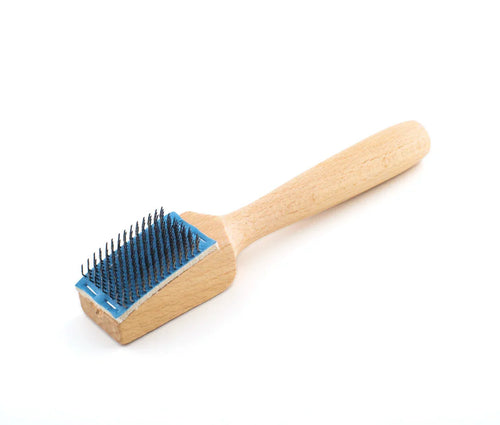
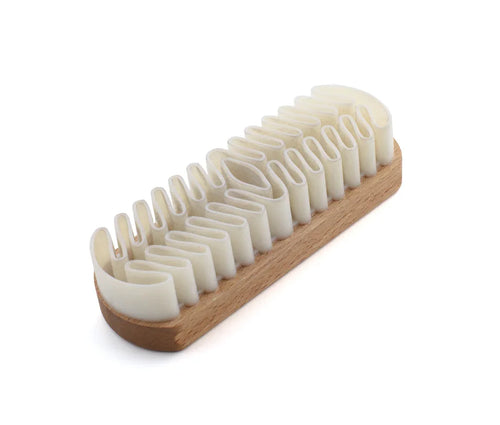
Don't forget your shoe brush! A suede sole becomes slippery over time due to dust on the floor. A quick brush and you have the perfect grip again for those fast ganchos. Want to know everything about making the right choice? Check out our extensive Argentine Tango Shoes Guide.
Different styles: Which tango suits you?
Not every tango is the same. When you start, you often hear terms like 'Milonguero', 'Tango de Salón', or 'Tango Nuevo' flying around. Don't panic, I'll explain it to you.
Tango Milonguero is the style of the crowded dance floors in Buenos Aires. The embrace (the abrazo) is very close, chest-to-chest. The movements are small and compact. Here, it's purely about the connection and less about the complicated figures. For this style, you need shoes that are extremely stable because you are constantly leaning into your partner's axis.
Tango de Salón is a bit more open. There is more space between the partners, allowing you to make those beautiful, large ochos and ganchos you see in movies. It is more elegant and technical.
Tango Nuevo is the modern variant. Think of music by Astor Piazzolla or even electronic beats. Here you see many fluid movements, ganchos in all directions, and even jumps. It is athletic and asks a lot of your body (and your shoes!). Here you often see dancers in shoes with a bit more cushioning, like the Rummos models, to absorb the impact of the movements.
Whichever style you choose, the basis remains the same: connection, axis, and technique. Start with the basics and discover along the way what suits your personality. Are you a hugger? Go for Milonguero. Are you a drama queen (or king) who wants to claim the space? Then Salón or Nuevo is your thing.
Frequently asked questions about tango movements
1. What are the 4 types of movement in tango?
At the core, we're talking about the step (forward, backward, sideways), the pivot (turn), the dissociation (twisting of the body), and the weight transfer. Everything you see on the dance floor is a combination of these four elements. Even the most complex figure is just a clever sequence of steps and turns.
2. Why do they call it 'ochos'?
Quite simple: because you draw a figure 8 on the floor with the tip of your foot. If you do it well, after a few minutes of dancing, you'll see a beautiful pattern of eights on a dusty floor. It's the ultimate test of your technique: are your eights fluid or do they look more like angular squares?
3. Are ganchos dangerous?
Only if you do them without technique. A gancho should never be a 'kick'. It's a reaction to a movement. If your partner blocks your leg, your knee bends automatically. The danger lies in uncontrolled movements on a crowded floor. Only do ganchos if you're sure there's space and your partner understands the technique.
4. Can I learn tango barefoot or in socks?
At home to practice? Go ahead then. But on the dance floor? Absolutely not. Socks are too slippery (dangerous for your ankles) and bare feet have no 'slide' (dangerous for your knees). Moreover, there's a good chance someone will step on your toes with a stiletto heel. Believe me, invest in a good pair of Tango shoes for women or men. Your feet will thank you.
5. How long does it take before I can make a good ocho?
You learn the basics in your first lesson. Perfection? Most dancers take years to achieve that. That's exactly the beauty of tango; you're never done learning. Every time you turn that eight, you find a new nuance in your balance or your connection.
6. What are the 4 elements of movement in a broader sense?
Although this is often a general question, in tango we apply this as: Space (where you dance), Time (the rhythm of the music), Power (the intensity of the movement), and Flow (how the movements transition into each other). In tango, you master these four to turn from a 'walker' into a 'dancer'.
7. Which shoes do you recommend for beginners?
Start with a brand that offers stability. Tangolera is fantastic because of the balance, but Werner Kern is also a safe haven for beginners because they often have a slightly lower and wider heel. The most important thing is that you feel safe. If you're constantly afraid of falling over, you'll never dance relaxed.
So, dear friend, are you ready to hit the floor? Remember: everyone started as a wooden board once. The secret is to keep smiling, keep practicing, and above all, take good care of your feet. Put on those beautiful shoes, feel the music, and let those ochos come. Will I see you at the next milonga?
Ready to shine on the dance floor?
Stop doubting and give your feet the luxury they deserve. Whether you're looking for the stability of Tangolera or the elegance of Rummos, we have the perfect match for your feet.
View our Women's Tango CollectionDiscover the Men's Tango Collection


