

Table of Contents
- The crucial difference: Why your regular heels are ruining your tango
- The anatomy of a tango shoe: Technique under your feet
- Choosing the right heel height: From 4cm to 'stiletto heaven'
- Materials and soles: Suede, leather or nubuck?
- Shoes for the Milonga: Elegance meets endurance
- Maintenance: How to keep your investment beautiful for years
- Tips for the perfect fit (even for wide feet!)
- Frequently asked questions about the Argentine Tango
The crucial difference: Why your regular heels are ruining your tango
Let's be honest: those gorgeous heels you bought for that wedding are beautiful for a photo, but a disaster on the dance floor. In my classes, I see it every week: beginners arriving in shoes with a rubber sole or heels where the center of gravity is completely wrong. Argentine tango is all about pivots (turning on the ball of your foot). If your sole is too grippy, your feet stick to the floor while your knee continues to turn. That's a one-way ticket to the physiotherapist, and we don't want that.
Unlike ballroom dancing, where movements are often large and cover the whole floor, Argentine tango is more compact and technical regarding foot placement. You need a shoe that 'hugs' your foot. Brands like Women's tango shoes are specifically designed to provide that stability. Where a normal pump pushes your weight toward your toes, a real tango shoe ensures your heel is supported, exactly under your natural axis. This is essential for Tango Techniques: Learning Ochos and Ganchos, where your balance is everything.
Action point: Grab your current shoes and try to do a turn on a wooden floor. Do you feel resistance in your knee? Then it's time for an upgrade to a real dance sole.
The anatomy of a tango shoe: Technique under your feet
When I talk to friends who are just starting out, I always explain that a good tango shoe is actually a technical masterpiece. Take a brand like Tangolera, for example. These shoes often have a special 'no pain' insole. That sounds like marketing talk, but when you're standing at a milonga for three hours, it's the difference between dancing until sunrise or sitting crying in a taxi at 11:00 PM.
Another top brand is Werner Kern. What they do fantastically is the steel shank in the sole. This ensures the shoe doesn't bend in the wrong places, giving your arch the support it needs. For men, stability is just as important. A solid heel that doesn't wobble is a must for the leader. Take a look at the options for Tangolera men; these are designed to feel the ground perfectly without sacrificing comfort.
Why not sneakers? Well, unless they are specific dance sneakers from Bloch or Capezio with a split-sole, they hinder your ability to stretch your foot (point). And let's be honest, that stretched foot is exactly what makes tango so elegant. Want to know more about entry-level models? Check out the Tango for Beginners: Choosing Your First Shoes.
My tip: When fitting, pay attention to the 'heel cup'. It should fit firmly. If your heel slips, you lose control over your entire dance posture.
Choosing the right heel height: From 4cm to 'stiletto heaven'
I often get the question: "Should I start on 9cm heels right away?" My answer is always a resolute "No!". If you're still struggling with your basic steps, then a 7cm or even 9cm heel is a recipe for frustration. Your center of gravity changes drastically.
For beginners, I usually recommend a heel between 5cm and 6.5cm. This gives you the necessary 'forward lean' that is so characteristic of tango, without constantly feeling like you're falling forward. Brands like Rummos offer fantastic training heels that are wider at the bottom, which provides much more stability during those first uncertain steps at the practica. Read more about this in the guide on Tango Practica Clothing.
Are you already somewhat advanced? Then you can look at slimmer heels. The beauty of professional brands is that the heel balance is perfectly aligned with the center of your heel bone. Because of this, an 8cm heel from a top brand often feels more comfortable than a 5cm heel from a cheap fashion chain. For men, heel height is also a factor; a slightly higher 'tango heel' can help bring your weight more to the ball of your foot, making leading easier. See the details in Men's Tango Shoes: Style and Stability.
Action point: Measure the heel height of your favorite pair of shoes at home. Does it feel stable? Then look for a dance shoe with a similar height to make the transition easy.
Materials and soles: Suede, leather or nubuck?
The sole is where the magic happens. In the tango world, there are roughly two camps: suede and leather. Suede (also known as chrome leather) is the standard. It gives you just enough grip not to slip but allows you to turn effortlessly. The downside? You can't wear them outside. One rain shower and your soles are ruined. That's why you always see dancers carrying shoe bags.
Leather soles are often seen on more traditional tango shoes and are favored by dancers who like a lot of slide. They are also slightly more durable if you accidentally take a step outside on the way to the car. For men, a leather sole is often the standard because it gives a tougher, more powerful sound on the floor. View the differences between Tango collection for men for various sole options.
And then the upper material. Leather molds to your foot, which is wonderful if you suffer from, for example, a hallux valgus (bunion). Satin looks beautiful on stage but is less forgiving and harder to clean. If your feet get warm quickly, choose an open-work model or shoes with a leather lining that absorbs moisture.
My experience: I swear by suede soles for lessons because they give more control, but for a smooth marble floor at a festival, I always grab my leather soles. It's a matter of the right tool for the right job. More on this in Tango Shoes: Nuevo vs Traditional.
Shoes for the Milonga: Elegance meets endurance
A milonga is not just a dance evening; it's a social event with unwritten rules. Your outfit must be on point, but your shoes have to do the work. For ladies, this often means glitters, patent leather, or bright colors that stand out under the dimmed lights. But beware: a shoe that is too heavy can tire your legs during a long tanda.
When you go to a milonga, you want shoes that match your elegant outfit. Think of a beautiful dress combined with shoes from Werner Kern that often radiate just that extra bit of class. For inspiration on your entire look, check Women's Tango Clothing: Elegant Outfits. Don't forget the etiquette either; how you walk to the dance floor is just as important as the dance itself. Read all about the Milonga Etiquette.
For the men: shiny patent leather shoes are beautiful, but they can 'stick' if your feet touch each other during complex steps. A pro tip: apply a little bit of silicone spray to the inside of your heels to prevent your shoes from hooking together. More style tips can be found at Men's Tango Clothing.
My tip: Always take a spare pair with you to a milonga. Sometimes the floor is grippier than expected and you want to be able to switch from suede to leather.
Maintenance: How to keep your investment beautiful for years
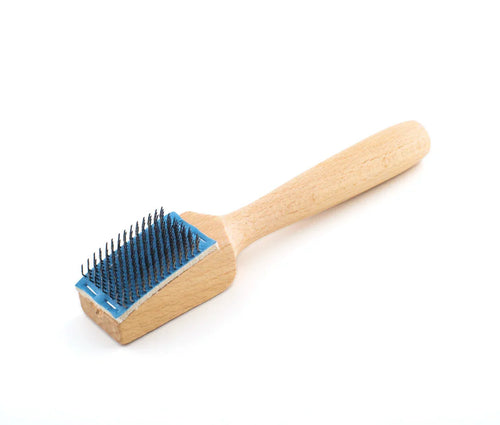
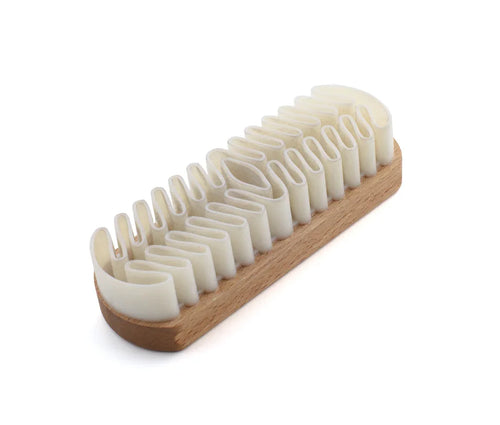
Good tango shoes are an investment. You pay for quality, so it's a shame if they're worn out after three months. The most important tool in your dance bag? The suede brush. After a night of dancing, the sole is full of dust and wax from the floor, making it slippery and hard. A quick brush and the 'hairs' of the suede stand up again for the perfect grip.
Do you have new shoes that are still a bit tight? Use a special shoe stretch spray or wear them at home with a pair of thick socks (looks ridiculous, but it works!). For more in-depth tips on this process, view Breaking in Tango Shoes: Tips for Optimal Comfort.
Always let your shoes air out as well. Don't put them directly into a sealed plastic bag after dancing. Leather needs to breathe to maintain its shape and scent. Preferably use cedar shoe trees for your men's shoes to extract moisture and preserve the shape.
Action point: Buy a suede brush today. It costs almost nothing and doubles the life of your soles.
Tips for the perfect fit (even for wide feet!)
Nothing is as annoying as a shoe that is too narrow. Many Italian brands run narrow, which is a disaster for the average Dutch foot. Fortunately, brands like Werner Kern have specific lines for wide feet. When you put your foot in the shoe, your toes shouldn't hang over the edge of the sole (in open models), but they shouldn't 'swim' either.
A good test is to stand on one leg and make a small pivot movement. Do you feel your foot sliding in the shoe? Then it's too big. Dance shoes should fit like a second skin. They always stretch out a bit eventually. So buy them slightly too tight rather than too loose. For ladies with narrow heels, models with an ankle strap or a cross strap over the instep are ideal for extra security.
Think about the seasons too. During a Tango Festival, you often dance for hours in warm rooms, which can cause your feet to swell. An adjustable buckle is then your best friend. Are you curious about the differences between tango and ballroom models? Check out Tango vs Ballroom: Which Shoe for Which Style?.
My advice: Always fit your shoes at the end of the day when your feet are already a bit thicker. This prevents nasty surprises during a long night of dancing.
Frequently asked questions about the Argentine Tango
What is the meaning of Tango?
Tango is more than just a dance; it is a cultural expression that originated at the end of the 19th century in the working-class neighborhoods of Buenos Aires and Montevideo. It symbolizes nostalgia, passion, and human connection. The word itself has various possible origins, ranging from African terms for 'enclosed space' to the Latin 'tangere' (to touch).
What exactly is Tango?
It is an improvisation dance based on a 4/4 time signature. Unlike many other dances, Argentine tango has no fixed basic pattern that you constantly repeat. It is about the communication between the leader and the follower, where musical interpretation is central.
Is Tango Spanish?
No, although the language in Argentina is Spanish, the dance itself is purely South American (Río de la Plata region). However, it was influenced by European immigrants (including Spaniards and Italians) and African rhythms such as Candombe.
What does Tango stand for?
Tango stands for connection. In a world that is becoming increasingly digital, tango offers a unique physical and emotional connection with another person. It also stands for self-expression and finding your own 'voice' in movement.
How do I learn the basic steps of Argentine tango?
The best way is to take a local trial lesson. You will learn the Salida (the basic exit), the Ocho (figure eights), and the Resolución (the resolution/close). Good shoes make this process 10x easier because they help you find your axis.
What should I wear to a milonga?
For ladies, a dress or skirt that falls just over the knee (or with a slit) is ideal to give freedom to leg movements. For men, neat trousers and a shirt are the standard. More tips can be found in Tango Milonga Clothing: What Should You Wear?.
Ready to conquer the floor?
Stop torturing your feet and give yourself the technique you deserve. Whether you're looking for your very first pair or that one spectacular shoe for your next festival, we have the perfect match for you.
Shop Women's Tango Collection Shop Men's Tango Collection


