

You finally have them: those dream heels from Rummos or Werner Kern you've been eyeing for weeks. You put them on, take three steps in the living room and... OUCH. You feel it already, right? Those edges cutting into your skin, your toes are a bit too cramped and you seriously wonder if you're going to survive that three-hour workshop. Listen, I know exactly how you feel. In my years as a dance instructor, I've seen hundreds of girls standing on the sidelines with tears in their eyes (and bleeding heels) because they thought they could just break in their new shoes 'on the fly'. Don't do that to yourself.
Breaking in heels is done by first wearing them at home for 15 to 30 minutes a day with a pair of (thick) socks, so that the material (leather or satin) gently adjusts to your unique foot shape. On average, it takes 2 to 4 dance sessions before your Latin shoes really feel comfortable. Want to know how to speed up this process without ruining your expensive shoes? I'm going to tell you everything I tell my students in class, so you can shine pain-free on the dance floor.
What you need to know about breaking in your heels
- Why you should NOT wear those new Latin shoes directly to a party
- The 'Thick Socks Method' (and other hacks for your Rummos heels)
- Fit is everything: How do you know if you have the right size?
- First aid for wide feet and pinching straps
- Maintenance of your suede soles: The secret of the grip
- The first aid kit for dancers: What to do if the pain strikes anyway?
- Frequently asked questions about breaking in heels
Why you should NOT wear those new Latin shoes directly to a party
I get it, you're excited. You just bought those beautiful Latin Dancing heels and there's a salsa social tonight. The temptation is HUGE to put them on immediately. But believe me, if you do that, you'll hate yourself after an hour. Dance shoes are not ordinary shoes; they are precision instruments. Whether you swear by Werner Kern for that classic stability or Rummos for that amazing flexibility, the material needs to be 'broken'.
In my classes, I see it weekly: girls who try to do a double spin on their brand-new heels and then lose their balance. Why? Because the sole is still too stiff and the shoe doesn't 'move' with your arch yet. Your foot slips a bit in the shoe because the material isn't grippy enough on the inside yet, and that's where those nasty blisters form. Before you hit the floor, you should first read this guide: Buying Salsa Shoes? Everything about Latin Dance Shoes. In it, I explain why your choice of shoe is the foundation for everything that follows.
Breaking them in ensures that the pressure points disappear. Everyone has a 'difficult' bump near the big toe or a heel that is shaped slightly differently. By breaking in your shoes at home first, you force the material to adapt to YOU, instead of your foot having to adapt to the shoe. Actionable tip: Put them on tonight while you're unloading the dishwasher or watching a series on the couch. Just do it.
The 'Thick Socks Method' (and other hacks for your Rummos heels)
This might sound super silly, but it works like a charm. If you notice that your new heels (especially those made of satin or sturdy leather like some Capezio or Bloch models) are just a bit too tight at the forefoot, grab your thickest winter socks from the closet. Put them on and squeeze your feet into your dance shoes. Yes, it looks ridiculous, but we're here to dance, not for a fashion show in your own living room.
Why does this work? The thick socks create just that little bit of extra space you need when your feet get warm and swell a bit during dancing (which always happens!). Wear this for half an hour a day. Want to speed up the process? Use a hairdryer on the lowest setting and blow some warm air over the areas that pinch while wearing those thick socks. The heat makes the leather or lining supple, making it easier to stretch. Be careful with satin, though; it can stain if you make it too hot.
Another trick I often share with my advanced students who dance on Rummos: use a little bit of alcohol (or special shoe-stretch spray) on the inside of the shoe where it pinches. The moisture temporarily makes the fibers stretchable. Put them on immediately afterward so they dry in the correct shape. Only do this if you are sure the shoes are made of real leather!
Fit is everything: How do you know if you have the right size?
Sometimes the problem isn't breaking them in, but simply the size. I so often see girls buying salsa heels that are a size too big "so they don't pinch". WRONG! A dance shoe should fit like a second skin. If there is space between your heel and the back of the shoe, you're going to slide. And sliding means friction. And friction means... exactly, blisters.
With brands like Werner Kern, you can often count on very consistent sizing, but with Rummos, the sizes sometimes run a bit differently. When you try on your shoes, your toes should come exactly to the edge of the sole (or even a fraction over it if you have an open toe). It might feel TOO tight at first, but remember: dance shoes always stretch by half a size. If they are already 'nice and roomy' when you buy them, you'll be dancing out of them in a month.
Also check the width. Do you have a narrow foot? Then models with adjustable straps over the forefoot are your best friend. Do you have a wider foot instead? Then look for specific 'wide fit' lines. Nothing is as frustrating as a beautiful shoe where your pinky toe escapes from the side. You don't break that in; that's just a mismatch. Take a look at our Latin Dancing collection for different width sizes.
First aid for wide feet and pinching straps
If you have wide feet, breaking in heels can feel like torture. But don't panic, there are solutions. First: choose your material wisely. Satin stretches less than suede or soft leather. If you know your feet swell quickly, a suede model from, for example, Werner Kern is often wiser because this material is much more forgiving.
Are you suffering from straps cutting into your instep? There are special silicone strips you can stick to the inside of the straps. This distributes the pressure and prevents the material from cutting into your skin. What I also often advise: use a shoe stretcher. Not a cheap plastic one, but a wooden one that you can adjust in width. Put these in your shoes overnight to very gently stretch them in the places where you experience the most pressure.
And girl, be honest with yourself: if a shoe still feels like your feet are in a vice after three weeks of breaking them in, then the model is probably not suitable for your foot type. Every foot is different, and sometimes another brand like Bloch or Capezio is simply a better match for your specific shape. Actionable tip: Measure your feet at the end of the day when they are at their largest. Use those measurements as a reference when ordering.
Maintenance of your suede soles: The secret of the grip
You might think: what does the sole have to do with breaking in my heels? Everything! A stiff, new suede sole ensures that your foot cannot roll off naturally. This causes you to tense muscles in your foot that you don't normally use, leading to cramps under your sole (plantar fasciitis, for the nerds among us).
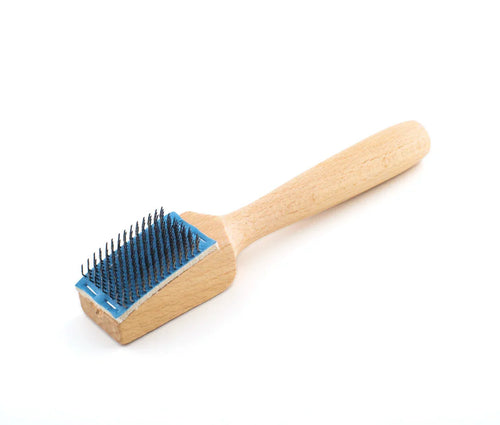
New soles are often very slippery and flattened. Grab a special dance shoe brush (with those steel bristles) and gently roughen the sole before you go dancing for the first time. This makes the sole more flexible and gives you much-needed grip. If you find you have too much grip on your laminate while breaking them in at home, you can put a little bit of baby powder on the sole, but NEVER do this on the club dance floor (the owner will hate you).
By maintaining the sole well, you ensure that the shoe 'breaks' faster at the point where your foot bends (the ball of the foot). The more flexible the sole, the less hard you have to work to perform your technique correctly. And that in turn means less fatigue and less pain. Actionable tip: Brush your soles after every dance session. It removes dirt and wax from the dance floor, making your shoes last much longer.
The first aid kit for dancers: What to do if the pain strikes anyway?
Let's be realistic: even with the best preparation and the most beautiful Rummos shoes, it can happen that you get a burning sensation after an hour on the dance floor. That is the moment you need to take action. Don't wait until the blister actually pops!
In my dance bag, there is always an 'emergency kit'. What's in it?
- Compeed blister plasters: The holy grail. Stick them on as soon as you feel a 'hotspot'.
- Sport tape: Ideal for preventively taping your toes if you know they rub against each other.
- Anti-blister stick: A kind of deodorant for your feet that reduces friction. Rub this on your heels and the sides of your feet before you put on your shoes.
- Spare heels: Sometimes it helps to switch to a lower heel or a broken-in pair halfway through the evening.
If you notice that the pain is mainly under the ball of your foot, consider putting gel cushions in your shoes. Note: these take up space, so your shoes must have the room for them. With brands like Werner Kern, the footbed is often already so well-padded that extra cushions are not necessary, but with cheaper models, it can make a world of difference.
Frequently asked questions about breaking in heels
How long do you have to break in heels?
Allow at least a week before you take them to a real party. Wear them every day for 20 minutes at home. On the dance floor itself, it usually takes 2 to 4 full sessions before they have truly shaped themselves to your foot.
What does "breaking in heels" mean?
Breaking in means that you make the material of the shoe (usually leather or satin) more supple and the sole more flexible. This makes pinching pressure points disappear and the shoe shapes itself to the unique contours of your foot.
How long does it take to break in new heels?
This depends on the material. Suede and soft leather break in faster (often within 2-3 wears) than stiffer satin or patent leather, which can take 5 to 6 times before it really sits comfortably.
How do you break in high heels quickly?
The fastest way is the 'thick socks and hairdryer' method. Put on thick socks, put on your shoes, and briefly heat the pinching spots with a hairdryer while moving your feet. Let them cool on your feet for the best result.
My heels slip at the heel, now what?
If your heel slips, the shoe is probably too big or too wide. You can try to solve this with heel grips (anti-slip strips), but often a size smaller is the only real solution for stability on the dance floor.
Listen, dancing should be fun, not torture. Take the time to get to know your shoes, take good care of them, and don't be afraid to ask for help if you're unsure about the size. We've all had that one night where we had to walk barefoot to the car because our new heels were killing us. Let's agree that that's not going to happen to you, deal? Now go quickly to our Latin Dancing collection and find that perfect pair that is worth breaking in!
Ready to conquer the floor?
Now that you know how to get those heels pain-free, it's time for the real work. Check out our latest collection and dance the night away!
Shop Latin Dance Shoes Now


